Short Answer

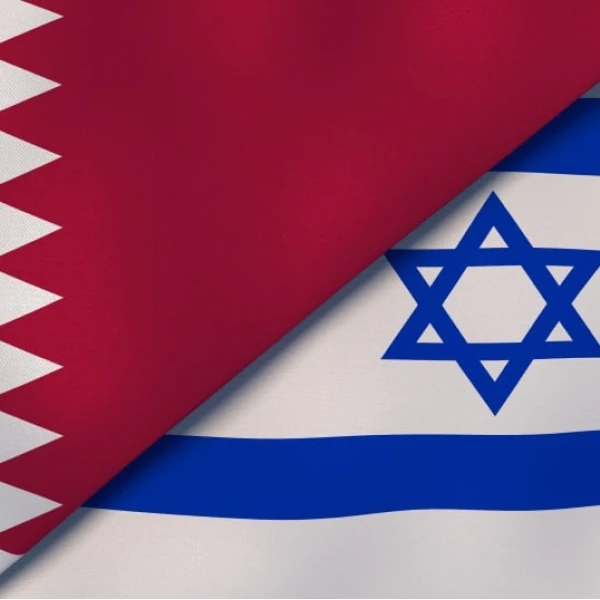
Both the model and the market expect Israel and Qatar to normalize relations before Jan 1, 2027, with no compelling evidence of mispricing.

1. Executive Verdict

  • A potential second Trump administration would likely pressure Qatar into normalization.
  • Qatar's substantial support for Hamas conflicts with Abraham Accords' prerequisites.
  • Qatar's economic vulnerabilities appear to differ from earlier normalization cases.
  • Public data on official Israeli-Qatari diplomatic engagements is not readily available.
  • Normalization critically hinges on a just resolution to the Palestinian issue.
  • A low probability of normalization before 2027 is currently assessed by markets.

Who Wins and Why

Outcome Market Model Why
Before Jan 1, 2027 9.0% 9.0% Persistent regional conflicts and political disagreements may impede normalization efforts.

Current Context

Qatar's mediator role and Hamas ties hinder immediate normalization efforts. Qatar's self-portrayal as a neutral mediator and its maintenance of ties with Hamas are widely cited as primary reasons for a low near-term likelihood of normalizing relations with Israel [^]. Despite this, former President Trump's late May 2026 push specifically urged Qatar and Saudi Arabia to sign additional Abraham Accords "immediately" [^]. However, reports note that Qatar's existing role and affiliations make immediate normalization unlikely [^].
Recent Israeli-Qatari meetings focused on Gaza mediation, not normalization. Israeli and Qatari officials met in New York in late 2025, as reported by The Times of Israel [^]. These discussions, however, were framed as efforts to mediate a Gaza ceasefire or facilitate a phase transition in the conflict, rather than steps towards establishing full diplomatic relations [^]. Qatar and Israel currently do not have diplomatic relations, underscoring the mediation-centric nature of these encounters [^].
Prediction markets overwhelmingly suggest no normalization before 2027. The sentiment across prediction markets skews negatively regarding the normalization of relations between Israel and Qatar before 2027 [^][^]. For instance, Coinbase hosts a contract specifically on "Will Israel and Qatar normalize diplomatic relations before Jan 1, 2027" [^]. Further indicating this outlook, Polymarket shows a market titled "Will Qatar recognize Israel by June 30" with 96% predicting "No," signifying that traders overwhelmingly expect no formal recognition by mid-2026 [^]. While one market on Kalshi addresses normalization with an expiration tied to 2029, it suggests that the event is viewed as uncertain enough to be priced into a later timeframe rather than the immediate future [^].

2. Market Behavior & Price Dynamics

Historical Price (Probability)

Outcome probability
Date
This prediction market has shown a distinct upward trend, with the probability of normalization rising from a low of 3.3% to its current price of 9.0%. The most significant price action occurred in late May 2026, when the market price surged from 3.3% to over 8% in approximately one week. This sharp increase in perceived probability appears to be a direct reaction to news reports from that time, which stated that former President Trump was urging Qatar to sign an Abraham Accord "immediately." The price has since stabilized around the 9.0% level, suggesting this is a new point of equilibrium for the market as it digests the potential for increased diplomatic pressure against the known obstacles.
The market has a total traded volume of 4,211 contracts, indicating consistent interest over its lifespan. However, the sample data points for the recent price spike show zero volume, which might suggest that the move was a sharp adjustment based on news rather than a period of heavy trading, or that the volume was concentrated on other days. The price action has established an initial support level around 3%, with the recent high of 9.0% now acting as a potential resistance level. Overall, market sentiment has become more optimistic about the chances of normalization, but the low absolute probability of 9.0% indicates that traders still view it as a highly unlikely event before 2027, factoring in reports that Qatar's role as a mediator and its ties to Hamas remain significant barriers.

3. Market Data

View on Kalshi →

Contract Snapshot

The market resolves to "Yes" if Israel and Qatar normalize diplomatic relations, with the agreement ratified, before January 1, 2027. If this normalization does not occur by that date, the market resolves to "No." The outcome is verified by The New York Times, and the market will close early if the event occurs, otherwise by January 1, 2027, 10:00 AM EST.

Available Contracts

Market options and current pricing

Outcome bucket Yes (price) No (price) Last trade probability
Before Jan 1, 2027 $0.08 $0.94 9%

Market Discussion

Qatar has reportedly conditioned normalization on progress in the Israel–Palestinian dispute and abstained from formal Abraham Accords participation [^][^][^]. As of 2025-12-07, Israeli and Qatari officials reiterated they "do not have diplomatic relations" [^]. Despite Trump publicly urging countries including Qatar to normalize relations on 2026-05-27 [^][^], a market indicates a low probability for recognition by June 30 [^], suggesting significant hurdles remain before 2027.

4. What specific US foreign policy shifts under a potential second Trump administration could accelerate normalization talks between Israel and Qatar before 2027?

Primary Policy GoalQatar's joining of Abraham Accords (explicitly desired by Trump) [^][^][^][^][^]
Key Policy LinkageNormalization linked to Iran peace deal (demanding nations like Qatar sign Accords) [^][^]
US Security Guarantee DateSeptember 2025 (by executive order to Qatar) [^][^][^]
A potential second Trump administration would pressure Qatar into Abraham Accords. A second Trump administration is expected to implement specific foreign policy shifts aimed at accelerating normalization talks between Israel and Qatar before 2027. These shifts involve direct pressure on Qatar to join the Abraham Accords, which former President Trump has explicitly stated as a mandatory component of a broader regional settlement, particularly concerning any potential deal with Iran [^][^][^][^][^]. Reports indicate that Trump aims to hinge any peace agreement with Iran on Arab nations recognizing Israel, requiring countries, including Qatar, to simultaneously sign onto the Abraham Accords [^][^].
A US security guarantee would further accelerate Qatar-Israel normalization. Furthermore, these policy shifts include a security guarantee for Qatar. The US reportedly issued a security guarantee to Qatar by executive order in September 2025, stating that an armed attack on Qatar would be considered a threat to US peace and security [^][^][^]. Such policies, characterized by direct pressure and linking normalization to broader regional security and strategic goals, could compel Qatar to accelerate normalization talks with Israel before 2027 [^][^]. Qatar has historically maintained diplomatic channels with both Israel and Hamas, playing a crucial role in mediating ceasefires and humanitarian aid for Gaza [^][^][^][^].

5. How does Qatar's stated policy toward Hamas and its role as a regional mediator conflict with the diplomatic prerequisites for joining the Abraham Accords?

Financial aid to HamasOver $1.8 billion transferred [^][^][^][^][^][^][^][^][^][^][^]
Hamas leadershipHosted in Doha [^][^][^][^][^][^][^][^][^][^][^]
Foreign Policy RoleSignificant regional and international mediator [^][^][^][^][^][^][^]
Qatar's substantial support for Hamas directly conflicts with Abraham Accords' prerequisites. As a key financial and political supporter, Qatar has hosted Hamas's political leadership in Doha and transferred over $1.8 billion to the organization [^][^][^][^][^][^][^][^][^][^][^]. This stance clashes with the fundamental requirement of the Abraham Accords for establishing direct diplomatic, economic, and security relations with Israel. Although Qatar asserts its financial aid is for the Palestinian people in Gaza and vital for humanitarian delivery, and Israeli governments have occasionally approved these payments, these enduring ties fundamentally contrast with the Accords' framework for normalization with Israel [^][^][^][^][^][^][^][^][^][^][^].
Qatar's mediation role diverges from the Abraham Accords' normalization objectives. In its foreign policy, Qatar has established itself as a significant regional and international mediator, notably in current negotiations between Israel and Hamas for hostage releases and ceasefire agreements [^][^][^][^][^][^][^]. While Israeli and U.S. officials acknowledge this mediation, it fundamentally differs from the direct diplomatic, economic, and security relationships mandated by the Abraham Accords. These Accords were primarily motivated by shared strategic concerns among Israel and Sunni Arab states, such as confronting Iran [^][^][^][^][^][^][^][^][^]. Moreover, Qatar has not expressed interest in adopting the Abraham Accords' rapprochement model, and some prospective signatories continue to link their normalization with Israel to progress toward Palestinian sovereignty [^][^][^].

6. How do Qatar's current economic and security dependencies differ from those of the UAE and Bahrain before they normalized relations with Israel in 2020?

Qatar U.S. Forcesnearly 10,000 U.S. forces [^]
Bahrain U.S. Forcesover 7,000 U.S. forces [^]
Bahrain U.S. Naval HQsince 1948 [^]
Qatar's economic vulnerabilities before 2020 differed significantly from Bahrain's. Qatar's economic dependency was particularly exposed through its liquefied natural gas (LNG) export logistics, as the required transit through the Strait of Hormuz posed a structural single-point failure for its exports [^]. In contrast, Bahrain's economic dependency prior to 2020 was notably linked to Saudi Arabia, relying on income from the Al-Shafaa oil field and a substantial share of visitors from Saudi citizens [^]. The research did not specify the United Arab Emirates' (UAE) pre-2020 economic dependency.
Qatar's security relied heavily on its substantial U.S. military presence. Prior to 2020, Qatar's security dependency was predominantly centered on the United States, hosting nearly 10,000 U.S. forces and serving as the regional headquarters for U.S. Central Command (CENTCOM) at Al Udeid Air Base [^].
Bahrain and the UAE also maintained significant security ties with the U.S. Bahrain's security dependency on the U.S. was structurally deep, characterized by hosting a U.S. naval command headquarters since 1948, its designation as a major non-NATO ally, and the presence of over 7,000 U.S. forces, primarily Navy personnel [^]. The UAE's pre-2020 security dependency involved long-standing U.S. defense cooperation, including basing and port access, with U.S. forces stationed at multiple facilities such as Al Dhafra Air Base and ports like Jebel Ali [^][^].

7. What publicly available data tracks the frequency and level of official diplomatic engagements between Israeli and Qatari officials since the Abraham Accords were signed?

Direct engagement data availabilityNot available as an automatically countable dataset since Abraham Accords [^][^][^]
Primary official proxy sourceQatar Ministry of Foreign Affairs (mofa.gov.qa) [^][^][^][^][^][^]
Additional official proxy sourceUS State Department official records [^][^]
Directly countable public data on official diplomatic engagements between Israeli and Qatari officials since the Abraham Accords is not readily available [^] [^] [^] . While some third-party compilations exist, they do not offer a consistently countable dataset for the frequency of official engagement during this specific period [^][^][^]. However, records of high-level diplomacy from official Qatari and U.S. sources, particularly those concerning Gaza negotiations involving Israel, can be utilized as a proxy for tracking such engagements [^][^][^][^].
Qatari and U.S. sources are key for proxy data. The Qatar Ministry of Foreign Affairs website (mofa.gov.qa) serves as the most promising official source for constructing a dataset of post-Abraham Accords Israel–Qatar engagement events [^][^][^][^][^][^]. This can be accomplished by analyzing their press releases and remarks that explicitly mention Gaza negotiation and mediation communications involving Israel, including press conference statements and updates on negotiation rounds [^][^][^]. Similarly, the U.S. State Department provides official records, such as joint press availabilities, which characterize the level and frequency of Qatar’s high-level diplomatic efforts during the Abraham Accords era, although these records are not exclusively bilateral for Israel–Qatar interactions [^][^].

8. What developments in the Israeli-Palestinian conflict between now and 2026 could serve as the primary catalyst or main obstacle for Qatari normalization?

Condition for NormalizationEstablishment of a Palestinian state with East Jerusalem as capital [^][^][^][^][^][^][^]
Main Obstacles (pre-2027)Israeli military operations, occupation, settlement expansion, and undermining Qatar's mediation [^][^][^][^][^][^][^][^][^][^][^][^][^]
Primary Catalyst for NormalizationCredible diplomatic breakthrough for an independent Palestinian state [^][^][^][^][^][^]
Qatari normalization hinges on a just resolution to the Palestinian issue. Full normalization of relations between Qatar and Israel depends on the establishment of a Palestinian state with East Jerusalem as its capital, aligning with the Arab Peace Initiative and a two-state solution [^][^][^][^][^][^][^]. As of mid-2026, major obstacles to normalization before 2027 include continued Israeli military operations in Gaza and the West Bank, settlement expansion, and actions undermining Qatar's mediation role [^][^][^][^][^][^][^][^][^][^][^][^][^]. Israeli operations have continued in areas such as Khan Younis, Rafah, Tulkarm, and Nur Shams, leading to displacement [^][^][^]. The ongoing expansion of Israeli settlements and increased settler violence further diminish the prospects for a future Palestinian state, a trend observed through early 2026 [^][^][^]. Additionally, an Israeli airstrike in Doha in September 2025, targeting Hamas leaders, strained relations and was condemned by Qatar as a violation of sovereignty and an indication of insincerity [^][^][^][^]. The current Israeli government's opposition to a two-state solution also poses a significant hurdle [^], as do persistent internal divisions between Hamas and Fatah [^][^].
Credible diplomatic breakthroughs are the main catalysts for normalization. The most significant catalyst would be a clear and irreversible path towards an independent Palestinian state with East Jerusalem as its capital, established through a credible diplomatic breakthrough [^][^][^][^][^][^]. A concerted effort by the United States, potentially under a new administration, offering substantial incentives linked to tangible progress on the Palestinian issue could also serve as a catalyst [^][^]. For instance, former President Trump has attempted to link an Iran deal to broader normalization efforts, including Qatar [^][^]. Furthermore, a substantial and sustained improvement in humanitarian aid delivery, followed by large-scale reconstruction efforts in Gaza with international backing, particularly if Qatar is a key player, could create a more conducive environment for diplomatic engagement [^][^].

9. What Could Change the Odds

Key Catalysts

As of May 2026, prediction markets assign a low probability, approximately 10%, to the normalization of diplomatic relations between Israel and Qatar before January 1, 2027 [^] . | Politics Prediction Markets | Solflare">[^]. This current assessment suggests that significant catalysts would be needed to alter the likelihood of such an event.
A potential catalyst involves external pressure, exemplified by U.S. President Donald Trump's public push in May 2026 for Qatar and Saudi Arabia to join the Abraham Accords as a condition for a broader peace agreement to end the war with Iran [^][^][^][^][^]. However, experts and regional sources remain skeptical of this possibility [^][^][^][^][^]. A primary hurdle to normalization is Qatar's long-standing condition of a two-state solution and its sensitivity to public opposition regarding the Palestinian issue [^][^][^][^][^]. This is further compounded by Israel’s current government's stance against Palestinian statehood, which has resulted in a significant diplomatic stalemate [^][^][^][^][^].
Despite lacking formal diplomatic relations, Israel and Qatar maintain intermittent communication, largely driven by Qatar's role as a regional mediator [^] [^] . These existing ties have been tested by recent geopolitical tensions, including allegations of anti-Israel activity and mutual accusations [^][^][^]. Any shifts in Qatar's mediation role or a de-escalation of these tensions could influence the prospects for normalization.

Key Dates & Catalysts

  • Expiration: January 01, 2027
  • Closes: January 01, 2027

10. Decision-Flipping Events

  • Trigger: As of May 2026, prediction markets assign a low probability, approximately 10%, to the normalization of diplomatic relations between Israel and Qatar before January 1, 2027 [^] .
  • Trigger: This current assessment suggests that significant catalysts would be needed to alter the likelihood of such an event.
  • Trigger: A potential catalyst involves external pressure, exemplified by U.S.
  • Trigger: President Donald Trump's public push in May 2026 for Qatar and Saudi Arabia to join the Abraham Accords as a condition for a broader peace agreement to end the war with Iran [^] [^] [^] [^] [^] .

12. Historical Resolutions

No historical resolution data available for this series.