Short Answer

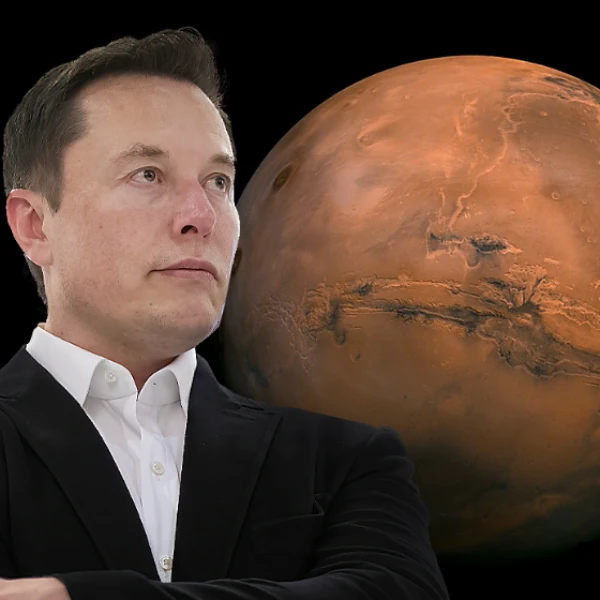
Both the model and the market expect Elon Musk to visit Mars in his lifetime, with no compelling evidence of mispricing.

1. Executive Verdict

  • Multi-year Mars missions face profound technical and physiological challenges.
  • SpaceX requires multiple technological advancements for human Mars missions.
  • SpaceX prioritizes NASA's Artemis program, delaying Mars colonization ambitions.
  • Musk's stated timelines for Mars missions have evolved since 2016.
  • Long-duration spaceflight induces physiological changes mirroring natural aging processes.
  • ISS data informs viability of multi-year Mars journeys for older astronauts.

Who Wins and Why

Outcome Market Model Why
Mars 9.0% 9.0% International space cooperation could facilitate Musk's ambition to visit Mars.

Current Context

Prediction markets assign a low probability to Elon Musk's Mars visit. SpaceX has consistently delayed its Mars mission timeline, with the current target for the first uncrewed mission set for 2028-2030, and crewed missions potentially following in the early 2030s [^][^][^]. Reflecting these delays and inherent challenges, prediction markets, including those on Kalshi, currently estimate a very low probability, approximately 6–8%, of Elon Musk visiting Mars in his lifetime (by 2099) [^][^][^].
SpaceX's strategic focus has recently shifted toward lunar operations. Elon Musk claims lunar missions may be achieved in less than 10 years, compared to a 20+ year timeframe for Mars, reflecting this shift in priority [^][^]. Expert opinions remain highly skeptical of near-term human colonization of Mars, citing fundamental challenges such as radiation, low gravity, resource extraction, and life-support requirements for long-duration missions [^][^]. Despite personally expressing a desire to die on Mars, Musk has acknowledged that the mission carries severe risks and that the timeline for achieving human presence has shifted significantly since his initial projections [^][^].

2. Market Behavior & Price Dynamics

Historical Price (Probability)

Outcome probability
Date
This prediction market shows a stable, sideways price trend, indicating a consistent market consensus. The probability of a "Yes" outcome has traded within a very narrow 2-point range, between a support level of 7.0% and a resistance level of 9.0%. The market opened at 8.0% and is currently trading at the top of its range at 9.0%, but overall price action has been flat with no significant spikes or drops. This lack of volatility suggests the market has fully priced in the long-term challenges and consistent delays associated with SpaceX's Mars missions, as outlined in the provided context. The low probability assessment reflects the current timelines which place the first uncrewed mission around 2028-2030, with crewed missions to follow even later.
The total trading volume of 3,219 contracts, distributed over 292 data points, suggests moderate but not aggressive trading activity. The stability of the price in the face of this volume indicates a strong market conviction around the low probability. There is no evidence of new information causing traders to significantly reassess the odds. The price action aligns with external reporting on prediction markets, which also estimate a low probability for this event. The consistent trading within the 7.0% to 9.0% channel suggests traders see little reason to bet on a sudden acceleration of the Mars mission timeline that would be required for Musk to make the journey.
Overall, the chart suggests a persistent and strong market sentiment that Elon Musk is very unlikely to visit Mars in his lifetime. The tight trading range and lack of significant price movement reflect a consensus that has already accounted for the immense technological, logistical, and safety hurdles of such an endeavor. The market appears to be in a holding pattern, waiting for a fundamental change in the outlook for crewed missions to Mars, which is not currently anticipated by traders.

3. Market Data

View on Kalshi →

Contract Snapshot

Based on the provided page content, the specific contract rules regarding what triggers a YES or NO resolution, key dates/deadlines, or any special settlement conditions are not detailed. The provided text only states the market question: "Will Elon Musk visit Mars in his lifetime? Odds & Predictions 2098."

Available Contracts

Market options and current pricing

Outcome bucket Yes (price) No (price) Last trade probability
Mars $0.09 $0.93 9%

Market Discussion

Prediction markets reflect deep skepticism about Elon Musk visiting Mars in his lifetime, with recent odds suggesting a 91-92% probability he will not do so before August 2099 [^][^]. This outlook is reinforced by SpaceX's announced 5-7 year delay in Mars ambitions in February 2026 to prioritize lunar infrastructure [^][^], and experts' consensus that establishing a permanent Mars colony of one million people—a goal tied to Musk's performance-based equity awards revealed in May 2026—faces immense biological, technical, and logistical hurdles [^][^][^].

4. What are the most significant unresolved technical and physiological challenges for a human Mars mission, according to recent NASA and planetary science reports?

Spaceflight hazards identified by NASA5 (space radiation, isolation/confinement, distance from Earth, altered gravity fields, and hostile/closed environments) [^][^][^]
Probability of communication/mission loss during Mars transitGreater than 99% [^]
Probability of communication/mission loss with high crew performanceDrops below 0.1% [^]
Human Mars missions face profound multi-year physiological and technical challenges. These include managing space radiation exposure and altered gravity physiology, compounded by significant human factors and operational complexities due to the mission's extended duration and immense distance from Earth [^]. Physiological risk gaps specifically being managed involve the effects of space radiation, such as acute syndromes, central nervous system impacts, and long-term carcinogenesis, alongside cardiovascular and neurocognitive outcomes [^]. Altered gravity physiology presents additional issues like muscle and bone loss, cardiovascular adaptation, sensorimotor and vestibular effects, and Spaceflight-Associated Neuro-ocular Syndrome (SANS) for long-duration Mars exposure [^]. NASA’s Human Research Program identifies five core hazards for human spaceflight: space radiation, isolation/confinement, distance from Earth, altered gravity fields, and hostile/closed environments, noting their synergistic interactions complicate crew health and performance for Mars missions [^][^][^].
NASA actively manages risks, but long-duration adaptation remains uncertain. Risk management is overseen by NASA’s Human System Risk Board (HSRB), which assigns likelihood and consequence across various Design Reference Missions [^]. Unresolved gaps are addressed as “path to risk reduction” items, encompassing health and performance risks such as reduced aerobic capacity, muscle loss, cardiovascular adaptations, sensorimotor changes, immune/medical risks, radiation carcinogenesis, and SANS [^][^][^][^]. A significant uncertainty is long-duration physiological and behavioral adaptation, with NASA emphasizing the need to characterize time-course physiological changes during multi-year Mars transit durations and to extrapolate from shorter records obtained on the International Space Station [^][^].
Operational complexities and human factors pose significant unresolved challenges. NASA highlights that communication delays or blackouts with Mars, combined with limited or no rapid return-to-Earth options, necessitate critical crew expertise for diagnosing and restoring functionality after unforeseen failures [^]. The probability of at least one occurrence of communication loss or other mission-potential failures during Mars transit is greater than 99%, only dropping below 0.1% under extremely high crew response performance assumptions [^]. The National Academies’ (2026) Mars human exploration science strategy further frames key cross-cutting health and performance uncertainties within the 'integrated martian environment', including longitudinal impacts on crew physiological, cognitive, and emotional health, team dynamics, and the necessity to develop and validate methods for monitoring and maintaining physical and behavioral performance [^][^].

5. What specific Starship development milestones must SpaceX achieve by 2040 to create a plausible window for Musk to travel to Mars in his lifetime?

Uncrewed Cargo Missions StartAs early as 2026-2028 [^][^][^]
Key Technological MilestonesOrbital refueling, rapid reusability, deep-space life-support, EDL, surface infrastructure [^]
Human Survival Infrastructure NeedsPower generation, construction capabilities, water extraction [^][^]
SpaceX requires multiple technological advancements for human Mars missions. To enable a human mission to Mars, SpaceX needs to demonstrate reliable orbital refueling, perfect the rapid reusability of the Starship system, and validate deep-space life-support systems [^]. Additionally, successful entry, descent, and landing (EDL) at a massive scale and establishing surface infrastructure, such as in-situ resource utilization for propellant production, are essential [^].
Significant infrastructure must be developed for human survival on Mars. Beyond transport capabilities, human Mars missions depend on robust power generation, construction capabilities, and water extraction to ensure human survival [^][^]. Experts highlight that these infrastructure developments are projected to require multiple successful preceding uncrewed missions before human arrival [^].
SpaceX plans uncrewed missions without a firm crewed 2040 deadline. The company's current roadmap focuses on uncrewed cargo missions, starting as early as 2026-2028, with the goal of delivering necessary infrastructure [^][^][^]. However, the available information does not specify a timeline for when all these required milestones would be fully achieved to create a plausible window for a crewed mission specifically by 2040 [^][^][^].

6. How do SpaceX's contractual obligations to NASA's Artemis program compare with its internal resource allocation for Mars-specific development?

2026 Mars MissionShelved [^][^]
Crewed Lunar LandingTarget 2028 [^][^]
Elon Musk Mars Visit by 209992% predict no (as of May 2026) [^][^]
SpaceX prioritizes NASA's Artemis program, delaying its Mars ambitions. The company has officially shelved its planned 2026 Mars mission, choosing instead to redirect its Starship development efforts to support its contractual obligations for NASA's Artemis Human Landing System (HLS) program, specifically for the Artemis III and IV missions [^][^].
NASA contracts provide crucial funding but face technical delays. The Artemis HLS contracts are vital for SpaceX, offering billions in guaranteed government revenue that helps to offset the substantial, multi-billion-dollar annual research and development costs associated with Starship development. Despite this crucial financial support, ongoing technical delays have pushed the target for a crewed lunar landing to 2028 [^][^].
Public prediction markets reflect skepticism about Musk's Mars visit. As of May 2026, prediction markets reveal significant public skepticism regarding Elon Musk's personal goal of visiting Mars before August 1, 2099. Approximately 92% of the market participants predict he will not achieve this goal in his lifetime [^][^].

7. What health data from long-duration missions on the International Space Station (ISS) informs the viability of a multi-year Mars journey for an older astronaut?

John Glenn's age during flight77 [^]
John Glenn's flight duration9 days [^]
Physiological changes observed in spaceflightMuscle atrophy, bone demineralization, immune dysregulation, cardiovascular shifts [^][^][^][^][^]
Long-duration spaceflight induces physiological changes mirroring natural aging processes. Missions to the International Space Station (ISS) cause significant alterations, including muscle atrophy, bone demineralization, immune system dysregulation, and shifts in cardiovascular function. These physiological impacts are particularly concerning for older astronauts considering multi-year missions to Mars, as the effects parallel natural aging processes observed on Earth, raising substantial health considerations [^][^][^][^][^].
ISS mission data informs viability, but specific insights on older astronauts are scarce. The physiological impacts observed during ISS missions directly inform the potential health challenges of extended space travel for older individuals. However, specific data on how spaceflight affects older individuals remains extremely limited. John Glenn's 9-day flight at age 77 serves as a rare, albeit short-term, reference point. Consequently, the current understanding of spaceflight's effects on older astronauts primarily relies on general observations from long-duration ISS missions, due to the lack of comprehensive data for this specific demographic [^].

8. How has Elon Musk's publicly stated timeline for sending humans to Mars evolved since his 2016 IAC presentation versus his most recent statements?

Target for first human landing on Marsas soon as 2029, though 2031 was considered more likely [^][^]
Goal for human population on Marsa million humans by 2050 [^]
Target for first uncrewed Starship flight to Marslate 2026 [^][^]
Musk's 2016 vision projected early human missions to Mars. His initial timelines in 2016 suggested that a human mission to Mars could potentially occur as early as 2024 [^][^][^][^]. At that time, his ambitious goal included establishing a self-sustaining city on Mars, intending to transport at least a million people, with the complete realization of a self-sustaining civilization estimated to take between 40 to 100 years following the first crewed flight [^][^][^][^]. Aspirational dates for uncrewed missions were also outlined, with a Dragon capsule variant mentioned for 2018, and initial unmanned Starship missions targeted for 2022 [^][^][^][^].
Recent updates have shifted anticipated Mars mission timelines. Human landings on Mars are now foreseen as soon as 2029, though 2031 is considered more probable [^][^]. In May 2025, Musk adjusted the target for the inaugural uncrewed Starship flight to Mars to late 2026, with an expected arrival in 2027, attributing the shift to faster iteration on lunar development [^][^][^][^]. Despite these adjustments, his ultimate vision remains to send one million humans to Mars by 2050 to establish a permanent, independent city [^]. As of September 2025, he suggested that a self-sustaining colony could be achievable within 30 years [^].

9. What Could Change the Odds

Key Catalysts

SpaceX has long articulated a primary goal of making humanity a multi-planetary species by colonizing Mars [^] [^] [^] . Initially, Elon Musk suggested human missions by 2024 in 2016, a timeline reiterated in 2017 [^][^][^]. By 2020, he expressed "high confidence" in landing humans on Mars by 2026, and in 2021, said he would be "surprised" if it didn't happen within five years [^]. However, in February 2026, Musk announced a strategic shift, deprioritizing Mars ambitions for "about five to seven years" to focus on building a "self-growing city on the Moon" within a decade, citing the faster iteration cycles due to more frequent launch windows to the Moon [^][^][^]. He clarified that Mars development would continue in parallel, maintaining a 20-30 year timeframe for a self-sustaining Martian city [^].
More recently, in March 2025, Musk stated plans to send a Starship with a Tesla Optimus robot to Mars by the end of 2026, with human missions following as early as 2029, or "more likely" 2031, if the uncrewed landings are successful [^] . Other reports from June 2024 and September 2024 also indicated crewed missions in the early 2030s, contingent on successful uncrewed flights in 2026-2028 [^][^]. Key positive catalysts include SpaceX's continued progress in Starship's development and successful test flights [^], Musk's unwavering personal commitment and the stated long-term goal of SpaceX to colonize Mars [^][^][^][^], and significant technological breakthroughs in areas such as in-situ resource utilization (ISRU) and advanced life support systems [^][^][^][^]. A successful and rapid development of a self-sustaining Moon city could also validate critical technologies applicable to Mars colonization [^][^].
Conversely, substantial challenges could delay timelines. These include numerous technical hurdles like large-scale orbital refueling, precision landing of heavy payloads, and robust closed-loop life support for multi-year missions [^][^][^][^]. Establishing a self-sustaining colony requires massive surface power generation and extensive water-mining infrastructure on Mars, which are not yet in development [^][^][^][^]. Musk's history of setting ambitious, often missed, deadlines and his recent reprioritization towards lunar missions further suggest potential delays for human Mars missions [^][^][^][^]. Furthermore, for Elon Musk, born on June 28, 1971 [^][^][^], a personal visit to Mars by the prediction market date would require radical life extension technologies not currently established [^][^][^][^].

Key Dates & Catalysts

  • Expiration: August 08, 2099
  • Closes: August 01, 2099

10. Decision-Flipping Events

  • Trigger: SpaceX has long articulated a primary goal of making humanity a multi-planetary species by colonizing Mars [^] [^] [^] .
  • Trigger: Initially, Elon Musk suggested human missions by 2024 in 2016, a timeline reiterated in 2017 [^] [^] [^] .
  • Trigger: By 2020, he expressed "high confidence" in landing humans on Mars by 2026, and in 2021, said he would be "surprised" if it didn't happen within five years [^] .
  • Trigger: However, in February 2026, Musk announced a strategic shift, deprioritizing Mars ambitions for "about five to seven years" to focus on building a "self-growing city on the Moon" within a decade, citing the faster iteration cycles due to more frequent launch windows to the Moon [^] [^] [^] .

12. Historical Resolutions

No historical resolution data available for this series.