Short Answer

Both the model and the market expect Above 15 GWh of energy deployed in a single quarter before 2027, with no compelling evidence of mispricing.

1. Executive Verdict

  • Since last update (~24h): Model probability for Above 20 GWh decreased by 2.6pp, widening the edge (model-led).
  • Headline model probability for Above 15 GWh rose 0.6pp; the edge compressed (model-led).
  • The overall model-market edge compressed by 0.6pp, indicating reduced divergence.
  • Above 15 GWh is highly probable, given Q2 2026 deployment and capacity ramp.
  • Above 20 GWh benefits from a positive outlook and continued production capacity ramp.
  • Achieving 30 GWh faces challenges from "lumpy" business and noted operational risks.

Who Wins and Why

Outcome Market Model Why
Above 15 GWh of energy deployed in a single quarter 81.0% 96.5% Model higher by 15.5pp
Above 20 GWh of energy deployed in a single quarter 83.0% 78.2% Market higher by 4.8pp
Above 30 GWh of energy deployed in a single quarter 27.0% 18.5% Market higher by 8.5pp
Above 50 GWh of energy deployed in a single quarter 13.0% 7.8% Market higher by 5.2pp

Current Context

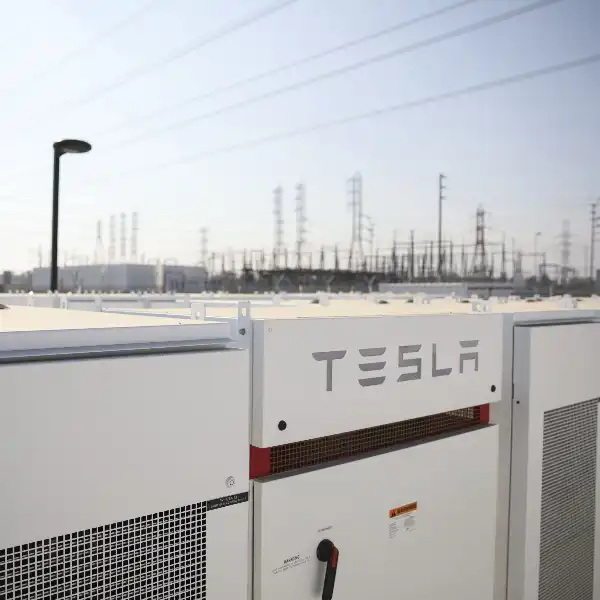
Tesla's energy storage segment is a core growth driver. Deployments in 2025 reached 46.7 GWh, a 48% year-over-year increase, generating $12.8 billion in revenue [^][^][^][^]. While Q1 2026 saw a sequential decline to 8.8 GWh, down 38%, deployments recovered to 13.5 GWh in Q2 2026 [^][^][^][^].
Infrastructure expansion and a substantial backlog underpin future growth. Tesla operates two megafactories at scale in Lathrop and Shanghai, boasting a combined capacity of 80 GWh [^][^][^][^]. A new facility in Brookshire, Texas, targets increased Megapack and Megablock production in 2026, leveraging the 20 MWh Megablock modular architecture to accelerate deployment timelines [^][^][^][^]. As of Q1 2026, Tesla held a $10.15 billion energy-related backlog, including a long-term program with NatPower for 100 GWh over 20 years and a 15 GWh order from Esyasoft [^][^][^].
Lumpy revenue recognition impacts short-term results; the long-term outlook is positive. The business experiences inherent lumpiness due to milestone-based revenue recognition on large utility and grid projects [^][^][^]. Despite Q1 2026 results falling short of expectations, company leadership expects 2026 to outperform 2025 in total capacity deployed [^][^][^]. Wall Street analysts project the energy division could generate approximately $18.3 billion in 2026 revenue, with Oppenheimer forecasting continued compound growth near 50% annually through 2027-2028 [^][^][^][^][^][^].

2. Market Behavior & Price Dynamics

Historical Price (Probability)

Outcome probability
Date
This market shows a decisive upward trend, moving from a 57.0% probability on June 30, 2026, to its current price of 97.0%. The entire repricing occurred over a short period. A key inflection point was a 9.0 percentage point spike on July 01, 2026, when the price jumped from 57.0% to 66.0%. This initial move was followed by a continued rapid climb to 97.0% by July 12, where the price has since stabilized. The initial price of 57.0% served as a support level before the catalyst, while the current 97.0% price acts as a new ceiling.
The primary driver for the price surge was the announcement of Tesla's Q2 2026 energy deployment figures. The market reacted to the report of 13.5 GWh of energy storage deployed, which represented a significant rebound from the 8.8 GWh reported for Q1 2026. This recovery appears to have alleviated concerns from the previous quarter's sequential decline and realigned market expectations with the business's strong long-term growth trajectory, such as the 48% year-over-year increase seen in 2025.
Total volume of 1,229 traded contracts indicates a moderately active market. The sharp, vertical price movement following the Q2 data release suggests a rapid and conclusive shift in market sentiment. The current 97.0% probability indicates a very high degree of confidence among participants that the energy business will meet the growth threshold required for a "YES" resolution.

3. Significant Price Movements

Notable price changes detected in the chart, along with research into what caused each movement.

📈 July 01, 2026: 9.0pp spike

Price increased from 57.0% to 66.0%

Outcome: Above 15 GWh of energy deployed in a single quarter

What happened: The primary driver of the 9.0 percentage point price spike on July 01, 2026, was the official announcement of Tesla's Q2 2026 energy deployment figures [^][^]. On or around this date, Tesla reported deploying 13.5 GWh of energy storage, a significant recovery from 8.8 GWh in Q1 2026 [^][^][^]. This strong sequential growth likely boosted market confidence that future quarters would surpass the 15 GWh threshold, especially as analysts project Tesla needs to average around 18.8 GWh per quarter for the remainder of 2026 to meet full-year targets [^][^][^]. Based on the available information, social media activity was irrelevant to this specific market movement.

4. Market Data

View on Kalshi →

Contract Snapshot

This market resolves YES if Tesla deploys over 30 GWh of energy products in a single quarter, starting with Q1 2025 and before Q1 2027; otherwise, it resolves NO. The outcome is verified using information from Tesla's blog. The market opened on March 20, 2025, and will close early if the event occurs, or by April 1, 2027, with payouts projected 30 minutes after closing. Insider trading is prohibited for employees of Source Agencies and individuals with material, non-public information.

Available Contracts

Market options and current pricing

Outcome bucket Yes (price) No (price) Last trade probability
Above 20 GWh of energy deployed in a single quarter $0.48 $0.60 83%
Above 15 GWh of energy deployed in a single quarter $0.81 $0.26 81%
Above 30 GWh of energy deployed in a single quarter $0.35 $0.72 27%
Above 50 GWh of energy deployed in a single quarter $0.13 $0.95 13%

Market Discussion

Tesla's energy business has shown strong momentum, with Q2 2026 energy deployments reaching 13.5 GWh, marking a 53% sequential and 40% year-over-year increase [^][^]. Wall Street estimates suggest energy revenue could reach approximately $18.3 billion for fiscal year 2026, compared to $12.8 billion in 2025 [^][^][^]. Key growth drivers for 2026-2027 include the expansion of manufacturing capacity with a new Megapack factory, the upcoming launch of Megapack 3, and a significant order backlog [^][^][^], leading analysts to increasingly view the segment as an earnings stabilizer [^][^][^][^].

5. What project-level delays or supply chain constraints represent the biggest risks to Tesla achieving a record energy deployment quarter before 2027?

Tariffs on LFP Battery CellsUp to 58% [^][^][^][^]
Q1 2026 Energy Deployment8.8 GWh [^][^][^][^][^]
2026 Energy Deployment Target65.1 GWh [^]
Tesla's record energy deployment faces major supply chain and operational risks. The company's ability to achieve a record energy deployment quarter before 2027 is significantly challenged by a combination of supply chain constraints and project-level operational delays [^][^][^][^][^]. The uneven deployment trajectory observed throughout 2026 introduces substantial volatility, hindering the consistent achievement of new records [^][^][^][^][^]. For instance, the deployment of 8.8 GWh in Q1 2026, followed by 13.5 GWh in Q2 2026, illustrates this inconsistency, further casting doubt on the feasibility of the 65.1 GWh target for 2026 [^][^][^][^][^].
Supply chain bottlenecks, including tariffs, threaten Tesla's energy deployment goals. A critical risk factor stems from persistent supply chain bottlenecks, particularly rising tariffs on Chinese LFP battery cells, which could increase up to 58% [^][^][^][^]. This challenge is compounded by Tesla's structural reliance on international component supply chains for its energy products [^][^][^][^].
Operational delays hinder production and deployment of Tesla's energy storage. Project-level operational risks pose further significant hurdles. These include delays in ramping production at the Houston Megafactory and potential setbacks in construction and permitting for crucial domestic cell manufacturing facilities, such as the LG Lansing plant, which is not expected to scale until late 2027 [^][^][^]. Additionally, acute shortages of essential grid infrastructure equipment, particularly high-voltage transformers, contribute to these operational challenges [^][^][^].

6. What are the core assumptions underpinning 2026 forecasts for Tesla's energy business from key analysts like Oppenheimer?

2026 Energy Storage Growth Forecast49% year-over-year [^][^][^]
LG Energy Solution Contract Value$4.3 billion [^]
Quarterly Energy Deployment Thresholds20 GWh or 30 GWh [^]
Oppenheimer projects significant growth for Tesla's energy business by 2026. Forecasts anticipate a 49% year-over-year growth rate in energy storage deployments for that year. This expansion is expected to benefit primarily from increasing grid stability requirements, growing AI compute loads, and data center expansions, rather than being reliant on automotive consumer cycles. Analyst revisions for 2026 earnings reflect a strategic emphasis on stationary storage, positioning it as a crucial enabler for SpaceX infrastructure and broader data center energy demands, moving beyond an exclusive dependence on Full Self-Driving (FSD) or autonomous vehicle milestones [^][^][^].
Operational factors underpin Tesla's projected energy business expansion. Key assumptions supporting growth through 2026 and 2027 include the successful ramp-up of the Houston Megafactory. Furthermore, supply chain resilience is strengthened by substantial LFP battery agreements, such as the $4.3 billion contract with LG Energy Solution specifically for Megapack 3, alongside an expanding global backlog of large-scale utility projects [^][^].
Prediction markets emphasize specific deployment metrics for growth. Markets tracking Tesla's energy business growth before 2027 are focused on achieving particular quarterly deployment thresholds, such as 20 GWh or 30 GWh in a single quarter. This specific focus indicates the market's uncertainty regarding the company's execution capabilities and its capacity for scaling production [^].

7. How does the growth trajectory of Tesla's energy storage division compare to key competitors like BYD Energy Storage in 2026?

Tesla Q2 2026 Energy Storage Deployments13.5 GWh (40% increase over Q2 2025, 53% over Q1 2026) [^][^][^][^]
Tesla 2026 Energy Business Revenue Estimate$18.3 billion [^][^][^]
Chinese Integrators Global Market Share76% (in BESS market) [^][^][^][^]
Tesla's energy storage division experienced significant growth and strong financial performance in 2026. This segment is a key growth area for the company, with Q2 2026 deployments reaching 13.5 GWh. This figure represents a 40% increase over Q2 2025 and a 53% increase compared to Q1 2026 [^][^][^][^]. Analysts project Tesla's energy business revenue to reach approximately $18.3 billion in 2026, an increase from $12.8 billion in 2025, supported by a substantial project backlog and demand from data centers [^][^][^]. This division also demonstrates robust gross margins, estimated to be between 29% and 31%, which are higher than those of its automotive operations [^][^][^].
BYD emerged as a leading competitor, capturing significant market share by 2026. In the competitive energy storage landscape, BYD became a top rival in 2026, surpassing Tesla in global battery energy storage system (BESS) shipment rankings during Q1 2026 [^][^][^][^]. This competitive edge for BYD is attributed to its aggressive vertical integration strategy and cost advantages [^][^][^][^]. Overall, Chinese integrators collectively hold a substantial share, accounting for approximately 76% of the global market [^][^][^][^].

8. What are the official sources and reporting timelines for Tesla's quarterly energy storage deployment data for Q3 and Q4 2026?

Energy Storage Data SourceTesla Investor Relations website [^][^][^]
Q3 2026 Results ExpectedLate October 2026 [^][^][^]
Q4 2026 Results ExpectedLate January 2027 [^][^][^]
Tesla releases quarterly energy storage data through official press releases. Tesla provides its quarterly energy storage deployment data within its official production and deliveries press releases. These documents are released concurrently with the company's quarterly financial results and are made available on the Tesla Investor Relations website [^][^][^].
Tesla's 2026 Q3 and Q4 results follow a predictable release schedule. For 2026, Tesla's Q3 results are generally expected to be released in late October 2026. Subsequently, the Q4 results for the same year are anticipated in late January 2027 [^][^][^]. These timelines are consistent with historical reporting trends and typical earnings release calendars [^][^][^].

9. What do Tesla's major energy contracts, like those with NatPower and Esyasoft, indicate about the deployment pipeline through 2026?

NatPower Initial Contract Capacity25 GWh (initial), pathway to exceed 100 GWh [^][^][^]
Esyasoft Collaboration Capacity15 GWh (initial) [^][^]
2026 Energy Storage Revenue Estimate$18.3 billion [^][^][^]
Tesla's energy contracts signal a shift to multi-year deployment pipelines. Recent agreements with NatPower and Esyasoft indicate a clear strategic focus on high-visibility, multi-year energy storage deployments through 2026. These agreements reflect an integrated service model that bundles hardware, EPC, and Autobidder revenue trading, addressing previous investor concerns regarding revenue volatility and project execution [^][^][^]. The multi-year NatPower agreement covers an initial 25 GWh of battery energy storage across Italy and the UK, with a pathway for future phases to exceed 100 GWh of total capacity [^][^][^]. Separately, Tesla and Esyasoft have formed a global strategic collaboration to deploy an initial 15 GWh of utility-scale energy storage, targeting high-growth markets including the UK, Western Europe, the GCC, and India [^][^].
Significant contract capacities align with strong 2026 revenue estimates. These substantial contract capacities align with Wall Street analysts' estimates for Tesla's 2026 energy storage revenue, which is projected to reach approximately $18.3 billion [^][^][^]. This revenue forecast is supported by an expected rebound in quarterly deployments to 13.5 GWh in Q2 2026, following a slower first quarter [^][^][^].
Tesla's Megapack production capacity supports ambitious deployment goals. The company's Megapack production capability supports this robust deployment pipeline, with existing factories in Lathrop, producing approximately 40 GWh annually, and Shanghai [^][^]. Further expansion includes a new Houston facility, which aims to produce 50 GWh annually of Megapack 3, with production expected to commence in late 2026 [^][^].

10. What Could Change the Odds

Key Catalysts

Tesla's energy storage segment is a primary growth driver, projected for $12.7 billion in revenue by 2025 with gross margins near 30%, significantly exceeding its automotive business [^] [^] [^] [^] . The company reported a substantial backlog, with $4.96 billion in deferred energy revenue expected to be recognized throughout 2026, more than double the amount recognized in 2025 [^][^][^].
Deployments in early 2026 were lumpy, with 8.8 GWh in Q1 and 13.5 GWh in Q2, but energy storage remains a key strategic focus [^] [^] . This growth is supported by global grid modernization, data center expansion, and AI infrastructure demand [^][^][^]. The business scales via "megafactories" in Lathrop and Shanghai, with a new facility in Brookshire, Texas, targeting increased Megapack and modular Megablock production to maintain installation speed advantages [^][^][^].
Bullish catalysts for 2026-2027 include sustained grid stability requirements and large-scale utility contracts from entities such as NatPower and Esyasoft [^] [^] . Conversely, bearish risks encompass manufacturing execution, supply chain constraints, and potential policy-driven margin pressures [^][^].

Key Dates & Catalysts

  • Expiration: April 01, 2027
  • Closes: April 01, 2027

11. Decision-Flipping Events

  • Trigger: Tesla's energy storage segment is a primary growth driver, projected for $12.7 billion in revenue by 2025 with gross margins near 30%, significantly exceeding its automotive business [^] [^] [^] [^] .
  • Trigger: The company reported a substantial backlog, with $4.96 billion in deferred energy revenue expected to be recognized throughout 2026, more than double the amount recognized in 2025 [^] [^] [^] .
  • Trigger: Deployments in early 2026 were lumpy, with 8.8 GWh in Q1 and 13.5 GWh in Q2, but energy storage remains a key strategic focus [^] [^] .
  • Trigger: This growth is supported by global grid modernization, data center expansion, and AI infrastructure demand [^] [^] [^] .

13. Historical Resolutions

No historical resolution data available for this series.