Short Answer

Both the model and the market overwhelmingly agree that David Valadao is most likely to advance from the CA-22 primary, with only minor residual uncertainty.

1. Executive Verdict

  • Randy Villegas holds a narrow fundraising lead over Jasmeet Bains.
  • Party endorsements offer a boost, but their late impact is unclear.
  • California's 22nd district leans Democratic per 2026 voter data.
  • Candidate strategies and local mobilization may determine primary outcomes.
  • The CA-22 primary election is scheduled for June 2, 2026.

Who Wins and Why

Outcome Market Model Why
Randy Villegas 44.0% 31.0% Faces strong competition from fellow Democrats Rudy Salas and Jasmeet Bains for party support.
Rudy Salas 3.0% 1.0% His campaign has reportedly secured significant support from local Democratic groups.
David Valadao 92.3% 91.8% Benefits from a strong fundraising lead and the advantage of being an incumbent.
Chris Mathys 1.0% 0.3% Faces an uphill battle against better-funded and more established candidates.
Jasmeet Bains 61.0% 50.0% Is projected to capture a substantial share of the Democratic vote through strong grassroots efforts.

Current Context

The CA-22 primary features an incumbent and two competing Democrats. In California's top-two primary system, the race for the second spot is an unclear contest between two Democrats, Jasmeet Bains and Randy Villegas [^][^][^][^][^]. David Valadao, the Republican incumbent, is running for his seventh non-consecutive term [^]. Jasmeet Bains is a Kern County Assemblymember and family physician, who has garnered support from the progressive wing of the Democratic Party and environmental groups, with endorsements from figures such as Senator Bernie Sanders [^]. Randy Villegas has reportedly been the most active in public forums and debates among the three candidates [^]. As of March 2026, neither the California Democratic Party nor the Republican Party had endorsed a candidate in this primary [^][^].
Key dates outline the primary election process leading to the general. County elections offices began mailing ballots on May 4, 2026 [^][^][^]. Secure ballot drop-off locations opened on May 5, 2026 [^][^][^]. The last day to register online to vote was May 18, 2026 [^][^][^]. Vote centers opened for early in-person voting in Voter's Choice Act counties on May 23, 2026 [^][^]. Polls are open from 7:00 a.m. to 8:00 p.m., and mail-in ballots must be postmarked by this date [^][^][^][^][^][^][^][^]. The General Election is scheduled for November 3, 2026 [^]. Regarding the CA-22 general election, as of March 2026, The Cook Political Report with Amy Walter and Larry Sabato's Crystal Ball rated it a "Toss-up," while Inside Elections with Nathan Gonzales rated it "Tilt Republican" [^]. Redistricting efforts have shifted district lines, with Inside Elections suggesting the new map "would make it easier for Democrats to dislodge Valadao," though the district is "trending Republican" and is expected to remain a battleground [^][^].
National outlooks suggest a challenging election cycle with integrity concerns. Analyses from late 2025 and early 2026 indicate a high probability that Republicans could lose control of the House of Representatives, with some prediction markets signaling a Democratic likelihood of winning the House [^][^]. The Senate, however, presents a more daunting challenge for Democrats, who would need a net gain of four seats to secure control [^]. Experts surveyed in early 2026 expressed cautious optimism about the security of US elections, expecting them to run smoothly despite potential physical threats at polling places and the likelihood of candidates questioning results [^]. There is also an expectation that pre-election court rulings could alter election rules [^].

2. Market Behavior & Price Dynamics

Historical Price (Probability)

Outcome probability
Date
This market has exhibited a completely flat trend, with the price holding static at a 92.3% probability since its inception. There have been no significant price movements, spikes, or drops throughout the market's history. The price action is best described as a sideways line, starting and currently remaining at the 92.3% mark. This stability, however, is not the result of a strong consensus but rather a total lack of trading activity.
The most critical feature of this market is the volume, which stands at zero contracts traded. This indicates that the market is completely illiquid and inactive. Consequently, the provided context regarding the competition between Democratic candidates has had no observable impact on the market price, as no trades have been executed to reflect any shift in sentiment. Because there has been no trading, no support or resistance levels have been established. The current price of 92.3% represents only the initial listing price and has not been tested or validated by market participants. The chart suggests an untested initial sentiment that the incumbent is highly likely to advance, but the zero volume shows a complete absence of market conviction or engagement at this price level.

3. Significant Price Movements

Notable price changes detected in the chart, along with research into what caused each movement.

📉 May 18, 2026: 27.0pp drop

Price decreased from 49.0% to 22.0%

Outcome: Randy Villegas

What happened: Based on the provided information, the primary driver for Randy Villegas's 27.0 percentage point price drop on May 18, 2026, cannot be identified [^]. The available sources introduce the candidates for the CA-22 primary [^] and describe California's top-two primary system [^] but do not contain any information regarding specific social media activity, traditional news events, or market structure factors that coincided with or led to this movement. Therefore, social media was irrelevant as no related activity is reported in the provided research.

4. Market Data

View on Kalshi →

Contract Snapshot

A "Yes" resolution occurs if Jasmeet Bains advances to the general election in CA-22 in 2026; otherwise, the market resolves to "No." The market opened on February 4, 2026, and will close after the outcome occurs, or by June 2, 2027, at 10:00 AM EDT if the event has not yet happened. Resolution is based on information from a hierarchical list of Source Agencies, including the relevant state Secretary of State or chief election officer, with payouts projected 30 minutes after closing.

Available Contracts

Market options and current pricing

Outcome bucket Yes (price) No (price) Last trade probability
David Valadao $0.99 $0.08 92%
Randy Villegas $0.44 $0.61 44%
Rudy Salas $0.03 $1.00 3%
Chris Mathys $0.06 $0.99 1%
Jasmeet Bains $0.61 $0.44 61%
Eric Garcia $0.04 $0.99 1%

Market Discussion

The discussion primarily revolves around the two leading Democratic candidates, Jasmeet Bains and Randy Villegas, and the reasons behind Bains' recent increase in market probability. Some traders attribute Bains' rise to DCCC support, while others question its impact, favoring Villegas' perceived stronger grassroots campaign and more visible public events. A central argument for Bains is her moderate Democratic stance, which some believe appeals to disaffected Republican voters in the R+1 district, potentially negating the need for aggressive campaigning, while others support Villegas due to his active outreach and Hispanic heritage.

5. How do Jasmeet Bains' and Randy Villegas' fundraising totals and key endorsements compare ahead of the June 2026 primary?

Randy Villegas Cash on Hand$718,980 (as of March 31, 2026) [^]
Jasmeet Bains Cash on Hand$700,531 (as of March 31, 2026) [^]
Randy Villegas Poll Support25% (May 2026, Data for Progress) [^]
Randy Villegas holds a narrow fundraising lead over Jasmeet Bains. As of the March 31, 2026, FEC reporting deadline, Democratic candidates Jasmeet Bains and Randy Villegas were in a tight financial competition. Randy Villegas reported $718,980 in cash on hand, slightly ahead of Jasmeet Bains, who held $700,531, indicating a very close financial race between the two [^].
Candidates differ significantly in their key organizational and political endorsements. Jasmeet Bains has secured support from establishment-aligned groups and labor unions, notably the DCCC's 'Red to Blue' program and SEIU California [^][^][^][^][^]. Conversely, Randy Villegas has received endorsements from progressive organizations and prominent figures, including Senator Bernie Sanders, the Working Families Party, and the Congressional Progressive Caucus PAC [^][^][^][^][^].
Recent polling indicates Randy Villegas leading Jasmeet Bains, but both trail the incumbent. A May 2026 poll conducted by Data for Progress showed Randy Villegas with 25% support among district voters, compared to Jasmeet Bains at 21% [^]. However, both Democratic candidates lagged behind the Republican incumbent David Valadao, who polled at 44% in the same survey [^].

6. What impact could a late endorsement from either the California Democratic Party or Republican Party have on the primary race before June 2026?

CA-22 Primary DateJune 2, 2026 [^][^][^]
CA-22 IncumbentDavid Valadao (R) [^][^][^]
Party Endorsement ImpactMeasurable boost, often smaller than perceived [^][^]
Party endorsements offer a boost, but the effect of 'lateness' is unclear. A late endorsement from either the California Democratic Party or Republican Party in the CA-22 primary before June 2026 could provide a measurable boost to candidates, particularly among mainstream party voters and independents. However, this effect is often smaller than commonly perceived [^][^]. The available research does not specifically detail the distinct impact of an endorsement being late or its timing relative to the June 2, 2026 primary [^][^].
CA-22's top-two primary system creates unique vote-splitting dynamics. The CA-22 primary, scheduled for June 2, 2026, involves incumbent Republican David Valadao and several Democratic challengers, including Jasmeet Bains, Eric Garcia, Rudy Salas, and Randy Villegas [^][^][^]. Under California's top-two primary system, all candidates appear on a single ballot, with the two highest vote-getters advancing to the general election irrespective of party affiliation [^][^]. This system inherently introduces a risk of vote-splitting, especially when multiple candidates from the same party are vying for positions [^][^].
The CA-22 race is competitive with some candidates already endorsed. As of May 2026, the CA-22 race is considered competitive [^]. Among the candidates, Democratic contenders Bains and Villegas have already secured notable endorsements, while Valadao continues as the incumbent Republican [^].

7. What do the latest voter registration data and district-level polling indicate about the political lean of California's 22nd district for the 2026 cycle?

Democratic Voter Registration (2026)42% [^]
Cook Partisan Voting IndexR+1 (2024 and 2020 presidential results) [^]
David Valadao Primary Winner ProbabilityApproximately 82% [^][^]
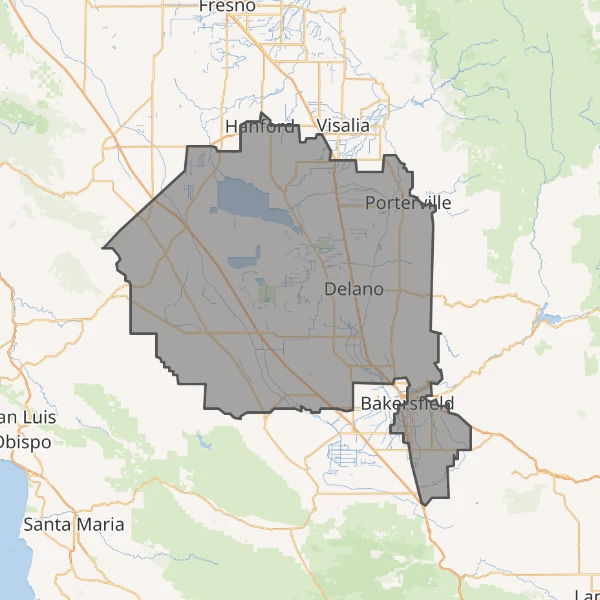
California's 22nd district leans Democratic despite its competitive nature. Although the seat is described as competitive, 2026 voter registration data for CA-22 indicates Democratic registration at 42%, Republican at 26%, and no party preference at 24% [^].
The district is considered a battleground with a slight Republican tilt. It is characterized as a battleground for the June 2 top-two primary [^]. Based on 2020 and 2024 presidential results, the Cook Partisan Voting Index for the district is R+1, meaning it is one point more Republican than the national average [^].
Current predictions favor David Valadao to advance in the primary. Polymarket currently places David Valadao as the clear favorite to advance, with approximately 82% likelihood as a CA-22 Primary Winner based on the crowd signal [^][^].

8. Which potential campaign developments or external events could significantly alter the polling gap between the leading Democratic candidates before the primary?

Campaign InfluenceStrategies regarding economic populism vs. moderate appeal influence voter preference [^]
Key District FactorsLatino voter turnout and Democratic mobilization efforts are crucial [^][^]
External Impact on VotersShifting foreign policy views and national economic conditions affect voter enthusiasm [^][^]
Candidate strategies and local mobilization are key determinants in CA-22. The polling gap between leading Democratic candidates Jasmeet Bains and Randy Villegas in California's 22nd Congressional District primary is significantly shaped by their distinct campaign strategies, such as emphasizing economic populism versus a moderate appeal, which directly impact voter preferences [^]. In this lean-Republican district, crucial factors for the primary outcome include Latino voter turnout and the overall effectiveness of Democratic mobilization efforts [^][^]. Furthermore, federal agricultural and water policies enacted by the administration could introduce additional variables into the race [^].
External events and national policies profoundly impact voter sentiment. Beyond specific campaign developments, broader external events heavily influence the primary dynamics. Shifts in Democratic foreign policy stances, particularly concerning Israel, combined with national economic conditions like gas prices and inflation, and geopolitical events such as the war in Iran, affect voter enthusiasm both nationwide and within California [^][^].
California's primary system creates unique polling uncertainties. The state's electoral process, characterized by substantial early and mail-in voting, introduces considerable uncertainty into polling. This is because late-counted ballots can diverge significantly from early returns, potentially leading to late shifts in voter preference [^][^][^][^][^].

9. How do David Valadao's and Rudy Salas' stated policy positions on key issues for Central Valley voters, such as water rights and agriculture, differ?

Valadao's Water FocusIncreasing water storage infrastructure and streamlining water operations [^]
Valadao's Agricultural FundingPrioritizes securing federal funding for agricultural programs through the Farm Bill and Appropriations Committee [^][^][^][^][^]
Salas's Water ManagementFocuses on water infrastructure investments like the Friant-Kern Canal and groundwater management, including supporting SGMA and authoring AB 453 [^][^][^][^][^]
David Valadao advocates for expanded water storage and federal agricultural funding. A dairy farmer, Valadao emphasizes the necessity of increasing water storage infrastructure and streamlining water operations in the Central Valley [^]. He also prioritizes securing federal funding for agricultural programs, with his involvement in the Farm Bill and the Appropriations Committee highlighting these financial and legislative efforts [^][^][^][^][^].
Rudy Salas prioritizes specific water infrastructure and comprehensive groundwater management. In contrast to Valadao, Salas centers his water management approach on targeted infrastructure investments, such as the Friant-Kern Canal, and comprehensive groundwater management strategies [^][^]. He supports the Sustainable Groundwater Management Act (SGMA) and previously authored legislation, AB 453, which aims to enhance local groundwater monitoring and promote sustainability efforts [^][^][^].

10. What Could Change the Odds

Key Catalysts

The California 22nd Congressional District primary election is scheduled for June 2, 2026 [^] [^] [^] . This race is considered highly competitive, with analysts rating it as a tilt Republican seat despite a Democratic voter registration advantage in the district [^][^][^]. Primary candidates for the CA-22 seat include incumbent Republican David G. Valadao and Democratic challengers Jasmeet Bains and Randy Villegas, among others [^][^][^][^].
Prediction markets are actively tracking the CA-22 race, with key catalysts including fundraising totals, party endorsements, and local polling data [^] [^] [^] . Odds & Predictions 2026">[^][^][^]. The Democratic Congressional Campaign Committee's backing of Jasmeet Bains is an example of a significant party endorsement being monitored [^][^][^]. California utilizes a top-two primary system where the two candidates receiving the most votes advance to the general election, regardless of party affiliation [^][^].

Key Dates & Catalysts

  • Expiration: June 02, 2027
  • Closes: June 02, 2027

11. Decision-Flipping Events

  • Trigger: The California 22nd Congressional District primary election is scheduled for June 2, 2026 [^] [^] [^] .
  • Trigger: This race is considered highly competitive, with analysts rating it as a tilt Republican seat despite a Democratic voter registration advantage in the district [^] [^] [^] .
  • Trigger: Primary candidates for the CA-22 seat include incumbent Republican David G.
  • Trigger: Valadao and Democratic challengers Jasmeet Bains and Randy Villegas, among others [^] [^] [^] [^] .

13. Historical Resolutions

No historical resolution data available for this series.