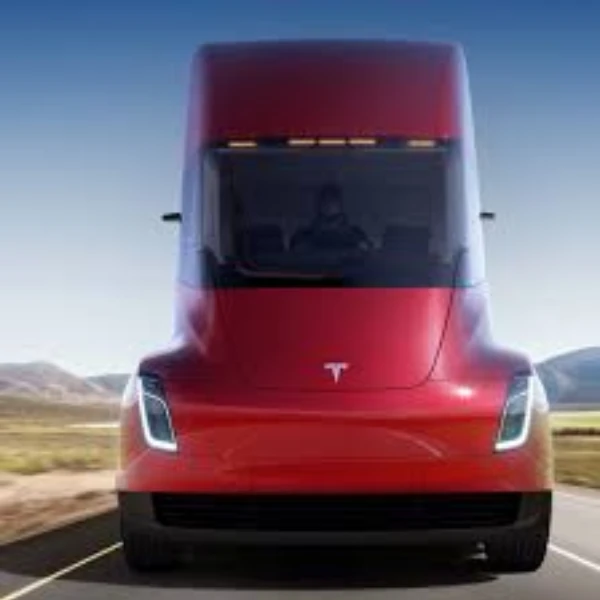
Short Answer

Both the model and the market expect Tesla to produce Above 0 Semi Trucks in a quarter in 2026, with no compelling evidence of mispricing.

1. Executive Verdict

  • Tesla Semi production in 2026 will likely face significant constraints.
  • Constraints stem from gradual ramp-up, new supply chain, and battery output.
  • Total annual 2026 production estimates range from 5,000 to 15,000 units.
  • The first Semi rolled off high-volume production on April 29, 2026.
  • Specific Semi production numbers are not expected in 2026 earnings reports.

Who Wins and Why

Outcome Market Model Why
Above 1000 60.0% 37.5% Production in 2026 will be constrained by ramp-up and battery output, but some volume is expected.
Above 5000 16.0% 8.0% Annual 2026 estimates range from 5,000 to 15,000 units, making quarterly output above 5,000 unlikely.
Above 0 97.0% 93.6% Tesla Semi production is expected in 2026, though volumes will likely be constrained.
Above 10000 8.0% 4.0% Quarterly output will fall significantly short of the theoretical quarterly run-rate of 12,500 units.
Above 15000 7.0% 2.0% Quarterly production is unlikely to exceed the annual 2026 estimate of 15,000 units.

Current Context

Tesla Semi production commenced in 2026 with an aggressive ramp-up strategy. Mass production of the Tesla Semi officially began in March 2026 [^], with the first unit rolling off the high-volume production line on April 29, 2026 [^][^][^][^][^][^][^][^][^][^][^][^][^]. The dedicated Nevada factory is engineered for an annual capacity of 50,000 units, equating to approximately 12,500 trucks per quarter once fully operational [^][^][^][^][^][^][^][^][^][^][^][^][^][^]. Tesla aims to achieve its full production ramp by the end of Q2 2026 or during the second half of 2026 [^][^][^]. Initial analyst projections for total Tesla Semi production throughout 2026 range from 5,000 to 15,000 units [^][^][^][^][^][^]. Following pilot deliveries of approximately 200 units to clients like PepsiCo starting in December 2022 [^][^][^], deliveries of mass-produced units are slated to begin in 2026 [^][^].
The Tesla Semi features advanced capabilities, impressive efficiency, and expanding infrastructure. Major orders include 370 units for WattEV, with the first 50 scheduled for delivery in 2026, and additional orders for Big F Transport (40 units) and NICA Container Freight Line (20 units) [^][^][^][^]. The vehicle is available in Standard Range (325 miles) and Long Range (500 miles) configurations [^][^][^][^][^]. Real-world tests show consumption figures ranging from 1.55 to 1.9 kWh per mile, often surpassing Tesla's estimate of under 2 kWh per mile [^][^][^]. This contributes to estimated operating costs that are 50% less per mile for energy compared to diesel trucks in California [^][^][^]. Charging is facilitated by the Megacharger network, which supports 1.2 MW ultra-fast charging, enabling a 60% range recovery in about 30 minutes, aligning with driver rest breaks [^][^][^][^][^][^][^]. Tesla plans to expand its Megacharger network to 37 locations by the second half of 2026 and 46 by early 2027 [^]. An updated design in 2025 introduced improved aerodynamics, increased payload, enhanced charging, and a 25 kW electric Power Take-Off (ePTO) system to power auxiliary equipment like refrigerated trailers, eliminating the need for separate diesel units [^][^][^][^][^][^][^]. Supply chain bottlenecks, particularly for batteries, have been addressed through vertical integration of 4680 battery cell manufacturing within the Nevada complex [^][^][^][^][^].
Experts recognize the Tesla Semi's transformative potential while noting critical adoption factors. Industry analysts generally consider the Tesla Semi a "game-changer" due to its compelling economic and performance advantages over traditional diesel trucks [^][^][^]. However, some experts emphasize that the speed of the production ramp-up and the rapid expansion of the Megacharger network are crucial for widespread market penetration [^][^]. Although early concerns were raised regarding Tesla's service and support network, the confirmed commencement of mass production and a robust order book indicate growing confidence in the Semi's commercial viability [^].

2. Market Behavior & Price Dynamics

Historical Price (Probability)

Outcome probability
Date
This prediction market has displayed a stable, sideways trend since its inception, trading within a very narrow 10-point range between 88.0% and 98.0%. The market opened at a high probability of 96.0% and quickly firmed up to 97.0%, where it has largely remained. This price action indicates that traders entered the market with a strong conviction that Tesla would achieve its production goals. The primary catalyst for the market's high valuation appears to be the news that mass production of the Tesla Semi began in March 2026, with reports of the first unit coming off the high-volume line around April 29, 2026. This development, occurring shortly after the market opened, seems to have confirmed the initial bullish sentiment, cementing the price at the upper end of its range.
The trading volume of 3,586 contracts, while not exceptionally high, suggests consistent participation and agreement among traders. The price has found a clear support level around the 96.0% opening price and has been consolidating near the 97.0% level. The lack of significant price drops or volatility, coupled with the steady price action, points to a market with a deeply entrenched belief in a positive resolution.
Overall, the chart suggests a market sentiment of near-certainty. The price has remained consistently high, reflecting the market's interpretation of production news as a strong positive signal. The sideways movement at such a high probability indicates that the market is not speculating on the outcome but rather reflecting a consensus view that Tesla's production ramp-up is on track for a successful quarter in 2026.

3. Significant Price Movements

Notable price changes detected in the chart, along with research into what caused each movement.

Outcome: Above 1000

📉 May 05, 2026: 9.0pp drop

Price decreased from 62.0% to 53.0%

What happened: The primary driver for the 9.0 percentage point drop on May 05, 2026, was likely the traditional news surrounding the commencement of Tesla Semi volume production. On April 29, 2026, reports emerged that the "first Semi" had rolled off the "high-volume line" [^][^][^]. This announcement, while marking the official start of volume production, likely tempered market expectations by emphasizing the nascent stage of the ramp-up, rather than indicating significant immediate output. This led to a reassessment by market participants who anticipated a quicker scaling, reducing confidence that any quarter in 2026 would exceed 1000 units, especially given previously stated expectations of "lower volumes in early 2026" [^][^]. Social media was not identified as a primary driver or significant contributing accelerant.

📈 April 29, 2026: 25.0pp spike

Price increased from 44.0% to 69.0%

What happened: The primary driver for the market movement was the announcement on April 29, 2026, that the first Tesla Semi had rolled off the new high-volume production line at the Nevada factory [^]. This significant development, indicating the official commencement of mass production, directly suggested Tesla was on track to achieve quarterly outputs above 1000 units [^]. While specific social media posts from key figures directly coinciding with the spike are not provided, this news rapidly spread as a viral narrative across social media platforms, acting as a contributing accelerant to the price movement.

Outcome: Above 5000

📈 April 25, 2026: 9.0pp spike

Price increased from 8.0% to 17.0%

What happened: The 9.0 percentage point spike on April 25, 2026, was primarily driven by social media activity and early reports anticipating a major production milestone for the Tesla Semi [^][^][^][^]. Although specific social media posts from key figures are not detailed in the provided research, the price movement suggests that news or strong rumors about the first Semi rolling off the high-volume production line, officially announced on April 29, 2026, circulated and were amplified days prior [^][^][^][^][^]. This pre-announcement activity, appearing to LEAD the official news, bolstered expectations for a rapid production ramp towards the Gigafactory Nevada's full capacity of 12,500 units per quarter [^][^][^][^][^][^][^][^][^]. Social media was a primary driver, accelerating the market's reaction to these positive production signals.

4. Market Data

View on Kalshi →

Contract Snapshot

This market resolves to "Yes" if Tesla Inc. reports producing above 1000 Semi Trucks in any single quarter before 2027; otherwise, it resolves to "No". The market will close and expire early if the event occurs, with a final closing deadline of January 1, 2027, at 10:00 am EST. Resolution is determined by reports from sources such as Tesla, Tesla Investor Relations, and major news outlets.

Available Contracts

Market options and current pricing

Outcome bucket Yes (price) No (price) Last trade probability
Above 0 $0.98 $0.03 97%
Above 1000 $0.60 $0.41 60%
Above 5000 $0.17 $0.84 16%
Above 10000 $0.08 $0.97 8%
Above 20000 $0.09 $0.97 8%
Above 15000 $0.07 $0.97 7%
Above 25000 $0.06 $0.98 6%

Market Discussion

The discussion centers on Tesla's ability to achieve significant Semi truck production within a single quarter, with the market indicating a 60% chance of exceeding 1000 units. Traders arguing for "Yes" are making optimistic predictions, with one user suggesting a quarterly output as high as 13,000 trucks. Conversely, arguments for "No" emphasize recent low production figures (e.g., only 200 units made recently), making such high targets seem unattainable for the current quarter, and some express frustration over perceived changes in market rules.

5. What are the primary supply chain and manufacturing bottlenecks that could affect Tesla's Semi production ramp-up in 2026?

First Semi productionApril 29, 2026 [^]
Factory capacityUp to 50,000 Class 8 battery-electric tractors per year [^][^]
Key production constraint4680 battery-cell output [^][^][^]
Tesla's Semi production ramp-up in 2026 faces several key internal challenges. Volume production for the Tesla Semi began at the Nevada high-volume line on April 29, 2026, with the factory holding capacity for up to 50,000 Class 8 battery-electric tractors annually [^][^]. However, near-term 2026 output is widely expected to be constrained by the speed of the ramp-up [^][^]. Tesla has stated that the new supply chain required for the Semi will result in very slow initial production, with an exponential ramp anticipated towards the end of 2026 and into 2027 [^][^]. This explicitly signals that 2026 quarterly production is susceptible to delays stemming from the ramp and learning curve [^][^]. Production growth for the Semi is also directly tied to Nevada's 4680 battery-cell output, making 4680 throughput an immediate candidate for a bottleneck during the ramp-up [^][^][^].
Heavy-duty charging infrastructure poses an additional external risk. A further cited ramp risk for Semi growth is the heavy-duty charging infrastructure gap [^][^]. Insufficient availability of megawatt-class public charging for heavy transport could limit fleet deployment speed, even if trucks are readily available [^][^].

6. How does the historical production ramp of the Tesla Cybertruck inform the likely trajectory for the Semi in 2026?

Cybertrucks delivered to dateFewer than 50,000 [^][^]
First Semi truck off Reno lineApril 29, 2026 [^][^]
Reno factory annual capacityUp to 50,000 trucks [^][^]
Tesla's Cybertruck production history suggests a gradual Semi ramp. The historical production ramp of the Cybertruck, which involved scaled-back output and fewer than 50,000 units delivered to date, demonstrates Tesla's capability to miss or retract production targets [^][^]. This experience sets a precedent, indicating that the Tesla Semi’s production ramp in 2026 is also likely to be gradual, with acceleration expected later in the year [^][^].
Semi production began in April 2026 at the Reno factory. The first Tesla Semi truck from the high-volume Reno production line was produced on April 29, 2026 [^][^]. This factory is designed to produce up to 50,000 trucks annually, which translates to an estimated 12,500 units per quarter at full capacity [^][^]. However, during a Q1 2026 discussion, Tesla's CEO characterized the Semi's output as an S-curve, implying a slow initial ramp before accelerating later in 2026 and into 2027 [^]. While production is anticipated in every quarter of 2026 following April, achieving high quarterly thresholds near the full run-rate early in the year is uncertain without evidence of a steady-state ramp [^][^].

7. How do Tesla's official production targets for the Semi compare with consensus analyst forecasts for the second half of 2026?

Long-term Annual CapacityUp to 50,000 units per year [^][^][^]
Long-term Quarterly CapacityApproximately 12,500 units per quarter [^][^][^]
2026 Analyst Production Estimate5,000–15,000 units (full year) [^][^]
Tesla targets substantial long-term Semi production capacity. The company has stated a long-term production goal of up to 50,000 units annually for the Semi at its high-volume factory, which translates to approximately 12,500 units per quarter once fully operational [^][^][^].
Analyst forecasts for 2026 Semi production are lower, anticipate later ramp. While Tesla's long-term capacity is significant, contemporaneous reporting suggests that the 2026 production ramp-up will accelerate toward the latter half of the year, rather than immediately reaching full-rate production [^][^][^]. The only specific numeric analyst estimate for Semi output in 2026 projects a total production and delivery range of 5,000–15,000 units for the entire year, also predicting a later ramp in production [^][^]. Importantly, there is currently no explicit consensus analyst forecast available for the second half of 2026 quarterly output split [^][^].

8. Will Tesla's Q3 and Q4 2026 earnings reports provide specific, disaggregated production numbers for the Semi?

Semi production disclosure Q3/Q4 2026Not expected to provide specific, disaggregated numbers [^][^][^]
Historical Semi reporting styleTreated as future ramp item, not unit totals [^][^][^]
Semi volume production timelineBegin or ramp in 2026 with an S-curve [^][^]
Tesla is not expected to disclose specific Semi production numbers. Tesla's Q3 and Q4 2026 earnings reports are unlikely to provide specific, disaggregated production unit numbers for the Semi [^][^][^]. Publicly available sources indicate that Tesla’s historical disclosures and earnings-related communications have consistently avoided providing quarter-by-quarter Semi production unit figures. While reports from earnings discussions suggest that Semi volume production would commence or ramp up in 2026 following an S-curve, these communications do not include specific quarter-by-quarter production unit numbers in the available sources [^][^]. Therefore, current public information does not suggest that Tesla will disclose disaggregated quarterly production numbers for the Semi in its Q3 and Q4 2026 earnings reports.
Historically, Tesla's reports use broad vehicle categories. Tesla’s production updates and disclosures have historically presented quarterly production data using broad categories, such as “Model 3/Y” and “Other models,” rather than specific vehicle types [^][^][^]. The Tesla Semi has typically been presented as a future ramp item, with reporting focusing on its developmental status, such as “Tesla Semi – Construction” or “Tooling,” instead of providing detailed unit production totals in the same manner as its passenger vehicles [^][^][^]. This established pattern reinforces the expectation that specific Semi production numbers will not be disaggregated.

9. What specific delivery commitments to major clients like WattEV or PepsiCo must Tesla meet by the end of 2026?

WattEV first Semi deliveryStarting in 2026 [^][^]
WattEV full fleet operationalEnd of 2027 [^][^]
Tesla Semi high-volume production startApril 2026 [^][^]
WattEV anticipates receiving its initial Semi deliveries in 2026 [^] [^] . While WattEV has an order for 370 Tesla Semis, only the first 50 units are scheduled for delivery in 2026. The full fleet is expected to be operational by the end of 2027, with no indication that the entire 370-unit order must be delivered by the close of 2026 [^][^].
PepsiCo lacks a specified Tesla Semi delivery commitment for 2026 [^] [^] . Although PepsiCo is identified as a primary customer with a planned delivery ramp-up into 2026, the available research does not detail a definitive number of units Tesla is committed to delivering to PepsiCo by the end of that year [^][^].
Tesla initiated high-volume Semi production in April 2026 [^] [^] . This marks the start of high-volume manufacturing for the electric truck, as reported in April 2026 [^][^].

10. What Could Change the Odds

Key Catalysts

Tesla's first Semi rolled off the high-volume production line in Reno/Sparks, Nevada on April 29, 2026, with high-volume production now underway [^] [^] . This supports that any "quarterly production" question for 2026 depends heavily on the ramp speed from Q2 onward [^][^]. A ramp cadence stated across sources is gradual early and accelerating later in 2026 [^][^].
The Tesla Semi factory is described as able to produce up to 50,000 Class 8 battery-electric tractors per year, which corresponds to ~12,500 per quarter only at full run-rate [^] . Multiple reports cite analyst expectations that first-year (2026) Semi output will be in the 5,000–15,000 total units range [^]. This implies that at least some 2026 quarters are below the ~12,500 full run-rate level, aligning with higher-volume production expected to ramp in 2026 rather than immediately at peak [^][^].

Key Dates & Catalysts

  • Expiration: January 01, 2027
  • Closes: January 01, 2027

11. Decision-Flipping Events

  • Trigger: Tesla's first Semi rolled off the high-volume production line in Reno/Sparks, Nevada on April 29, 2026, with high-volume production now underway [^] [^] .
  • Trigger: This supports that any "quarterly production" question for 2026 depends heavily on the ramp speed from Q2 onward [^] [^] .
  • Trigger: A ramp cadence stated across sources is gradual early and accelerating later in 2026 [^] [^] .
  • Trigger: The Tesla Semi factory is described as able to produce up to 50,000 Class 8 battery-electric tractors per year, which corresponds to ~12,500 per quarter only at full run-rate [^] .

13. Historical Resolutions

No historical resolution data available for this series.