
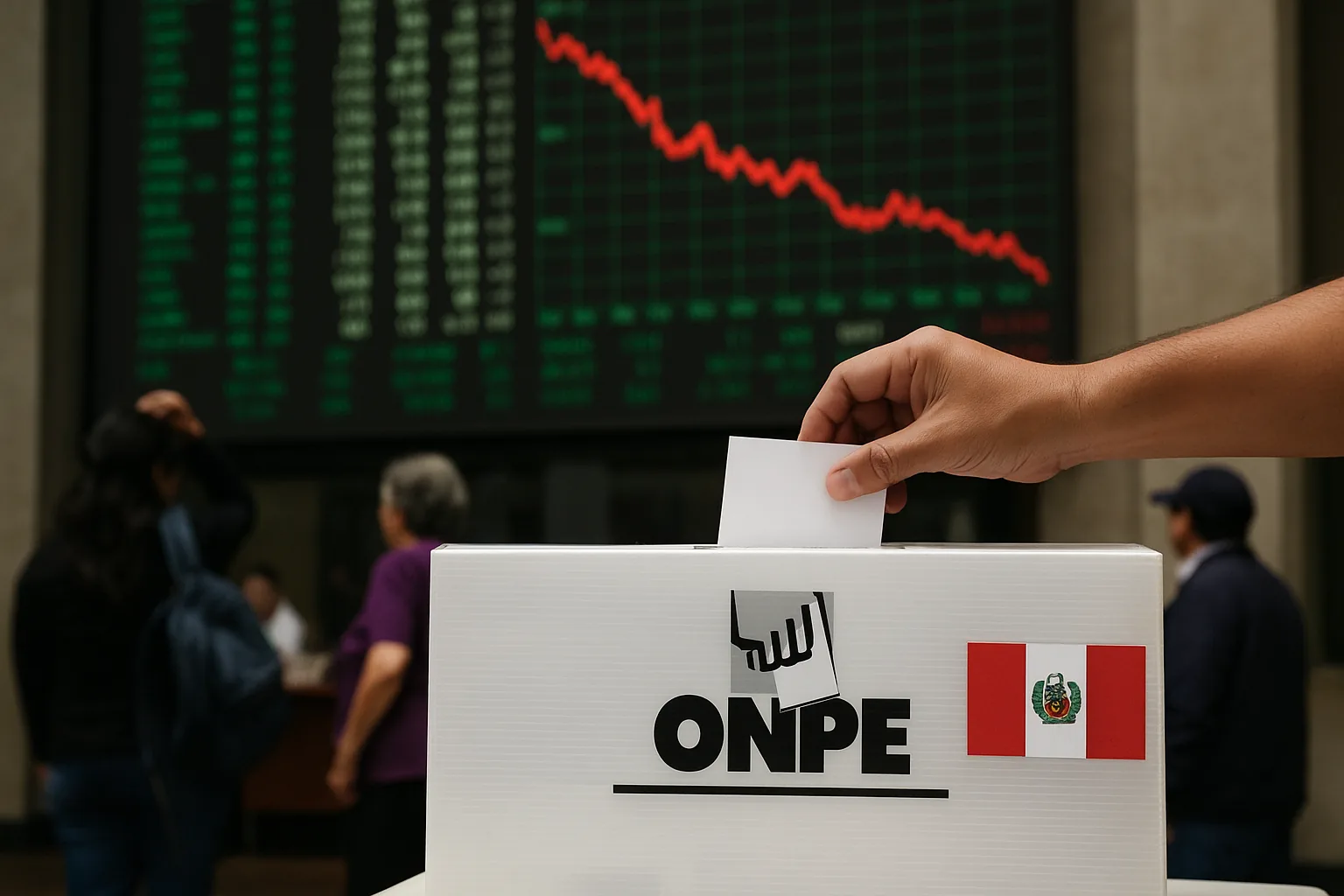
Early official results from Peru's presidential runoff on June 7 showed a statistical dead heat, prompting traders to significantly revise the odds of a victory for conservative candidate Keiko Fujimori. In Monday's session (June 08, 2026), contracts on the Kalshi exchange for Fujimori to win the presidency fell 11 percentage points, from an implied probability of 81% to 70%. The repricing reflects the exceedingly tight race, where Fujimori's narrow lead is expected to evaporate as ballots from rural areas favoring her leftist rival, Roberto Sánchez are tallied.
The probability that was shed from Fujimori's contract shifted directly to her opponent. Contracts for Roberto Sánchez to win the presidency gained 8 percentage points, rising from 21% to 29%. The high-volume move signals that while traders still view Fujimori as the more likely victor, they are now pricing in a much higher degree of uncertainty and a credible path to victory for Sánchez as the vote count continues.
Distribution Analysis
| Outcome | Current Prob | Change | Volume |
|---|---|---|---|
| Keiko Fujimori | 70% | -11.0pp | 754,093 |
| Roberto Sánchez | 29% | +8.0pp | 576,878 |
| Probabilities as of 4:00 p.m. ET, June 08, 2026. Total implied probability is 99%. |
Net: Probability shifted decisively from Keiko Fujimori to Roberto Sánchez on combined volume of over 1.3 million contracts, reflecting the tightening official vote count.
What's Driving the Shift
The significant repricing in the Peruvian election market coincides directly with the release of official results that paint a picture of a deeply divided electorate and a race that is too close to call.
Narrowing Official Count: After voting closed on Sunday, June 7, initial results from Peru's official electoral body, ONPE, gave Fujimori a lead. However, as more votes were counted, that advantage began to shrink. With over 93% of the votes tallied by Monday morning, Fujimori's lead had diminished to less than a single percentage point, at 50.2% to Sánchez's 49.8%. This trend of a narrowing lead is the primary driver behind the market's re-evaluation of her chances.
Geographic Vote Division: The vote count reflects a stark urban-rural split. Fujimori performed strongly in the capital, Lima, and other urban coastal areas, which tend to report results faster Keiko Fujimori. For instance, with 96.8% of votes counted in Lima, Fujimori was leading with 63.5%. Conversely, Sánchez has dominated in the rural and mountainous Andes regions, where the vote tallying is slower.
Prospect of Prolonged Uncertainty: The razor-thin margin has drawn comparisons to Peru's 2021 election, which took weeks to resolve. Both candidates have acknowledged the tight race, with Fujimori stating there will be "long days ahead" and Sánchez calling it a "dead heat". Electoral officials have warned that a final, official proclamation of the winner may not be possible for weeks, potentially not until mid-July, due to the processing of contested ballots and potential legal challenges. This extended timeline and potential for disputes have introduced a new layer of risk, contributing to the decline in Fujimori's previously high-flying odds.
Market Context
The market for Peru's next president, which trades on the CFTC-regulated Kalshi exchange, had priced Fujimori as a strong favorite leading into and immediately following the election, with her contract trading as high as 81¢. This initial confidence likely reflected exit polls that gave her a slight edge and her dominant performance in the Lima metropolitan area.
The 11-point drop in Monday's trading represents a market correction, aligning odds with the complex reality of the official vote count. While a 70% implied probability still makes Fujimori the clear favorite, it acknowledges a nearly one-in-three chance for Sánchez, a significant increase from the roughly one-in-five chance priced in before the official count began to tighten.
What to Watch
The key determinant for this market will be the continued release of official results from Peru's ONPE. Traders will be closely watching the tallies from remaining rural and international precincts, which are expected to favor Sánchez. The final settlement of the contract will depend on the formal proclamation by the Jurado Nacional de Elecciones (JNE), Peru's highest electoral body. Given the close margin, the process for reviewing observed or challenged ballots will be critical and could delay a definitive result for weeks.
