Short Answer

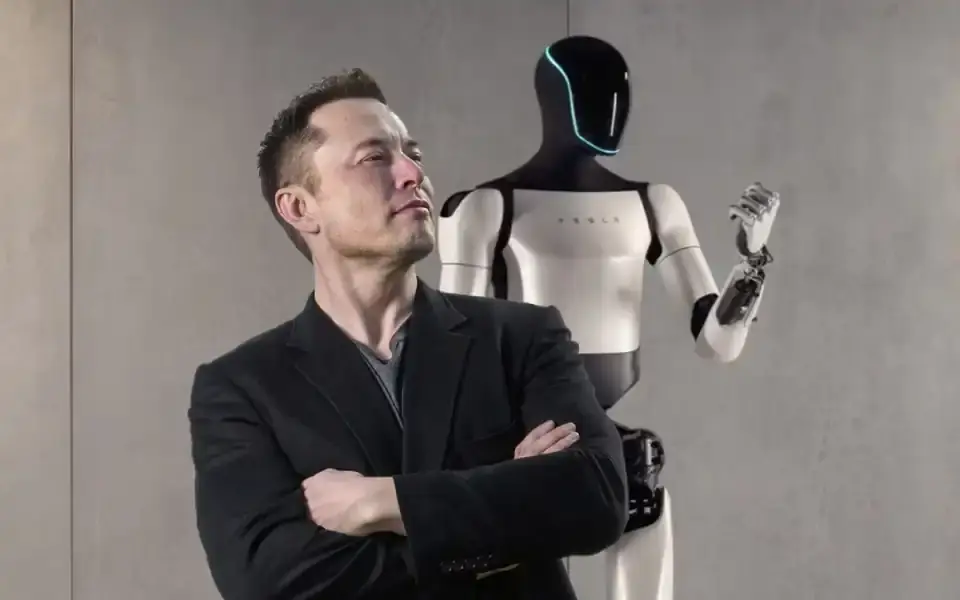
Both the model and the market expect Tesla Optimus to be released Before 2027, with no compelling evidence of mispricing.

1. Executive Verdict

  • Tesla's 2026 Optimus goals prioritize manufacturing de-risking for consumer release.
  • Optimus production is slated to begin slowly in late 2026 at Fremont.
  • Independent robotics analysts project Optimus Gen 3 consumer availability beyond 2027.
  • Current Optimus units remain restricted to internal R&D and factory data collection.
  • Tesla is repurposing a Fremont assembly line to commence low-volume Optimus production.
  • Optimus's initial production timeline reportedly shows parallels to Cybertruck's rollout.

Who Wins and Why

Outcome Market Model Why
Before 2027 16.0% 20.8% No specific research or data was provided to support this outcome.

Current Context

Tesla's Optimus Gen 3 is not yet available for public consumer sales in 2026. Low-volume production of the Optimus Generation 3 robot officially began in January 2026, with the production-ready hand system confirmed in February 2026 [^]. The Optimus V3 is expected to debut mid-2026, with large-scale production projected to commence between July and August 2026 [^]. Initial units produced in Summer 2026 will be deployed within Tesla's own factories, and limited business-to-business (B2B) sales for industrial customers may start in late 2026 [^][^][^][^][^]. Supporting this rollout, Tesla's Cortex 2.0 supercomputer, the AI training engine for Optimus, is going online in phases starting April 2026, aiming for full capacity by mid-2026 [^][^][^].
Tesla plans significant Optimus manufacturing expansion and future iterations annually. The Fremont factory is being converted from Model S/X lines to accommodate Optimus production, targeting a run rate of 1 million units per year by late 2026 [^][^][^]. A dedicated Optimus factory at Gigafactory Texas is under construction, aiming for an annual capacity of 10 million units, with high-volume production expected by Summer 2027 [^][^][^]. Tesla intends to release a new robot design every year, with Optimus 4 design completion anticipated in 2027, and application testing in external scenarios for Optimus also slated to begin that year [^][^][^]. While Elon Musk has targeted the end of 2027 for public consumer sales, most industry analysts predict widespread consumer availability between 2028 and 2029 [^][^][^].
Expert opinions vary, highlighting Optimus's potential and challenges. Elon Musk has consistently stated that Optimus will be "by far the most advanced robot in the world" and eventually surpass Tesla's car business in significance [^][^][^][^][^][^]. Angel investor Jason Calacanis echoed this sentiment after an early viewing of Optimus V3 in January 2026 [^]. Nvidia CEO Jensen Huang also forecasts that humanoid robots will become one of the largest industries globally [^]. Counterpoint Research identifies Tesla's in-house AI platform (AI5), data flywheel from Full Self-Driving (FSD) and Grok AI, and an overlapping industrial ecosystem as key competitive advantages for Optimus, enhancing its capabilities in perception, multitasking, and human-robot interaction [^][^]. The research firm predicts global humanoid robot shipments will exceed 50,000 units by 2026 and surpass 100,000 units by 2027, though manufacturing costs for Optimus V3 are expected to remain above $60,000 per unit during the second half of 2026 [^][^]. Earlier critics in 2024 viewed initial prototypes as impressive demos but far from Musk's ambitious claims, with roboticist Rodney Brooks calling the vision of general-purpose home humanoids "pure fantasy thinking" in 2025 [^][^][^]. However, recent developments, particularly with Gen 2 and Gen 3, have shown significant advancements in dexterity and balance [^].

2. Market Behavior & Price Dynamics

Historical Price (Probability)

Outcome probability
Date
This prediction market has been characterized by a stable, sideways trend, with the probability of a Tesla Optimus release before 2027 trading within a narrow range of 11.0% to 20.0%. The current price of 16.0% is very close to its starting point of 15.0%, reinforcing the lack of a clear directional bias. The market has established a clear support level around 11.0% and resistance at 20.0%. The consistently low probability suggests that traders remain skeptical of a qualifying product release happening within the specified timeframe, a sentiment that has held steady throughout the market's history.
The market's low valuation appears to be grounded in recent news developments. While reports indicate that low-volume production of Optimus has begun and a V3 debut is expected mid-year, the context clarifies the nature of this rollout. The initial units produced are slated for internal use within Tesla's own factories. The possibility of limited business-to-business sales by late 2026 is mentioned, but there is no information suggesting a wider public consumer release, which is likely what traders are pricing in. This distinction between internal deployment and a public sale keeps the perceived probability of the market resolving to "YES" suppressed.
The trading volume provides additional insight into market conviction. The total volume of 4,567 contracts suggests moderate interest. The price dip to 12.0% around June 5 was accompanied by a significant spike in volume, indicating that this downward move was driven by a temporary increase in trading activity and conviction. However, the price has since recovered to 16.0% without substantial new volume, suggesting the bearish pressure was short-lived and the market has settled back into its established range, awaiting new catalysts.

3. Market Data

View on Kalshi →

Contract Snapshot

The market resolves to "Yes" if the Tesla Optimus, or another humanoid robot, is on sale to the general public (including pre-orders) before December 31, 2026; otherwise, it resolves to "No." The outcome is verified from Tesla.com/blog. The market closes by December 30, 2026, at 11:59 PM EST if the event doesn't occur, with payouts projected 1 hour after closing.

Available Contracts

Market options and current pricing

Outcome bucket Yes (price) No (price) Last trade probability
Before 2027 $0.20 $0.83 16%

Market Discussion

Traders are actively debating whether Tesla Optimus will be "on sale to the general public" by December 31, 2026, with a key clarification stating that pre-orders qualify as being "on sale." Arguments for 'Yes' include the need for Tesla to accelerate to compete with China, while 'No' arguments raise questions about B2B pre-orders and the historical gap between Tesla pre-orders and actual product deliveries. Despite some optimistic individual posts, the market currently shows a strong consensus leaning towards 'No' with 83% odds.

4. What are the key production and manufacturing milestones Tesla must achieve in 2026 for an Optimus consumer release to be feasible?

Fremont Optimus production startLate July/August 2026 [^]
Fremont 1st-gen production capacity1 million robots/year [^]
Gen 3 hands autonomous deploymentQ2 2026 [^]
Tesla's 2026 Optimus goals prioritize manufacturing de-risking for consumer release. With consumer availability targeted for late 2027, 2026 is dedicated to proving manufacturing processes and ramping up capabilities [^]. Tesla plans to initiate Optimus production in Fremont around late July/August 2026, which entails converting existing Model S/X lines and installing new infrastructure for robotics [^]. This transformation establishes Fremont as a first-generation robotics line with an approximate annual capacity of 1 million robots [^]. Simultaneously, Gigafactory Texas is being prepared for a second-generation line, aiming for a long-term annual capacity of approximately 10 million robots [^].
Operational validation and clear consumer release criteria are crucial for feasibility. A decisive milestone in 2026 involves Gen 3 hands beginning 24/7 autonomous industrial shift deployments in Q2 2026 across both the Fremont and Giga Texas facilities [^]. This transition to continuous operation will demonstrate improving reliability and task-capability, essential steps before any consumer market entry [^]. For a consumer release to be deemed feasible, it requires availability for purchase by the general public through an official Tesla channel with live checkout or a paid preorder/deposit, explicitly excluding internal factory deployments or partner/enterprise pilots [^].

5. What is the official product roadmap for Optimus's public release, based on statements from Tesla and Elon Musk during 2026?

Initial Production StartLate July or August 2026 (Fremont) [^][^][^][^][^]
High-Volume Production TargetSummer 2027 (Giga Texas) [^]
Broad Public AvailabilitySummer 2027 [^][^][^]
Optimus production is slated to begin slowly in late 2026. Tesla's official product roadmap outlines an initial slow production ramp at the Fremont site, with Elon Musk indicating a start in late July or August 2026 [^][^][^]. Musk described this initial output as "quite slow" [^][^][^], a point corroborated by a March 2026 interview summary detailing the Optimus Gen 3 roadmap, which includes a slow ramp commencing "this summer" [^][^].
High-volume production and broad public availability are targeted for summer 2027. Tesla aims for significant scaling of Optimus during this period [^][^][^]. To facilitate this expansion, Tesla is constructing a second Optimus factory at Giga Texas, with production there also projected to begin around summer 2027 [^].
Consequently, 2026 serves as an initial production proving and ramp year. This phased manufacturing approach, commencing at Fremont in 2026 and expanding to Giga Texas, signifies that high-volume output or widespread public access is not anticipated in 2026 [^][^][^]. Instead, the company anticipates achieving substantial scaling and broad public availability primarily in summer 2027 [^][^][^].

6. How does the projected Optimus development and production timeline compare to the historical rollout of Tesla's Cybertruck?

Optimus Gen 3 Production StartLate July or August 2026 (Fremont factory) [^][^][^]
Cybertruck Pilot Production StartJuly 2023 [^][^][^]
Optimus 2025 Production Target10,000 units (missed) [^]
Optimus's initial production timeline shows parallels to the Cybertruck's rollout. The Optimus robot's Gen 3 production is anticipated to begin in late July or August 2026 at the Fremont factory, following a May 2026 shutdown and conversion of existing Model S/X production lines [^][^][^]. This schedule can be compared to the Tesla Cybertruck, which commenced pilot production in July 2023 and had its official delivery event on November 30, 2023 [^][^][^].
Optimus's production ramp is expected to be slow and unpredictable. Elon Musk has described the initial phase of Optimus production as "agonizingly slow" and "impossible to predict," drawing comparisons to the Cybertruck's multi-year S-curve volume ramp [^][^][^]. Earlier targets for Optimus, such as achieving 10,000 units by the end of 2025, were not met [^]. Current commitments instead focus on initiating "low-volume" production in 2026, with high-volume scaling postponed until 2027 at a dedicated Giga Texas factory [^][^][^].

7. What publicly available data, such as supply chain orders or job postings for Tesla's robotics division, can be used to track Optimus production progress through 2026?

Fremont line conversion for Optimus assemblyJune 2026 [^][^][^][^][^]
Optimus pilot production startJuly/August 2026 [^][^][^][^][^]
Gen 3 technology deployment indicator50-actuator hand trials [^][^][^]
Tracking Tesla Optimus production progress through 2026 relies on indirect public indicators. Tesla does not publicly disclose specific Optimus unit production counts, making direct tracking challenging [^][^][^]. A key indicator is the official conversion of Tesla's Fremont Model S/X production line for Optimus assembly by June 2026, with pilot production scheduled to commence in July/August 2026 [^][^][^][^][^]. This significant factory retooling provides a tangible timeline for initial production phases.
Further progress can be observed through other indirect methods and facility development. Monitoring deployments of Gen 3 technology, such as 50-actuator hand trials, offers insight into technological readiness, alongside reviewing executive commentary on the robot's internal factory utility [^][^][^]. Additionally, construction progress for the dedicated, high-volume Optimus factory at the Giga Texas North Campus is visible through observer drone footage and official milestones, indicating long-term production scalability [^].

8. What do independent robotics analysts and supply chain experts project for the Optimus Gen 3 consumer release, and what specific bottlenecks inform their post-2026 forecasts?

Consumer purchase probability (by June 30, 2026)6% (January 2026 prediction market) [^]
Initial commercial sale price$75,000 to $150,000 per unit (late 2026) [^][^][^][^][^][^][^]
Current manufacturing cost$50,000 to $100,000 per unit [^][^][^][^][^]
Independent robotics analysts project Optimus Gen 3 consumer availability beyond 2027. Despite Elon Musk's goal of consumer availability by the end of 2027, independent robotics and supply chain analysts widely expect a consumer release of Tesla Optimus Gen 3 to be improbable before 2027 [^][^][^][^][^][^]. Formal Optimus V3 production is scheduled for summer 2026, with high-volume production slated for 2027. Initial commercial sales to businesses are anticipated in late 2026, with unit prices projected to range from $75,000 to $150,000 [^][^][^][^][^][^][^]. As of January 2026, a prediction market indicated only a 6% probability of consumer purchase by June 30, 2026 [^].
Hardware limitations and manufacturing complexity significantly contribute to delayed forecasts. Post-2026 forecasts are informed by persistent hardware challenges, including overheating in joint motors, limited transmission lifespan, inadequate battery endurance, and insufficient load capacity in the dexterous hands [^][^][^]. Manufacturing complexity and scalability also pose substantial issues, as humanoid robots require proprietary components, which elevates costs and complicates production scaling. Current manufacturing costs are estimated between $50,000 and $100,000 per unit, substantially exceeding Musk's target of $20,000 to $30,000, with costs projected to remain above $60,000 until production volumes notably increase in late 2026 [^][^][^][^][^][^][^]. Tesla is effectively establishing the entire supply chain from its inception, leading to a slow production ramp-up [^][^][^][^][^].
AI autonomy, supply chain issues, and missed deadlines further compound development challenges. The robots are still primarily in the research and development phase, not yet performing "useful work" due to ongoing challenges in AI autonomy and software development [^][^][^]. Achieving AI autonomy for general-purpose tasks remains an industry-wide hurdle [^]. Supply chain delays, particularly concerning Samsung's 2-nanometer process for Tesla's AI6 chip and persistent rare earth disruptions, could push the mass production of Gen 3 to late 2027 [^][^][^]. Historical data reveals that all major Optimus timelines announced since 2022 have been missed, and the departure of Milan Kovac, the head of the Optimus program, in June 2025, further suggests internal difficulties [^][^][^][^][^][^].

9. What Could Change the Odds

Key Catalysts

Tesla has not yet released the Optimus humanoid robot to the general public, with all current units restricted to internal R&D and factory data collection tasks at Tesla facilities in Fremont and Giga Texas [^] [^] [^] . Price, Pre-Order & Timeline">[^][^]. However, Tesla is currently repurposing the Fremont Model S and Model X assembly line to commence low-volume production of the Optimus Gen 3 robot, with manufacturing expected to begin around late July or August 2026 [^][^][^].
The full public reveal of the Optimus Gen 3 robot has faced multiple delays, now anticipated for late summer 2026. This timing aims to align the unveiling closer to the actual start of production to minimize the risk of competitors replicating Tesla's technology [^][^][^][^]. Prediction markets indicate a high unlikelihood of a general consumer release of Optimus by the end of 2026, with most bets currently favoring a 'No' outcome regarding commercial availability to the public within this calendar year [^][^][^][^]. CEO Elon Musk has stated that Tesla Inc. (TSLA) will probably start selling its Optimus robots to the public by the end of 2027 [^].

Key Dates & Catalysts

  • Expiration: December 31, 2026
  • Closes: December 31, 2026

10. Decision-Flipping Events

  • Trigger: Tesla has not yet released the Optimus humanoid robot to the general public, with all current units restricted to internal R&D and factory data collection tasks at Tesla facilities in Fremont and Giga Texas [^] [^] [^] .
  • Trigger: However, Tesla is currently repurposing the Fremont Model S and Model X assembly line to commence low-volume production of the Optimus Gen 3 robot, with manufacturing expected to begin around late July or August 2026 [^] [^] [^] .
  • Trigger: The full public reveal of the Optimus Gen 3 robot has faced multiple delays, now anticipated for late summer 2026.
  • Trigger: This timing aims to align the unveiling closer to the actual start of production to minimize the risk of competitors replicating Tesla's technology [^] [^] [^] [^] .

12. Historical Resolutions

No historical resolution data available for this series.