Short Answer

The model assigns meaningfully higher odds than the market for the 'Yes' outcome regarding Trump ordering more tariffs in May 2026, with its probability at 67.3% compared to the market's 56.0%.

1. Executive Verdict

  • USTR hearings in early May 2026 did not immediately trigger new tariffs.
  • Administration's tariff strategy pivoted after a February 20, 2026 Supreme Court ruling.
  • EU diplomacy in May 2026 delayed threatened car tariffs to July 4.
  • USTR scheduled public Section 301 hearings for May 5–8, 2026.
  • Section 301 and 232 tariff processes utilize distinct procedures and bodies.

Who Wins and Why

Outcome Market Model Why
Yes 56.0% 67.3% Trump's past policies indicate a strong preference for using tariffs as a trade tool.

Current Context

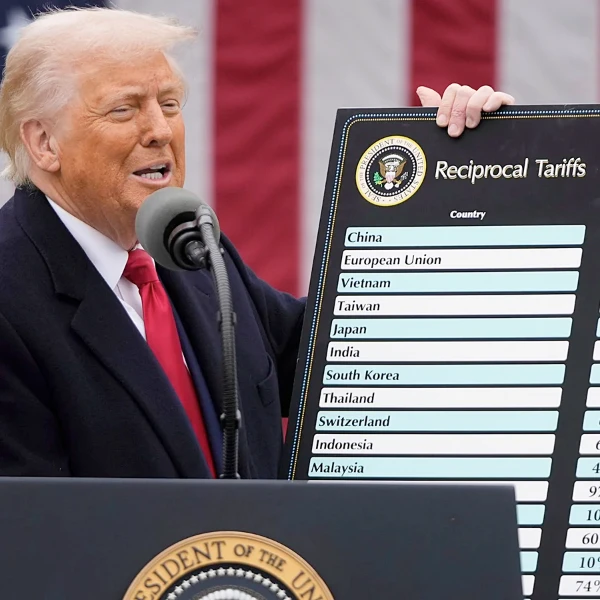
The administration actively pursued new tariffs and threatened escalations in May 2026. The United States Trade Representative (USTR) scheduled public hearings for May 5–8, 2026, to investigate "structural excess capacity" in 16 economies under Section 301, signaling an active pathway for potential additional tariff remedies after these proceedings [^][^]. Reports in May 2026 also stated the administration was planning new “Plan B” tariffs under Section 301. These tariffs were described as hard to overturn following a Supreme Court setback on earlier broad tariffs and were expected to lead to more price pressure [^][^]. Separately, early May 2026 coverage indicated plans to raise EU car tariffs, with a July 4 deadline set for EU compliance to avoid higher tariffs, suggesting that tariff increases were being used as leverage for further action [^][^][^].
Ongoing tariff adjustments and market uncertainty characterized May 2026. Sectoral tariff changes were evident with modified Section 232 metals tariff rules, effective April 6, 2026, imposing 50% tariffs on certain semi-finished products and 25% on certain derivative products [^][^]. This demonstrated continuous tariff activity during the month. Amidst these developments, a prediction market (Polymarket) tracking the likelihood of a US-China tariff agreement by May 31, 2026, showed a crowd probability of approximately 42% for "Yes," indicating that traders perceived meaningful uncertainty about tariff outcomes through late May [^].

2. Market Behavior & Price Dynamics

Historical Price (Probability)

Outcome probability
Date
This prediction market has exhibited a volatile but ultimately sideways trend, trading within a range of 43.0% and 85.0% before settling near its starting price. The chart is defined by two major, news-driven price movements in May 2026. On May 1, the probability spiked 27 percentage points, from 57.0% to a peak of 84.0%, after a statement was released that tariffs on EU vehicles would increase "next week." However, this sentiment reversed sharply on May 7, when the price dropped 19 percentage points. This drop was a reaction to a subsequent announcement which declared a July 4, 2026 deadline for EU compliance, effectively pushing the timeline for tariff implementation beyond the market's May resolution date.
The price action suggests a market highly sensitive to specific timelines. The high of 85.0% acts as a clear resistance level, established during peak optimism for a May tariff order. The low of 43.0% has served as a support level. Volume appears to have been concentrated around the major news events, indicating strong conviction during those periods of high volatility. Currently, the price has stabilized at 56.0%, suggesting traders see the outcome as slightly more likely than not. This reflects a tension between the administration's active pursuit of new tariff pathways, such as the scheduled USTR hearings, and the announced delay in enforcement until after May. The market sentiment indicates that while the threat of tariffs is credible, their immediate implementation within the required timeframe is now viewed with considerable uncertainty.

3. Significant Price Movements

Notable price changes detected in the chart, along with research into what caused each movement.

📉 May 07, 2026: 19.0pp drop

Price decreased from 78.0% to 59.0%

Outcome: Yes

What happened: The primary driver of the 19.0 percentage point drop was Donald J. Trump's announcement on May 7, 2026, which coincided with the market movement [^][^]. Trump declared a July 4, 2026 deadline for the EU to comply, warning that tariffs would "jump to much higher levels" if the agreement was not met [^][^]. This indicated that significant additional tariff orders would likely occur after May 2026, directly decreasing the "Yes" outcome's probability for tariffs in May [^][^]. While Trump uses social media for policy announcements [^], this policy decision was primarily reported through traditional news outlets, indicating social media was not the primary confirmed driver for this specific event based on available information.

📈 May 01, 2026: 27.0pp spike

Price increased from 57.0% to 84.0%

Outcome: Yes

What happened: The primary driver of the prediction market price spike was former President Trump's announcement on Truth Social on May 1, 2026, stating that tariffs on EU cars and trucks would increase to 25% “next week” (mid/late May 2026) [^][^]. This direct statement from a key figure, made precisely on the day of the market movement, explicitly addressed the market's question regarding tariffs in May 2026 [^][^]. CNBC also reported the White House confirmed these changes would be made under Section 232, further reinforcing the news [^]. Social media activity, specifically Trump's post, was a primary driver, directly initiating the rapid repricing of the "Yes" outcome.

4. Market Data

View on Kalshi →

Contract Snapshot

This market resolves to YES if Donald Trump issues an executive action (e.g., order, proclamation, memorandum) in May 2026 that imposes new or increased tariffs, specifies an effective date in May 2026, and is publicly announced or documented by sources like the White House or Federal Register before expiration. Otherwise, it resolves to NO.

The market opens on May 1, 2026, at 10:00 am EDT, and will close early if a qualifying action occurs; otherwise, it closes on May 31, 2026, at 11:59 pm EDT. Trading is prohibited for individuals employed by source agencies or those possessing material, non-public information.

Available Contracts

Market options and current pricing

Outcome bucket Yes (price) No (price) Last trade probability
Yes $0.75 $0.45 56%

Market Discussion

On May 1, 2026, Trump announced plans to increase tariffs on EU cars and trucks to 25% starting "next week," an action consistent with the 'Yes' outcome for May 2026 markets [^]. Prediction markets, including one with a 'Yes' contract priced at 74¢, reflected strong expectations for new tariffs [^]. Following a Supreme Court ruling, market sentiment reportedly increased, with traders raising the probability of additional tariffs to 82.6% [^].

5. What specific outcomes from the USTR's Section 301 hearings in early May 2026 could trigger an immediate new tariff order?

Immediate new tariffs from May 2026 hearingsNot expected [^][^][^][^][^]
Hearings for structural excess capacity investigationMay 5-8, 2026 [^][^][^]
Target date for new tariff proposals/determinationsAround July 24, 2026 [^][^][^]
Early May 2026 USTR hearings did not trigger immediate new tariffs. The Section 301 hearings conducted by the USTR in early May 2026 did not identify specific outcomes that would lead to an immediate new tariff order. These proceedings were primarily focused on reviewing and determining the continuation of existing tariffs, rather than initiating the immediate imposition of new ones [^][^][^][^][^].
New investigations for specific practices could lead to tariffs in July. However, separate public hearings for new Section 301 investigations were held concerning structural excess capacity from May 5 to May 8, 2026 [^][^][^], and forced labor practices from April 28 to April 29, 2026 [^][^]. For these new inquiries, the USTR has an unofficial target date of approximately July 24, 2026, for completing the investigations and issuing determinations and proposals for remedial actions, which could encompass new tariffs [^][^][^].
Any new tariff orders are expected by late July. Consequently, any new tariff orders resulting from these new Section 301 investigations would likely be announced around the July 24, 2026, timeframe, consistent with established procedural steps, rather than immediately following the May hearings [^]. While the current administration has expressed a strong intent to utilize Section 301 for imposing tariffs, this intent is subject to established procedural timelines [^][^][^][^][^].

6. What legal groundwork underpins the Trump administration's 'Plan B' tariffs following its recent Supreme Court setback?

Supreme Court IEEPA Tariff RulingFebruary 20, 2026 [^]
Initial Section 122 Surcharge10% [^][^]
USTR Section 301 HearingsMay 5-8, 2026 [^][^][^]
Following a Supreme Court setback, the administration's tariff strategy pivoted. Following a Supreme Court ruling on February 20, 2026, which terminated tariffs previously based on the International Emergency Economic Powers Act (IEEPA), the Trump administration outlined a new 'Plan B' for imposing tariffs [^][^]. This revised strategy initially relies on Section 122 of the Trade Act of 1974 to implement a temporary import surcharge [^][^][^][^][^]. The proposed surcharge is reported to commence at 10% and could increase to the 15% statutory maximum [^][^].
For sustained tariff imposition, the administration plans Section 301 investigations. The administration plans Section 301 investigations and administrative processes as a longer-running legal mechanism for imposing tariffs [^]. Consistent with this approach, the United States Trade Representative (USTR) held public hearings from May 5-8, 2026 [^][^][^]. These hearings specifically addressed Section 301 investigations into structural excess capacity [^][^][^].

7. How does the process for levying tariffs under Section 301 compare to the process under Section 232 in May 2026?

Section 301 AdministrationUSTR (public hearings/comments, potential exclusions) [^][^]
Section 232 Investigation Report TimelineCommerce has 270 days to prepare a report to the President [^]
Market "Yes" ConditionAny qualifying Trump executive action imposing new or increased tariffs with an effective date in May 2026, not specific statutory authority [^]
Section 301 and 232 tariff processes have distinct procedures and bodies. The processes for levying tariffs under Section 301 and Section 232 differ significantly in their administrative bodies and procedural steps, though both mechanisms can result in new or increased tariffs [^][^][^][^][^][^]. Section 301 involves an inter-agency Section 301 Committee-led hearing and public comment workflow, administered by the Office of the United States Trade Representative (USTR). In contrast, Section 232 entails a Commerce investigation and report timeline that culminates in a presidential decision regarding import adjustments [^][^][^][^][^][^].
Section 301 tariffs follow a USTR-led public engagement process. Under Section 301, the USTR is responsible for the overall administration of the process, which includes organizing public hearings, establishing dockets for written comments, and inviting submissions [^][^][^]. This framework is particularly relevant for investigations related to structural excess capacity and production in 2026. Furthermore, actions initiated under Section 301 can also involve processes for potential tariff exclusions [^].
Section 232 tariffs stem from Commerce national-security investigations and presidential decisions. Conversely, Section 232 mandates that the Department of Commerce promptly initiate an investigation, with a 270-day period to submit a report to the President [^]. Should the Commerce investigation yield an affirmative finding, the President then has 90 days to decide on import adjustments, such as imposing tariffs or quotas [^]. These Section 232 actions are based on Commerce's national-security findings and a subsequent presidential decision period that can lead to tariff proclamations [^][^][^]. Notably, the May 2026 tariff prediction market's "Yes" condition is satisfied by any qualifying executive action that imposes new or increased tariffs with an effective date in May 2026, irrespective of whether the authority originates from Section 301 or Section 232 [^].

8. What public records and testimony will be available from the USTR's Section 301 public hearings from May 5-8, 2026?

Hearing DatesMay 5-8, 2026 [^][^][^][^]
Estimated WitnessesApproximately 150 [^][^][^]
Economies Under Investigation16 [^][^]
The United States Trade Representative's (USTR) Section 301 public hearings will occur May 5-8, 2026. These hearings are scheduled to take place at the USITC main hearing room [^][^][^][^][^][^]. Approximately 150 witnesses are expected to provide testimony, representing companies, associations, and governments [^][^][^]. It has been confirmed that no video or livestream of the proceedings will be permitted [^][^][^][^].
Transcripts and public records will be accessible following the hearings. After the hearings conclude, a full transcript will be made available on ustr.gov [^][^][^][^]. Public records, including written comments and hearing requests, can be accessed via dockets USTR-2026-0067 and USTR-2026-0068 at https://comments.ustr.gov/s/ [^][^][^]. Additionally, post-hearing rebuttals, which are limited to addressing or supplementing prior testimony, are due around May 15, 2026 [^][^][^][^]. The Section 301 investigations cover 16 economies, including China, the EU, India, Japan, and Mexico [^][^].

9. What diplomatic responses from the European Union in May 2026 could influence the timing of Trump's threatened car tariffs?

New Tariff DeadlineJuly 4, 2026 [^][^][^][^]
Next Trilogue TalksMay 19 in Strasbourg [^][^]
Tariff Threshold for SuspensionAbove 15% [^][^][^]
EU diplomacy in May 2026 delayed car tariffs to July 4. The European Union's diplomatic efforts in May 2026 aimed to influence the timing of Trump's threatened car tariffs through legislative actions to ratify a trade agreement and public statements of readiness [^][^][^][^][^][^][^][^][^][^]. These actions resulted in a delay to the immediate tariff threat, establishing a new deadline of July 4, 2026 [^][^][^][^].
Trilogue negotiations advanced the Turnberry Agreement towards ratification. Negotiators from the European Parliament, Commission, and member states are engaged in "trilogue negotiations" to implement the Turnberry Agreement [^][^][^][^]. A second round of these discussions concluded in early May, with the subsequent round scheduled for May 19 in Strasbourg, reporting progress on safeguard mechanisms and regulatory review [^][^]. Ratification by the July 4 deadline is considered essential to avoid tariffs [^][^][^][^][^]. The agreement contains clauses allowing for suspension if the U.S. imposes tariffs above 15% or new taxes, and a "sunrise clause" making EU import duty reductions conditional on Washington upholding its commitments [^][^][^].
EU officials confirmed readiness for tariffs, emphasizing open options. European Commission President Ursula von der Leyen and other EU officials have publicly affirmed their dedication to the transatlantic trade relationship while also stating that the EU is "prepared for every scenario" and will "keep our options open" to safeguard its interests if the U.S. takes measures inconsistent with the joint statement [^][^][^][^][^][^]. Potential retaliatory measures include counter-tariffs on U.S. goods, trade defense instruments, and World Trade Organization dispute settlement [^]. The European Commission maintains it is implementing the Turnberry deal in line with standard legislative practice and is informing the U.S. administration to counter accusations of slow implementation [^][^][^].

10. What Could Change the Odds

Key Catalysts

The U.S. Trade Representative (USTR) scheduled public Section 301 hearings regarding structural excess capacity for May 5–8, 2026 [^][^][^]. This period in May is considered a procedural “catalyst window” during which additional tariff remedies can be considered after the record is built, supporting the expectation that Trump could order or authorize more tariffs in May 2026 [^][^][^].
These hearings are explicitly tied to Section 301 investigations into 16 economies, which were initiated in March 2026 [^] [^] . This connection establishes a concrete May timeline for potential tariff outcomes [^][^].
A Polymarket event related to a broad China “200% or greater” tariff is priced around an ongoing May-31 (2025) resolution date [^] . Predictio... 2026 | Polymarket">[^]. However, this event is not a May-2026 tariff-order prediction and is therefore not strong evidence for May 2026 tariff orders [^].

Key Dates & Catalysts

  • Expiration: June 08, 2026
  • Closes: June 01, 2026

11. Decision-Flipping Events

  • Trigger: The U.S.
  • Trigger: Trade Representative (USTR) scheduled public Section 301 hearings regarding structural excess capacity for May 5–8, 2026 [^] [^] [^] .
  • Trigger: This period in May is considered a procedural “catalyst window” during which additional tariff remedies can be considered after the record is built, supporting the expectation that Trump could order or authorize more tariffs in May 2026 [^] [^] [^] .
  • Trigger: These hearings are explicitly tied to Section 301 investigations into 16 economies, which were initiated in March 2026 [^] [^] .

13. Historical Resolutions

Historical Resolutions: 2 markets in this series

Outcomes: 1 resolved YES, 1 resolved NO

Recent resolutions:

  • KXNEWTARIFFS-26-MAY01: YES (Apr 09, 2026)
  • KXNEWTARIFFS-26APR01: NO (Apr 01, 2026)