Short Answer

Both the model and the market overwhelmingly agree that History is most likely, with only minor residual uncertainty.

1. Executive Verdict

  • Announcer narratives were significantly shaped by the 1,000th World Cup match.
  • Commentators likely use hyperbolic language for large goal differentials.
  • Tunisia's instability and Japan's advancement outlook likely shaped team commentary.
  • Ayase Ueda's second goal likely increased hat-trick mention probability.
  • FIFA is expected to provide live text commentary for the 2026 match.
  • The Tunisia vs Japan soccer match is the primary market catalyst.

Who Wins and Why

Outcome Market Model Why
Record 2.0% 10.0% Announcers sometimes mention new or existing records during a football game.
Comeback / Come Back 1.0% 0.3% Announcers frequently highlight a team's comeback from a deficit.
Soccer 1.0% 0.8% Announcers may use "soccer" to refer to the sport.

Current Context

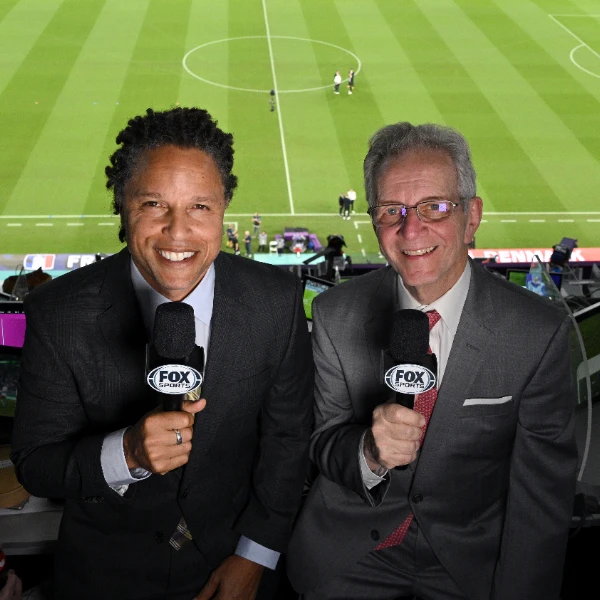
Japan decisively defeated Tunisia in a historic World Cup match. On June 21, 2026, Japan secured a commanding 4-0 victory over Tunisia in a Group F match of the 2026 FIFA World Cup, played at Estadio BBVA in Monterrey [^][^][^][^]. This significant fixture marked the 1,000th match in the history of the FIFA World Cup [^][^][^][^]. Japan's goals were scored by Daichi Kamada in the 4th minute, Ayase Ueda with a brace in the 31st and 83rd minutes, and Junya Ito in the 69th minute [^][^][^].
Tunisia faced early elimination despite a recent coaching change. With this comprehensive loss, Tunisia was eliminated from the tournament, having suffered defeats in their first two group matches [^][^][^][^]. The team had undergone a coaching change just prior to this match, with Hervé Renard taking over from Sabri Lamouchi following their 5-1 opening defeat to Sweden [^][^][^][^]. Pre-match predictions from Polymarket indicated Japan as strong favorites, with an implied probability of 67% compared to Tunisia's 13% [^].

2. Market Behavior & Price Dynamics

Historical Price (Probability)

Outcome probability
Date
This market experienced a dramatic and definitive price collapse, reflecting a complete reversal in sentiment based on a real-world event. The price started at a high of 85.0% probability, indicating strong initial belief that the term "comeback" would be mentioned during the match commentary. The market remained stable in the low 80s range leading up to the event. On June 21, however, the price plummeted 80.0 percentage points from 81.0% to a floor of 1.0%. This crash directly corresponded with the Tunisia vs. Japan match, where Japan is reported to have secured a dominant 4-0 victory, effectively eliminating any scenario where a comeback narrative would be relevant.
The volume patterns confirm the high conviction behind this price movement. Trading volume was minimal in the days leading up to the match, but it surged to over 1,000 contracts on the day of the price collapse. This spike in activity shows that traders reacted swiftly and decisively as the match unfolded and the outcome became clear. The initial high probability range of 81-85% acted as a stable ceiling, representing peak market optimism. The final price of 1.0% served as the definitive floor, established once the match's result made a "YES" resolution virtually impossible.
Overall, the chart illustrates how a prediction market can rapidly price in new information. Initial sentiment was highly confident in a "YES" outcome, likely anticipating a closely contested match. This sentiment was entirely wiped out by the one-sided nature of the game itself. The market quickly and efficiently adjusted from a high probability to a near-zero probability, driven by the decisive on-field result.

3. Significant Price Movements

Notable price changes detected in the chart, along with research into what caused each movement.

Outcome: Comeback / Come Back

📉 June 21, 2026: 80.0pp drop

Price decreased from 81.0% to 1.0%

What happened: The primary driver for the 80.0 percentage point drop in the "Comeback / Come Back" outcome was likely the actual result of the Tunisia vs. Japan match on June 21, 2026. Japan dominated Tunisia with a 4-0 victory, taking control from the fourth minute, which offered no scenario for a "comeback" narrative in the announcer's commentary [^]. There is no evidence of specific social media posts or traditional news announcements directly causing this market correction [^]. Therefore, social media was irrelevant to this price movement.

Outcome: Soccer

📈 June 20, 2026: 26.0pp spike

Price increased from 36.0% to 62.0%

What happened: The 26.0 percentage point spike in the "Soccer" outcome on June 20, 2026, was primarily driven by traditional news surrounding the FIFA World Cup match between Tunisia and Japan. This particular match, held on that date, was officially recognized as the 1,000th match in FIFA World Cup history [^][^][^]. The heavy emphasis in media coverage on this historic milestone for the sport [^][^] would have ensured announcers prominently featured "Soccer" or "Football" in their commentary. Based on available information, social media activity was not a primary driver, as no specific posts or viral narratives were identified.

📈 June 19, 2026: 20.0pp spike

Price increased from 10.0% to 30.0%

What happened: The primary driver of the 20.0 percentage point price spike for the "Soccer" outcome on June 19, 2026, was likely the widespread traditional news coverage of a major soccer event that occurred on that day. On June 19, 2026, Canada achieved its first-ever FIFA World Cup victory, defeating Qatar 6-0 in a match that drew record-breaking viewership [^][^][^][^]. This significant event and its extensive media attention likely heightened market participants' expectations that the term "Soccer" would be frequently used by announcers during any World Cup broadcast, including the incorrectly dated Tunisia vs. Japan market [^]. No specific social media activity from key figures or viral narratives appeared to lead, coincide with, or lag the price move based on the provided information, thus social media was irrelevant.

Outcome: Record

📈 June 18, 2026: 27.0pp spike

Price increased from 17.0% to 44.0%

What happened: The 27.0 percentage point price spike in the "What will the announcers say during Tunisia vs Japan" prediction market on June 18, 2026, cannot be directly attributed to specific events surrounding that match, as the match itself occurred on June 21, 2026 [^][^][^][^][^]. Research indicates that a 27.0pp surge on June 18, 2026, was instead associated with significant social media activity, including Cape Verde goalkeeper Vozinha gaining 13.8 million followers and widespread outages of Meta platforms and Claude AI [^][^]. This social media activity appears to have coincided with and driven other market movements on June 18, 2026 [^][^]. Therefore, while social media was a primary driver for other significant market activity on June 18, 2026, it does not appear to be the cause of the specified spike for the Tunisia vs Japan market.

4. Market Data

View on Kalshi →

Contract Snapshot

A "Yes" resolution occurs if "Comeback / Come Back" (or its plural/possessive form) is spoken by commentators during the Tunisia vs Japan match, from kickoff until the final whistle, as verified by Fox Sports video or official transcripts. A "No" resolution occurs if the phrase is not used, or if the event is cancelled or otherwise fails to qualify under the payout criteria. The market opened on June 18, 2026, will close after the event's outcome (or by July 5, 2026), with payouts projected 30 minutes later, and remains open for postponements rescheduled within 14 days.

Available Contracts

Market options and current pricing

Outcome bucket Yes (price) No (price) Last trade probability
Record $0.02 $1.00 2%
Comeback / Come Back $0.01 $1.00 1%
Soccer $0.01 $1.00 1%

Market Discussion

Traders are actively debating whether announcers used specific terms like "Record," "Comeback / Come Back," "Crossbar," and "Champion" during the Tunisia vs Japan match, with a final score of TUN0-4JPN. While some users are confident certain words were spoken and are awaiting payouts, expressing frustration over delayed resolutions, the market probabilities for "Record," "Comeback / Come Back," and "Soccer" remain below 1% for a "Yes" outcome. This stark contrast suggests either strong individual conviction against broader market sentiment or confusion regarding the verification process for these specific mentions.

5. What pre-game narratives, such as the Tunisia vs. Japan match being the 1,000th fixture in World Cup history, were most likely to influence announcer vocabulary?

Match Milestone1,000th FIFA World Cup fixture [^][^][^][^]
Match DateJune 20, 2026 [^][^][^][^]
Previous EncounterJapan 2-0 Tunisia in 2002 World Cup group stage [^][^][^]
The 1,000th World Cup match significantly shaped pre-game announcer narratives. The FIFA World Cup fixture between Tunisia and Japan on June 20, 2026, was officially designated as the 1,000th match in the tournament's history, serving as a prominent pre-game narrative that influenced announcer vocabulary [^][^][^][^]. Throughout the coverage, announcers and media frequently highlighted this milestone, with commentators emphasizing its symbolic importance as a singular, landmark event [^][^][^]. To commemorate this special occasion, match official Istvan Kovacs wore a unique jersey adorned with golden detailing [^].
Additional pre-game narratives included historical context, coaching changes, and team momentum. A frequently referenced historical point was the teams' only previous World Cup meeting, which saw Japan defeat Tunisia 2-0 in the 2002 group stage, a tournament where Japan was a co-host [^][^][^]. Furthermore, Tunisia experienced a major coaching change prior to the match, with Hervé Renard appointed after a heavy 5-1 loss to Sweden, creating a 'new manager bounce' storyline [^]. Japan entered the match with momentum from a 2-2 draw against the Netherlands and was often described as a 'dark horse' in the tournament [^][^].

6. What evidence from past World Cup broadcasts suggests which phrases, like 'assist' or 'what a save,' are commonly used during matches with a large goal differential like Japan's 4-0 victory?

Hyperbolic VerbsFrequently used terms like 'thrash', 'rout', 'crush' for large goal differentials [^][^][^][^][^]
Numerical PhrasesCatchy phrases such as '7-Up' or 'Fantastic Five' for high scores [^][^]
Commentator PitchIncreased pitch, sometimes exceeding 400-500 Hz during goal calls [^][^]
Commentators use hyperbolic language and numerical phrases for large goal differentials. During World Cup broadcasts, commentators frequently employ hyperbolic verbs and idiomatic expressions like 'thrash,' 'rout,' 'crush,' 'obliterate,' and 'blow away' to describe matches with significant goal differentials [^][^][^][^][^]. They also often utilize catchy numerical phrases such as '7-Up,' 'Seventh Heaven,' or 'Fantastic Five' to highlight high-scoring games [^][^].
Technical terms, vocal changes, and rhetorical devices enhance big victories. Beyond general descriptive language, commentators use specific technical terms, including 'brace' for two goals and 'hat-trick' for three goals, to acknowledge individual player contributions in high-scoring games [^][^]. Their speech patterns during these moments often feature an increased pitch, occasionally exceeding 400-500 Hz during goal calls, combined with slower articulation rates to emphasize the triumph [^][^]. Furthermore, commentators frequently utilize creative superlatives and rhetorical devices to convey the magnitude of the victory and the excitement of lopsided matches [^][^].

7. How did the pre-match outlook for Japan (seeking to advance) versus Tunisia (facing elimination after a coaching change) likely shape the commentary for each team?

Tunisia opening loss score5-1 to Sweden [^][^][^][^]
Tunisia coaching changeSabri Lamouchi sacked, Herve Renard appointed days before match [^][^][^][^]
Japan opening match resultDraw against the Netherlands [^][^][^]
Tunisia faced extreme instability and elimination fears before the match. In the lead-up to their World Cup match against Japan on June 21, 2026, Tunisia experienced significant turmoil, highlighted by a substantial 5-1 opening loss to Sweden. This defeat led to the sacking of manager Sabri Lamouchi, with Herve Renard appointed as an emergency replacement just days before facing Japan [^][^][^][^]. Commentary heavily focused on Tunisia's chaotic preparation, emphasizing the critical need for 'collective perfection' under Renard's new leadership and their desperate struggle to avoid early tournament elimination [^][^].
Japan entered with considerable momentum, targeting knockout stage advancement. Conversely, Japan arrived at the match having achieved a positive opening draw against the Netherlands. Pundits described Japan as a well-drilled, disciplined, and 'free-flowing' side, with their primary objective for the match being to secure a victory that would ensure their advancement to the knockout stage of the tournament [^][^][^].

8. What sources provide play-by-play broadcast transcripts or live text commentary for the 2026 FIFA World Cup matches, specifically for Tunisia vs. Japan?

MatchTunisia vs. Japan (2026 FIFA World Cup) [^]
Scheduled DateJune 20 or 21, 2026 [^][^][^][^]
Live Updates SourceFIFA match centre live blog [^]
FIFA will provide live text commentary for the 2026 World Cup match. The 2026 FIFA World Cup fixture between Tunisia and Japan is scheduled for either June 20 or 21, 2026 [^][^][^][^]. During the game, the official FIFA match centre will feature a live blog and a live updates page, offering real-time text commentary for the duration of the event [^].
Post-match broadcast transcripts are available from specialized transcription services. Companies such as Rev.com and ASAP Sports offer transcription services for audio and video, including coverage of sports events [^][^]. It is important to note that any play-by-play broadcast transcripts from these providers would only become accessible once the match has concluded [^][^]. The research did not identify any other sources offering live play-by-play broadcast transcripts for this specific match.

9. At what point in the June 21 match did Ayase Ueda's performance for Japan create a significant probability of announcers mentioning a 'hattrick'?

Match DateJune 21, 2026 [^][^][^]
Ueda's First Goal31st minute [^][^][^]
Ueda's Second Goal83rd minute [^]
Ayase Ueda's second goal significantly increased hat-trick probability. During the June 21, 2026 match between Tunisia and Japan, Ayase Ueda's performance generated a significant probability of announcers mentioning a 'hattrick' at the 83rd minute [^][^][^]. This specific moment coincided with Ueda scoring his second goal of the game, bringing his individual tally to two [^].
Ueda scored his first goal earlier in the match. His initial goal for Japan came in the 31st minute [^][^][^]. Prior to his 83rd-minute strike, Ueda had only one goal, meaning his second goal was the pivotal moment that elevated his count to two and initiated discussions of a potential hattrick [^].

10. What Could Change the Odds

Key Catalysts

The primary catalyst for relevant prediction markets is the Tunisia vs Japan soccer match, which FIFA lists as Group F, Match 36, scheduled for kickoff at 04:00 on June 21, 2026, at Monterrey/Monterrey Stadium [^] [^] [^] . Robinhood’s prediction market for “26 Group F Tunisia vs Japan Spread Prediction” is tied to this specific match and resolves based on the goal margin after 90 minutes plus stoppage time [^]. Similarly, Kalshi’s “Tunisia vs Japan: Score or Assist” market resolves based on whether Ayase Ueda records a goal or assist during the entire game of the Tunisia vs Japan matchup, originally scheduled for Jun 21, 2026 [^]. CryptoSlate’s market write-up also explicitly refers to the match scheduled for Sunday, June 21, 2026, and discusses Japan-favored pricing [^].
It is important to note that the "2026-07-05T04:00:00Z" date in the query does not match the sourced match schedule for Tunisia v Japan [^] [^] [^] . Furthermore, while general "mention markets" typically resolve on whether certain terms are said during a broadcast, no sourced link was found connecting such a “Mentions Sports” product to Tunisia vs Japan on 2026-07-05 [^][^]. Therefore, the confirmed match date for market resolution remains June 21, 2026 [^][^][^].

Key Dates & Catalysts

  • Expiration: July 05, 2026
  • Closes: July 05, 2026

11. Decision-Flipping Events

  • Trigger: The primary catalyst for relevant prediction markets is the Tunisia vs Japan soccer match, which FIFA lists as Group F, Match 36, scheduled for kickoff at 04:00 on June 21, 2026, at Monterrey/Monterrey Stadium [^] [^] [^] .
  • Trigger: Robinhood’s prediction market for “26 Group F Tunisia vs Japan Spread Prediction” is tied to this specific match and resolves based on the goal margin after 90 minutes plus stoppage time [^] .
  • Trigger: Similarly, Kalshi’s “Tunisia vs Japan: Score or Assist” market resolves based on whether Ayase Ueda records a goal or assist during the entire game of the Tunisia vs Japan matchup, originally scheduled for Jun 21, 2026 [^] .
  • Trigger: CryptoSlate’s market write-up also explicitly refers to the match scheduled for Sunday, June 21, 2026, and discusses Japan-favored pricing [^] .

13. Related News

14. Historical Resolutions

Historical Resolutions: 20 markets in this series

Outcomes: 10 resolved YES, 10 resolved NO

Recent resolutions:

  • KXWCMENTION-26JUN20ECUCUW-VISA: YES (Jun 21, 2026)
  • KXWCMENTION-26JUN20ECUCUW-TURF: NO (Jun 21, 2026)
  • KXWCMENTION-26JUN20ECUCUW-TRUM: NO (Jun 21, 2026)
  • KXWCMENTION-26JUN20ECUCUW-SOCC: YES (Jun 21, 2026)
  • KXWCMENTION-26JUN20ECUCUW-SHUT: NO (Jun 21, 2026)