Short Answer

Both the model and the market expect announcers to say 'Comeback' or 'Come Back' during the Scotland vs Morocco match, with no compelling evidence of mispricing.

1. Executive Verdict

  • Morocco scored an early, record-breaking goal 70 seconds into the match.
  • Match events, not pre-match expectations, primarily shaped the broadcast narrative.
  • UK broadcasters likely offered understated, analytical football commentary.
  • Details about specific commentators for the match broadcast were lacking.
  • Full broadcast commentary for the Scotland vs Morocco match is likely available.

Who Wins and Why

Outcome Market Model Why
Champion 1.0% 0.3% Mentioning "Champion" is less likely unless the game directly determines a championship.
Handball 99.0% 99.0% Referees often call handball infringements, leading to commentator discussion.
Red Card 99.0% 99.0% Announcers frequently mention red cards due to their significant impact on a soccer game.
Ronaldo 1.0% 0.3% Announcers are unlikely to mention Ronaldo as he is not playing in this match.

Current Context

Morocco defeated Scotland 1-0 due to a very early goal in their Group C First Stage match on June 19, 2026. The game took place at Boston Stadium, with FIFA listing the match centre time as 22:00 [^]. The decisive incident occurred when Ismael Saibari scored for Morocco approximately 70 seconds into the game, around the second minute [^][^][^][^]. Despite a late push and Scott McTominay being denied a penalty, Scotland was unable to find an equalizer [^][^]. Following this defeat, Scotland’s next scheduled World Cup group match is against Brazil on June 24, 2026 [^][^][^].
Morocco was widely favored in pre-match predictions for a low-scoring affair. Prediction market and odds aggregators indicated Morocco as the favorite against Scotland [^]. For example, Polymarket showed Morocco at 60¢ (implying a 60% probability) and Scotland at 16¢ (implying a 16% probability) on its moneyline scale [^]. Several betting sources also leaned towards a low-scoring outcome for the match, with Dimers listing the Over/Under 2.5 at +120/-134 and suggesting a correct-score prediction of Morocco 1-0 [^].

2. Market Behavior & Price Dynamics

Historical Price (Probability)

Outcome probability
Date
This prediction market exhibited extreme volatility, with the price for a "YES" outcome swinging from a low of 1.0% to a high of 84.0% before ultimately resolving at 1.0%. The chart shows a significant pre-match run-up in price, peaking two days before the event. A sharp decline began on June 17, followed by a dramatic drop during the match itself on June 19. The overall price action reflects a market that was initially highly uncertain but reacted decisively to in-game events, ultimately predicting the outcome with high accuracy. The total traded volume of 92,531 contracts suggests significant interest and participation throughout the market's lifecycle.
The primary drivers of the price action were events during the live football match. After an early goal by Morocco put Scotland behind, the market's probability fluctuated. The most critical price movement was a 32.0 percentage point drop on June 19. This collapse appears to be a direct reaction to reports that commentators announced a red card had been issued to a Scottish player. Such an event would make a Scottish comeback significantly less likely, thus reducing the probability that announcers would discuss that narrative. Earlier, on June 17, the price experienced a 21.0 percentage point drop, though the specific cause for this pre-match adjustment is not clearly identifiable from the provided context.
Market sentiment shifted dramatically from bullish to bearish. The pre-match peak at 84.0% indicates that traders initially saw a high probability of a comeback narrative being mentioned. This level acted as a key resistance point before the price began to fall. As the match progressed, and particularly after the red card, sentiment inverted completely. The price collapsed through previous support levels and settled at the floor of 1.0%, showing overwhelming market conviction that the conditions for a "comeback" mention would not materialize. The final price accurately reflected the match's outcome, where Scotland did not recover from the early goal deficit.

3. Significant Price Movements

Notable price changes detected in the chart, along with research into what caused each movement.

Outcome: Red Card

📈 June 19, 2026: 59.0pp spike

Price increased from 40.0% to 99.0%

What happened: The primary driver of the prediction market price movement was the live announcement by commentators of a red card being issued to a Scottish player during the Scotland vs Morocco World Cup fixture on June 19, 2026 [^]. Announcers reported the referee showed "no hesitation" after a "very strong challenge," leaving Scotland with ten men for the remainder of the "crucial" match [^][^][^][^]. This significant on-field event, which dramatically altered the match and was described as the game "exploding," directly triggered the market outcome [^][^][^]. Based on the available information, social media activity was irrelevant to this price movement.

Outcome: Handball

📈 June 17, 2026: 49.0pp spike

Price increased from 7.0% to 56.0%

What happened: The primary driver for the 49.0 percentage point price spike on June 17, 2026, in the "Handball" outcome for the Scotland vs Morocco match is not identifiable from the provided information. This market movement occurred two days before the actual FIFA World Cup football match on June 19, 2026 [^]. While significant controversy regarding penalty appeals, potentially involving handball, did arise during the match on June 19 [^], these in-match events could not have directly caused a spike on June 17. Although the "spike 49.0pp" metric likely relates to social media listening [^], no specific social media activity, news, or influential posts are documented on or before June 17 to explain a surge in "handball" predictions. Therefore, social media's role in this specific pre-match spike is unsubstantiated by the available data and appears irrelevant.

4. Market Data

View on Kalshi →

Contract Snapshot

The market resolves to Yes if a play-by-play or color commentator says "Handball" (or its plural/possessive form) during the Scotland vs. Morocco match, from kickoff until the referee's final whistle (ending after a VAR decision if applicable). It resolves to No if the phrase is not used, or if the event is cancelled or fails to qualify, with verification primarily based on Fox Sports video and official transcripts as a backup. Postponements rescheduled within 14 days keep markets open, and the market is set to close by July 3, 2026, if not resolved sooner.

Available Contracts

Market options and current pricing

Outcome bucket Yes (price) No (price) Last trade probability
Handball $1.00 $0.01 99%
Red Card $1.00 $0.01 99%
Champion $0.01 $1.00 1%
Ronaldo $0.01 $1.00 1%

Market Discussion

The central event for any announcer commentary on 2026-06-19 would be Morocco's 1-0 victory over Scotland, secured by Ismael Saibari's early goal, which significantly impacted Scotland's World Cup progression hopes [^][^][^]. While prediction markets and social media show extensive discussion on match dynamics and score predictions, the available web research does not provide verbatim announcer dialogue or specific insights into what announcers said during the game [^][^][^][^].

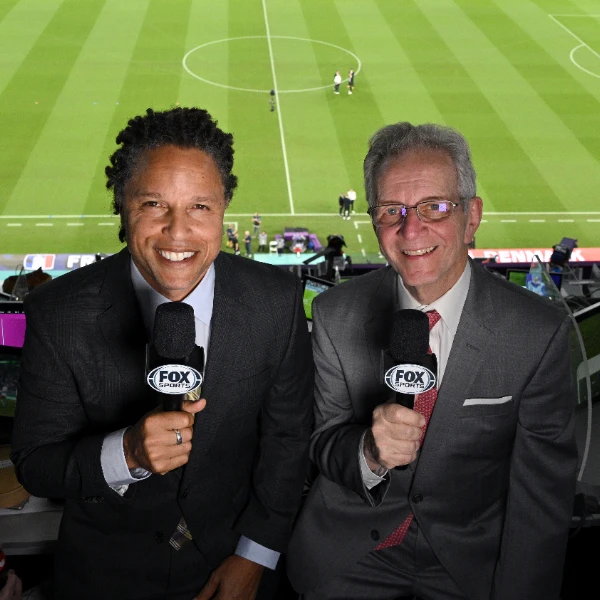
5. Who were the lead and color commentators for the primary English-language broadcasts (e.g., Fox Sports, BBC, ITV) of the Scotland vs. Morocco match on June 19, 2026?

Lead CommentatorNot identified for Scotland vs [^]. Morocco match on June 19, 2026 [^].
Color CommentatorNot identified for Scotland vs [^]. Morocco match on June 19, 2026 [^].
Match Broadcast InformationNo details available for a Scotland vs [^]. Morocco match on June 19, 2026 [^].
Research lacked details about commentators for the Scotland vs. Morocco match. The available research findings do not provide sufficient information to identify the lead and color commentators for primary English-language broadcasts of a Scotland versus Morocco match scheduled for June 19, 2026. Although the term "commentary" appeared in the research, it pertained to communication with advisers regarding market insights and current events, rather than sports broadcasting analysis [^].
Mentions of Scotland related to politics and finance, not sports broadcasting. "Scotland" was referenced in a political discussion concerning North Sea oil and turbines on June 1st, 2026 [^]. Additionally, "Scotland" appeared in the context of the Royal Bank of Scotland's involvement in a company acquisition during the early 2010s [^]. None of the gathered information specifies any commentators, broadcasters, or details about a Scotland vs. Morocco match on the requested date of June 19, 2026.

6. Which key on-field incidents during the Scotland vs. Morocco match would have prompted specific commentary phrases from the market list?

Fastest Goal Scored70 seconds (Ismael Saibari) [^][^][^]
Dismissed Penalty Appeals for Scotland2 (John McGinn at 49 mins, Scott McTominay at 82 mins) [^][^][^]
Player Frustration DisplayedScott McTominay during hydration break [^][^]
Morocco scored a record-breaking early goal, dominating the match's opening. Ismael Saibari netted for Morocco just 70 seconds into the game, making it the fastest goal scored in the 2026 FIFA World Cup qualifiers to date and also Morocco's quickest-ever goal at a World Cup [^][^][^]. This remarkably early score was a major talking point and would have been a significant focus for match commentators.
Scotland had two significant, dismissed penalty appeals, sparking controversy. In the second half, Scotland saw two appeals for penalties dismissed, one for John McGinn at 49 minutes and another for Scott McTominay at 82 minutes [^][^][^]. Both incidents were not overturned by VAR, leading to potential discussions among commentators regarding controversial refereeing decisions and the effectiveness of video assistant reviews.
Scott McTominay visibly expressed frustration, prompting team dynamics commentary. During a second-half hydration break, Scott McTominay openly vented his frustration at his teammates. This emotional display necessitated intervention from manager Steve Clarke and would have provided commentators with material to discuss team dynamics and player reactions during critical match moments [^][^].

7. How might the commentary styles of a typical UK broadcast (BBC/ITV) and a US broadcast (Fox Sports) have differed in their description of the match's key moments?

UK Commentary StyleUnderstated, analytical, and traditional [^][^][^]
Fox Sports Commentary StyleEnthusiastic, high-energy, and dramatic [^][^][^]
Fox Sports Engagement StrategyContinuous play-by-play descriptions to keep viewers engaged [^][^][^][^][^]
UK broadcasters favor understated, analytical, and traditional football commentary. Channels such as the BBC and ITV are expected to provide descriptions that emphasize tactical elements and historical context of a match [^][^][^]. For a game like Scotland vs. Morocco, UK commentators would likely use traditional football terminology and dry wit, often allowing the visuals and crowd noise to tell much of the story without continuous talking [^][^][^][^]. Their commentary typically delves into intricate passing and tactical nuances, reflecting a deep appreciation for the "beautiful game," frequently featuring professional experts and seasoned commentators, including former players [^][^][^][^][^].
In contrast, Fox Sports commentary adopts an enthusiastic, high-energy, and dramatic storytelling approach. This style prioritizes individual player narratives and broader storylines during key moments [^][^][^]. Fox Sports is known for delivering continuous play-by-play descriptions to maintain viewer engagement, often incorporating jargon from other popular US sports to appeal to an audience potentially less familiar with football traditions [^][^][^][^][^]. Their coverage frequently utilizes rules analysts, such as former referees like Joe Machnik, to clarify controversial calls and penalties [^][^][^][^].

8. Are full broadcast recordings or official transcripts of the commentary from the Scotland vs. Morocco match publicly available for review?

Audio Commentary SourceBBC Radio Scotland programme page [^]
Commentary Duration3 hours and 15 minutes (BBC Radio Scotland) [^]
Official Transcript AvailabilityNot publicly available [^]
The full broadcast commentary for the Scotland vs. Morocco match is likely available. BBC Radio Scotland's Sportsound program, specifically the "World Cup 2026: Scotland v Morocco" episode, suggests accessibility to live football commentary lasting 3 hours and 15 minutes via its program page [^]. This contrasts with BBC iPlayer, which hosts "FIFA World Cup 2026 - Group Stage: Scotland v Morocco - Post-Match Reaction," offering only post-match analysis rather than a full announcer commentary recording [^].
Official full commentary transcripts are not publicly available from major sources. While full broadcast recordings of commentary may be accessible through BBC Radio Scotland, available sources do not indicate that official full transcripts of the announcers’ commentary for the entire match are publicly available [^]. BBC Sport's match page provides live coverage, but it does not present a full official transcript of the announcers’ commentary for the entire match [^]. Similarly, the FIFA match centre page for Scotland vs. Morocco does not suggest that FIFA offers full announcer commentary recordings or official transcript text for the broadcast commentary [^].

9. How did the pre-match betting odds and pundit expectations for Morocco versus Scotland likely shape the broadcast narrative?

Morocco World Ranking5th (June 19, 2026) [^]
Scotland World Ranking40th (June 19, 2026) [^]
Fastest Goal71 seconds by Ismael Saibari [^][^]
The broadcast narrative for the Morocco versus Scotland World Cup match was primarily shaped by events during the game itself, not pre-match expectations. The available research indicated that pre-match betting odds or pundit expectations were not specified as primary influences on the narrative [^][^]. Instead, key in-game factors such as rapid scoring, Scotland's struggles offensively, and denied penalty appeals significantly influenced the storytelling [^][^]. Morocco ultimately secured a 1-0 victory, notably with Ismael Saibari scoring the fastest goal of the 2026 World Cup at 71 seconds [^][^].
Pre-match context highlighted a significant disparity between the two teams in global standing. Morocco was ranked 5th in the world, while Scotland was ranked 40th leading up to the June 19, 2026, match [^]. Scotland had led Group C after a 1-0 victory over Haiti, and Morocco was second following a 1-1 draw with Brazil [^][^]. The early goal by Saibari, combined with Scotland's inability to register a shot on target and controversial denied penalty appeals for John McGinn and Scott McTominay, became central themes in the broadcast's focus during the match [^][^].

10. What Could Change the Odds

Key Catalysts

The FIFA World Cup match between Scotland and Morocco took place on June 19, 2026, with Morocco winning 1-0 after Ismael Saibari scored the decisive goal [^][^][^][^][^][^].
Prediction platforms utilize "Mentions" markets where users can bet on announcers saying specific phrases or words during a live event broadcast, and these markets typically conclude once the event finishes or the mention occurs [^] [^] [^] . Given that the Scotland vs Morocco match occurred on June 19, 2026, there is no "Scotland vs Morocco" event scheduled for July 3, 2026, rendering any prediction market catalysts or scenarios involving announcer mentions for that specific date invalid [^][^][^][^][^].

Key Dates & Catalysts

  • Expiration: July 03, 2026
  • Closes: July 03, 2026

11. Decision-Flipping Events

  • Trigger: The FIFA World Cup match between Scotland and Morocco took place on June 19, 2026, with Morocco winning 1-0 after Ismael Saibari scored the decisive goal [^] [^] [^] [^] [^] [^] .
  • Trigger: Prediction platforms utilize "Mentions" markets where users can bet on announcers saying specific phrases or words during a live event broadcast, and these markets typically conclude once the event finishes or the mention occurs [^] [^] [^] .
  • Trigger: Given that the Scotland vs Morocco match occurred on June 19, 2026, there is no "Scotland vs Morocco" event scheduled for July 3, 2026, rendering any prediction market catalysts or scenarios involving announcer mentions for that specific date invalid [^] [^] [^] [^] [^] .

13. Related News

14. Historical Resolutions

Historical Resolutions: 20 markets in this series

Outcomes: 9 resolved YES, 11 resolved NO

Recent resolutions:

  • KXWCMENTION-26JUN19USAAUS-AMER: NO (Jun 19, 2026)
  • KXWCMENTION-26JUN19USAAUS-CALI: YES (Jun 19, 2026)
  • KXWCMENTION-26JUN19USAAUS-SPAC: NO (Jun 19, 2026)
  • KXWCMENTION-26JUN19USAAUS-SEAH: YES (Jun 19, 2026)
  • KXWCMENTION-26JUN19USAAUS-LENO: YES (Jun 19, 2026)