Short Answer

Both the model and the market overwhelmingly agree that 'Double Play' is the most likely phrase to be said by announcers during the Cardinals vs Padres game, with only minor residual uncertainty.

1. Executive Verdict

  • Liberatore and King possess comparable historical ground ball rates.
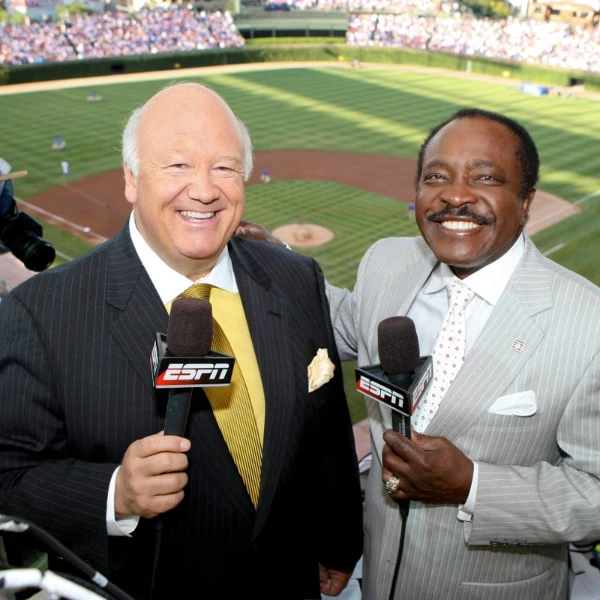
  • ESPN's broadcast team likely features Ravech, Cone, Pérez, and Olney.
  • Masyn Winn's two-way past may prompt Ohtani comparisons.
  • Padres' bullpen depth challenges may prompt prolonged discussion.
  • Padres recorded more pitch clock violations than Cardinals in 2025.

Who Wins and Why

Outcome Market Model Why
What a Catch 2.0% 0.6% Announcers frequently comment on impressive defensive plays during a game.
Pinch Hitter / Pinch Hit 2.0% 0.6% Managers often use pinch hitters, prompting announcers to discuss the strategic substitution.
MVP 9.0% 3.8% Announcers often discuss star players and potential Most Valuable Player candidates.
Wild Pitch 3.0% 1.0% Wild pitches occur regularly, and announcers will comment on the play.
Error 7.0% 2.7% The provided evidence details general game context, including starters, injuries, and betting lines, but offers no specific information to predict the likelihood of announcers mentioning the word "Error" during the game, thus providing neutral support for the debiased price.

Current Context

A prediction market allows wagers on Cardinals vs Padres announcer phrases. Kalshi hosts a dedicated prediction market for the "What will the announcers say during Cardinals vs Padres..." game, identified by event code kxmlbmention-26may08stlsd, enabling bettors to wager on specific announcer phrases [^]. ESPN's pregame listing for the Cardinals at Padres game on May 8, 2026, sets the first pitch for 10:10 p.m. EDT at Petco Park [^]. Probable starters for the matchup are Matthew Liberatore for the Cardinals and Michael King for the Padres [^].
Betting markets favor the Padres, with specific expert predictions available. The market line for the game indicates the Padres are favored around -177 to -178, with an 8-run total, according to ESPN [^]. An expert betting preview from Action Network for the May 8 matchup also cites the Padres as favored on the moneyline (approximately -156) and an 8-run total, recommending an "under on McGreevy outs" prop approach [^]. Furthermore, Polymarket's outcome market for a May 9 event reports implied probabilities through ticket prices, showing approximately 62% for San Diego and 39% for St. Louis [^].
Key players from both teams are currently on the injured list. The Padres' injury notes include Jake Cronenworth (7-day IL, concussion) and Will Wagner (10-day IL, oblique) [^]. For the Cardinals, Ramón Urias (10-day IL, elbow) and Matt Pushard (15-day IL, knee) are listed on their respective injured lists [^].

2. Market Behavior & Price Dynamics

Historical Price (Probability)

Outcome probability
Date
This prediction market has displayed extreme volatility rather than a consistent trend. The price started at a low probability of 2.0%, then experienced a massive 63.0 percentage point spike around May 5, reaching a high of 74.0%. This sharp increase appears to have been driven by speculation following a recent, noteworthy "pinch-hit" situation in a different baseball game, which may have led traders to believe the term would be more likely to be mentioned in the upcoming Cardinals vs. Padres broadcast. However, this sentiment was short-lived, as the price plummeted by 57.0 percentage points on May 8, erasing the entire rally and settling at the current 3.0% level. The provided context does not offer a specific reason for this sudden and decisive collapse in price.
The trading volume provides insight into market conviction. The initial price spike occurred on very low or zero volume, suggesting it was not supported by significant trading activity. In contrast, the price collapse on May 8 was accompanied by a surge in volume, with over 64 contracts traded, indicating strong conviction among traders that the event would not occur. Key price levels were established at the peak resistance near 74.0% and a support floor around the 1.0-3.0% range, where the price began and has now returned. The current market sentiment is overwhelmingly bearish, with the low 3.0% price reflecting a strong consensus that the announcers are unlikely to say "Pinch Hitter" or "Pinch Hit" during the game.

3. Significant Price Movements

Notable price changes detected in the chart, along with research into what caused each movement.

Outcome: Pinch Hitter / Pinch Hit

📉 May 08, 2026: 69.0pp drop

Price decreased from 70.0% to 1.0%

What happened: The provided web research does not contain information on social media activity, traditional news, or market structure factors that would explain a 69.0 percentage point drop in the prediction market for "Pinch Hitter / Pinch Hit" on May 8, 2026. The available sources, including game trackers from CBS Sports and ESPN, explicitly state they do not include verbatim announcer transcripts for the specific game [^][^]. Consequently, the primary driver of this market movement cannot be identified from the given data. Based on the provided information, social media's role as a primary driver, accelerant, or noise cannot be determined.

📈 May 05, 2026: 67.0pp spike

Price increased from 2.0% to 69.0%

What happened: The 67.0 percentage point spike likely stemmed from a significant baseball event where Chandler Simpson delivered a tie-breaking, two-run single for the Rays in a "pinch-hit" scenario [^]. This event, reported as occurring "the other day" in a May 07, 2026 article, appears to have coincided with the May 05, 2026 market movement [^]. Such a critical play would inherently prompt announcers to use the phrase "Pinch Hitter / Pinch Hit," directly impacting the prediction market outcome [^]. Based on the available information, social media was not identified as a primary driver.

Outcome: Wild Pitch

📈 May 07, 2026: 11.0pp spike

Price increased from 25.0% to 36.0%

What happened: The primary driver for the 11.0 percentage point price spike in the "Wild Pitch" outcome for the May 07, 2026, Cardinals vs. Padres game cannot be determined from the available information. The provided research does not include details on social media activity from key figures or viral narratives, traditional news announcements, or specific market structure events that occurred around the time of the price movement. Furthermore, game summaries and recaps for May 07, 2026, do not confirm any wild pitch occurrences during the game itself, indicating the price movement was not directly driven by an on-field event [^][^][^]. Without evidence of external catalysts, social media's role remains unascertainable.

4. Market Data

View on Kalshi →

Contract Snapshot

The market resolves to "Yes" if a play-by-play or color commentator says "Wild Pitch" (or its plural/possessive form) during the Cardinals vs. Padres game on May 7, 2026, from the first pitch until the game concludes. The market resolves to "No" if the phrase is not used, or if the event is definitively cancelled or fails to qualify under payout criteria. Outcomes are verified primarily via video of the national (or home local) broadcast, and the market remains open if the game is postponed and rescheduled within 14 days.

Available Contracts

Market options and current pricing

Outcome bucket Yes (price) No (price) Last trade probability
MVP $0.03 $1.00 9%
Error $0.02 $1.00 7%
Wild Pitch $0.01 $1.00 3%
Pinch Hitter / Pinch Hit $0.02 $1.00 2%
What a Catch $0.02 $1.00 2%

Market Discussion

MLB players believe sports betting is causing online harassment, creating a "new dynamic" that players and leagues are still navigating [^]. This issue, reported on May 30, 2025, could be a topic of discussion during a professional baseball game broadcast [^].

5. How do starting pitchers Matthew Liberatore and Michael King compare in their historical ground ball rates and propensity to induce a 'double play'?

Matthew Liberatore Career GB%approximately 42% [^]
Michael King Career GB% Average43-45% [^]
Michael King 2024 GB%41.5% [^]
Matthew Liberatore and Michael King possess comparable historical ground ball rates. Matthew Liberatore's career ground ball percentage (GB%) is approximately 42%, with his 2024 rate recorded at 42.2% and a similar projection for 2025 [^]. Michael King's career GB% generally falls between 43-45% [^]. His recent ground ball percentages include 41.5% in 2024 and 43.4% in 2023, having peaked at a career high of 48.7% [^].
Specific double-play metrics for these pitchers are not directly available. The research does not provide historical data that specifically compares Matthew Liberatore's and Michael King's individual propensity to induce double plays [^]. While the significance of ground balls and double plays for high-contact starters is recognized, direct comparative data for these two players is absent [^]. However, Michael King is generally considered to have an advantage in managing base runners due to lower traffic and a superior strikeout profile compared to Matthew Liberatore [^].

6. What are the commentary tendencies and signature phrases of the probable ESPN broadcast team for the Cardinals vs. Padres game?

ESPN Sunday Night Baseball TV TeamKarl Ravech (play-by-play), David Cone (analyst), Eduardo Pérez (analyst), Buster Olney (field reporter) [^][^][^]
ESPN Sunday Night Baseball Radio TeamJon Sciambi (play-by-play), Doug Glanville (analyst) [^][^]
David Cone's Analytical StyleIncorporates sabermetric statistics and advanced pitching concepts like spin rate and release point [^][^][^][^][^]
The primary ESPN broadcast features Ravech, Cone, Pérez, and Olney. Karl Ravech serves as play-by-play announcer, recognized for his engaging, witty, and charming style [^][^][^]. Analyst David Cone, often described as a "thinking-man's analyst," provides insightful, nuanced, and new-age perspectives by integrating sabermetric statistics and advanced pitching concepts such as spin rate and release point [^][^][^][^][^]. Eduardo Pérez offers an easygoing style with high energy and passion, delivering an insider's view as a former player and coach, frequently mentioning "exit velocity" [^][^]. Buster Olney, the field reporter, contributes comprehensive coverage, storytelling, and observations from the field and dugout, including background and injury updates [^][^][^]. This team is the probable lineup for prominent telecasts like "Sunday Night Baseball" [^][^][^].
ESPN Radio's team offers a distinct blend of commentary. For ESPN Radio's "Sunday Night Baseball," the typical broadcast team consists of Jon Sciambi for play-by-play and Doug Glanville as the analyst [^][^]. Sciambi, known as "Boog," employs a smooth, polished, and energetic play-by-play style, demonstrating deep baseball knowledge while aiming to avoid sounding like a "stereotypical" announcer [^][^][^][^]. Doug Glanville provides an intellectual and thoughtful perspective, often connecting baseball concepts to broader life lessons and offering insightful analysis from his experience as a former player [^][^][^][^]. His commentary is characterized by its reflective nature and ability to "bridge-build" understanding, providing deeper context rather than relying on repetitive phrases [^][^].

7. What recent performance by a Cardinals or Padres player could prompt announcers to make a direct comparison to Shohei Ohtani during the broadcast?

Masyn Winn Draft BackgroundDrafted in 2020 as hitter/pitcher, hit 98 mph [^][^]
Masyn Winn Prospect ComparisonCompared to Shohei Ohtani in his prospect days [^][^]
Masyn Winn Recent PerformanceTriple for game-winning RBI on May 7 [^]
Masyn Winn's two-way past uniquely positions him for Ohtani comparisons. Winn was drafted in 2020 as a two-way prospect, showcasing skills as both a hitter and a pitcher, with pitching speeds up to 98 mph [^][^]. During his prospect career, he was notably compared to Shohei Ohtani, a distinctive element that announcers could emphasize [^][^]. This history provides a compelling narrative point for broadcast commentary, setting him apart from other players.
Recent performance could revive Winn's unique two-way talent narrative. Winn's recent performance, including hitting a triple for the game-winning RBI on May 7, could prompt broadcasters to revisit his unusual past as a two-way talent and the explicit Ohtani comparison [^]. While other players like Jordan Walker have strong offensive numbers, including 10 home runs and 27 RBIs [^][^], and Mason Miller has demonstrated dominant pitching with a projected 153 strikeouts and a 1.04 ERA on a 2026 pace [^], these players lack a history of two-way play or explicit past comparisons to Shohei Ohtani [^][^][^][^][^]. Winn remains the only Cardinals or Padres player identified with such a background that could elicit a direct Ohtani comparison during a broadcast.

8. What specific game state or player injury history for the Cardinals or Padres would necessitate a prolonged discussion of their 'bullpen' depth?

Padres Pitcher InjuryJeremiah Estrada - elbow tendinitis (injured list) [^][^]
Cardinals Bullpen ERA4.87 [^][^]
Cardinals Player InjuriesRamon Urias (10-day IL, elbow), Matt Pushard (15-day IL, knee) [^]
The San Diego Padres are experiencing significant challenges with their bullpen depth due to a series of player injuries. Jeremiah Estrada was placed on the injured list with elbow tendinitis, prompting the activation of Jason Adam to fill a high-leverage role [^][^]. Further compounding their pitching woes, pregame notes from May 8, 2026, indicated that both Nick Pivetta and Joe Musgrove were also on the injured list, intensifying the need for discussions surrounding available bullpen options [^].
The St. Louis Cardinals are similarly grappling with injuries and a struggling bullpen, necessitating critical depth discussions. As of May 8, 2026, the team had Ramon Urias (10-day IL, elbow) and Matt Pushard (15-day IL, knee) on the injured list [^]. These player absences, combined with the Padres' pitching staff challenges, highlight the immediate need to identify which relievers will be utilized next [^]. Adding to these concerns, the Cardinals' bullpen has been described as a significant weakness, characterized as "leaky" with a reported 4.87 ERA, making discussions about available depth especially crucial when injuries already limit the available options [^][^].

9. Which team, the Cardinals or the Padres, has a higher statistical frequency of triggering a 'pitch clock' violation mention based on recent season data?

Padres Violations (2025)19 [^][^]
Cardinals Violations (2025)17 [^][^]
Violation Difference2 more by Padres [^][^]
The San Diego Padres recorded more pitch clock violations than the St. Louis Cardinals in the 2025 MLB season. During this season, the San Diego Padres accumulated a total of 19 pitch-clock or pitch-timer infractions [^][^]. In comparison, the St. Louis Cardinals registered 17 such violations over the same period [^][^].
This data indicates the San Diego Padres experienced a higher frequency of triggering a pitch clock violation mention. Specifically, the Padres committed two more pitch-timer infractions than the St. Louis Cardinals in the 2025 season [^][^].

11. Historical Resolutions

Historical Resolutions: 20 markets in this series

Outcomes: 11 resolved YES, 9 resolved NO

Recent resolutions:

  • KXMLBMENTION-26MAY05LADHOU-WILD: NO (May 06, 2026)
  • KXMLBMENTION-26MAY05LADHOU-WHAT: YES (May 06, 2026)
  • KXMLBMENTION-26MAY05LADHOU-WALK: NO (May 06, 2026)
  • KXMLBMENTION-26MAY05LADHOU-TRIP: YES (May 06, 2026)
  • KXMLBMENTION-26MAY05LADHOU-TRAD: YES (May 06, 2026)