
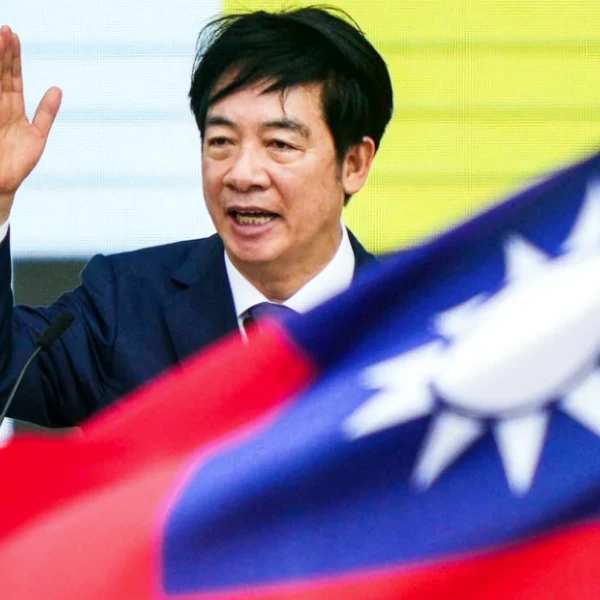
Lai Ching-te out as President of Taiwan?
Short Answer
1. Market Behavior & Drivers
- Opposition lacks the required supermajority for a 2026 impeachment vote.
- Taiwan's Legislative Yuan currently operates without a single party majority.
- Significant political or economic catalysts may alter the opposition's strategy.
- The current impeachment effort faces hurdles common to previous presidential challenges.
- Public approval ratings have shown significant fluctuations since May 2024 inauguration.
- Opposition's impeachment grounds center on constitutional and legislative disputes.
Who Wins and Why
| Outcome | Market | Model | Why |
|---|---|---|---|
| Before January 1, 2027 | 3.2% | 2.9% | The opposition lacks sufficient legislative seats (62) for the 76 votes needed to pass the impeachment motion. |
| Before July 1, 2027 | 26.0% | 15.4% | The opposition lacks sufficient legislative seats (62) for the 76 votes needed to pass the impeachment motion. |
| Before January 1, 2028 | 29.0% | 17.3% | The opposition lacks sufficient legislative seats (62) for the 76 votes needed to pass the impeachment motion. |
Current Context
Sources (10)
- 1President Lai-President & vice president|Office of the President Republic of China(Taiwan)english.president.gov.tw
- 2Presidency of Lai Ching-teen.wikipedia.org
- 3Lai Ching-teen.wikipedia.org
- 4Taiwan Parliament Impeachment Targets Lai Ching-tetelesurenglish.net
- 5Update: Taiwan lawmakers vote to pass motion to impeach island's leader Lai Ching-tetaiwansnews.net
- 6Taiwan legislature passes motion to initiate impeachment proceedings against President Lai Ching-teheidoh.com
- 7Legislature to hold roll-call vote on Lai impeachment - Taipei Timestaipeitimes.com
- 8Lai Ching-te's impeachment case will be put to a vote on May 19th to request a trial; opposition parties may struggle to pass the threshold. - VOCO News | Global Chinese Instant News Networknews.vocofm.com
- 9Lai Ching-te out as President of Taiwan by December 31, 2... | Polymarketpolymarket.com
- 10Lai Ching-te Out as Taiwan President by End of 2026?lines.com
2. Price Chart
Historical Price (Probability)
3. Significant Price Movements
Notable price changes detected in the chart, along with research into what caused each movement.
📉 May 08, 2026: 8.0pp drop
Price decreased from 34.0% to 26.0%
Outcome: Before July 1, 2027
📈 May 07, 2026: 12.0pp spike
Price increased from 22.0% to 34.0%
Outcome: Before July 1, 2027
Sources (2)
4. Market Data
Contract Snapshot
This market resolves "Yes" if Lai Ching-te leaves office or announces his departure (to occur within the next year) before July 1, 2027, confirmed by listed news sources. If these conditions are not met by July 1, 2027, the market resolves "No." In the event of his death, the market resolves based on the last traded price prior to death, unless the Exchange determines that price is unavailable, inconsistent, or not representative of a fair settlement, in which case a fair value will be determined by the Exchange or Outcome Review Committee.
Available Contracts
Market options and current pricing
| Outcome bucket | Yes (price) | No (price) | Last trade probability |
|---|---|---|---|
| Before January 1, 2027 | $0.12 | $0.98 | 3% |
| Before July 1, 2027 | $0.34 | $0.74 | 26% |
| Before January 1, 2028 | $0.33 | $0.76 | 29% |
Market Discussion
Lai Ching-te was inaugurated as President on May 20, 2024, with his term expected to end in 2028 [1][2]. An impeachment motion against him passed an initial 60-51 vote on December 26, 2025, and a final vote is scheduled for May 19, 2026, requiring 76+ votes to proceed to the Constitutional Court [3][4][5]. However, with the opposition holding approximately 60 seats in the legislature, they may struggle to achieve the supermajority needed, and prediction markets currently suggest a low probability (7.5%-13.5%) of Lai being out by the end of 2026 [5][6][7][8][9][10].
Sources (10)
- 1Presidency of Lai Ching-teen.wikipedia.org
- 22024 Taiwanese presidential electionen.wikipedia.org
- 3Legislature passes motion to start impeachment proceedings against Lai - Focus Taiwanfocustaiwan.tw
- 4Legislature to hold roll-call vote on Lai impeachment - Taipei Timestaipeitimes.com
- 5Lai Ching-te's impeachment case will be put to a vote on May 19th to request a trial; opposition parties may struggle to pass the threshold. - VOCO News | Global Chinese Instant News Networknews.vocofm.com
- 6Taiwan legislature passes motion to initiate impeachment proceedings against President Lai Ching-teheidoh.com
- 7Taiwan opposition takes aim at president in long-shot impeachment | Taiwan Politics | Politics | Taiwan Current Newstcn.tw
- 8Lai Ching-te Out as Taiwan President by End of 2026?lines.com
- 9Lai Ching-te out as President of Taiwan in 2026? Predicti... | Polymarketbase.polymarket.com
- 10Lai Ching-te out as President of Taiwan by De… 7.5% Odds | Polymarketpredictmarketcap.com
5. Trust Index
Includes the cost to trade: a $10,000 order can't be filled here because the order book is too thin.
Weighted blend with hard caps — a critically weak safety pillar, or a severe trading anomaly, caps the total regardless of the rest. Full methodology · About the Trust Index
6. What is the current composition of Taiwan's Legislative Yuan, and how does the opposition's seat count compare to the supermajority required for the May 2026 impeachment vote?
| Total Legislative Yuan Members | 113 [1][2] |
|---|---|
| Votes Required for Impeachment | 76 [3][4] |
| Combined Opposition Seats | 62 [5][3][4] |
Sources (14)
- 1wikipedia.orgen.wikipedia.org
- 2wikipedia.orgen.wikipedia.org
- 3tcn.tw
- 4channelnewsasia.com
- 5aljazeera.com
- 6globaltaiwan.org
- 7csis.orginterpret.csis.org
- 8wikipedia.orgen.wikipedia.org
- 9focustaiwan.tw
- 10taipeitimes.com
- 11aa.com.tr
- 12judicial.gov.twcons.judicial.gov.tw
- 13president.gov.twenglish.president.gov.tw
- 14yenisafak.comen.yenisafak.com
7. What political or economic catalysts before May 2026 could realistically alter the KMT-TPP coalition's calculus on the impeachment of President Lai?
| KMT-TPP Legislative Seats | 62 of 113 [1][2][3] |
|---|---|
| Impeachment Quorum Required | 76 seats [1][2][3] |
| Prediction Market Odds (Lai out by Dec 31, 2026) | 7-12.5% YES (as of April-May 2026) [4][5][6][7] |
Sources (12)
- 111th Legislative Yuanen.wikipedia.org
- 22024 Taiwanese legislative electionen.wikipedia.org
- 3KMT, TPP criticize Lai as hearings continue - Taipei Timestaipeitimes.com
- 4Lai Ching-te Out as Taiwan President by End of 2026?lines.com
- 5Lai Ching-te out as President of Taiwan by December 31, 2... | Polymarketpolymarket.com
- 6Lai Ching-te out as President of Taiwan by De… 7.5% Odds | Polymarketpredictmarketcap.com
- 7Lai Ching-te out as President of Taiwan by December 31, 2026?perplexity.ai
- 8Taiwan legislature to vote May 19 on unlikely Lai impeachmenttaiwannews.com.tw
- 9China & Taiwan Update, April 24, 2026 | AEIaei.org
- 10EDITORIAL: Lai impeachment vote is a farce - Taipei Timestaipeitimes.com
- 11Taiwan opposition KMT, TPP announce move to impeach President Laiasiapacificnews.net
- 12Taiwan Constitutional Court resumes operation following constitutive quorum controversies - JURIST - Newsjurist.org
8. How does the current impeachment effort against Lai Ching-te compare to previous major political challenges faced by Taiwanese presidents?
| Required Majority for Removal | Two-thirds parliamentary majority (148 legislators) [1][2][3] |
|---|---|
| Lai Impeachment Vote Scheduled | May 19, 2026 [1][4][5] |
| Polymarket Probability of Removal | 13% by December 31, 2026 [6][2] |
Sources (6)
- 1Taiwan legislature passes motion to initiate impeachment proceedings against President Lai Ching-teheidoh.com
- 2CNA Explains: The impeachment bid against Taiwan’s Lai – and why it’s unlikely to succeed - CNAchannelnewsasia.com
- 3Taiwan Leader Survives Bid to Recall Himwashingtonpost.com
- 4Experts Testify in Lai Impeachment Hearing as Final Vote Date Set - TaiwanPlustaiwanplus.com
- 5Presidential impeachment hearings begin as parties clash over constitutionality - Focus Taiwanfocustaiwan.tw
- 6Lai Ching-te out as President of Taiwan by December 31, 2... | Polymarketpolymarket.com
9. What do public approval rating trends from major Taiwanese pollsters since May 2024 indicate about Lai Ching-te's political capital ahead of the 2026 vote?
| Initial Approval Rating | 40-50% (May 2024) [1] |
|---|---|
| Record Low Approval | 31% (August 2025 Formosa) [2] |
| Odds of Early Departure | 13% (May 2026 Prediction Markets) [3][4] |
Sources (11)
- 1[PDF] Taiwan Public Opinion Foundation - May 2024 Public Opinion Polltpof.org
- 2President Lai Ching-te’s approval rating drops to record 31%│TVBS新聞網news.tvbs.com.tw
- 3Lai Ching-te Out as Taiwan President by End of 2026?lines.com
- 4Lai Ching-te out as President of Taiwan by December 31, 2... | Polymarketpolymarket.com
- 5President Lai's Approval Rating Plummets with a "Death Cross": Expert Reveals Five Critical Factors﹐Trouble from Within - 長風基金會fairwindsfoundation.org
- 6https://www.tpof.org/wp-content/uploads/2025/05/20250520-TPOF-May-2025-Public-Opinion-Poll-–-English-Excerpt.pdftpof.org
- 7Lai’s approval rebounds to 57% ahead of first year, KMT plans protest-News-Radio Taiwan Internationalen.rti.org.tw
- 8President Lai’s approval rating narrows gap in new poll│TVBS新聞網news.tvbs.com.tw
- 9Lai's Approval Ratings Show Signs of Recovery as Opposition Loses Public Support | Yi Junyao | Taiwan - The Storm Mediaworld.storm.mg
- 10Lai Ching-te impeached before 2026? Trading Odds & Predictions | Polymarketpolymarket.com
- 11Lai Ching-te impeached by June 30? Trading Odds & Predictions | Polymarketpolymarket.com
10. What are the specific allegations and legal arguments put forth by the opposition as the formal grounds for impeaching President Lai Ching-te?
| Opposition seats in legislature | 62 seats (out of 113) [1][2][3][4][5] |
|---|---|
| Votes required for impeachment | 76 votes (two-thirds majority) [1][2][3][4][5] |
| Final impeachment vote scheduled | May 19, 2026 [6][3][5] |
11. What Could Change the Odds
Key Catalysts
Key Dates & Catalysts
- Expiration: July 01, 2026
- Closes: January 01, 2028
Sources (12)
- 1Presidency of Lai Ching-teen.wikipedia.org
- 2Lai Ching-teen.wikipedia.org
- 32028 Taiwanese presidential electionen.wikipedia.org
- 4Lai Ching-te out as President of Taiwan by December 31, 2... | Polymarketpolymarket.com
- 5Lai Ching-te out as President of Taiwan by De… 7.5% Odds | Polymarketpredictmarketcap.com
- 6Lai Ching-te out as President of Taiwan in 2026? Predicti... | Polymarketbase.polymarket.com
- 7How the 2028 Taiwanese Elections Could Determine Beijing’s Calculus in the Taiwan Strait | Atlas Institute for International Affairsatlasinstitute.org
- 8Taiwan Presidential Election 2028 Date: What Is Known So Far (2026) | PoliticaHubpoliticahub.com
- 92024 Taiwanese presidential electionen.wikipedia.org
- 10Taiwan’s opposition parties join forces for local elections with eye on 2028 race | South China Morning Postscmp.com
- 11Donovan’s Deep Dives: The KMT’s 2028 presidential calculus is changingtaipeitimes.com
- 12KMT, TPP to collaborate for presidential election - Taipei Timestaipeitimes.com
