
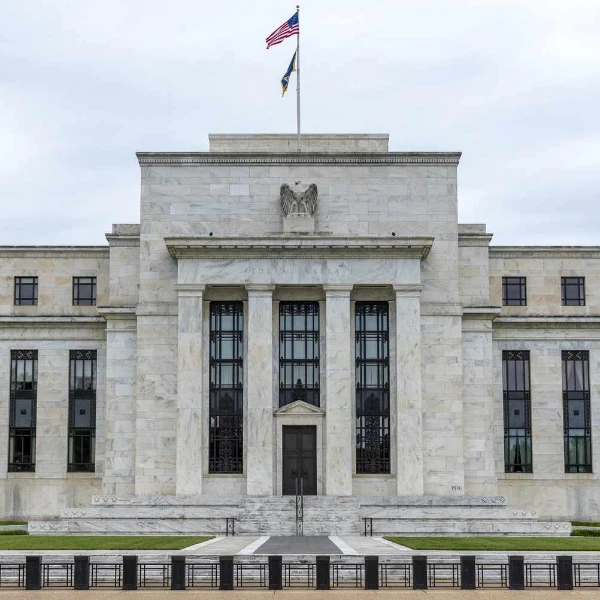
Fed decision in Jun 2026?
Short Answer
1. Market Behavior & Drivers
- The FOMC announced an interest rate hold on June 17, 2026.
- Prediction markets overwhelmingly priced in a rate hold for the meeting.
- Persistent inflation and strong labor data drove year-end rate hike expectations.
- New Fed Chair Kevin Warsh's first meeting saw rates held steady.
- The Fed released its updated Summary of Economic Projections on June 17, 2026.
Current Context
Sources (18)
- 1The Hold That Isn't a Hold: What the Fed's June 2026 Decision Actually Signals Under Kevin Warshinteractivecrypto.com
- 2FOMC Meeting Preview: Will Warsh Kill the Rate Cut Trade for Good?investing.com
- 3Fed to Keep Rates Steady at New Chair's First Meetingtradingeconomics.com
- 4Warsh to face spotlight as Federal Reserve likely to leave interest rates unchangednewstimes.com
- 5The Fed - Meeting calendars and information - Federal Reservefederalreserve.gov
- 6Federal Reserve Board - Federal Open Market Committee announces its tentative meeting schedule for 2025 and 2026federalreserve.gov
- 7Federal Reserve Calendarschicagofed.org
- 8Federal Reserve Meeting Calendar - MNImnimarkets.com
- 9From Easing Hopes to Hike Fears, Investors Reset Expectations for the Fed | FXEmpirefxempire.com
- 10Bond options markets signal uncertainty over Fed direction under Warsh - Hedgeweekhedgeweek.com
- 11clevelandfed.org
- 12clevelandfed.org
- 13newyorkfed.org
- 14newyorkfed.org
- 15atlantafed.org
- 16atlantafed.org
- 17stlouisfed.orgfred.stlouisfed.org
- 18atlantafed.org
2. Price Chart
Historical Price (Probability)
3. Market Data
Contract Snapshot
This market resolves to Yes if the Federal Reserve implements a 0bps hike on June 17, 2026, or if the scheduled FOMC meeting is cancelled. Conversely, it resolves to No if the Fed enacts any non-zero rate change, as this market is mutually exclusive with other rate adjustment contracts. Trading for this market opens on September 29, 2025, closes on June 17, 2026, and payouts are projected for June 17, 2026, with the Federal Reserve website verifying the outcome.
Market Discussion
While the market overwhelmingly predicts the Fed will maintain current rates at 99%, some traders are betting on alternative outcomes, viewing them as speculative opportunities or hedges. Arguments for a rate cut often dismiss hikes as unlikely, while those anticipating a hike offer little detailed reasoning beyond economic indicators like housing and inflation. The strong consensus remains for unchanged rates, with individual bets on cuts or hikes generally seen as "lotto tickets" against this expectation.
4. What specific inflation and unemployment data in H1 2026 would compel new Fed Chair Kevin Warsh to advocate for a rate change in June?
| US Unemployment Rate (May 2026) | 4.3% [1] |
|---|---|
| Annual Inflation Rate (May 2026) | 4.2% [2] |
| Federal Reserve Inflation Target | 2% [3][4] |
Sources (9)
- 1Employment Situation News Release - 2026 M05 Resultsbls.gov
- 2United States Inflation Rate - Trading Economicstradingeconomics.com
- 3clevelandfed.org
- 4atlantafed.org
- 5Warsh faces first big test as Fed chair with markets watching closelyscrippsnews.com
- 6Trump trusts Fed Chair Warsh. It matters for more than interest ratescnbc.com
- 7Warsh caught between Trump and bond market | The Starthestar.com.my
- 8Kevin Warsh makes Fed meeting debut as chair. This is what advisors should expect from him - InvestmentNewsinvestmentnews.com
- 9atlantafed.org
5. How do leading economic indicators from the Atlanta Fed (GDPNow) and Cleveland Fed (Inflation Nowcasting) characterize the economy ahead of the June 2026 meeting?
| Real GDP Growth (2026:Q2) | 2.83% (seasonally adjusted annual rate) [1][2][3][4] |
|---|---|
| June 2026 Headline CPI (YoY) | 4.05% [5][6] |
| FOMC Rate Change (June 17, 2026) | 0bps change (99% probability) [7][8][9][10] |
Sources (10)
- 1Current and Past GDPNow Commentariesatlantafed.org
- 2GDPNow - Federal Reserve Bank of Atlantaatlantafed.org
- 3GDPNow, Release Date: 2026-06-16 | ALFRED | St. Louis Fedalfred.stlouisfed.org
- 4GDPNow - FRED - Federal Reserve Bank of St. Louisfred.stlouisfed.org
- 5Inflation Nowcasting - Federal Reserve Bank of Clevelandclevelandfed.org
- 6Center for Inflation Research - Federal Reserve Bank of Clevelandclevelandfed.org
- 7Fed funds rate after June meeting? Odds & Predictions 2026 - Kalshikalshi.com
- 8Fed decision in Jun 2026? | Prediction Market Networkpredictionmarketnetwork.com
- 9Fed Decision in June? — 0.3% YES | PolyInsiderpolyinsider.io
- 10June 17, 2026: Fed decision in Jun 2026 Prediction Marketrobinhood.com
6. How does Kevin Warsh's public stance on monetary policy compare to that of recent FOMC voting members, and what does this suggest for committee consensus?
| Warsh's Policy Framework | Rules-based over discretionary, data-dependent policy [1][2][3][4] |
|---|---|
| April 2026 FOMC Split | Four-way split over easing vs. hawkish stance amidst 4.2% inflation [5][6][7][8] |
| First Policy Decision Under Warsh | Federal funds rate maintained at 3.50%-3.75% on June 17, 2026 [5][9] |
Sources (12)
- 1What to Expect From Kevin Warsh's Fed in the First 100 Dayscfr.org
- 2Will Kevin Warsh Rebalance The Fed? | Weekly Economic Commentary | Northern Trustnortherntrust.com
- 3Kevin Warsh's Fed Record: What It Signals for Interest Ratesinvestopedia.com
- 4Powell Holds, Warsh Waits — and the Two Men Have Completely Different Theories of Inflation — Ruslan Averinaverin.com
- 5FOMC Minutes Show Four-Way Split at Powell's Final Meeting, Warsh Inherits Divided Committee | Sourced Wiresourcedwire.com
- 6Kevin Warsh comes into the Fed facing a big 'family fight' over cutting interest rates - NYT News Todaynytimesnewstoday.com
- 7US Fed Meeting 2026 Live: Hold or Hike? All eyes on Warsh’s first FOMC and his ‘Dot Plot’ signal - Global Markets News | The Financial Expressfinancialexpress.com
- 8FOMC Meeting Preview: Will Warsh Kill the Rate Cut Trade for Good?investing.com
- 9The Hold That Isn't a Hold: What the Fed's June 2026 Decision Actually Signals Under Kevin Warshinteractivecrypto.com
- 10The Ideology Of Kevin Warsh - by James - JB Macrojbmacro.substack.com
- 11The Transition to Warsh: Bumpy Road to a Betterfulcrumasset.com
- 12Will New FED Chair Warsh be Hawkish or Dovish? - Financial Trend Forecasterfintrend.com
7. When will the Federal Reserve release its Q2 2026 Summary of Economic Projections (SEP), and what are the key forecasts to watch in the dot plot?
| Q2 2026 SEP Release Date | Wednesday, June 17, 2026, at 2:00 p.m. ET [1][2] |
|---|---|
| Associated FOMC Meeting Dates | June 16–17, 2026 [1][2] |
| Fed Chair's Dot Plot Stance | Expected to withhold his 'dot' [3] |
Sources (10)
- 12026 Economic Release Calendar - Summary of Economic Projections | FRED | St. Louis Fedfred.stlouisfed.org
- 2FOMC Summary of Economic Projections for the Growth Rate of Real Gross Domestic Product, Central Tendency, Low (GDPC1CTL) | FRED | St. Louis Fedfred.stlouisfed.org
- 3Fed Chair Warsh expected to withhold 'dot' from central bank's interest rate outlookcnbc.com
- 4Calendar: June 2026 - Federal Reserve Boardfederalreserve.gov
- 5The Fed - Meeting calendars and information - Federal Reservefederalreserve.gov
- 6Federal Reserve Board - Federal Open Market Committee announces its tentative meeting schedule for 2025 and 2026federalreserve.gov
- 7Some at Fed may pencil in a hike. Most won't. Warsh is a question mark | MarketScreener Hong Konghk.marketscreener.com
- 8FOMC Meeting Preview: Will Warsh Kill the Rate Cut Trade for Good?uk.investing.com
- 9FOMC June Preview: Warsh's First Dot Plot, Cuts in Play - Equity Capital Marketecmsource.com
- 10Fed Rate Decision June 17, 2026: What to Watchstocktitan.net
8. What is the breakdown of hawkish versus dovish sentiment among the 2026 voting members of the FOMC, based on their public statements in H1 2026?
| April 2026 FOMC Vote | 8-4 [1][2][3] |
|---|---|
| Key Hawkish Members | Beth M. Hammack, Neel Kashkari, Lorie K. Logan [1][2][3] |
| New Fed Chair Sentiment | Kevin Warsh (leaning dovish) [4][5][3] |
Sources (9)
- 1Hawkish Fed members fire warning shot across Warsh's bow | articlesthink.ing.com
- 2A Fractured Fed: Inside the April 2026 FOMC Minutes | Joshua Baronesavvywealth.com
- 3FOMC June 2026: 25-bps Fed Rate Cut Debate Opens Warsh Era - Pomegra Newspomegra.io
- 4FOMC June 2026: What Traders Need to Know About Kevin Warshmrktedge.ai
- 5Kevin Warsh navigates a hawkish Fed shift | articles | ING THINKthink.ing.com
- 6newyorkfed.orgtellerwindow.newyorkfed.org
- 7The Fed - Federal Open Market Committeefederalreserve.gov
- 8Federal Open Market Committee - Wikipediaen.wikipedia.org
- 9Minutes of the Federal Open Market Committee, January 27–28, 2026federalreserve.gov
9. What Could Change the Odds
Key Catalysts
Key Dates & Catalysts
- Strike Date: June 17, 2026
- Expiration: September 16, 2026
- Closes: June 17, 2026
Sources (12)
- 1Calendar: June 2026 - Federal Reserve Boardfederalreserve.gov
- 2Federal Reserve Meeting Calendar - MNImnimarkets.com
- 3June 2026 FOMC Meeting Preview: June 16-17 Decision, Dot Plot & Market Impact | EskiSignaleskisignal.com
- 4Fed decision in Jun 2026? | Prediction Market Networkpredictionmarketnetwork.com
- 5Fed decision in Jun 2026? | PredictionMarkets.USpredictionmarkets.us
- 6Fed Decision June 2026 — Prediction Market Odds & Trade Setuppredictionauthority.com
- 7June 17, 2026: Fed decision in Jun 2026 Prediction Marketrobinhood.com
- 8Fed June Rate Decision Preview: Stubborn Inflation Fuels Hawkish Expectations, How Will US Stocks, Dollar and Gold React?tradingkey.com
- 9From Easing Hopes to Hike Fears, Investors Reset Expectations for the Fed | FXEmpirefxempire.com
- 10FOMC Meeting Preview: Will Warsh Kill the Rate Cut Trade for Good?investing.com
- 11Fed Rate Decision June 17, 2026: What to Watchstocktitan.net
- 12Strait of Hormuz Set to Reopen, How New Fed Chair Warsh Walks a Tightrope Amid Market Expectations?tradingkey.com
11. Related News
Fed Rate Cut Expectations Solidify Amid Disinflationary Signals, Despite Hawkish Crosscurrents
The prediction market for the June 17, 2026 Federal Open Market Committee (FOMC) decision has undergone a significant distributional shift, with the 25bps rate cut outcome rising to 37% from 36% over ...
Fed Rate-Hold Prospects Surge Amid Data Turbulence by June 2026
Markets have abruptly shifted toward betting on the Federal Reserve maintaining its policy rate in June 2026 despite earlier expectations of a cut. The KXFEDDECISION-26JUN-H0 rate-hold contract surged...
12. Historical Resolutions
Historical Resolutions: 5 markets in this series
Outcomes: 1 resolved YES, 4 resolved NO
Recent resolutions:
- KXFEDDECISION-26APR-H26: NO (Apr 29, 2026)
- KXFEDDECISION-26APR-H25: NO (Apr 29, 2026)
- KXFEDDECISION-26APR-H0: YES (Apr 29, 2026)
- KXFEDDECISION-26APR-C26: NO (Apr 29, 2026)
- KXFEDDECISION-26APR-C25: NO (Apr 29, 2026)
