Short Answer

Both the model and the market expect the Steam Machine to cost at least $400, with no compelling evidence of mispricing.

1. Executive Verdict

  • Here are the key claims:
  • Rising memory and storage costs are driving an upward price shift.
  • Performance specifications likely justify a premium over previous Valve hardware.
  • TechSpot's analysis suggests profit will likely require an $800-$900 price.
  • Leaked prices for higher-end models are reported near $950 and $1,070.
  • Valve announced revisiting pricing and shipping due to component shortages in 2026.

Who Wins and Why

Outcome Market Model Why
At least $900 30.0% 32.7% Unconfirmed leaked prices for specific models are reported at approximately $950 and $1,070.
At least $800 56.0% 53.3% TechSpot's analysis suggests an $800–$900 price range is likely needed for profit.
At least $1000 15.0% 17.5% Unconfirmed leaked prices for the 2TB model are reported at approximately $1,070.
At least $700 69.0% 66.1% Valve's rising memory and storage costs, plus performance, justify a premium price.
At least $600 93.0% 91.9% Valve's rising memory and storage costs, plus performance, justify a premium price.

Current Context

Valve has not officially priced the Steam Machine as of May 2026. As of May 8, 2026, no official retail pricing for the Steam Machine has been released by Valve in the sources found, indicating that any current cost figures represent predictions or leaks rather than confirmed information [^]. Non-official estimates for a likely base model generally converge around the $700$850 range. For instance, TechSpot's Bill of Materials (BOM) estimate approximates $700 for core components plus an additional $150 for other elements, totaling about $850 [^]. Other reports offer slightly different ranges, pointing to $650$750 [^] or $750$800 [^].
Prediction markets suggest a strong likelihood of a $700 or higher price. A signal from the Polymarket prediction market indicates that traders assign approximately a 70% probability that the 512GB edition of the Steam Machine will be priced at $700 or more upon release [^]. This market sentiment implies a general expectation that the device's cost will be at least $700, rather than below it [^].

2. Market Behavior & Price Dynamics

Historical Price (Probability)

Outcome probability
Date
This prediction market has exhibited a highly stable, sideways trading pattern since its inception. The price has been confined to an extremely narrow range between 95.0% and 97.0%, with 95.0% acting as a durable support level. The current price of 96.0% reflects a market with very high conviction in a "YES" outcome. Trading volume was concentrated early in the market's history, establishing this high probability, but has been minimal since. This pattern suggests that early participants formed a strong consensus that has not been seriously challenged by subsequent events or traders.
The market's price action shows a significant disconnect from the provided news context. Market sentiment, reflected by the steady 96% probability, has remained entirely unaffected by public reports and bill-of-materials estimates suggesting a retail price between $650 and $850. The lack of any price volatility indicates that traders are either dismissing these external estimates as irrelevant to the market's resolution criteria or are trading on information not contained in these public reports. The chart suggests an unwavering belief among participants that the conditions for a "YES" resolution will be met, regardless of ongoing speculation in the tech press.

3. Significant Price Movements

Notable price changes detected in the chart, along with research into what caused each movement.

📉 May 05, 2026: 55.0pp drop

Price decreased from 62.0% to 7.0%

Outcome: At least $800

What happened: The primary driver of the 55.0 percentage point drop in the "At least $800" outcome was the widespread reporting of leaked Steam Machine pricing. Around May 5-7, 2026, reports emerged suggesting the device's base model would cost between $600 and $650 [^][^][^][^], substantially lower than earlier estimations of $800 or more [^][^][^]. This leaked information, coinciding with the market movement on May 05, 2026, directly contradicted the "At least $800" outcome [^]. While social media likely accelerated the dissemination of these reports, the leaks themselves, reported by online gaming news outlets, appear to be the primary driver [^].

📈 April 29, 2026: 12.0pp spike

Price increased from 59.0% to 71.0%

Outcome: At least $800

What happened: The primary driver of the prediction market price movement was a traditional news report from GamingBible on April 29, 2026, which stated the Steam Machine's price was "skyrocketing" due to RAM shortages and becoming "much pricier than initially intended," framing it as "top-end triple-figures minimum" [^]. This report, coinciding directly with the market spike, provided strong public confirmation that the device's cost would likely meet or exceed the $800 threshold. An earlier report on April 28, 2026, concerning leaker Brad Lynch's claim of an internal price hike due to the hardware crisis, served as a precursor to this market adjustment [^]. While leaks often originate on social media, direct evidence of a specific social media post by Brad Lynch causing the spike is not provided; thus, traditional news was the primary driver, with the earlier leak as a contributing precursor.

4. Market Data

View on Kalshi →

Contract Snapshot

A YES resolution occurs if Valve Corporation's first announced manufacturer's suggested retail price (MSRP) for a new Steam Machine is at least $800. This price will be the cheapest base model's MSRP in USD, before tax, discounts, or promotions; a NO resolution occurs if the price is less than $800. The market opened on November 25, 2025, closes after the outcome or by December 31, 2026, and is settled using information from official Valve channels and various major news sources.

Available Contracts

Market options and current pricing

Outcome bucket Yes (price) No (price) Last trade probability
At least $400 $0.96 $0.09 96%
At least $500 $0.96 $0.10 95%
At least $600 $0.91 $0.17 93%
At least $700 $0.71 $0.32 69%
At least $800 $0.59 $0.46 56%
At least $900 $0.35 $0.71 30%
At least $1000 $0.17 $0.95 15%
At least $1100 $0.08 $0.95 5%
At least $1200 $0.09 $1.00 1%

Market Discussion

Traders are actively debating the potential price of the Steam Machine, with a crucial clarification confirming the market will resolve based on the cheapest base model. Arguments for a higher price include skepticism towards unconfirmed leaks and the belief that even the base model could exceed $900. Conversely, arguments for a lower price contend that anything over $850 would make the product unpurchasable, labeling it "Dead On Arrival."

5. What specific component costs, such as the APU and storage, are driving the consensus price estimates for the Steam Machine above $700 in 2026?

Primary Price DriversMemory and storage [^][^][^]
Example Memory Kit Cost~£300 for 2x16GB SODIMM [^]
2026 Component Stack Estimate~$700 (CPU/APU, GPU, DRAM/VRAM, SSD) [^]
Memory and storage costs are the primary drivers of Steam Machine pricing. Consensus price estimates for the Steam Machine exceeding $700 in 2026 are primarily driven by the limited availability and increasing prices of memory and storage [^][^][^]. Valve has publicly acknowledged these challenges, stating the necessity to re-evaluate shipping schedules and pricing due to shortages and rising costs of "critical components," specifically identifying memory and storage [^]. Reports further indicate that increasing RAM and SSD costs have directly led Valve to adjust delivery timelines, contributing to the $700+ price points [^][^].
High memory costs, especially SODIMM modules, significantly inflate the total price. Digital Foundry specifically highlights Valve's concerns about "memory and storage pricing issues," noting that the device utilizes laptop-style SODIMM modules [^]. For example, 2x16GB kits are reported to cost approximately £300, which demonstrates how memory inflation can substantially elevate the final retail price [^]. Beyond memory and storage, the CPU/APU and GPU are also identified as critical components contributing to the overall cost stack [^].
Component costs push the Steam Machine's estimated retail price above $800. A 2026 component-cost analysis by TechSpot suggests that the combined cost for just the CPU/APU, GPU, DRAM/VRAM, and SSD could reach approximately $700 [^]. The total cost, after accounting for all other elements, could climb to about $850 [^]. This analysis indicates that to ensure profitability, the Steam Machine would likely require a retail price between $800 and $900, largely attributable to the high cost of memory components [^].

6. How do the rumored performance specifications of the Steam Machine justify a potential price point $300-$500 higher than the 2026 price of the top-tier Steam Deck OLED?

Horsepower increaseSix times the horsepower of the Steam Deck [^]
Potential Price Premium$300-$500 higher than the top-tier Steam Deck OLED's 2026 price of $649 [^][^][^][^][^]
CPUSemi-custom AMD Zen 4 CPU (six cores, up to 4.8GHz) [^]
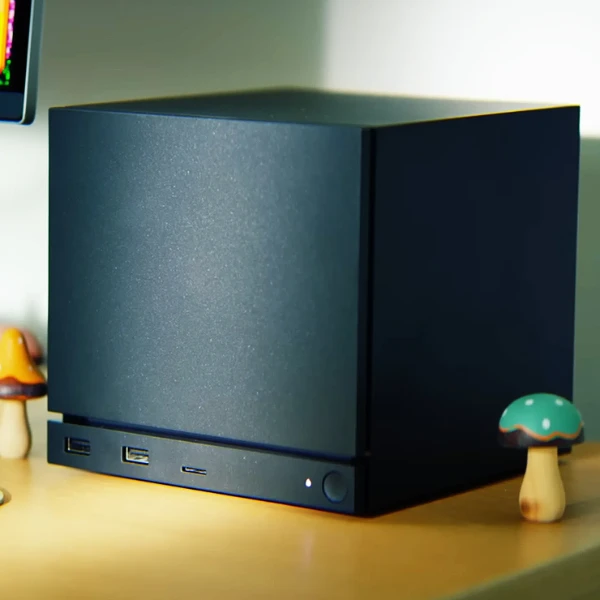
The rumored Steam Machine performance significantly exceeds Steam Deck OLED, targeting high-end gaming. This anticipated device is expected to deliver a substantial performance upgrade over the Steam Deck OLED, with claims of "six times the horsepower" [^]. Its enhanced capabilities are attributed to expected hardware specifications, including a "semi-custom" AMD Zen 4 CPU with six cores clocking up to 4.8GHz and a "semi-custom" RDNA3 AMD GPU [^]. The Steam Machine is also rumored to feature 16GB of DDR5 RAM and 8GB of GDDR6 VRAM [^][^], supporting 4K gaming at 60 frames per second using AMD's FSR technology, alongside ray tracing [^][^]. Unlike the handheld Steam Deck, the Steam Machine is designed as a compact living-room PC, enabling a higher performance ceiling for stationary gaming [^][^].
The Steam Machine is expected to be significantly pricier than the Steam Deck. Although an official price has not been announced, it is projected to be considerably more expensive than the Steam Deck OLED. Industry speculation suggests a potential price point $300-$500 higher than the top-tier Steam Deck OLED's 2026 price of $649 [^][^][^][^][^]. Valve has indicated that its pricing would be "comparable to a PC with similar specs" and "positioned closer to the entry level of the PC space," aiming to be "very competitive with what you a PC you could build yourself from parts" [^]. It is also projected to cost more than a PlayStation 5, which retails for $499 [^]. Valve has acknowledged that ongoing memory and storage shortages could influence the final pricing and release timing [^][^].

7. How might Valve's historical pricing strategy for the Steam Deck hardware inform the final retail price of the new Steam Machine before 2027?

Steam Deck 64GB launch price$399 [^][^]
Leaked Steam Machine 521GB price~$950 (19,826 CZK) [^][^]
Steam Machine 512GB prediction market threshold$700 or more [^][^]
Valve launched the Steam Deck with an aggressive, user-focused pricing model. The initial price for the 64GB model was set at $399, reflecting a strategy centered on generating revenue through engagement with the Steam platform rather than achieving high hardware profit margins. This approach led to speculation that units might even be sold at a loss to attract users [^][^][^].
New Steam Machine pricing suggests a significant shift from the Deck's strategy. Unconfirmed leaked information indicates considerably higher price points for the upcoming device, with a 512GB model potentially retailing for approximately $950 (19,826 CZK) and a 2TB model estimated around $1,070 (22,305 CZK) [^][^]. Furthermore, prediction markets anticipate a higher cost, establishing a threshold of $700 or more for the 512GB version [^][^]. This substantial difference from the Steam Deck's initial pricing implies a potential change in Valve's hardware pricing strategy for the new product [^][^].

8. What FCC filings or import/export data from Valve would serve as a leading indicator of an imminent production run and price announcement before 2027?

FCC Grantee Code2AES4 [^][^][^]
Imported Game Consoles50 tons in May 2026 [^]
Hardware Availability WindowBefore 2027 [^]
FCC authorization events provide early signals for Valve hardware production. Valve hardware products, such as the Steam Controller and SteamVR Tracking 2.0 Base Station, are associated with the FCC grantee code 2AES4 [^][^][^]. As FCC equipment authorization is a prerequisite for importing or selling products in the United States, late-stage authorization or grant events under Valve's grantee code, following testing and certification or Supplier's Declaration of Conformity procedures, can serve as a leading indicator of an imminent production run [^][^][^].
Significant hardware imports directly foreshadow product availability and pricing. In addition to regulatory filings, import data can also signal upcoming product availability and subsequent announcements. For example, The Verge reported that Valve imported approximately 50 tons of "Game Consoles" during a two-day period in May 2026 [^]. This substantial cargo was suggested to potentially include products like the Steam Machine or Steam Frame, not exclusively the Steam Deck [^]. Such significant import activity implies a near-term window for hardware availability, with a price announcement potentially occurring before 2027 [^].

9. How does the projected bill of materials (BOM) for the Steam Machine compare to the launch-day BOM of the PlayStation 5 and Xbox Series X?

Steam Machine Projected BOM$425 [^][^]
Steam Machine Projected Release2026, with potential delays to 2027 [^][^][^]
Steam Machine Retail Price Target$450-$500 (break even), $599 (realistic high-end), $699.99 (one analyst prediction) [^][^]
The Steam Machine faces potential delays but has a low projected BOM. Announced in 2025, the "GabeCube" is anticipated for a 2026 release, though shortages in memory and storage components may push its launch to 2027 [^][^][^]. Its projected bill of materials (BOM) is estimated at approximately $425 [^][^]. Retail pricing for the 500GB model is predicted to range from $450-$500 for break-even or minor profit, with a realistic high-end target of $599, and one analyst suggesting a price of $699.99 [^][^].
The new console's BOM is less than its current-gen rivals. The Steam Machine's $425 BOM is lower than the PlayStation 5's launch-day manufacturing cost of around $450 per unit [^][^][^][^], and also less than the Xbox Series X, which had an estimated launch-day BOM of about $500 per unit [^][^]. Despite its cost advantage, the new Steam Machine is expected to deliver less powerful performance compared to current-generation consoles and significantly less power than anticipated next-generation consoles; its GPU has been characterized as a "lower-mid range option that's five years old" [^]. For historical context, the PlayStation 4's manufacturing cost at launch was approximately $381 per unit [^][^]. High-end components like those for heat dissipation, DRAM, and NAND flash memory contributed significantly to the PlayStation 5's cost [^][^][^], while the CPU/GPU and memory alone accounted for about half of the Xbox Series X's production cost [^].

10. What Could Change the Odds

Key Catalysts

Valve announced on February 4, 2026, that it must revisit the Steam Machine’s exact shipping schedule and pricing because memory and storage shortages had rapidly increased, while keeping its goal of shipping in the first half of 2026 [^][^].
Market probabilities indicate a higher expected price for the Steam Machine. A Polymarket market titled “Will the Steam Machine cost $700 or more at release?” for the 512GB edition showed a crowd probability of 70% for “Yes” and resolves using official statements from Valve or credible reporting [^]. Separately, a Kalshi market “How much will the Steam Machine cost? (Odds & Predictions 2026)” includes a rule that it resolves to Yes if Valve’s first announced Steam Machine price is at least $800 [^].

Key Dates & Catalysts

  • Expiration: January 08, 2027
  • Closes: January 01, 2027

11. Decision-Flipping Events

  • Trigger: Valve announced on February 4, 2026, that it must revisit the Steam Machine’s exact shipping schedule and pricing because memory and storage shortages had rapidly increased, while keeping its goal of shipping in the first half of 2026 [^] [^] .
  • Trigger: Market probabilities indicate a higher expected price for the Steam Machine.
  • Trigger: A Polymarket market titled “Will the Steam Machine cost $700 or more at release?” for the 512GB edition showed a crowd probability of 70% for “Yes” and resolves using official statements from Valve or credible reporting [^] .
  • Trigger: Separately, a Kalshi market “How much will the Steam Machine cost?

13. Historical Resolutions

No historical resolution data available for this series.