Short Answer

Both the model and the market expect that Tesla Optimus will be released before 2027, with no compelling evidence of mispricing.

1. Executive Verdict

  • Tesla targets Optimus's external utility and unified AI by 2027.
  • Incomplete safety standards pose significant certification hurdles for Optimus.
  • Optimus 3 production is expected to commence in Summer 2026.
  • Tesla needs specific H2 2026 data to validate Optimus public release.
  • Competitors Figure AI and Boston Dynamics lead early commercialization efforts.
  • Tesla's past product launches show phased, incremental release patterns.

Who Wins and Why

Outcome Market Model Why
Before 2027 16.0% 10.5% The provided Octagon research excerpt does not contain specific information for this outcome.

Current Context

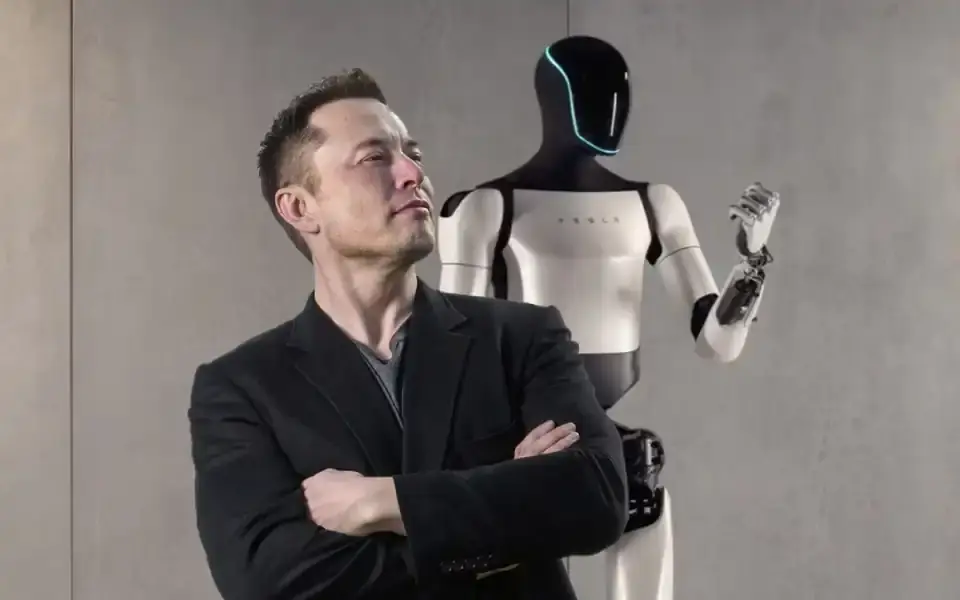
Tesla expects to begin production of its Optimus robot in late July or August 2026, though initial output will be slow [^] . Tesla CEO Elon Musk indicated production would occur at the Fremont factory, with no commitment to significant 2026 volume or consumer availability [^]. Musk has also stated that Optimus is intended to become "useful outside of Tesla sometime next year" (referring to 2027), suggesting a broader public release is not anticipated in 2026 [^]. Furthermore, a reveal of Optimus V3 is planned closer to the production timeline, specifically targeting the July-August 2026 window, which aligns with the start of manufacturing rather than an earlier consumer rollout [^].
Prediction markets reflect low confidence in a 2026 general public release for Optimus. The definition of "released" on a leading prediction market (Polymarket) requires a humanoid, bipedal robot to be newly introduced and available for purchase by the general public, explicitly excluding enterprise or employee-only pilot programs [^]. The market's leading outcome for a release is December 31, 2026, rather than June 30, 2026 [^]. Odds for Optimus being released by June 30, 2026, stood at approximately 5%, improving to about 16% for a release by December 31, 2026, which indicates a low market expectation for a general public release within 2026 [^].

2. Market Behavior & Price Dynamics

Historical Price (Probability)

Outcome probability
Date
This prediction market has exhibited a generally sideways trend, trading within a tight range of 14.0% to 25.0% probability. The contract started at 21.0% and, after a brief rise to 24.0% early in the period, experienced a significant drop to 16.0%. This decline appears directly linked to recent context indicating that while Tesla is expected to begin Optimus production in late 2026, a broader public release is not anticipated until the following year. The market seems to have interpreted this news pessimistically for a 2026 release, causing the probability to fall and settle near the lower end of its historical range.
The market has established a clear resistance level near 25.0% and a support level around 14.0%. The current price of 16.0% is trading close to this support, suggesting a sustained period of low expectation. Total traded volume is substantial at over 20,000 contracts, indicating significant interest in the question. However, the sample data points show periods of zero volume, which could suggest that trading activity is clustered around key news events rather than being continuous. Overall, the chart suggests that market sentiment is strongly bearish on the prospect of a public Optimus release before 2027, with traders pricing in the CEO's comments about a later timeline for usefulness outside the company.

3. Market Data

View on Kalshi →

Contract Snapshot

This market resolves to YES if the Tesla Optimus (or another humanoid robot) is on sale to the general public before December 31, 2026, with the outcome verified from the Tesla blog. If this condition is not met by the deadline, the market resolves to NO. The market closes by December 30, 2026, at 11:59 PM EST if the event does not occur, or the following 10 AM ET if it does, with payouts projected 1 hour after closing.

Available Contracts

Market options and current pricing

Outcome bucket Yes (price) No (price) Last trade probability
Before 2027 $0.16 $0.85 16%

Market Discussion

While Tesla has confirmed that Optimus Gen 3 production will begin in Summer 2026, with a public reveal anticipated around mid-2026 [^][^][^][^][^][^][^][^], widespread availability for general consumer purchase is not expected in 2026 [^]. Prediction markets currently indicate a low probability (around 6%) of Optimus being available for consumer purchase by June 30, 2026, citing Musk's January 2026 admission that no robots were performing "useful work" and Tesla's history of ambitious timelines [^][^][^][^][^]. Limited business-to-business arrangements, however, may commence in late 2026 [^].

4. What is the expected timeline for Tesla to integrate its FSD AI with the Optimus platform, and how does this compare to robotics-specific AI from Boston Dynamics?

Optimus external usefulness targetSometime in 2027 [^]
Fremont Optimus production startLate July, August time frame [^]
Boston Dynamics robots deployedMore than 2,000 Spot and Stretch robots [^]
Tesla targets 2027 for Optimus's external utility and unified AI. Tesla anticipates its Optimus humanoid robot becoming "useful outside of Tesla sometime next year," specifically 2027 [^]. The company expects initial Optimus production to commence at its Fremont factory around "late July, August time frame," with a second Optimus factory at Giga Texas projected to begin operations around summer 2027 [^]. A key aspect of Tesla's strategy is its unified AI stack, which employs the same architecture for both its Full Self-Driving (FSD) system and Optimus, thereby integrating robotics control and decision-making without requiring separate systems [^]. For Optimus to be considered "released" on prediction markets, it must be a humanoid bipedal robot available for purchase by the general public through an official Tesla consumer channel, with an example cutoff date of June 30, 2026 [^].
Boston Dynamics has deployed robots and advanced AI partnerships. In contrast, Boston Dynamics has already deployed more than 2,000 of its Spot and Stretch robots and is actively applying AI to enhance their understanding and interaction within diverse customer environments [^]. The company further announced a significant partnership with Google DeepMind in January 2026, aiming to integrate Gemini Robotics foundation models into its Atlas robot platform [^]. This reflects an established presence in the robotics market and a focus on evolving AI capabilities for deployed and future systems.

5. What specific technical or safety certification hurdles do robotics experts believe could delay a general public Optimus release beyond the 2026 timeframe?

Safety Standard Publication (ISO 25785-1)2026 or 2027 [^][^][^]
Musk's Public Sale Expectationend of 2027 [^][^]
Prediction Market Release DeadlineJune 30, 2026 [^][^]
Incomplete safety standards pose significant certification hurdles for Optimus. A key factor potentially delaying the general public release of Optimus beyond 2026 is the lack of a complete and mature safety standard, ISO 25785-1, for dynamically stable humanoids. This standard remains a working draft, with final publication anticipated in 2026 or 2027, creating significant certification uncertainty [^][^][^]. Robust certification requires extensive evidence beyond laboratory tests, including hazard and risk analysis, verification and validation across various conditions, and ongoing post-market monitoring as software updates are deployed [^]. This cycle of software updates, especially for foundation models, can cause a drift from the certified safety baseline, creating a recurring gap between certification schedules and AI release cycles that may hinder rapid scaling [^][^].
Public operation necessitates new safety solutions and trained personnel. Operating humanoids around the general public in unstructured environments presents unique safety challenges because barrier and behavior predictability are paramount. Unlike industrial robots, which often achieve mature safety solutions by excluding people, a comparable 'mature safety solution' for unplanned proximity with humanoids is not yet established for Optimus [^]. This requires more time for developing communication and training protocols, as well as comprehensive safety cases for home and consumer scenarios [^]. Additionally, workforce training and certification programs are crucial for operational readiness. As of May 2026, Tesla's 'Optimus Academy' is not publicly accessible, with plans to open alongside initial commercial deployments in late 2026. This suggests that the necessary ecosystem of certified operators, technicians, and developers may not be ready for widespread consumer availability in 2026 if deployments expand too quickly [^].
Tesla's own timelines indicate public release delays are likely. Elon Musk's statements, linked to Tesla's internal timelines, suggest a baseline risk of delays beyond 2026, with public sales of Optimus robots expected by the end of 2027. This is contingent on achieving 'very high reliability' and 'very high safety' [^][^]. The stringent definition of 'released' in prediction markets, requiring availability for purchase via an official consumer channel by June 30, 2026, means that safety and regulatory readiness act as practical gating factors for meeting this target [^][^].

6. How do the published commercialization roadmaps and demonstrated capabilities of competitors like Boston Dynamics and Figure AI compare to Tesla's stated pre-2027 goals for Optimus?

Figure AI Commercial ShipmentsFigure 02 currently shipping to commercial clients [^]
Boston Dynamics Atlas ProductionBegan January 2026 for strategic partners [^][^]
Tesla Optimus Consumer Sales TargetEnd of 2027 [^][^]
Figure AI and Boston Dynamics lead in early commercialization efforts. Figure AI has already achieved commercial shipments with its Figure 02 robot, which successfully completed a two-week pilot at a BMW plant in August 2024, performing tasks such as fitting sheet metal parts [^][^][^]. Additionally, the company introduced Figure 03 in October 2025, with a stated goal of achieving advanced home autonomy in residential environments by late 2026 [^][^]. Meanwhile, Boston Dynamics began initial production of its Atlas robot in January 2026. All units for that year are committed to strategic partners Hyundai's Robotics Metaplant Application Center and Google DeepMind for field testing and AI research [^][^]. Commercial availability for other customers is projected for early 2027 [^].
Tesla Optimus's pre-2027 goals are more internally focused. The robot's objectives include low-volume production for use within Tesla's own factories by summer 2026 [^][^]. As of early 2026, Optimus has demonstrated autonomous factory tasks; however, Elon Musk noted in January 2026 that the robots are "not doing useful work yet" in a material sense, and many public demonstrations have relied on teleoperation rather than full autonomy [^][^][^]. Tesla's most concrete timeline for public consumer sales of Optimus is targeted for the end of 2027 [^][^]. This falls outside the "Before 2027" timeframe, which some prediction markets define as on sale to the general public before December 31, 2026 [^][^].

7. What specific production numbers or pre-order data points would Tesla need to announce in H2 2026 to validate a public release is on track before 2027?

Public release definitionProduct available for purchase by the general public through an official Tesla consumer channel, either with a live checkout or a paid preorder/deposit [^]
Optimus production startExpected late July or August 2026 in Fremont [^]
H2 2026 validation for pre-2027 releaseAnnouncement of paid preorder/deposit or live checkout availability on an official consumer channel, and/or a disclosed units-to-be-produced and/or first-batch shipment figure by late 2026 [^][^]
To validate a public release of Optimus before 2027, Tesla needs specific H2 2026 data. To confirm Optimus is on track for a public release before 2027, Tesla would need to announce specific data points in the second half of 2026. These include the availability of paid preorders or deposits, or a live checkout option on an official consumer channel [^][^]. Additionally, a disclosed figure for units-to-be-produced and/or the first-batch shipment by late 2026 would be essential [^][^]. Prediction market criteria define a "released" product as one available for purchase by the general public through an official Tesla consumer channel, either with a live checkout or a paid preorder/deposit. Simple announcements, unveilings, demonstrations, or non-paid "register interest" waitlists do not meet the criteria for a release [^].
Tesla's planned production start alone would not validate a public release. Reporting from around 2026 indicated that Fremont Optimus production was anticipated to begin in late July or August 2026 [^]. However, Elon Musk declined to provide a 2026 volume target, stating only "start production" [^][^]. Such production-start signals are considered weaker than the established consumer-release criteria within prediction-market definitions and would be insufficient to meet the "paid preorder/live checkout" validation bar before 2027 [^][^][^].

8. How have Elon Musk's past launch strategies for products like the Cybertruck and FSD defined 'release,' and what does this precedent suggest for Optimus before 2027?

Cybertruck Customer Deliverieslate November 2023 [^]
Optimus External Usefulness Targetsometime next year (before 2027) [^]
Optimus Early Production (Fremont)later in 2026 [^]
Tesla's product launches show a pattern of phased, incremental releases. The real-world customer deliveries for the Cybertruck, marking its release, occurred in late November 2023, two years after initial projections [^]. Similarly, Full Self-Driving (FSD) began with internal releases, followed by limited external beta programs, aligning with later point releases rather than a single, comprehensive launch [^][^]. This historical trend indicates that "release" typically signifies a progressive deployment rather than immediate, widespread commercial availability.
Optimus's timeline suggests phased development before general availability. Elon Musk has indicated that Tesla aims for Optimus to achieve external usefulness "sometime next year" (before 2027), with initial production at the Fremont factory anticipated later in 2026. A subsequent manufacturing ramp-up, intended to boost production, is expected by summer 2027 [^]. These projections imply a sequential development and manufacturing increase for the humanoid robot.
Prediction markets define Optimus's release much more strictly. For instance, Polymarket's criteria for Optimus being "released" demand that the bipedal robot is available for purchase by the general public through an official Tesla consumer channel, requiring a live checkout or a paid preorder/deposit [^]. This definition explicitly excludes demonstrations, unveilings, and internal, employee, or partner pilot programs [^]. Consequently, Optimus becoming externally "useful" or entering early production would not fulfill these specific market standards for a general public release [^][^], indicating that any "Released this year? (resolves Before 2027)" prediction market wager is primarily concerned with commercialization timing.

9. What Could Change the Odds

Key Catalysts

Bullish catalysts include the commencement of Optimus 3 production in Summer 2026 and its deployment within Tesla factories for tasks such as data collection and execution [^] [^] . The integration of advanced AI, including Full Self-Driving (FSD)-derived technology, and the powerful Cortex 2.0 supercomputer serve as an underpinning for its potential [^][^]. The Gen 3 model features enhanced hands capable of over 3,000 distinct manipulation tasks, and Grok voice integration is planned for 2026, enabling natural language instructions [^].
Elon Musk has expressed ambitious goals for Optimus, predicting it will become Tesla's most significant product, potentially surpassing its automotive business [^] [^] [^] . He envisions a future where Optimus contributes to a "future of abundance" and projects an eventual annual production capacity of 10 million units from Gigafactory Texas [^][^][^]. Musk has also stated that Optimus will be "useful outside of Tesla sometime next year" (2027), indicating external deployment beyond Tesla's internal operations [^][^][^]. Analysts are increasingly recognizing Optimus as a major growth catalyst for Tesla [^][^], and the planned annual iteration cycle for new designs, such as Optimus 4 design complete in 2027, presents substantial growth opportunities [^][^].
Despite progress, skepticism exists regarding the robot's broad demand, the aggressive timeline, and its general-purpose viability [^] . The scaling of production for a complex product with thousands of new components is expected to be slow and unpredictable [^][^][^], and competition in the humanoid robotics space is intensifying [^]. Prediction markets currently reflect low confidence in Optimus being available for consumer purchase in 2026, distinguishing between internal or B2B deployment and public availability [^][^].

Key Dates & Catalysts

  • Expiration: December 31, 2026
  • Closes: December 31, 2026

10. Decision-Flipping Events

  • Trigger: Bullish catalysts include the commencement of Optimus 3 production in Summer 2026 and its deployment within Tesla factories for tasks such as data collection and execution [^] [^] .
  • Trigger: The integration of advanced AI, including Full Self-Driving (FSD)-derived technology, and the powerful Cortex 2.0 supercomputer serve as an underpinning for its potential [^] [^] .
  • Trigger: The Gen 3 model features enhanced hands capable of over 3,000 distinct manipulation tasks, and Grok voice integration is planned for 2026, enabling natural language instructions [^] .
  • Trigger: Elon Musk has expressed ambitious goals for Optimus, predicting it will become Tesla's most significant product, potentially surpassing its automotive business [^] [^] [^] .

12. Historical Resolutions

No historical resolution data available for this series.