Short Answer

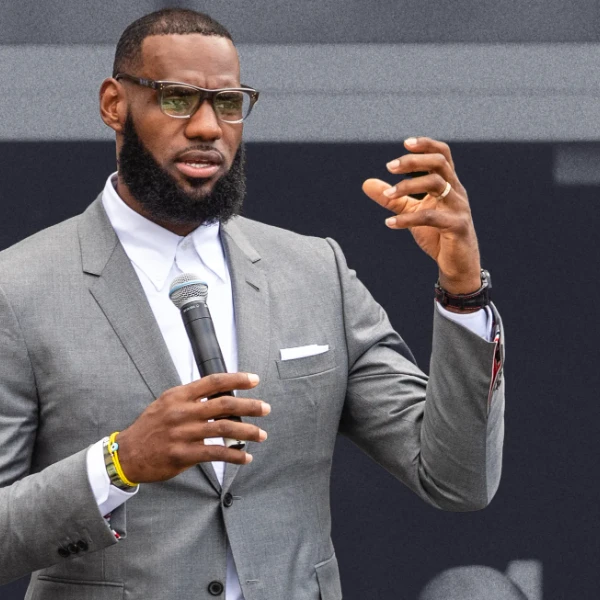
Both the model and the market expect LeBron James to become a majority owner of a men's Pro Basketball team before 2030, with no compelling evidence of mispricing.

1. Executive Verdict

  • Active NBA players are strictly prohibited from majority team ownership.
  • NBA media rights deal finalizes by late 2025, driving expansion.
  • Fenway Sports Group orchestrates multi-billion dollar sports team acquisitions.
  • A Las Vegas NBA expansion team will cost several billion dollars.
  • NBA expansion processes typically take nearly two years to complete.

Who Wins and Why

Outcome Market Model Why
Before 2030 13.0% 12.1% LeBron James has publicly stated his desire to own an NBA team after his playing career.

2. Market Behavior & Price Dynamics

Historical Price (Probability)

Outcome probability
Date
This market shows a modest upward trend, with the perceived probability of LeBron James becoming a majority owner of a men's pro basketball team before 2030 increasing from 5.0% to a current price of 13.0%. The chart is characterized by significant volatility and sharp price swings within a defined range. Notably, there were several rapid movements in late March and early April 2026, including an 8.0 percentage point spike on March 31, a 9.0 point drop on April 3, followed by two more large spikes on April 4 and April 11. Given the lack of specific news or external context provided, the direct causes for this sudden volatility are not apparent from the available information. The price action may be driven by speculative trading or reactions to unlisted events or rumors.
The trading activity establishes clear technical levels. There appears to be a support floor around the 4.0% to 5.0% mark, where the price has repeatedly found buying interest. Conversely, a strong resistance level has formed at 13.0%, a price point the market has reached and struggled to surpass on multiple occasions. Trading volume, while modest overall at 303 contracts, has tended to increase during these significant price spikes, suggesting that the upward moves are backed by a growing conviction among a small group of traders. Overall, the chart indicates that while market sentiment is gradually becoming more optimistic about the prospect, it remains low in absolute terms and is currently capped by significant resistance, reflecting continued uncertainty.

3. Significant Price Movements

Notable price changes detected in the chart, along with research into what caused each movement.

📈 April 11, 2026: 8.0pp spike

Price increased from 5.0% to 13.0%

Outcome: Before 2030

What happened: No supporting research available for this anomaly.

📈 April 04, 2026: 9.0pp spike

Price increased from 4.0% to 13.0%

Outcome: Before 2030

What happened: No supporting research available for this anomaly.

📉 April 03, 2026: 9.0pp drop

Price decreased from 13.0% to 4.0%

Outcome: Before 2030

What happened: No supporting research available for this anomaly.

📈 March 31, 2026: 8.0pp spike

Price increased from 5.0% to 13.0%

Outcome: Before 2030

What happened: No supporting research available for this anomaly.

4. Market Data

View on Kalshi →

Contract Snapshot

This market resolves to "Yes" if LeBron James becomes a majority owner of a men's professional basketball team before January 1, 2030. If this event does not occur by that date, the market resolves to "No." The market will close early if the ownership event takes place; otherwise, it closes on December 31, 2029, at 11:59 PM EST.

Available Contracts

Market options and current pricing

Outcome bucket Yes (price) No (price) Last trade probability
Before 2030 $0.13 $0.95 13%

Market Discussion

Limited public discussion available for this market.

5. How Will New NBA Media Rights Impact League Expansion Decisions?

Media Rights Deal FinalizationLate 2025 [^]
New Media Rights Deal ValueProjected US$76 billion [^]
NBA Expansion DecisionAnticipated 2026 [^]
The NBA anticipates finalizing its new media rights deal by late 2025. Sports business journalists project that new revenue will be secured by December 2025, succeeding the previous nine-year agreement valued at US$24 billion [^]. Industry experts forecast a substantially larger new deal, potentially ushering in a "US$76bn broadcast era" [^]. Following the finalization of this agreement, NBA Commissioner Adam Silver has indicated that decisions regarding league expansion will be made in 2026 [^].
Expansion is primarily driven by significant revenue increases, not specific contractual clauses. League insiders confirm there is no explicit language within the media rights deal that formally triggers expansion [^]. Instead, the substantial increase in revenue from the new media rights agreement serves as a significant financial enabler and incentive for growth [^]. This influx of broadcasting revenue helps to offset the dilution of ownership stakes for existing teams, making expansion more financially appealing when combined with substantial expansion fees [^]. The NBA Board of Governors has already formally approved the exploration of expansion, specifically identifying Seattle and Las Vegas as potential locations [^]. Expansion fees are projected to be between US$3-4 billion per team, which could generate US$6-8 billion for the existing 30 owners if two teams are added [^].

6. Can Active NBA Players Own a Team or Become Team Governors?

Active Player Majority OwnershipProhibited by NBA By-Laws [^]
Active Player Minority OwnershipAllowed for passive, minority stakes (not own team/conference) [^]
Time to Ownership Post-RetirementMichael Jordan ~1.5 years; Dwyane Wade ~2 years [^]
Active NBA players are prohibited from holding majority team ownership stakes. NBA By-Laws strictly forbid any team owner from having a direct or indirect financial interest in any NBA player or coach, which inherently prevents an active player from becoming a majority owner or "team governor" due to the conflict of interest [^]. While the new collective bargaining agreement does permit active players to acquire limited, passive minority interests in NBA and WNBA teams, these investments are subject to specific restrictions. These generally prohibit stakes in their own team or any team within their conference, and crucially, they do not allow for a controlling role or majority ownership [^].
Significant ownership roles are assumed by players post-retirement, not immediately after leaving the league. Historically, players have only taken on substantial ownership positions after their playing careers have concluded. For instance, Michael Jordan became a part-owner and president of basketball operations for the Washington Wizards approximately 1.5 years after his final retirement from the Chicago Bulls in 1998 [^]. Similarly, Dwyane Wade acquired a minority ownership stake in the Utah Jazz roughly two years following his 2019 retirement, with his stake specifically precluding involvement in day-to-day team operations [^]. The NBA requires any potential owner to undergo a thorough vetting process by its ownership committee and secure approval from three-fourths of the league's 30 teams [^], which is a time-consuming process that former players typically navigate over a period post-retirement to achieve significant ownership.

7. Can LeBron James Acquire a Majority NBA Team Stake with FSG?

FSG RedBird Investment$750 million (RedBird Capital Partners [^])
LeBron James Net Worth$1 billion - $1.3 billion (as of 2026 [^])
Majority NBA Stake CapitalOver $1 billion (based on multi-billion dollar team valuations) [^]
Fenway Sports Group (FSG) typically orchestrates multi-billion dollar sports acquisitions. Their financial model for an NBA team acquisition involves combining FSG's own capital with investments from strategic partners. This approach often allows previous owners to retain a minority stake, as demonstrated by FSG's 2021 acquisition of the Pittsburgh Penguins, where former owners Mario Lemieux and Ron Burkle maintained a minority interest [^]. Furthermore, a significant $750 million investment from RedBird Capital Partners facilitated growth and brought LeBron James, Maverick Carter, and Paul Wachter on board as minority owners of FSG [^]. This highlights FSG's role as a primary financial orchestrator, leveraging various capital sources for large-scale sports franchise acquisitions, exemplified by the Penguins' reported $1.7 billion valuation when FSG sold them in 2025 [^].
LeBron James's personal liquid capital likely cannot cover a majority stake. Considering FSG's model and current NBA team valuations, it is improbable that his personal liquid capital could cover the necessary percentage for a controlling or majority stake in an NBA team. His net worth is estimated to be between $1 billion and $1.3 billion as of 2026 [^], but net worth includes diverse assets and is not entirely liquid cash. NBA teams are commonly valued in the multi-billions of dollars, implying that a majority stake (over 50%) would likely require an investment exceeding $1 billion. Although LeBron James is a minority owner of FSG [^], his path to majority ownership of an NBA team, especially with FSG, faces significant challenges [^]. His substantial net worth would likely necessitate considerable co-investments or external financing to secure a controlling interest in a top-tier professional basketball franchise.

8. How Much is a Las Vegas NBA Expansion Team Projected to Cost?

Projected Team Valuation$5 billion [^]
NBA Engaged Investment BanksAllen & Co., Raine Group [^]
Publicly Identified BidderGroup led by Magic Johnson [^]
A Las Vegas NBA expansion team is projected to be the most expensive U.S. franchise. A potential NBA expansion franchise in Las Vegas is projected to be valued at an unprecedented $5 billion, which would establish it as the most expensive sports franchise in U.S. history [^]. The NBA has initiated its expansion process, engaging prominent investment banks such as Allen & Co. and the Raine Group to oversee the addition of new teams, with Las Vegas identified as a primary target [^].
Specific competing investment groups formally bidding remain largely undisclosed. While significant interest exists for a Las Vegas NBA team, the available research does not explicitly provide details regarding specific competing investment groups that have formally engaged sports investment banks for bids. One notable group that has publicly met with Nevada leaders regarding a Las Vegas NBA bid is led by Magic Johnson [^]. However, information concerning this group's specific financial backing or its engagement with investment banks, particularly in relation to the $5 billion projected valuation, remains undisclosed [^]. It is also noted that LeBron James does not plan to be part of a Las Vegas expansion team bid [^].

9. How Long Does NBA Expansion Take From Announcement to Entry?

Total Expansion DurationApproximately 21 months [^]
Bidding & Vetting Phase2 to 3 months [^]
Post-Approval FormalizationApproximately 16 months [^]
NBA expansion processes involve distinct stages, taking nearly two years. The 2004 Charlotte Bobcats expansion precedent demonstrates an approximate 21-month timeline from the formal announcement of expansion pursuit to the franchise's official entry into the league. This comprehensive process commenced with a focused bidding and vetting phase for prospective ownership groups. For Charlotte, NBA officials initiated meetings with potential groups in October 2002, culminating in three finalist groups submitting their bids by December 2002. This initial bidding and vetting period lasted roughly 2 to 3 months [^].
Ownership committee review and league approval can be swift. Following the initial bidding, the league's ownership committee undertook a review of the proposals and formulated a recommendation for the full NBA Board of Governors. This specific review and approval stage was comparatively quick, requiring approximately one month. On January 10, 2003, the NBA Board of Governors unanimously granted approval to Robert Johnson's group to own the new Charlotte franchise [^].
League entry involves post-approval formalization and official integration. After this critical approval by the Board of Governors, the formalization activities and the franchise's official entry into the league began. This phase included the team's official naming as the Charlotte Bobcats in June 2003. The team officially joined the NBA on May 3, 2004, following the payment of the expansion fee, marking a period of approximately 16 months from the Board of Governors' approval to its full integration into the league [^].

10. What Could Change the Odds

Key Catalysts

Catalyst analysis unavailable.

Key Dates & Catalysts

  • Expiration: January 08, 2030
  • Closes: January 01, 2030

11. Decision-Flipping Events

  • Trigger: Catalyst analysis unavailable.

13. Historical Resolutions

No historical resolution data available for this series.