
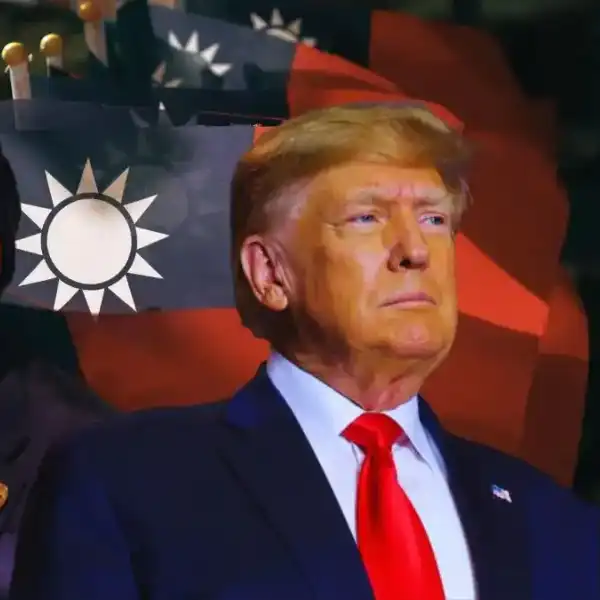
Will Trump recognize Taiwan?
Yes refers to: During Trump's term
Short Answer
1. Executive Verdict
- Trade disputes may lead Trump to reconsider the 'One China Policy'.
- Trump's likely advisors hold diverse views on strategic ambiguity for Taiwan.
- Trump's transactional view of Taiwan diverges from traditional Republican platform.
- Beijing's direct military actions would likely trigger a U.S. policy shift.
- The market indicates low crowd expectation of formal U.S. recognition by 2029.
- Formal recognition requires explicitly naming the Republic of China as sovereign.
Who Wins and Why
| Outcome | Market | Model | Why |
|---|---|---|---|
| During Trump's term | 16.0% | 12.2% | Trump's administration may choose to recognize Taiwan as part of a broader foreign policy shift. |
Current Context
2. Market Behavior & Price Dynamics
Historical Price (Probability)
3. Market Data
Contract Snapshot
This market resolves to "Yes" if the United States explicitly and formally recognizes the Republic of China as a sovereign state independent from any previously recognized country before January 20, 2029. This includes actions like opening a U.S. embassy, accepting an ambassador, or signing a formal treaty, with verification from the White House. Merely acknowledging a governing authority or establishing non-embassy missions is insufficient for a "Yes" resolution.
If the U.S. does not provide explicit and formal recognition by the deadline, the market resolves to "No." The market will close early if the "Yes" event occurs; otherwise, it closes on January 20, 2029.
Available Contracts
Market options and current pricing
| Outcome bucket | Yes (price) | No (price) | Last trade probability |
|---|---|---|---|
| During Trump's term | $0.20 | $0.83 | 16% |
Market Discussion
Traders are debating the likelihood of Donald Trump formally recognizing Taiwan as a sovereign state, with most arguments leaning against it. Key reasons for "No" include concerns that such a move would contradict US strategic ambiguity, potentially trigger World War III, or that Trump might instead recognize Taiwan as a province of China, alongside the critical economic ties linked to Taiwan's manufacturing. Despite one "Yes" viewpoint, the overwhelming sentiment in the discussion and the market's current 83% chance for "No" point to a strong consensus against recognition.
4. How might U.S.-China trade disputes during a second Trump term serve as a catalyst for changing the 'One China Policy'?
| Initial challenge to One China Policy | December 2016 [^][^][^] |
|---|---|
| Potential tariffs on Chinese goods | 140-145% [^][^] |
| China's goal for Taiwan | Reunification, by force if necessary [^] |
5. What are the stated positions of Trump's likely top foreign policy advisors for a second term regarding the Taiwan Relations Act and strategic ambiguity?
| Pompeo on Strategic Ambiguity | Advocates for "strategic clarity" [^][^][^][^] |
|---|---|
| Colby on Taiwan Defense Spending | Recommends around 10% of its GDP [^][^][^][^] |
| Bolton's Concern | Taiwan could be "sold out" for a trade deal [^][^] |
6. How does Donald Trump's transactional view of Taiwan's defense and semiconductor role compare to the traditional Republican party platform?
| Trump's proposed Taiwan defense spending | 10% of its GDP [^][^] |
|---|---|
| Republican platform Taiwan mention | Omitted in 2020 platform [^][^] |
| Traditional Republican Taiwan policy | Guided by Taiwan Relations Act (1979) and Six Assurances (1982) [^][^][^][^][^][^][^] |
7. What does the historical data on U.S. arms sales to Taiwan reveal about policy shifts during the Trump, Biden, and Obama administrations?
| Obama Admin Foreign Military Sales | $14 billion (more than) [^] |
|---|---|
| Obama Admin Direct Commercial Sales | $6.2 billion (additional) [^] |
| Trump Admin Total Arms Sales | $18.3 billion (approximately) [^][^][^] |
8. What specific military or economic actions from Beijing against Taiwan would most likely trigger a U.S. policy shift away from strategic ambiguity under Trump?
| Primary Trigger 1 | Comprehensive naval blockade of Taiwan [^][^][^] |
|---|---|
| Primary Trigger 2 | Targeted missile strikes on Taiwan's infrastructure or military bases [^] |
| Economic Trigger | Extreme economic coercion targeting Taiwanese businesses and individuals [^] |
9. What Could Change the Odds
Key Catalysts
Key Dates & Catalysts
- Expiration: January 20, 2029
- Closes: January 20, 2029
10. Decision-Flipping Events
- Trigger: The Kalshi market, "Will Trump recognize Taiwan?" (KXRECOGROC-29), indicates a low crowd expectation of formal recognition before the Jan 20, 2029 deadline, with "Buy Yes" at 19¢ and "Buy No" at 87¢ [^] .
- Trigger: This market defines formal recognition as the U.S.
- Trigger: Explicitly and formally recognizing the Republic of China as a sovereign state between Dec 18, 2024 issuance and before Jan 20, 2029, explicitly excluding mere acknowledgment, consulate/liaison offices, trade/cultural missions, or participation in multilateral forums as insufficient recognition [^] .
- Trigger: Current (2026) diplomacy keeps Taiwan salient in U.S.-China engagement, with Reuters reporting ahead of a Trump–Xi discussion that Taiwan is a top agenda item [^] [^] [^] .
12. Historical Resolutions
No historical resolution data available for this series.
