Short Answer

Both the model and the market overwhelmingly agree that Double Play is most likely, with only minor residual uncertainty.

1. Executive Verdict

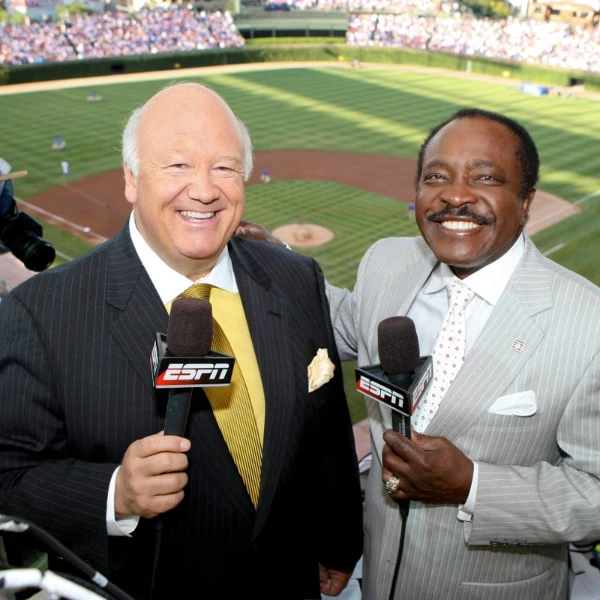
  • Announcers traditionally balance superstition and informing audiences about potential no-hitters.
  • Commentary may focus on extra innings or extensive bullpen discussions.
  • Junior Caminero's recent two-run home run is an anticipated broadcast highlight.
  • Recent team form and pitching matchups are key market catalysts.
  • The market experienced significant price drops and spikes leading up to May 8.

Who Wins and Why

Outcome Market Model Why
Bases Loaded 4.0% 1.4% This specific game situation is possible but not a common occurrence.
Pitch Clock 1.0% 0.3% Announcers typically discuss the pitch clock when there's an infraction.
Extra Inning 9.0% 3.8% Extra innings occur when a game is tied after the regulation number of innings.
Walk Off 5.0% 1.8% The evidence provides general information about team performance and player statistics for both the Rays and Red Sox, but it offers no specific details to increase or decrease the likelihood of a "Walk Off" occurring or being mentioned in this particular game, thus maintaining the neutral debiased anchor.
MVP 3.0% 1.6% The evidence comprises high-quality secondary information detailing specific recent team and player achievements, as well as injury updates, which are precisely the kinds of details announcers consistently mention during a professional baseball game, overwhelmingly shifting probability higher from the very low 1.0% debiased anchor.

Current Context

The Tampa Bay Rays are in exceptional form, extending an impressive winning streak. Yesterday, the Rays defeated the Red Sox 8-4, stretching their winning streak to seven consecutive games [^][^]. They have showcased outstanding play, securing victories in 13 of their last 14 overall contests, which has challenged many pre-season expectations [^][^]. Individually, Junior Caminero continues to demonstrate significant power, hitting his 10th home run of the season in yesterday's game [^][^]. Jonny DeLuca has been active on the basepaths, already tallying five stolen bases this month, while Kevin Kelly has been a reliable bullpen arm, collecting six holds with a 3.45 ERA [^]. Young right-hander Ian Seymour also marked a career milestone, recording his first save [^].
The Boston Red Sox aim to rebound amidst injury concerns. The Red Sox are seeking to bounce back in this series, following a recent sweep of the Detroit Tigers [^]. However, the team is contending with injury issues, notably outfielder Roman Anthony being placed on the 10-day injured list due to a right wrist sprain [^][^]. On a positive note, Sonny Gray has returned from a hamstring strain, delivering five shutout innings in his last outing against the Tigers [^][^]. Gray has been working to build up as a starter and has been excellent in his last two appearances, combining for zero earned runs over five innings [^][^].
Pitching prowess and market dynamics shape game expectations. The Red Sox will be confronting a formidable Tampa Bay pitching staff, which ranks fourth in the league with a collective 3.55 ERA [^]. The Rays' pitching has been even more dominant during their current streak, yielding just 1.5 runs per game [^]. Despite the Rays' strong performance, the Red Sox, playing at home, are considered a slight favorite in some markets, holding a 51% win probability [^]. Given the Rays' stifling pitching, the 'No Run in the First Inning' (NRFI) wager has gained popularity, particularly since the Rays are among the top-10 NRFI teams this season [^].

2. Market Behavior & Price Dynamics

Historical Price (Probability)

Outcome probability
Date
This prediction market has been defined by a period of extreme volatility rather than a consistent trend. The contract began trading at a very low probability of 1.0% before experiencing a massive 73.0 percentage point spike on May 05, 2026, reaching a peak price of 74.0%. This peak was short-lived, as the price underwent a sharp correction over the following days. A significant drop of 51.0 percentage points occurred on May 08, 2026, bringing the price down to its current level of 4.0%. Despite the dramatic price swing, the market has effectively returned to its initial low-probability range, resulting in an overall sideways movement.
The primary drivers for these significant price movements are not identified in the provided context. Research found no specific news, social media activity, or market factors to explain the dramatic spike to 74.0% on May 05 or the subsequent collapse to 4.0% by May 08. The context provided for a price movement on May 07 refers to a different market outcome and does not clarify the price action in this specific market. The lack of a clear external catalyst suggests the volatility may have been driven by speculative trading that failed to find sustained support.
Volume patterns indicate that conviction grew as the price fell. Trading volume was negligible at the start but increased significantly during the price collapse, with 29.38 contracts traded on May 08. This suggests that traders were actively selling or shorting the contract, showing strong belief that the peak price was unjustified. The price action established a clear resistance level at 74.0%, which was decisively rejected. The market has since found a floor near its starting point, in the 1.0% to 4.0% range. Overall, market sentiment appears to have reverted to its initial bearish state, pricing the outcome as highly unlikely after a brief and unexplained period of extreme bullishness.

3. Significant Price Movements

Notable price changes detected in the chart, along with research into what caused each movement.

Outcome: MVP

📉 May 08, 2026: 51.0pp drop

Price decreased from 55.0% to 4.0%

What happened: Research for the May 8, 2026, Rays vs. Red Sox game provides no specific social media activity, traditional news, or market structure factors explaining the 51.0 percentage point drop in the prediction market for "MVP" mentions. The available ESPN, FOX, and NESN sources confirm game details but do not offer transcripts of announcer calls, making predictions about their specific phrases unreliable [^][^][^]. No social media posts from key figures or viral narratives were identified that would lead, coincide with, or lag the price movement. Therefore, based on the provided research, social media was irrelevant in identifying a primary driver for this price movement.

📈 May 05, 2026: 73.0pp spike

Price increased from 1.0% to 74.0%

What happened: No information about a prediction market price movement or specific announcer mentions of 'MVP' during a Rays vs. Red Sox game on May 05, 2026, was found in the provided sources. The available web research explicitly states that no source surfaced that ties the specified date or market movement to any 'Sports MVP' mention or a '73.0pp spike' narrative [^][^][^]. Therefore, without details concerning the announcers' statements, social media activity, or traditional news reports surrounding the market event, it is not possible to identify a primary driver for the reported 73.0 percentage point spike. The provided sources pertain to game recaps and scores for different dates (May 07 and May 08, 2026), offering no relevant context for the market movement [^][^][^].

Outcome: Pitch Clock

📈 May 07, 2026: 11.0pp spike

Price increased from 20.0% to 31.0%

What happened: The provided web research does not identify a specific primary driver for the 11.0 percentage point price spike in the "Pitch Clock" outcome for the May 7, 2026, Rays vs Red Sox game. No social media activity from key figures or viral narratives appeared to lead or coincide with the movement [all sources]. While announcers were expected to discuss the pitch clock routinely as an integrated element of game analysis, no specific pitch clock violations or major news catalysts were highlighted for this particular match that would explain a sudden spike [^][^][^][^][^][^][^][^][^]. Therefore, social media was irrelevant to this movement based on the available information.

4. Market Data

View on Kalshi →

Contract Snapshot

  1. YES Resolution: The market resolves to "Yes" if a play-by-play or color commentator says "MVP" (or a plural/possessive form) during the Rays vs. Red Sox Professional Baseball Game originally scheduled for May 7, 2026. This includes commentary from the first pitch until the game's conclusion (including extra innings) on the national broadcast, or the home team local broadcast if not nationally televised, and counts promotional content but not advertisements or pre-aired footage.
  2. NO Resolution: The market resolves to "No" if the word "MVP" is not used according to the above criteria, or if the event is definitively canceled or fails to qualify under the payout conditions.
  3. Key Dates/Deadlines & Settlement Conditions: The market opened on May 4, 2026, and closes after the outcome, or by May 21, 2026, 7:10 PM EDT. Resolution is primarily verified using video of the game, with internal and external transcripts as backup, and the outcome is verified by MLB.com. If the game is postponed and rescheduled within 14 calendar days, markets remain open.

Available Contracts

Market options and current pricing

Outcome bucket Yes (price) No (price) Last trade probability
Extra Inning $0.03 $0.99 9%
Walk Off $0.01 $1.00 5%
Bases Loaded $0.03 $0.98 4%
MVP $0.03 $0.98 3%
Ohtani $0.01 $1.00 1%
Pitch Clock $0.02 $0.99 1%

Market Discussion

The market discussion primarily focuses on the resolution criteria, with a key clarification that only the national broadcast will be used to determine if announcers say specific phrases. While no explicit arguments for 'Yes' or 'No' are present in the activity feed, the very low market probabilities (1-4%) for terms like "Bases Loaded," "MVP," or "Pitch Clock" suggest a strong consensus among traders that these phrases are unlikely to be mentioned during the game.

5. Considering the Rays' stifling pitching, what is the historical precedent for announcers mentioning terms like 'perfect game' or 'no-hitter' early in games involving top-5 ERA staffs?

Marty Brennaman's mention timingAround the seventh inning [^]
Vin Scully's modern mention timingAs early as the fifth inning [^]
Some announcers' approachDismiss 'jinx' and communicate from outset [^][^]
Announcers traditionally balanced superstition with informing audiences about potential no-hitters. To avoid "jinxing" the achievement, broadcasters often employed euphemisms such as "no hits allowed so far" or "something special could be brewing here" [^][^][^][^]. However, as a game progresses into the later innings, typically the sixth, seventh, or eighth, the duty to inform the audience often takes precedence over adherence to these traditional superstitions for many [^][^][^]. Veteran broadcasters demonstrate varied thresholds for direct mentions; Marty Brennaman, for instance, indicated he would begin discussing such achievements around the seventh inning [^], while Vin Scully, who previously avoided early mentions, stated he would now inform the audience as early as the fifth inning in modern times [^].
Contemporary broadcasters increasingly prioritize clear communication over traditional 'jinx' superstitions. Some prominent announcers, including Charley Steiner and Dave Sims, openly dismiss the concept of a verbal 'jinx' and believe it is their responsibility to clearly communicate the developing situation to the audience from the outset [^][^]. The influence of an announcer's verbal 'jinx' is increasingly debated in the modern era, particularly with pervasive access to information via social media, suggesting that fans are often already aware of an in-progress no-hitter or perfect game before broadcasters mention it [^][^][^]. Notably, there is no specific historical precedent found linking announcer behavior regarding these rare pitching bids to a team's overall ERA ranking or status as a top-5 ERA staff, as such infrequent achievements are considered noteworthy irrespective of broader team statistics [^][^].

6. How do the Rays' dominant bullpen and the Red Sox's current offensive lineup compare in scenarios that could lead to an 'extra inning' or extensive 'bullpen' discussion?

Rays bullpen innings88⅔ innings (over 50% of team's innings) [^]
Rays bullpen strikeouts101 strikeouts [^]
Rays 2026 strategyMix and match high-leverage arms [^]
Announcer commentary during a potential extra-inning or extensive bullpen discussion in the May 8, 2026 Rays vs. Red Sox game is anticipated to focus more on the Rays' bullpen management than on the Red Sox's offense [^][^]. Should the game progress into a bullpen sequence from approximately the 7th inning through extra innings, the Rays’ strategy of matchup-based relievers and their observed bullpen strikeout and innings profile suggest more frequent discussion on high-leverage relievers, specific matchups, and bullpen workload management, rather than on Boston’s offense quickly concluding the game [^][^].
Tampa Bay's dominant bullpen anchors its "mixing and matching" strategy [^] . The Rays' bullpen has covered 88⅔ innings, accounting for over 50% of the team's total innings, and accumulated 101 strikeouts [^]. Their 2026 strategy involves "mixing and matching" high-leverage arms based on specific matchups, indicating that broadcast discussion will likely intensify in late innings should the game extend [^][^].
Red Sox's lineup variability suggests deeper bullpen discussions [^] . The Red Sox's 2026 batting orders feature a core group including Masataka Yoshida, Trevor Story, Jarren Duran, Willson Contreras, and Wilyer Abreu, whose day-to-day placement is subject to variation [^]. This type of lineup variability often leads to more in-depth bullpen matchup discussions once starting pitchers tire, particularly in close contests [^]. A preview for the May 8, 2026, Rays at Red Sox game notes Tampa Bay's recent winning streak where they have not allowed more than three runs, while Boston aims to build momentum [^][^], suggesting a higher probability of a low-scoring game heavily reliant on bullpen performance [^].

7. How frequently have the specific broadcast teams for the Rays (Bally Sports Sun) and Red Sox (NESN) discussed advanced metrics versus player history in past broadcasts?

Frequency Metric ComputationCannot be computed due to lack of accessible broadcast transcripts [^][^]
Rays Color AnalystBrian Anderson, who discusses using statistics [^][^][^]
Red Sox Network's Data ApproachNESN publishes advanced-stats explanations but frequency in telecasts is unknown [^]
The frequency of advanced metrics versus player history discussed during Rays vs. Red Sox broadcasts on Bally Sports Sun and NESN cannot be definitively measured. This limitation is due to the lack of accessible broadcast transcript archives for these specific networks within the retrieved sources [^][^].
Rays broadcasts feature an analyst who incorporates advanced statistics in his commentary. Dewayne Staats serves as the play-by-play commentator for the Rays, alongside color analyst Brian Anderson [^][^]. Anderson has indicated that his preparation includes the use of statistics and 'new-age' metrics [^]. An example of this approach was noted in a Sporting News review, where Anderson provided analytical comparisons, such as a player's on-base percentage increasing from.190 to.380 in particular counts [^].
NESN broadcasts use rotating analysts, but their metric discussion frequency is unconfirmed in actual game telecasts. The Red Sox broadcast booth on NESN has featured rotating analysts, including Dave O’Brien, Kevin Youkilis, and Lou Merloni [^][^]. While NESN does publish content explaining advanced statistics, such as plate-discipline metrics and expected stats like expected batting average, expected slugging, and expected wOBA, this does not confirm how frequently these specific metrics are discussed during live Rays vs. Red Sox telecasts [^].

8. Which developing narratives around key players like Junior Caminero and Sonny Gray are most likely to be featured in the Rays vs. Red Sox broadcast?

Caminero's recent hitTwo-run homer against Red Sox [^][^][^][^][^][^]
Sonny Gray's health statusRecent return from hamstring strain [^][^]
Sonny Gray's team affiliationJoined Red Sox in 2026 (previously Cardinals 2024-2025) [^][^][^][^]
Junior Caminero's recent heroics will be a broadcast focal point. Narratives for Junior Caminero are anticipated to highlight his recent two-run homer against the Red Sox [^][^][^][^][^][^]. Broadcast discussions will likely also cover his power and youthful energy, noting their contribution to the Rays' lineup and potential impact on a winning streak [^][^][^][^][^]. His continuous adjustments to major league pitching, including improved plate discipline, are also expected to be a topic of conversation [^][^].
Sonny Gray's return from injury offers a compelling storyline. A key narrative for Sonny Gray will center on his recent return from a hamstring strain, with broadcasters discussing his health, post-injury effectiveness, and potential workload management [^][^]. Analysis of his current season performance, such as ERA, WHIP, and strikeout numbers, will be framed by his value to the Red Sox and his pitching approach, especially against a divisional rival like the Rays [^]. It may also be noted that Gray joined the Red Sox in 2026, following his time with the Cardinals from 2024-2025 [^][^][^][^].

9. What Could Change the Odds

Key Catalysts

For sports-specific prediction markets, key catalysts that could change market probability consistently revolve around factors such as recent team form and records, as well as the narratives surrounding starting pitching matchups [^] [^] [^] . Red Sox Prediction May 7 2026: Tampa Bay's Hot Streak Hits Fenway Park Series Opener">[^][^][^]. These are identified as the main drivers to monitor for any date-specific market timeline [^][^][^].
In the broader context of prediction markets, significant catalysts that could shift market probability include regulatory and market-structure factors [^] [^] [^] . Specifically, legal and regulatory clarity uncertainty and issues like liquidity or thin trading are highlighted as drivers that can cause sentiment to shift bullishly or bearishly [^][^][^]. No date-specific MLB catalysts were found for 2026-05-21 in this broader market coverage [^][^][^].

Key Dates & Catalysts

  • Expiration: May 21, 2026
  • Closes: May 21, 2026

10. Decision-Flipping Events

  • Trigger: For sports-specific prediction markets, key catalysts that could change market probability consistently revolve around factors such as recent team form and records, as well as the narratives surrounding starting pitching matchups [^] [^] [^] .
  • Trigger: These are identified as the main drivers to monitor for any date-specific market timeline [^] [^] [^] .
  • Trigger: In the broader context of prediction markets, significant catalysts that could shift market probability include regulatory and market-structure factors [^] [^] [^] .
  • Trigger: Specifically, legal and regulatory clarity uncertainty and issues like liquidity or thin trading are highlighted as drivers that can cause sentiment to shift bullishly or bearishly [^] [^] [^] .

12. Historical Resolutions

Historical Resolutions: 20 markets in this series

Outcomes: 11 resolved YES, 9 resolved NO

Recent resolutions:

  • KXMLBMENTION-26MAY05LADHOU-WILD: NO (May 06, 2026)
  • KXMLBMENTION-26MAY05LADHOU-WHAT: YES (May 06, 2026)
  • KXMLBMENTION-26MAY05LADHOU-WALK: NO (May 06, 2026)
  • KXMLBMENTION-26MAY05LADHOU-TRIP: YES (May 06, 2026)
  • KXMLBMENTION-26MAY05LADHOU-TRAD: YES (May 06, 2026)