Short Answer

The model sees potential mispricing: the most likely outcome is criticism Before Jun 8, 2026, with 100.0% model probability versus 0.0% market probability. This suggests that Trump has already publicly criticized Benjamin Netanyahu multiple times as of June 2026, making further criticism highly probable by 2027.

1. Executive Verdict

  • Trump has already publicly criticized Netanyahu multiple times by June 2026.
  • Ongoing diplomatic friction makes further Trump criticism highly probable by 2027.
  • Trump's criticism is most likely tied to Netanyahu's actions regarding Iran policy.
  • Trump confirmed using derogatory language towards Netanyahu during a recent phone call.
  • Trump and Netanyahu diverge on Iran's nuclear program and regional influence in 2026.

Who Wins and Why

Outcome Market Model Why
Before Jun 15, 2026 30.0% 100.0% Trump has already criticized Netanyahu multiple times, and ongoing diplomatic friction makes further criticism highly probable.
Before Jun 22, 2026 2.0% 100.0% Trump has already criticized Netanyahu multiple times, and ongoing diplomatic friction makes further criticism highly probable.
Before Jun 29, 2026 97.0% 100.0% Trump has already criticized Netanyahu multiple times, and ongoing diplomatic friction makes further criticism highly probable.

Current Context

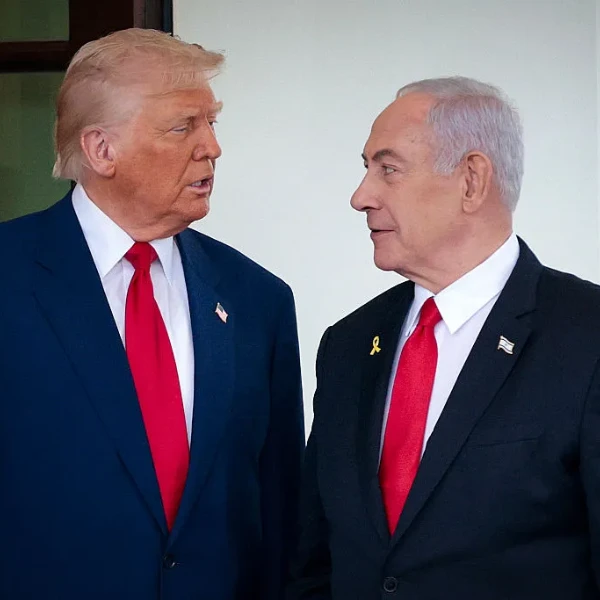
President Donald Trump has already publicly criticized Prime Minister Benjamin Netanyahu and asserted control. As of June 2026, President Trump notably confirmed that he called the Israeli leader “fucking crazy” during a heated phone call regarding Israel's military actions in Lebanon [^][^][^]. Trump has explicitly stated that he is the one who “calls the shots” in the U.S.-Israel relationship and that Netanyahu will have to accept any U.S.-Iran deal, underscoring a period of significant diplomatic friction [^][^][^][^].
Netanyahu’s political future relies on appearing aligned with Trump, despite existing tensions. Prime Minister Netanyahu faces critical Israeli national elections no later than October 27, 2026, and his political survival is largely viewed as dependent on maintaining the appearance of a functional relationship with Trump [^][^][^][^]. Expert opinions are divided on whether the current rift between the two leaders represents a temporary tactical disagreement or a more profound strategic divergence, with some analysts suggesting that Trump might still intervene to support Netanyahu’s re-election efforts despite his public rebukes [^][^].

2. Market Behavior & Price Dynamics

Historical Price (Probability)

Outcome probability
Date
This market has experienced a significant upward trend, with the probability of the event occurring moving from a starting price of 5.0% to a current price of 30.0%, after peaking at 87.0% earlier. The price action has been highly reactive to news reports concerning President Trump's public statements about Prime Minister Netanyahu. A series of spikes in early June corresponded directly with these developments. For instance, a notable price increase occurred around June 5 after it was reported that Trump confirmed calling Netanyahu "f*ing crazy." This was followed by a brief drop on June 7, which also coincided with reports of Trump's criticisms, possibly reflecting temporary uncertainty or profit-taking. However, the upward trend resumed with a 12.0 percentage point spike on June 8 as reports surfaced of Trump's continued public criticism and assertions that he "calls the shots."
Trading volume has been substantial, with over 10,400 contracts traded, indicating significant market interest. The price spike on June 8 was accompanied by a volume of over 684 contracts, suggesting strong conviction behind that specific upward move. From a technical perspective, the price found initial support around the 5.0% level before its ascent. The current 30.0% level appears to be a key pivot point, established after the most recent news cycle. The overall chart suggests market sentiment has shifted dramatically; what was once considered a low-probability event is now seen as much more plausible based on recent actions. The current price indicates traders assign a notable chance of further public criticism occurring before the 2027 resolution date, though significant uncertainty remains.

3. Significant Price Movements

Notable price changes detected in the chart, along with research into what caused each movement.

Outcome: Before Jun 29, 2026

📈 June 08, 2026: 87.0pp spike

Price increased from 10.0% to 97.0%

What happened: The primary driver of the 87.0 percentage point spike on June 08, 2026, was President Donald Trump's continued public criticism of Benjamin Netanyahu, conveyed through traditional news channels. On or around June 8, 2026, Trump was reported stating in an interview with the Financial Times that Netanyahu would have "no choice" but to accept a US-Iran peace deal, emphasizing, "I call the shots. He [Netanyahu] doesn’t call the shots" [^][^][^]. This direct and assertive criticism, coinciding with the market movement date, directly addressed the prediction market's condition. While social media likely amplified these news reports, the core statements originated in traditional news interviews, making traditional news the primary driver and social media a contributing accelerant.

📉 June 07, 2026: 26.0pp drop

Price decreased from 36.0% to 10.0%

What happened: The primary driver for the 26.0 percentage point drop was Donald Trump's public criticisms of Benjamin Netanyahu on June 7, 2026 [^][^][^]. In interviews around this date, Trump publicly stated that he "calls the shots" and Netanyahu "won't have any choice" but to accept a U.S.-brokered deal with Iran [^][^][^][^][^]. These direct public statements from a key figure coincided with the market movement, fulfilling the market's condition for public criticism. Based on the provided information, social media was not explicitly identified as a primary driver, as the criticisms were reported as public statements made in interviews rather than social media posts.

Outcome: Before Jun 22, 2026

📉 June 05, 2026: 13.0pp drop

Price decreased from 43.0% to 30.0%

What happened: The primary driver of this price movement was the widely reported news of former President Trump's explicit and public criticism of Benjamin Netanyahu, specifically his confirmation of calling Netanyahu "fing crazy" during a June 1, 2026 phone call [^][^]. This criticism, driven by Netanyahu's actions in Lebanon, was extensively covered by traditional news outlets on and before June 5, 2026, coinciding with the 13.0 percentage point market drop [^][^][^]. While the direction of the price drop (indicating a decreased probability) appears counter-intuitive given that the event fulfilling the market condition occurred, the public revelation of this criticism nonetheless represented the major news impacting market sentiment [^][^][^]. Based on the provided sources, traditional news reporting was the primary mechanism for disseminating this information, and social media activity does not appear to have been a primary driver.

📈 June 04, 2026: 16.0pp spike

Price increased from 27.0% to 43.0%

What happened: The primary driver of the market spike was Donald Trump's public confirmation, on June 3, 2026, that he had called Benjamin Netanyahu "fing crazy" and "crazy" during a private phone call, expressing his being "a little bit perturbed" by Netanyahu's military actions [^][^][^]. This direct criticism from a key figure was made public in an interview published on the 'Pod Force One' podcast [^][^][^], directly preceding and leading the market's 16.0 percentage point increase on June 4, 2026. While the original statement was not a direct social media post, its rapid dissemination through traditional news and subsequent viral spread across social media platforms made social media a contributing accelerant to the price movement.

📈 June 03, 2026: 11.0pp spike

Price increased from 16.0% to 27.0%

What happened: The primary driver of the market spike was President Trump's public confirmation on June 3, 2026, that he had described Benjamin Netanyahu as 'fing crazy' during an earlier phone call [^][^][^]. This statement, made during a podcast interview, represented a direct and significant public criticism from a key figure, directly fulfilling the prediction market's condition [^][^][^]. The public acknowledgment by Trump directly coincided with the market movement. While the communication medium was a podcast, not a social media post, this direct statement from a key figure acted as the primary driver due to its immediate and impactful public nature.

4. Market Data

View on Kalshi →

Contract Snapshot

This market resolves to "Yes" if Donald Trump publicly criticizes Benjamin Netanyahu before June 15, 2026, based on reports from a list of specified news sources. A public criticism must be an explicit, negative statement made by Trump personally, directed at Netanyahu by name or clear reference, and negative in substance. If this event does not occur by June 14, 2026, 11:59 PM EDT, the market resolves to "No", but will close early if the criticism happens sooner.

Available Contracts

Market options and current pricing

Outcome bucket Yes (price) No (price) Last trade probability
Before Jun 15, 2026 $0.30 $0.72 30%
Before Jun 22, 2026 $0.29 $0.93 2%
Before Jun 29, 2026 $0.97 $0.95 97%

Market Discussion

In early June 2026, former President Trump publicly confirmed reports that he had used profanity and called Prime Minister Benjamin Netanyahu "fucking crazy" during a phone call regarding Israel's military actions [^][^][^]. Trump has also publicly asserted control over the U.S.-Israel relationship, stating in interviews (e.g., June 7, 2026) that he "calls the shots" and that Netanyahu has "no choice" but to accept U.S.-brokered deals [^][^]. Political analysis characterizes these public criticisms as a significant stress test for the leaders' relationship, complicating Netanyahu's domestic political standing [^][^].

5. What potential actions by Benjamin Netanyahu regarding the U.S.-Iran deal or Israeli domestic policy are most likely to trigger new public criticism from Donald Trump before October 2026?

Primary Trigger for Trump's CriticismUnilateral military actions against Iran or publicly denouncing a U.S.-Iran deal [^][^][^]
Start of Current 'Iran War'February 28, 2026 [^][^][^][^][^][^][^][^][^][^][^][^][^][^][^]
Trump's Stance on Iran DealTrump "calls all the shots" and Netanyahu "won't have any choice" but to accept a deal [^][^][^]
Trump's criticism of Netanyahu is most likely tied to Iran policy. Donald Trump is most likely to publicly criticize Benjamin Netanyahu if Netanyahu undertakes unilateral military actions against Iran or its proxies, or if he publicly denounces a successfully negotiated U.S.-Iran agreement [^][^][^]. Trump has been actively pursuing a new Iran deal and pressing for a ceasefire in the current "Iran war," which commenced with U.S.-Israel strikes on February 28, 2026 [1-15]. He has explicitly told Netanyahu that he "calls all the shots" on this matter and that Netanyahu "won't have any choice" but to accept a deal with Iran [^].
Unilateral Israeli military actions against Iran would likely trigger Trump's public criticism. If Netanyahu were to take unilateral, aggressive military action against Iran or its proxies that Trump believes jeopardizes an emerging peace agreement or escalates regional instability, it would likely provoke strong public criticism, similar to recent instances where Trump reportedly called Netanyahu "crazy" [^]. Such actions could encompass pre-emptive strikes on Iranian nuclear facilities or significant military escalations without clear U.S. coordination, particularly if seen as derailing ongoing diplomatic efforts [^]. Additionally, if the Trump administration successfully negotiates a new Iran deal and Netanyahu publicly and vehemently denounces it, this would almost certainly draw Trump's ire [^].
Israeli domestic policy changes are less likely to provoke Trump's direct criticism. While a renewed and radical push for judicial overhaul causing severe internal chaos in Israel could theoretically elicit a critical remark [^][^][^], Trump has previously defended Netanyahu against his corruption trial [^][^].

6. What is the documented history of public statements and reported private remarks between Trump and Netanyahu since the start of 2026?

Trump's private description of Netanyahu"fucking crazy" (June 2026) [^][^][^]
Trump's public stance on Iran negotiations"I call the shots" (June 2026) [^][^][^]
Trump's personal view of NetanyahuLikes him personally, sees relationship as a partnership [^][^][^]
Donald Trump publicly and privately criticized Benjamin Netanyahu since June 2026. Since early June 2026, Donald Trump expressed contradictory sentiments regarding Benjamin Netanyahu, confirming in a private phone call that he used the phrase "fucking crazy" to describe Netanyahu concerning Israel's military actions in Lebanon [^][^][^]. Concurrently, throughout June 2026, Trump repeatedly asserted his dominance in U.S.-led Iran-related negotiations, publicly stating, "I call the shots," and indicating that Netanyahu would have to accept any deal reached by the U.S. [^][^][^].
Despite public criticisms, Trump maintained a personal liking for Netanyahu. He also stated in interviews that he personally likes Netanyahu and works effectively with him [^][^][^]. Trump has characterized their relationship as a partnership between two wartime leaders, suggesting a complex dynamic amidst the reported tensions [^][^][^].

7. How do Trump's and Netanyahu's strategic objectives concerning Iran's nuclear program and regional influence fundamentally differ in 2026?

Trump's Iran StrategyPrioritizes diplomatic deal and cooperative dismantling of uranium stockpiles [^][^][^][^]
Netanyahu's Iran StrategyAdvocates for continued military pressure to degrade military infrastructure and proxy networks [^][^][^][^]
Trump's Stance on US-Israel RelationshipAsserts dominance, stating he 'calls the shots' and Netanyahu has 'no choice' [^][^][^][^]
Trump and Netanyahu diverge on Iran's nuclear program objectives. In 2026, U.S. President Donald Trump and Israeli Prime Minister Benjamin Netanyahu hold fundamentally different strategic objectives regarding Iran's nuclear program and regional influence. Trump seeks a diplomatic deal to stabilize the region and restrict Iran's nuclear program, potentially through cooperative dismantling of uranium stockpiles [^][^][^][^]. Conversely, Netanyahu favors ongoing military pressure to significantly degrade Iran’s military infrastructure and regional proxy networks like Hezbollah [^][^][^][^].
Trump asserts control over the U.S.-Israel relationship. President Trump has explicitly asserted his dominance in the bilateral relationship, stating that he 'calls the shots' and that Netanyahu has 'no choice' but to accept any US-Iran deal [^][^][^]. This firm stance comes despite Netanyahu's reported internal skepticism and frustration over his perceived exclusion from the core of the negotiations and admitted difficulty influencing Trump's decisions [^][^][^][^].
Tensions are evident, yet coordination persists on security. Tensions are evident as Trump pressures Israel to avoid military escalation while Netanyahu aims to preserve his nation's freedom of action, leading to public disagreements [^][^][^][^]. Despite these underlying strategic frictions, both leaders continue to coordinate on specific security matters [^][^][^][^].

8. How might the polling trends for the Israeli general election (due by October 2026) influence the timing and nature of Trump's public comments on Netanyahu?

Bill to dissolve parliament advancedJune 8, 2026 [^][^]
Expected election periodSeptember 8 - October 20, 2026 [^][^]
Trump's reported comment on Netanyahu"fucking crazy" in June 2026 [^][^][^][^]
Israeli elections loom as Netanyahu faces political challenges and declining support. The Israeli parliament advanced a bill to dissolve itself on June 8, 2026, setting general elections for sometime between September 8 and October 20, 2026 [^][^]. Benjamin Netanyahu reportedly opposes an early September election, preferring a later date in the hopes of improving his standing amidst poor domestic polling [^]. This political vulnerability for Netanyahu presents an opportunity for Donald Trump, whose previous criticisms have reportedly already damaged the Israeli Prime Minister's image during this crucial pre-election period [^][^][^].
Tensions between Trump and Netanyahu are escalating, driven by strategic and personal factors. Public tensions between Donald Trump and Benjamin Netanyahu have intensified, particularly following a leaked phone call in June 2026 where Trump reportedly referred to Netanyahu as "fucking crazy" [^][^][^][^]. These strained relations are reportedly fueled by strategic disagreements concerning the ongoing war with Iran and Lebanon, with Trump aiming to assert dominance while Netanyahu endeavors to balance United States directives with his own political survival [^]. Given Netanyahu's reported preference for a later election, Trump's public comments may be strategically timed to further exploit Netanyahu's political weakness, potentially escalating beyond policy debates to include personal insults [^][^][^][^][^][^].

9. What is the current consensus among U.S. and Israeli foreign policy experts on whether the recent friction between Trump and Netanyahu is a temporary tactical dispute or a long-term strategic break?

Relationship StatusSignificant strain (As of June 2026) [^][^][^][^]
Expert View on FrictionDivided between tactical dispute or long-term strategic break [^][^][^][^]
Prediction Market OutlookSkepticism on persistent public escalation [^][^][^][^][^]
U.S. and Israeli experts lack consensus on Trump-Netanyahu friction. Foreign policy experts are divided on whether the recent friction between Donald Trump and Benjamin Netanyahu represents a temporary tactical dispute or a long-term strategic break [^][^][^][^]. As of June 2026, their relationship is characterized by significant strain, marked by profane rebukes from Trump and clear policy disagreements concerning the ongoing war in the Middle East and ceasefire negotiations with Iran [^][^][^][^].
Experts propose tactical or strategic reasons for the dispute. One perspective suggests the friction is tactical, potentially staged to maintain diplomatic maneuverability or confuse adversaries like Iran [^][^][^][^]. Conversely, another view interprets it as a substantive, long-term strategic break, stemming from divergent priorities: Trump seeks regional stabilization via diplomatic deals, while Netanyahu focuses on maintaining his domestic political coalition and pursuing harder-line military objectives. Both leaders face domestic pressure to appear independent, with Netanyahu criticized for perceived subservience to the U.S. and Trump scrutinized for allowing Israel to influence U.S. foreign policy [^][^].
Prediction markets reflect ongoing uncertainty but doubt sustained escalation. Prediction markets concerning whether Trump will publicly disparage or insult Netanyahu show continued active interest, reflecting uncertainty about the future trajectory of their public rhetoric. However, traders generally remain skeptical of persistent public escalation beyond the current level of friction [^][^][^][^][^].

10. What Could Change the Odds

Key Catalysts

As of June 8, 2026, President Donald Trump confirmed using derogatory language, specifically calling Prime Minister Benjamin Netanyahu "fucking crazy," during a recent phone call concerning Israel's actions in Lebanon [^] [^] [^] . US president says 'I call the shots, he doesn't' but Netanyahu goes on to strike Iran">[^][^][^]. Despite this public confirmation, Trump publicly stated in interviews that he still likes Netanyahu and works well with him, emphasizing their shared role as wartime leaders while acknowledging tactical disagreements [^][^][^].
Trump continues to exert public pressure on Netanyahu, stating to the Financial Times on June 7, 2026, that he "calls the shots" and that Netanyahu has "no choice" but to accept the US-negotiated deal with Iran [^] [^] . US president says 'I call the shots, he doesn't' but Netanyahu goes on to strike Iran">[^][^]. This public dynamic between the two leaders has been a subject of interest in prediction markets, which tracked the likelihood of Trump publicly insulting Netanyahu, with some markets establishing "Yes/No" contracts regarding such behavior before June 30, 2026 [^][^].

Key Dates & Catalysts

  • Expiration: June 15, 2026
  • Closes: June 29, 2026

11. Decision-Flipping Events

  • Trigger: As of June 8, 2026, President Donald Trump confirmed using derogatory language, specifically calling Prime Minister Benjamin Netanyahu "fucking crazy," during a recent phone call concerning Israel's actions in Lebanon [^] ing crazy’ during their recent phone call | The Times of Israel">[^] [^] .
  • Trigger: Despite this public confirmation, Trump publicly stated in interviews that he still likes Netanyahu and works well with him, emphasizing their shared role as wartime leaders while acknowledging tactical disagreements [^] ing crazy’ during their recent phone call | The Times of Israel">[^] [^] .
  • Trigger: Trump continues to exert public pressure on Netanyahu, stating to the Financial Times on June 7, 2026, that he "calls the shots" and that Netanyahu has "no choice" but to accept the US-negotiated deal with Iran [^] [^] .
  • Trigger: This public dynamic between the two leaders has been a subject of interest in prediction markets, which tracked the likelihood of Trump publicly insulting Netanyahu, with some markets establishing "Yes/No" contracts regarding such behavior before June 30, 2026 [^] [^] .

13. Historical Resolutions

Historical Resolutions: 1 markets in this series

Outcomes: 0 resolved YES, 1 resolved NO

Recent resolutions:

  • KXDJTATTACKNETANYAHU-26JUN-26JUN08: NO (Jun 08, 2026)