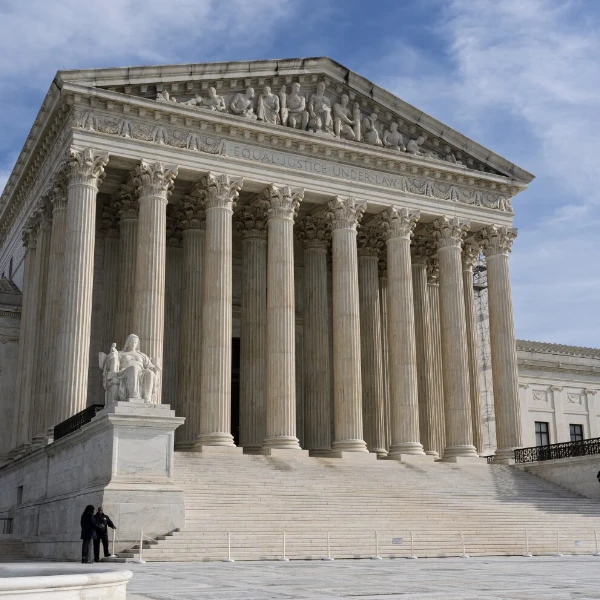
Short Answer

Both the model and the market expect that the Supreme Court will hear a 3rd Amendment case before Trump's term ends, with no compelling evidence of mispricing.

1. Executive Verdict

  • No active Circuit Court cases present a Third Amendment split.
  • No direct evidence of originalist justices' Third Amendment interest exists.
  • Project 2025 advocates for deploying military personnel domestically.
  • Third Amendment Lawyers Association actively seeks modern test cases.
  • An incident by June 2025 is key for a pre-2029 SCOTUS hearing.
  • The market saw an 8.5 percentage point drop on April 24, 2026.

Who Wins and Why

Outcome Market Model Why
any 3rd Amendment case 12.0% 9.0% The evidence confirms the market's low probability, as there are no currently active U.S. Circuit Court lawsuits identified that directly challenge the Third Amendment with a high probability of creating a circuit split, a key factor for Supreme Court review.

2. Market Behavior & Price Dynamics

Historical Price (Probability)

Outcome probability
Date
This market has exhibited a predominantly sideways trend, trading within a relatively narrow 10-point range for its entire history. The price has fluctuated between a low of 5.1% and a high of 15.0%, indicating a stable, albeit low, perceived probability of the event occurring. The most significant price movement was a sharp 8.5 percentage point drop on April 24, 2026, when the probability fell from 15.0% to 6.5%. The provided context does not include any specific news or developments that would explain this sudden decrease in perceived likelihood.
The market appears to have low liquidity, with a total volume of only 1,425 contracts traded across its lifespan. The minimal volume suggests that trading is sporadic and market conviction may be weak, making the price susceptible to large shifts from relatively small trades or changes in open orders. Prior to the drop, the 15.0% mark acted as a clear resistance level, while the 5.1% price point has served as the market's support floor. Overall, the chart indicates a persistent bearish sentiment. Traders have consistently priced this as a long-shot event, and the significant, unexplained drop in April 2026 has since established a new, even lower trading range, with the current price of 7.0% reflecting this diminished expectation.

3. Significant Price Movements

Notable price changes detected in the chart, along with research into what caused each movement.

📉 April 24, 2026: 8.5pp drop

Price decreased from 15.0% to 6.5%

Outcome: any 3rd Amendment case

What happened: No supporting research available for this anomaly.

4. Market Data

View on Kalshi →

Contract Snapshot

This market resolves to YES if the Supreme Court grants a writ of certiorari for a case explicitly raising a Third Amendment claim by January 20, 2029. The Third Amendment claim must be explicitly presented in the petition, the lower court decision being appealed, or the Supreme Court's order granting review, not merely mentioned in passing or in amicus briefs. Otherwise, the market resolves to NO by the January 20, 2029 deadline, with the outcome verified from the Supreme Court website.

Available Contracts

Market options and current pricing

Outcome bucket Yes (price) No (price) Last trade probability
any 3rd Amendment case $0.12 $0.93 12%

Market Discussion

Limited public discussion available for this market.

5. Are There Active Circuit Court Cases Challenging Third Amendment Quartering?

Landmark Third Amendment PrecedentEngblom v. Carey (2d Cir. 1982) [^]
Definition of a Circuit SplitConflicting rulings by two or more U.S. Courts of Appeals [^]
Engblom v. Carey Case OriginNew York correctional officers' dormitories used for National Guard during strike [^]
No active Circuit Court lawsuits present a Third Amendment circuit split. Current research indicates no specific, active U.S. Circuit Court lawsuits challenging police or National Guard use of private property are highly likely to create a "circuit split" on the modern application of the Third Amendment. A "circuit split" occurs when two or more U.S. Courts of Appeals issue conflicting rulings on the same legal question, which is a key factor for the Supreme Court to grant review [^]. The case of Engblom v. Carey (2d Cir. 1982) remains the primary precedent for the Third Amendment's applicability to the states and its protection for individuals [^].
Engblom v. Carey established key Third Amendment individual protections. The foundational Engblom v. Carey ruling established that the Third Amendment applies to the states through the Fourteenth Amendment, extending protections to individuals from the quartering of soldiers, rather than solely property owners [^]. This case originated from New York correctional officers being forced to vacate their dorm rooms to quarter National Guard members during a strike [^]. While recent legal discussions have acknowledged the potential for Third Amendment issues, particularly concerning National Guard deployments during civil unrest [^], current information does not detail ongoing Circuit Court litigation presenting new, conflicting interpretations. Therefore, the conditions for a modern 'circuit split' on the Third Amendment, as would be required for significant new judicial action, are not evident in the available research.

6. Do Thomas, Gorsuch, Alito Show Third Amendment Interest?

Justices' Third Amendment WritingsNo direct evidence of opinions, dissents, or law review articles by Thomas, Gorsuch, or Alito clarifying the Third Amendment's scope [^]
Justice Thomas's ClerkJacob Altik, clerking for Justice Thomas (October 2024 term), no jurisprudential interest in Third Amendment noted [^], [^]
Academic Interest in Third AmendmentScholarship exists (e.g., "The Third Amendment in 2020"), but not linked to justices' certiorari predisposition [^]
No direct evidence indicates originalist justices' jurisprudential interest in the Third Amendment. Current Supreme Court justices, specifically originalists like Clarence Thomas, Neil Gorsuch, or Samuel Alito, have not authored opinions, dissents, or law review articles signaling a jurisprudential interest in clarifying the scope of the Third Amendment [^]. While Justice Thomas did author a dissent in Groh v. Ramirez, this case primarily concerned the Fourth Amendment's particularity requirement for search warrants, not the Third Amendment [^].
Recently appointed clerks lack documented interest in the Third Amendment's scope. Jacob Altik has been identified as clerking for Justice Clarence Thomas for the October 2024 term [^], [^]. However, available sources detailing his appointment and background do not mention any specific scholarly work or jurisprudential interest by Altik or Justice Thomas concerning the Third Amendment [^], [^]. Similarly, Jack Tucker's appointment as a Supreme Court clerk is noted, but the specific justice he will clerk for is not detailed, nor is any connection to the Third Amendment made [^].
Academic interest in the Third Amendment does not link to justices. Although academic scholarship on the Third Amendment exists, as evidenced by a law review article titled "The Third Amendment in 2020" [^], this scholarship does not directly connect to the specific jurisprudential interests of the named Supreme Court justices or their recently appointed clerks. Therefore, the available research does not indicate a predisposition among these justices to grant certiorari on a Third Amendment case based on their past writings or those of their recent clerks.

7. Does Project 2025 Propose Quartering Troops in Civilian Homes?

Proposed Federal Troop DeploymentUp to 25,000 for immigration enforcement and unrest suppression [^]
Proposed Housing for Deployed ForcesTemporary housing and facilities within deployment regions [^]
Quartering in Private HomesNot explicitly proposed [^]
Project 2025 outlines expanded domestic roles for the U.S. military. The Heritage Foundation's 'Mandate for Leadership' advocates for deploying "military forces sufficient to achieve complete operational control" of the border, with reports suggesting up to 25,000 federal troops for immigration enforcement [2, p. 627, 628; 4]. Additionally, Project 2025 proposes invoking the Insurrection Act to employ armed forces against "insurrection, domestic violence, unlawful combination, or conspiracy" [1, p. 18; 4]. These policy papers also mention "maintaining temporary housing and facilities for those forces" within deployment regions [^].
Project 2025 does not explicitly propose private housing for military personnel. Despite the substantial increase in domestic military presence envisioned, the documents do not directly suggest housing troops in private civilian homes [^]. Instead, the documents emphasize organized, non-private housing solutions, specifically mentioning "temporary housing and facilities" for deployed forces [^]. The Third Amendment of the U.S. Constitution prohibits the quartering of soldiers in private homes without consent in peacetime, and only "in a manner to be prescribed by law" in wartime.
Therefore, qualifying 'quartering' incidents are not direct policy objectives. While expanded domestic operations might lead to increased military-civilian interactions, the specific act of quartering soldiers in private homes without consent is not a stated policy or an explicit anticipated outcome within Project 2025 documents. Any such incident would likely result from unforeseen circumstances during large-scale deployments that overwhelm existing infrastructure, rather than being a direct policy objective. There is no information in the provided sources to suggest Project 2025 explicitly proposes actions that would intentionally lead to such an incident.

8. Are Organizations Actively Seeking Third Amendment Test Cases?

ÞALA FoundingAugust 2021 [^]
Key ÞALA ActionFiled amicus brief in Garnett v. CDC [^]
Second Amendment FoundationNo stated search for Third Amendment test cases [^]
The Third Amendment Lawyers Association actively seeks modern test cases. Established in August 2021, ÞALA is actively seeking strategic "test cases" to challenge contemporary interpretations and limits of the Third Amendment [^]. This organization was founded by attorneys specifically concerned with governmental encroachment on property rights and individual liberties, viewing actions such as mandatory "sheltering in place" and eviction moratoria as potential Third Amendment violations [^]. ÞALA explicitly states it is looking for cases to support and clients to represent to advance its mission [^].
ÞALA and Institute for Justice have engaged in litigation. The Third Amendment Lawyers Association has already participated in public interest litigation by partnering with the Institute for Justice (IJ) [^]. Together, they filed an amicus curiae brief in the case of Garnett v. Centers for Disease Control and Prevention [^]. This brief argued that the federal eviction moratorium implemented by the Centers for Disease Control and Prevention constituted an unconstitutional quartering of soldiers or "quasai-soldiers," thereby violating the Third Amendment [^]. This collaboration underscores an active effort by both organizations to challenge modern applications of the Third Amendment [^].
The Second Amendment Foundation is not pursuing Third Amendment challenges. Despite the efforts of ÞALA and the Institute for Justice to engage with Third Amendment challenges, the available research does not indicate that the Second Amendment Foundation is publicly stating an intent or actively searching for a strategic "test case" to challenge the modern limits of the Third Amendment. The provided sources pertaining to the Second Amendment Foundation exclusively detail their involvement in Second Amendment-related lawsuits [^].

9. What is the Timeline for a Supreme Court Hearing by 2029?

District Court Processing (novel case)18 months [^]
Circuit Court Processing (median)8.8 months [^]
Certiorari Petition Deadline90 days [^]
For a pre-2029 Supreme Court hearing, incident by June 2025 is key. To realistically achieve a Supreme Court hearing for a novel constitutional case before January 2029, the incident would need to occur no later than June 2025. The initial filing in a federal district court would then be required by September 2025. This proposed timeline is highly accelerated and relies on an efficient and uninterrupted progression through each stage of the appellate process.
The timeline commences with a projected December 2028 Supreme Court oral argument. This backward calculation requires that certiorari must be granted by July 2028, necessitating the certiorari petition to be filed by April 2028, assuming a three-month review period [^]. Consequently, a federal circuit court judgment would be essential by January 2028, allowing 90 days for the certiorari petition to be filed [^]. Given that the median processing time for circuit courts is 8.8 months, the appeal would therefore need to be filed with the circuit court by April 2027 [^].
District court proceedings require significant time for complex constitutional matters. A federal district court would then need to issue its final judgment by March 2027. For a novel constitutional case, an estimated 18 months from the initial filing to a final judgment is considered a reasonable duration, notably longer than the 7.6 months median disposition time for all civil cases [^]. This extended period for complex constitutional issues means the incident must be filed in district court by September 2025. Allowing for necessary pre-filing preparation, this points to the incident itself occurring no later than June 2025. Any significant delay at any stage of this process would realistically push a potential Supreme Court hearing beyond January 2029.

10. What Could Change the Odds

Key Catalysts

Catalyst analysis unavailable.

Key Dates & Catalysts

  • Expiration: January 20, 2029
  • Closes: January 20, 2029

11. Decision-Flipping Events

  • Trigger: Catalyst analysis unavailable.

13. Historical Resolutions

No historical resolution data available for this series.