
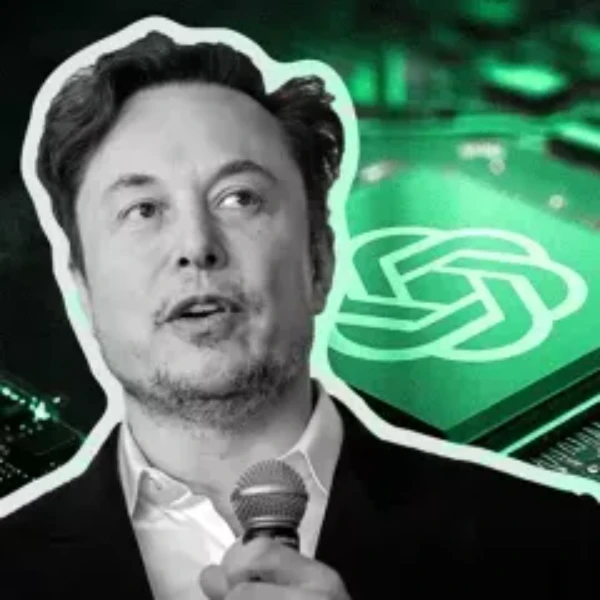
Will Elon win his case against OpenAI?
Yes refers to: Before 2027
Short Answer
1. Market Behavior & Drivers
- Legal experts generally view Elon Musk's breach of contract claim as weak.
- Judge Yvonne Gonzalez Rogers likely applies Ninth Circuit and California law.
- Musk's counsel alleged breach of trust during closing arguments in May 2026.
- OpenAI defended its for-profit transition as strategic recapitalization at trial.
- The trial concluded evidence presentation and closing arguments on May 16, 2026.
- Judge Yvonne Gonzalez Rogers will determine the final verdict and remedies.
Who Wins and Why
| Outcome | Market | Model | Why |
|---|---|---|---|
| Before 2027 | 21.0% | 16.2% | A swift resolution could result from an early motion to dismiss or a settlement agreement. |
Current Context
Sources (7)
- 1Musk, Altman Make Final Pitches to Jury in Battle Over OpenAInews.bloomberglaw.com
- 2Jury deliberations to begin in OpenAI nonprofit trial after Musk skips closing for Beijingthenextweb.com
- 3OpenAI Jury To Begin Deliberations Monday as Judge Weighs Altman Removal and $500B Restructure Reversaltechtimes.com
- 4Musk vs Altman enters final stage as jury begins deliberations in blockbuster OpenAI trialfinancialexpress.com
- 5Elon Musk vs Sam Altman: how the legal battle of the tech billionaires could shape the future of AItheconversation.com
- 6Elon Musk could lose his legal case against OpenAI and still get most of what he wants. | Voxvox.com
- 7Musk could beat OpenAI even if he loses case, experts sayeuropesays.com
2. Price Chart
Historical Price (Probability)
3. Significant Price Movements
Notable price changes detected in the chart, along with research into what caused each movement.
📉 May 15, 2026: 13.0pp drop
Price decreased from 31.0% to 18.0%
Outcome: Before 2027
📈 May 04, 2026: 10.0pp spike
Price increased from 38.0% to 48.0%
Outcome: Before 2027
📉 May 02, 2026: 13.0pp drop
Price decreased from 50.0% to 37.0%
Outcome: Before 2027
Sources (8)
- 1Closing arguments begin in Elon Musk’s landmark lawsuit against OpenAI | Elon Musk News | Al Jazeeraaljazeera.com
- 2Jury deliberations to begin in OpenAI nonprofit trial after Musk skips closing for Beijingthenextweb.com
- 3Elon Musk’s odds of winning lawsuit against OpenAI are slim, Kalshi traders saycnbc.com
- 4Musk, Altman Make Final Pitches to Jury in Battle Over OpenAInews.bloomberglaw.com
- 5What the jury will actually decide in the case of Elon Musk vs. Sam Altmantechcrunch.com
- 6OpenAI closing arguments conclude in Musk vs. Altman trialyoutube.com
- 7Musk vs Altman enters final stage as jury begins deliberations in blockbuster OpenAI trialfinancialexpress.com
- 8OpenAI trial live updates: Closing arguments begin in landmark case – NBC Bay Areanbcbayarea.com
4. Market Data
Contract Snapshot
The market resolves to "Yes" if the U.S. District Court in the Northern District of California rules in favor of Elon Musk in Musk v. Altman et al before January 1, 2027. Otherwise, it resolves to "No." The market opened on January 14, 2026, and will close upon the outcome or by January 1, 2027, with official judicial records serving as the primary source for resolution, followed by a hierarchy of other specified court and news agencies.
Available Contracts
Market options and current pricing
| Outcome bucket | Yes (price) | No (price) | Last trade probability |
|---|---|---|---|
| Before 2027 | $0.21 | $0.80 | 21% |
Market Discussion
Traders are divided, with a strong contingent betting "No" on Elon Musk winning his case. Those expecting a "No" outcome frequently cite reports that the judge dismissed 25 out of 27 of Musk's claims, believing that OpenAI's lawyers effectively discredited the core arguments and that Musk's case has little legal merit. Conversely, "Yes" supporters question the validity of the skepticism surrounding the case, suggesting it might still swing in Musk's favor.
5. What is the legal expert consensus on the merits of Elon Musk's breach of contract claim against OpenAI?
| Legal assessment of breach claim | Weak merits [1][2][3][4] |
|---|---|
| Trial commencement | Late April 2026 in Oakland, California [5][6][7][8] |
| Musk's win probability (Kalshi) | 40%–42% before 2027 (as of May 16, 2026) [3][9][4][10] |
Sources (10)
- 1https://law.duke.edu/web/sites/default/files/pdf/Daily_Journal-Open_AI.pdflaw.duke.edu
- 2The legal premise of Elon Musk’s OpenAI lawsuit is weak. But the questions it raises are notfortune.com
- 3Elon Musk Court Case Odds: Will Musk Win Lawsuit Against Sam Altman, Open AI in 2026?oddschecker.com
- 4Wil Elon Win His Case Against OpenAI?next.io
- 5What the jury will actually decide in the case of Elon Musk vs. Sam Altmantechcrunch.com
- 6Musk v. Altman Is a Battle for OpenAI’s Soul | WIREDwired.com
- 7https://storage.courtlistener.com/recap/gov.uscourts.cand.433688/gov.uscourts.cand.433688.390.0.pdfstorage.courtlistener.com
- 8Musk and Altman face off in court over future of OpenAI: NPRnpr.org
- 9Elon Musk odds low to win OpenAI suitcnbc.com
- 10Elon Musk vs. OpenAI: Kalshi Traders Push Odds to 45% as Trial Date Approaches - Microsoft (NASDAQ:MSFT)benzinga.com
6. What key legal precedents will Judge Yvonne Gonzalez Rogers likely rely on when ruling on OpenAI's corporate restructuring?
| Preliminary Injunction Standard | Winter v. Natural Resources Defense Council (2008) standard [1][2][3] |
|---|---|
| Breach of Charitable Trust Requirement | Express, written condition on donations [1][2] |
| Unjust Enrichment Classification | Treated as a quasi-contract claim [4][5][6] |
Sources (6)
- 1https://storage.courtlistener.com/recap/gov.uscourts.cand.433688/gov.uscourts.cand.433688.121.0.pdfstorage.courtlistener.com
- 2https://storage.courtlistener.com/recap/gov.uscourts.cand.433688/gov.uscourts.cand.433688.64.24.pdfstorage.courtlistener.com
- 3https://storage.courtlistener.com/recap/gov.uscourts.cand.433688/gov.uscourts.cand.433688.65.22.pdfstorage.courtlistener.com
- 4https://storage.courtlistener.com/recap/gov.uscourts.cand.433688/gov.uscourts.cand.433688.330.85.pdfstorage.courtlistener.com
- 5https://storage.courtlistener.com/recap/gov.uscourts.cand.433688/gov.uscourts.cand.433688.328.87.pdfstorage.courtlistener.com
- 6https://storage.courtlistener.com/recap/gov.uscourts.cand.249697/gov.uscourts.cand.249697.1004.2.pdfstorage.courtlistener.com
7. How do the remedies sought by Musk, such as removing Sam Altman, compare to penalties in past high-profile breach of fiduciary duty lawsuits?
| Musk's requested remedy | Disgorgement of wrongful gains, removal of Sam Altman and Greg Brockman, and restructuring to nonprofit [1][2][3] |
|---|---|
| Probability of winning | 40-42% before 2027 (as of May 2026) [4][5][6] |
| Common past remedies | Monetary damages (disgorgement), constructive trusts, occasional removal of officers [7][8][9][10] |
Sources (10)
- 1https://storage.courtlistener.com/recap/gov.uscourts.cand.433688/gov.uscourts.cand.433688.392.0.pdfstorage.courtlistener.com
- 2OpenAI opposes Elon Musk’s “amended” notice of remedies as belated bait and switch weeks before trial – Chat GPT Is Eating the Worldchatgptiseatingtheworld.com
- 3What Elon Musk and OpenAI's High-Profile Court Case Is Actually Aboutbigtechnology.com
- 4Wil Elon Win His Case Against OpenAI?next.io
- 5Elon Musk odds low to win OpenAI suitcnbc.com
- 6Musk lawsuit adds uncertainty to OpenAI IPO plans before 2027cryptobriefing.com
- 7Delaware Supreme Court Affirms Breach Of Fiduciary Duty Judgment Against CEO But Reverses Bidder's Aiding And Abetting Liability - Corporate and Company Law - United Statesmondaq.com
- 8Delaware Court Of Chancery Upholds CEO Termination Under The Business Judgment Rule In High-Profile Family Business Dispute - Securities - United Statesmondaq.com
- 9https://courts.delaware.gov/Opinions/Download.aspx?id=379460courts.delaware.gov
- 10https://courts.delaware.gov/Opinions/Download.aspx?id=375490courts.delaware.gov
8. How did the closing arguments from Musk's legal team contrast with those from OpenAI's counsel in May 2026?
| Trial Phase | Closing arguments in Musk v. OpenAI trial (May 2026 [1][2][3][4]) |
|---|---|
| Musk's Initial Donation Claim | $38 million (cited as basis for charitable trust) [1][2][3] |
| OpenAI Defense Stance | Lack of evidence and Musk's retaliatory motives [2][4][3] |
Sources (4)
- 1Musk, Altman Make Final Pitches to Jury in Battle Over OpenAInews.bloomberglaw.com
- 2Musk vs. OpenAI lawyers' closing arguments hit on Musk's ambition, Altman's characterfinance.yahoo.com
- 3Closing arguments begin in Elon Musk’s landmark lawsuit against OpenAI | Elon Musk News | Al Jazeeraaljazeera.com
- 4OpenAI closing arguments conclude in Musk vs. Altman trialyoutube.com
9. What evidence did OpenAI's defense team present during the trial to justify its transition to a for-profit model?
| Nonprofit Equity Stake | 26% equity stake, valued at approximately $130 billion [1] |
|---|---|
| Transaction Type | Recapitalization transaction [1] |
| Lawsuit Characterization | Described as 'baseless' harassment by the defense [2][3][4] |
Sources (4)
- 1https://storage.courtlistener.com/recap/gov.uscourts.cand.433688/gov.uscourts.cand.433688.422.0.pdfstorage.courtlistener.com
- 2Live updates: OpenAI trial to hear closing arguments Thursday | KTVU FOX 2ktvu.com
- 3OpenAI lawsuit updates: Elon Musk v. Sam Altman trial day 2cnbc.com
- 4Elon Musk’s odds of winning lawsuit against OpenAI are slim, Kalshi traders saycnbc.com
10. What Could Change the Odds
Key Catalysts
Key Dates & Catalysts
- Expiration: January 01, 2027
- Closes: January 01, 2027
Sources (10)
- 1Musk, Altman Make Final Pitches to Jury in Battle Over OpenAInews.bloomberglaw.com
- 2What the jury will actually decide in the case of Elon Musk vs. Sam Altmantechcrunch.com
- 3Musk vs Altman enters final stage as jury begins deliberations in blockbuster OpenAI trialfinancialexpress.com
- 4Will Elon Musk Win His OpenAI Lawsuit? Prediction Markets Say Only 32% Chanceainvest.com
- 5Elon Musk odds low to win OpenAI suitcnbc.com
- 6Elon Musk Court Case Odds: Will Musk Win Lawsuit Against Sam Altman, Open AI in 2026?oddschecker.com
- 7Elon Musk vs. OpenAI case: Prediction markets turn bearish on Muskmsn.com
- 8Elon Musk vs Sam Altman: OpenAI courtroom battle heads toward dramatic finishindianexpress.com
- 9Elon Musk could lose his legal case against OpenAI and still get most of what he wants. | Voxvox.com
- 10Musk could beat OpenAI even if he loses case, experts sayeuropesays.com
