Short Answer

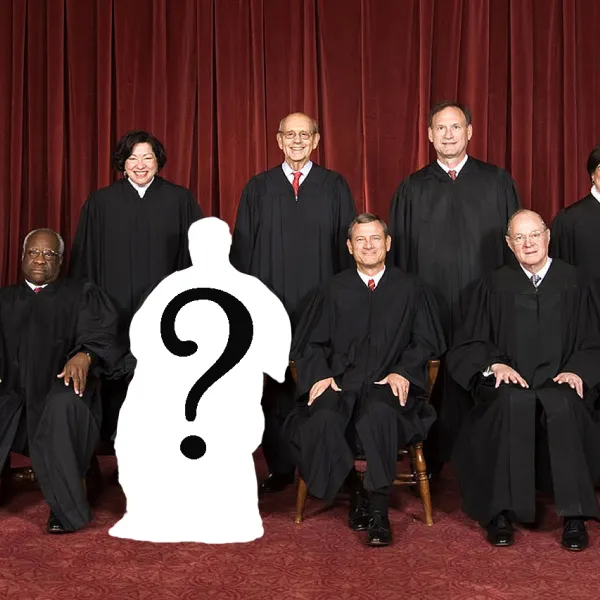
Both the model and the market expect Andrew Oldham to be the next Supreme Court Justice, with no compelling evidence of mispricing.

1. Executive Verdict

  • Judge Justin Smith has deep ties to Leonard Leo's influential judicial network.
  • Judge James Ho is consistently identified as a potential "originalist" heir.
  • Senators Lee and Cruz are championed by key Republican legislative leaders.
  • Several judges consistently appear on shortlists for a Republican presidency.
  • Supreme Court vacancy probabilities are highest in years 2025 and 2026.
  • Unexpected nominations remain possible despite extensive vetting and shortlists.

Who Wins and Why

Outcome Market Model Why
Amul Thapar 9.5% 7.8% As a conservative federal appellate judge, he remains a frequently discussed potential nominee.
Aileen Cannon 11.0% 8.9% Her high-profile judicial role has brought her increased attention as a potential conservative pick.
Andrew Oldham 13.0% 10.4% His background as a conservative federal appellate judge keeps him in consideration for future vacancies.
James Ho 12.0% 9.3% Judge Ho is consistently identified as an originalist and potential ideological heir to Justice Thomas.
Ted Cruz 8.0% 6.6% Senator Cruz's deep conservative legal background and political standing keep him a speculative contender.

2. Market Behavior & Price Dynamics

Historical Price (Probability)

Outcome probability
Date
This market has exhibited a clear sideways or range-bound trading pattern since its inception. The price opened at a high of 11.0% and has since been contained within a channel defined by that peak as resistance and a low of 6.1% as support. The current price of 9.5% sits within the upper half of this range, indicating a modest drift downward from its starting point but no significant trend breakout. The primary characteristic of this chart is price consolidation, suggesting a period of equilibrium where neither buyers nor sellers have demonstrated enough force to establish a new directional trend.
The total trading volume of 1,794 contracts is moderate and, when viewed with the sideways price action, indicates a lack of strong market conviction. The price fluctuations within the established range are not linked to any specific news events in the provided context, suggesting they are the result of internal market dynamics rather than reactions to major catalysts. This pattern implies that market sentiment is one of uncertainty or a "wait-and-see" approach. Traders have not received sufficient information to justify pushing the probability significantly higher or lower, leading to the prolonged period of consolidation.

3. Market Data

View on Kalshi →

Contract Snapshot

This market resolves to "Yes" if James Ho is the first person confirmed by the Senate as a Supreme Court Justice by January 20, 2029; otherwise, it resolves to "No." The outcome is verified using the Library of Congress. The market, which opened on November 7, 2024, will close early upon any Supreme Court justice's confirmation or by January 20, 2029, at 11:59 pm EST, and those with material, non-public information or employment by Source Agencies are prohibited from trading.

Available Contracts

Market options and current pricing

Outcome bucket Yes (price) No (price) Last trade probability
Andrew Oldham $0.10 $0.91 13%
James Ho $0.13 $0.88 12%
Aileen Cannon $0.11 $0.93 11%
Amul Thapar $0.10 $0.91 10%
Ron DeSantis $0.12 $0.92 9%
Ted Cruz $0.06 $0.95 8%
D. John Sauer $0.04 $0.97 7%
Mike Lee $0.06 $0.96 6%
Patrick Bumatay $0.07 $0.94 6%
Neomi Rao $0.05 $0.95 5%
Michael Park $0.02 $0.99 4%
Emil Bove $0.03 $0.99 3%
Stephanos Bibas $0.01 $1.00 3%
Barbara Lagoa $0.02 $0.99 2%
Joan Larsen $0.01 $1.00 2%
Kate Comerford Todd $0.01 $1.00 2%
Lawrence VanDyke $0.03 $0.98 2%
Mark Martin $0.01 $1.00 2%
Gregory G. Katsas $0.03 $0.98 2%
Stuart Kyle Duncan $0.01 $1.00 2%
Kevin Newsom $0.02 $0.98 2%
Allison Eid $0.01 $1.00 1%
Allison Jones Rushing $0.01 $1.00 1%
Britt Grant $0.01 $1.00 1%
Clint Bolick $0.01 $1.00 1%
David Stras $0.01 $1.00 1%
Evan Young $0.01 $1.00 1%
Kathryn Mizelle $0.02 $0.99 1%
Kevin Brobson $0.01 $1.00 1%
Kristen Waggoner $0.02 $0.99 1%
Matthew Kacsmaryk $0.02 $0.99 1%
Morse Tan $0.01 $1.00 1%
Patrick Wyrick $0.01 $1.00 1%
Trevor McFadden $0.01 $1.00 1%
Tom Cotton $0.01 $1.00 1%
Kenneth Lee $0.07 $0.94 0%
Mike Lee $0.00 $1.00 0%

Market Discussion

The market discussion primarily focuses on potential conservative nominees for the next Supreme Court justice, with Andrew Oldham, James Ho, and Amul Thapar showing the highest market percentages, and other names like Thomas Hardiman and Mike Lee also being discussed. Arguments for a "Yes" outcome center on specific individuals, with one notable instance of Mike Lee's price spiking significantly. Conversely, some traders debated the political viability of a conservative nominee if the House flips, though it was clarified that only the Senate approves judicial appointments.

4. Which Judicial Nominees Have Ties to Leonard Leo's Network and Project 2025?

Judge Smith's Network TiesDeep and current ties to Leonard Leo's conservative judicial network [^]
Heritage Foundation's RoleActively promotes specific individuals for Supreme Court consideration [^]
Project 2025 Advisory BoardMembers engage directly with its leadership [^]
Judge Justin Smith shows significant engagement with Leonard Leo's network. Judge Smith is a prominent figure among potential judicial nominees due to his documented direct engagement with Leonard Leo's influential network. During his confirmation hearings for the Eighth Circuit, Smith was questioned about his extensive connections, including his clerkship for Justice Neil Gorsuch, his involvement with the Federalist Society, and his ties to the Judicial Crisis Network; these organizations are closely associated with Leonard Leo's efforts to shape the judiciary [^]. Reports further indicate that Smith is "deeply entrenched in Leonard Leo’s dark money network," signaling a high level of personal and professional engagement with a key architect of conservative judicial shortlists [^].
Project 2025's leadership actively vets potential judicial nominees. Beyond direct connections to Leonard Leo, engagement with the leadership of the Heritage Foundation's Project 2025 serves as a crucial indicator of vetting and promotion for judicial positions. Project 2025, also known as the 2025 Presidential Transition Project, has established an Advisory Board composed of "Leading Conservative Partners" [^]. While the specific names of advisory board members are not detailed, their involvement signifies direct interaction with Project 2025's leadership. The Heritage Foundation, a primary partner in Project 2025, actively identifies and promotes individuals as potential Supreme Court nominees, demonstrating who is being vetted and considered for a Republican judicial shortlist [^]. This public promotion by the Heritage Foundation highlights active support from a key entity involved in shaping future judicial appointments.

5. Can Quantitative Analysis of Nominee Rulings Be Performed?

Nominee List ContextPotential nominees discussed for a second Donald Trump term [^], [^]
Vacancy DiscussionsSpeculation regarding Justice Samuel Alito [^], [^], [^], [^], [^]
Judicial Pick ConfirmationTimeline for confirming judicial picks mentioned [^], [^]
The requested quantitative analysis of judicial records is not feasible using current research. The available web research does not provide specific data points detailing individual appellate judges' decisions, the content of those decisions since 2020, or any pre-existing analysis of their rulings on particular federal issues. Without access to actual judicial opinions issued by potential nominees in federal appellate courts since 2020, it is impossible to quantify rulings on hot-button topics like abortion, gun control, or Chevron deference, which is necessary to identify candidates with the fewest such rulings for a narrow Senate majority confirmation strategy.
Available research primarily focuses on general nominee lists and vacancy context. The provided sources discuss general lists of potential Supreme Court nominees under a second Donald Trump term [^], [^]. Additionally, they address the broader context of potential Supreme Court vacancies, with particular attention to Justice Samuel Alito [^], [^], [^], [^], [^]. Information regarding the timeline for confirming judicial picks was also mentioned in the research [^], [^]. However, these materials do not contain the granular data required to perform the specific quantitative analysis requested.

6. How Does a Departing Justice's Identity Influence Replacement Strategy?

Influence of Departing JusticeDictates nominee's role as "ideological heir" or balance shifter [^]
Potential Justice HoIdentified as an "originalist" and "heir to Clarence Thomas" [^]
Common Nominee Shortlist CandidatesKyle Duncan, Neomi Rao, Kathryn Mizelle on shortlists [^]
A departing justice's identity significantly shapes replacement strategy and ideological continuity. The specific identity of a Supreme Court justice who departs critically alters the calculus for their replacement, primarily guiding the nominating administration's strategy to either maintain or shift the Court's existing ideological balance [^]. For instance, a conservative justice's departure often prompts the search for an "ideological heir" to maintain the Court's conservative majority. Judge James Ho, a judge on the 5th Circuit, is consistently cited as an originalist who is tipped as a potential successor to Justice Clarence Thomas, aligning with a judicial philosophy that prioritizes textualism and original intent [^]. Such a nomination would aim to fill the seat with a justice holding similar interpretative principles, thereby preserving the Court's existing ideological alignment.
Replacing ideologically diverse justices demands careful political management and strategic shifts. When the departing justice hails from a different ideological wing than the nominating president, the calculus expands to include managing political optics and potentially altering the Court's balance [^]. Names like Kyle Duncan, Neomi Rao, and Kathryn Mizelle consistently appear on various shortlists for potential Supreme Court nominees, especially under a prospective Trump administration [^]. These judges are generally considered conservative, making them suitable candidates regardless of whether the departing justice is conservative or liberal. If a liberal justice were to depart, nominating a conservative like Rao or Mizelle would represent a significant ideological shift, requiring careful political management to secure confirmation [^]. Reports have indicated that shortlists are circulated with specific justices in mind for replacement, highlighting a strategic approach to nominations that considers not just judicial philosophy but also the potential for broader political and ideological impact on the Court [^].

7. Who are the Supreme Court nominees backed by Republican leaders?

Key EndorsementsSenators Mike Lee and Ted Cruz by Senator Chuck Grassley [^]
Influential SupporterSenator Chuck Grassley, former Chairman of the Senate Judiciary Committee [^]
Broader Candidate Pool"Trump's Top Contenders" [^]
Influential senators back specific legislative candidates for Supreme Court. Senator Chuck Grassley, a prominent Republican and former chairman of the Senate Judiciary Committee, has publicly endorsed Senators Mike Lee of Utah and Ted Cruz of Texas as potential Supreme Court nominees [^]. Grassley specifically named both individuals as candidates he would favor for a Supreme Court vacancy, highlighting their strong personal backing within the legislative branch due to his significant influence over judicial nominations [^].
Future administrations will favor candidates with high-level executive patronage. Beyond specific legislative endorsements, a future Republican administration would likely prioritize a pool of candidates informally known as "Trump's Top Contenders for the Supreme Court" [^]. These individuals would benefit from direct patronage from the highest levels of a new Republican executive branch, ensuring robust support from senior administration officials responsible for judicial selection and confirmation [^].

8. What are the probabilities of a Supreme Court vacancy and Senate control?

2025 SCOTUS Vacancy Probability31% [^]
2026 SCOTUS Vacancy Probability35% [^]
Republicans Senate Control (Post-2026)57.1% [^]
Supreme Court vacancy probabilities are highest in 2025 and 2026. Current prediction market data indicates a 31% probability of a Supreme Court vacancy occurring in 2025 [^] and a 35% probability in 2026 [^]. These probabilities inherently account for factors such as the age and health of sitting justices, which are central to survival analysis models used to forecast judicial tenure [^]. While explicit prediction market probabilities for a vacancy in 2027 or 2028 are not available in the provided sources, the principles of judicial survival analysis remain relevant for longer-term vacancy outlooks [^].
Vacancy timing critically aligns with projected 2026 Senate majority shifts. The moment a potential vacancy arises is highly significant when considered against the anticipated changes in Senate control following the 2026 midterms. Election betting markets project Republicans with a 57.1% chance of controlling the Senate after the 2026 elections, compared to a 42.6% chance for Democrats [^]. If a vacancy occurs before the 2026 midterms—specifically in 2025 or early 2026—the sitting president could potentially nominate a more ideologically aligned or "aggressive" candidate if their party holds the Senate majority. Conversely, a vacancy emerging after the 2026 midterms could encounter a different political environment. Should Senate control shift or result in divided government, as currently projected, the confirmation process for a nominee would likely become more challenging. In such a scenario, particularly with a president from one party and the opposition controlling the Senate, there would be increased pressure to nominate a "less controversial," more moderate candidate to secure confirmation votes [^]. This strategic shift in nominee type underscores the crucial relationship between judicial longevity and electoral outcomes.

9. What Could Change the Odds

Key Catalysts

Catalyst analysis unavailable.

Key Dates & Catalysts

  • Expiration: February 03, 2029
  • Closes: January 21, 2029

10. Decision-Flipping Events

  • Trigger: Catalyst analysis unavailable.

12. Historical Resolutions

No historical resolution data available for this series.