Short Answer

Both the model and the market agree that it is highly unlikely Trump will create a $250 bill featuring himself before January 1, 2027, with no compelling evidence of mispricing.

1. Executive Verdict

  • Legal advisors have not advanced interpretations on living individuals on currency.
  • Donald Trump has publicly expressed interest in a new bill featuring his image.
  • Treasury Secretary holds primary legal authority for currency design and production.
  • A new $250 bill is not logistically feasible by January 2027.
  • 2024 elections may shift key congressional committee leadership.

Who Wins and Why

Outcome Market Model Why
Before Jan 1, 2027 7.7% 5.3% The evidence highlights a deeply entrenched tradition against featuring living individuals on standard U.S. currency and the lack of any legal strategy to challenge this, despite the market holding a low probability that this tradition could eventually be broken.

2. Market Behavior & Price Dynamics

Historical Price (Probability)

Outcome probability
Date
This market has established a clear sideways trading channel, with the probability of a "YES" outcome fluctuating consistently between a support level at 4.0% and a resistance level at 13.0%. The current price of 7.7% is near the midpoint of this range and slightly above its starting price of 5.7%. Despite minor fluctuations over its 209 data points, the market has not demonstrated a sustained breakout or breakdown from this channel, indicating a lack of a definitive long-term trend. As there is no additional context or news provided, specific price movements within the range cannot be attributed to any external events.
The total trading volume of 5,645 contracts, when spread across the market's history, suggests moderate but not intense engagement. The sample data shows price changes occurring on days with zero reported volume, which can indicate that price shifts are due to changes in open orders rather than a high number of executed trades. This pattern of sporadic activity suggests that market conviction is relatively low, and there are no strong, persistent pressures driving the price in a single direction. The market appears to be in a state of equilibrium, awaiting new information that could justify a move beyond its established support or resistance levels.
Overall, the price action suggests that market sentiment has remained stable and consistently views this event as a low-probability outcome. The fact that the price has never exceeded 13.0% indicates a strong consensus of skepticism among participants. The sideways trend reflects a market that is largely undecided on short-term direction but is firm in its long-term assessment that the resolution is highly unlikely. The current price of 7.7% accurately reflects this sentiment, pricing the event as an improbable long shot.

3. Market Data

View on Kalshi →

Contract Snapshot

The market resolves to "Yes" if a bill mandating the creation and issuance of a $250 U.S. bill featuring Donald J. Trump's likeness becomes law. If this event does not occur before January 1, 2027, the market resolves to "No." The outcome will be verified from the Library of Congress (congress.gov), and the market will close early if the event occurs, with projected payouts 30 minutes after closing.

Available Contracts

Market options and current pricing

Outcome bucket Yes (price) No (price) Last trade probability
Before Jan 1, 2027 $0.08 $0.94 8%

Market Discussion

The market discussion shows an overwhelming consensus against a $250 bill featuring Donald Trump passing, with traders deeming it highly unlikely to clear the Senate and calling the denomination "nonsensical" or too low for Trump's preferences. Key arguments against include the belief that Trump adheres to the tradition of only deceased figures on bills and that he would demand a higher value if such a bill were to exist. While one trader predicted "Yes" without specific reasoning, the market's low "Yes" probability reflects the strong skepticism, despite the awareness that a House Representative did introduce such legislation.

4. Do Project 2025 Advisors Interpret Currency Depiction Laws?

Primary Currency Statute31 U.S.C. § 5114 details engraving and printing, not living individuals on currency [^].
Living Individuals on CurrencyProhibited by long-standing tradition, not explicit statutory law [^].
Policy Groups' FocusBroader policy, economic strategy, and federal reform, not currency design legal specifics [^].
Key legal advisors have not advanced interpretations on living individuals on currency. Research indicates that potential legal advisors associated with organizations such as the Heritage Foundation's Project 2025 and the America First Policy Institute have not developed specific legal interpretations concerning the Treasury Secretary's authority under 31 U.S.C. § 5114 to permit or prohibit the depiction of living individuals on currency [^]. The statute itself primarily outlines details for the engraving and printing of currency and security documents, including denominations and security features [^].
Traditional practice, not statute, governs depictions of living individuals. The absence of living individuals on U.S. currency stems from a long-standing tradition rather than an explicit statutory prohibition within 31 U.S.C. § 5114 [^]. While discussions have occurred regarding public figures like Donald Trump appearing on currency, such proposals consistently encounter this historical precedent [^]. For example, the Treasury Department clarified plans to include President Trump's signature, but not his likeness, on new paper currency [^]. Similarly, discussions about commemorative coins featuring Trump did not pertain to standard circulating currency and acknowledged specific exceptions applicable to such items [^].
Reviewed documents lack specific legal strategies for currency design. A comprehensive review of materials from the Heritage Foundation's Project 2025, including "Mandate for Leadership" chapters on the Treasury [^], and documents from the America First Policy Institute [^], confirms the absence of specific legal interpretations or strategies related to the Treasury Secretary's authority under 31 U.S.C. § 5114 concerning living individuals on currency. These organizational documents primarily focus on broader policy issues, economic strategy, and federal agency reform, rather than intricate legal specifics of currency design [^].

5. What Evidence Exists for Trump's $250 Bill Interest?

Social Media PostsDiscussed placing his image on a $250 bill [^]
Initiative PushReportedly "pushed" for $250 bill initiative [^]
Public DisplayShowcased $250 bill design with his portrait [^]
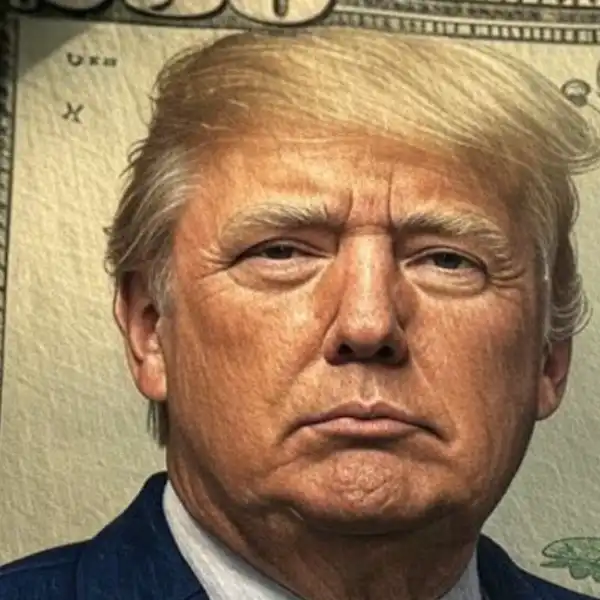
Donald Trump has directly expressed interest in new currency featuring his image. Verifiable evidence indicates that Trump made posts discussing the idea of placing his likeness on a new $250 bill [^], with multiple reports stating he has actively "pushed" for this concept [^]. Further demonstrating his personal involvement and apparent desire, Trump publicly displayed a stunning $250 bill design at his Trump National Doral Miami golf club, prominently featuring his portrait as a tribute to America's 250th Anniversary [^].
Legislative efforts by lawmakers align with, but are distinct from, Trump's actions. These instances of Trump's personal desire and actions are separate from the legislative efforts by Republican lawmakers, who introduced a bill known as the "Donald J. Trump $250 Bill Act" (H.R. 1761) in the 119th Congress [^].

6. Can BEP Director Veto Treasury Secretary's Currency Design Order?

Treasury Secretary's AuthorityLegally mandated to direct currency engraving and printing [^]
BEP Director's Stated PowerNo explicit statutory or regulatory procedural powers to delay or refuse currency design orders [^]
Federal Employee DutyImplicit duty to disregard unlawful orders [^]
The Treasury Secretary holds primary legal authority for currency design and production. The statutory framework explicitly mandates the Secretary of the Treasury to direct the engraving and printing of currency and security documents, as outlined in 31 U.S. Code § 5114 [^]. While the Bureau of Engraving and Printing (BEP), under its Director, manages the operational aspects of currency production [^], there is no specific statute, Treasury Order, or BEP directive that explicitly grants the Director a formal procedural power to veto, delay, or formally challenge a Secretary's order on design, even if such an order is perceived to conflict with federal law [^].
Federal law implies a duty for employees to resist unlawful directives. Despite the absence of explicit procedural powers for the BEP Director, federal statutes and established principles stipulate that all federal employees have an implicit duty to uphold the Constitution and federal statutes, necessitating them to disregard unlawful orders [^]. This suggests that an order from the Treasury Secretary perceived as clearly illegal or unconstitutional should be resisted through internal consultation and escalation, rather than through a codified veto mechanism [^]. However, the available research does not detail any historical precedents where a BEP Director has formally delayed, challenged, or refused a currency design order from a Treasury Secretary based on a perceived conflict with federal statute [^].

7. Is a New $250 Currency Note Feasible by 2027?

Total Redesign Time10-15 years for 6 existing denominations [^]
Next Redesigned Bill Release$10 note by 2026 [^]
New Design Introduction MethodOne denomination at a time [^]
Introducing a brand new $250 bill by January 2027 is not logistically feasible. The Bureau of Engraving and Printing (BEP) adheres to a comprehensive, multi-year timeline for banknote redesign, which involves developing new security features, material sourcing, and retooling production [^]. This extensive process demands significant collaboration with the Federal Reserve and the U.S. Secret Service, encompassing design, security feature development, material specification, and production processes [^]. The BEP estimates a 10-15 year period to redesign all six remaining existing denominations, issuing new designs one denomination at a time to manage complexity and public education [^].
The current Advanced Counterfeit Deterrence program has a multi-decade redesign schedule for existing U.S. currency. The next redesigned note, the $10 bill, is slated for release by 2026, followed by the $50 in 2028, the $20 in 2030, the $100 in 2032, the $5 in 2034, and the $1 in 2036 [^]. Introducing an entirely new $250 denomination would necessitate initiating a fresh process for design, security feature development, material specification, and production, a multi-year undertaking even for re-designing existing notes [^]. While the Secretary of the Treasury possesses the authority to prescribe new denominations [^], the established long-term pipeline for currency redesign and production makes the introduction and widespread circulation of a brand new $250 bill within the two-year window (January 2025 – January 2027) logistically impossible given the BEP's documented operational timelines and existing commitments [^].

8. How Do Committee Changes Affect Currency Legislation Initiatives?

House Financial Services LeadershipRep. Patrick McHenry not seeking re-election as Chair; Rep. Maxine Waters expected to remain ranking member if Democrats gain majority [^].
Senate Banking LeadershipSen. Sherrod Brown up for re-election; Sen. Tim Scott projected to chair if Republicans gain control [^].
H.R. 1761 Committee SupportNone of the introducer or nine co-sponsors are current members of House Financial Services or Senate Banking Committees [^], [^], [^].
Key committee leadership shifts are projected following the 2024 elections. The 2024 elections could significantly alter the leadership of the House Financial Services Committee and the Senate Banking, Housing, and Urban Affairs Committee. On the House side, the current Chairman, Representative Patrick McHenry (R-NC), is not seeking re-election to his leadership position. If Democrats secure a majority, Representative Maxine Waters (D-CA) is expected to continue as ranking member, potentially assuming the chairmanship. In the Senate, current Banking Committee Chair Senator Sherrod Brown (D-OH) faces re-election. Should Republicans gain control of the Senate, Senator Tim Scott (R-SC) is projected to become the committee's chair [^].
Currency design legislation lacks direct support from key financial committees. A bill, H.R. 1761, titled the 'Donald J. Trump $250 Bill Act,' has been introduced to mandate the Secretary of the Treasury to engrave and print $250 bills featuring the likeness of Donald J. Trump [^], [^]. This proposed legislation seeks to influence the discretionary authority granted to the Secretary under 31 U.S.C. § 5114(b) concerning currency printing [^]. Representative Joe Wilson (R-SC) introduced the bill, which currently has nine Republican co-sponsors [^], [^]. Notably, none of the introducer or nine co-sponsors of H.R. 1761 are current members of either the House Financial Services Committee or the Senate Banking, Housing, and Urban Affairs Committee [^], [^], [^]. This indicates an absence of direct sponsorship or co-sponsorship for this specific currency legislation from within the committees responsible for financial oversight.

9. What Could Change the Odds

Key Catalysts

Catalyst analysis unavailable.

Key Dates & Catalysts

  • Expiration: January 01, 2027
  • Closes: January 01, 2027

10. Decision-Flipping Events

  • Trigger: Catalyst analysis unavailable.

12. Historical Resolutions

No historical resolution data available for this series.