
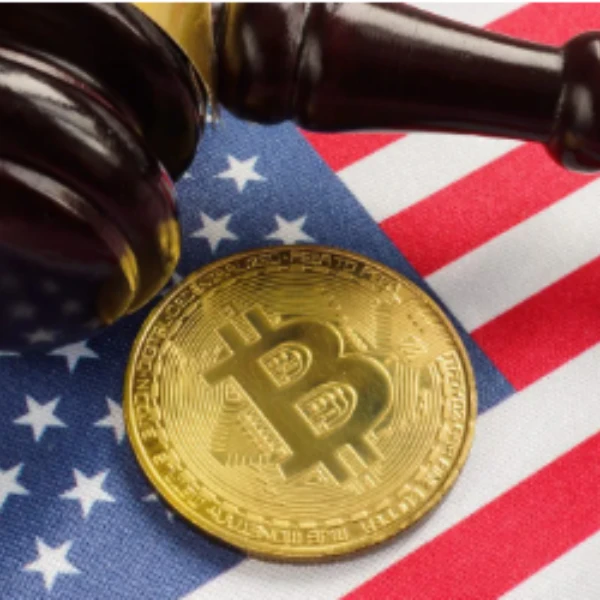
Will crypto market structure legislation become law?
Short Answer
1. Executive Verdict
- Since last update (~50d): The "Before Jul 1, 2026" outcome resolved no (market_led), with model and market at 0.0%.
- For "Before Aug 1, 2026", the model dropped -22.5pp and market -25.2pp (market_led).
- The "Before Feb 1, 2027" outcome saw a +1.3pp model increase (model_led), widening the edge.
- Several new outcomes were added, including "Before Sep 1, 2026" and "Before Jan 1, 2028".
- Passage before December 2026 is unlikely due to a narrow August legislative window.
- Legislation appears most probable before 2028, pending resolution of enforcement disputes.
Who Wins and Why
| Outcome | Market | Model | Why |
|---|---|---|---|
| Before Aug 1, 2026 | 1.8% | 1.0% | An extremely narrow legislative window before the August recess makes early passage highly improbable. |
| Before Sep 1, 2026 | 7.0% | 4.0% | Immediate post-recess passage is unlikely if a deal is not secured beforehand, due to delays. |
| Before Oct 1, 2026 | 47.0% | 33.5% | Failure to pass before the August recess significantly decreases the likelihood of 2026 enactment. |
| Before Nov 1, 2026 | 48.0% | 34.3% | Continued legislative impasse and August recess deadline negatively affect enactment before November 2026. |
| Before Dec 1, 2026 | 51.0% | 36.9% | Unresolved disputes and a looming August recess make enactment before December 2026 substantially less likely. |
Current Context
2. Market Behavior & Price Dynamics
Historical Price (Probability)
3. Significant Price Movements
Notable price changes detected in the chart, along with research into what caused each movement.
Outcome: Before Jan 1, 2027
📈 July 22, 2026: 8.0pp spike
Price increased from 45.0% to 53.0%
Outcome: Before Oct 1, 2026
📈 July 21, 2026: 20.0pp spike
Price increased from 24.0% to 44.0%
Outcome: Before Apr 1, 2027
📈 July 20, 2026: 12.0pp spike
Price increased from 45.0% to 57.0%
📉 July 19, 2026: 16.0pp drop
Price decreased from 61.0% to 45.0%
📈 July 18, 2026: 22.0pp spike
Price increased from 39.0% to 61.0%
4. Market Data
Contract Snapshot
The market resolves "Yes" if a federal crypto market structure bill becomes law before December 1, 2026, as verified by the Library of Congress. This bill must establish a comprehensive regulatory framework for digital assets, delineate federal agency authority, and classify digital assets. It resolves "No" if such legislation does not pass by the deadline, with bills focusing solely on stablecoins, CBDCs, specific activities, taxation, or non-congressional actions (like executive orders or state laws) being explicitly excluded. The market closes early if the event occurs, otherwise by December 1, 2026, at 10:00 am EST, with insider trading prohibited.
Available Contracts
Market options and current pricing
| Outcome bucket | Yes (price) | No (price) | Last trade probability |
|---|---|---|---|
| Before Aug 1, 2026 | $0.02 | $0.98 | 2% |
| Before Sep 1, 2026 | $0.07 | $0.94 | 7% |
| Before Oct 1, 2026 | $0.46 | $0.55 | 47% |
| Before Nov 1, 2026 | $0.49 | $0.52 | 48% |
| Before Dec 1, 2026 | $0.51 | $0.51 | 51% |
| Before Jan 1, 2027 | $0.52 | $0.49 | 49% |
| Before Feb 1, 2027 | $0.00 | $1.00 | 0% |
| Before Apr 1, 2027 | $0.63 | $0.42 | 43% |
| Before Jul 1, 2027 | $0.67 | $0.37 | 67% |
| Before Oct 1, 2027 | $0.69 | $0.33 | 67% |
| Before Jan 1, 2028 | $0.72 | $0.32 | 73% |
Market Discussion
The market is highly divided on whether crypto market structure legislation will become law, with probabilities for passage by various deadlines hovering around 50%. Supporters indicate that "closed door meetings are happening" and the legislation "needs to happen asap," considering specific bills like the CLARITY Act. Opponents express general skepticism ("Not happening captain"), though some traders view the existence of this prediction market as a positive sign for crypto's future.
5. What specific compromises on the ethics provisions in the CLARITY Act could secure the 60 Senate votes needed for passage before the August 2026 recess?
| Senate votes needed for CLARITY Act | 60 by August 2026 recess [^][^][^] |
|---|---|
| Key legislative obstacle | Resolving conflict over ethics provisions' enforcement design [^][^][^] |
| White House enforcement proposal | Enforcement vested exclusively in the Department of Justice [^][^][^] |
6. What are the latest legislative forecasts from key financial policy lobbying groups and D.C. analysts regarding the CLARITY Act's chances of passage in 2026?
| Prediction Market Odds | 32%-37% (as of July 22, 2026) [^][^][^][^][^] |
|---|---|
| Galaxy Research Estimate | Approximately 50% [^][^][^][^][^] |
| Senate Votes Required | 60 votes [^][^][^][^][^][^][^] |
7. How do the stated positions of the Senate Banking Committee and the Senate Agriculture Committee chairs differ on cryptocurrency jurisdiction under the CLARITY Act?
| CLARITY Act Jurisdictional Positions | No differing positions articulated [^][^] |
|---|---|
| Senate Banking Committee Focus | SEC-regulated digital asset securities [^] |
| Senate Agriculture Committee Focus | CFTC-regulated digital commodities [^][^] |
8. What is the historical success rate of financial services bills that passed the House but stalled in the Senate ahead of a major recess in an election year?
| Fixed Success Rate for Stalled Bills | None (no fixed statistical rate) [^][^][^][^][^] |
|---|---|
| Probability of Passage for Stalled Bills | Low [^][^][^] |
| Standalone Passage in Election Year | Rare [^][^][^] |
9. What specific executive actions or public statements from President Trump could pressure key Democratic senators to finalize the ethics provisions before the August 2026 recess?
| Trump's Ethics Provision Support | Agreed as of late July 2026 [^][^] |
|---|---|
| CLARITY Act Status | Stalled due to Democratic skepticism on enforceability [^][^][^] |
| Prediction Market Outlook (August 2026 recess) | Very low probabilities for enactment [^][^][^] |
10. What Could Change the Odds
Key Catalysts
Key Dates & Catalysts
- Expiration: February 01, 2027
- Closes: January 01, 2028
11. Decision-Flipping Events
- Trigger: The Digital Asset Market Clarity (CLARITY) Act (H.R.
- Trigger: 3633) is the primary vehicle for crypto market structure legislation, having passed the House in July 2025 and currently pending on the Senate Legislative Calendar as of July 22, 2026 [^] [^] [^] [^] .
- Trigger: As of July 22, 2026, this legislation remains stalled in the Senate due to ongoing negotiations and competing drafts between the Senate Banking and Agriculture Committees [^] [^] [^] [^] [^] .
- Trigger: Key roadblocks include reconciling jurisdictional boundaries between the SEC and CFTC, settling protections for developers, and resolving an outstanding ethics provision tied to the administration, which has hindered White House support as of early July 2026 [^] [^] [^] .
13. Related News
Reported Trump Ethics Deal Boosts Crypto Bill's Late-2026 Passage Odds
Reports on Tuesday, July 21, 2026, that President Donald Trump has accepted proposed ethics restrictions for the CLARITY Act pushed prediction market odds for the bill’s passage sharply higher. The mo...
Crypto Legislation Odds Rise on Key Senate Calendar Placement
The prediction market for U.S. crypto market structure legislation repriced significantly on Tuesday, June 02, 2026, with the implied probability of a bill becoming law this year rising sharply. This ...
Prediction Markets Price Major Delay for Crypto Market Structure Bill
The prediction market for U.S. crypto market structure legislation saw a significant repricing in Monday's session (June 01, 2026), with traders sharply lowering the odds of a bill becoming law before...
Crypto Bill Passage Odds Fall Sharply Amid Senate Delays
The prediction market for comprehensive U.S. crypto market structure legislation saw a significant repricing on Tuesday, April 28, 2026, as traders lowered their expectations for the CLARITY Act becom...
Crypto Bill Passage Odds Spike for Later 2026 Amid White House Push
In a significant repricing event on Monday, April 01, 2026, prediction markets for the passage of comprehensive crypto market structure legislation saw probabilities for a mid-2026 enactment surge. Th...
14. Historical Resolutions
Historical Resolutions: 2 markets in this series
Outcomes: 0 resolved YES, 2 resolved NO
Recent resolutions:
- KXCRYPTOSTRUCTURE-26JAN-JUL: NO (Jul 01, 2026)
- KXCRYPTOSTRUCTURE-26JAN-JUN: NO (Jun 01, 2026)
