
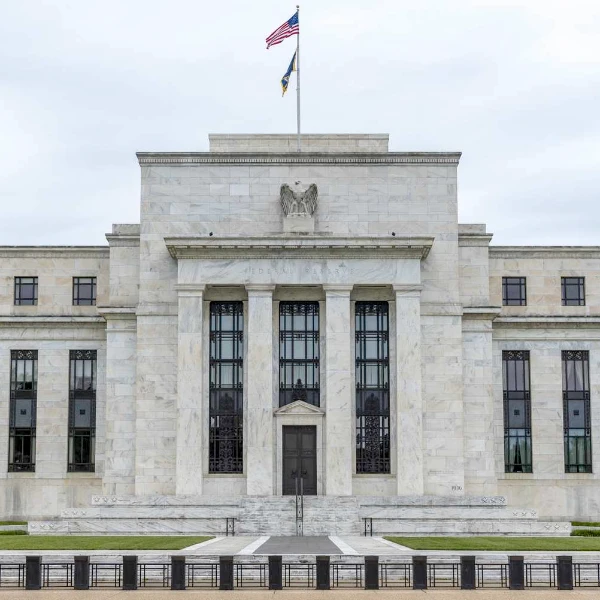
Who will be confirmed as Fed chair?
Short Answer
1. Market Behavior & Drivers
- Kevin Warsh's nomination was approved by the Senate Banking Committee.
- President Trump actively champions Warsh's nomination for Fed chair.
- Partisan opposition and filibuster possibility may challenge Warsh's full confirmation.
- Judy Shelton's unconventional views likely face significant Senate resistance.
Who Wins and Why
| Outcome | Market | Model | Why |
|---|---|---|---|
| Judy Shelton | 0.3% | 2.0% | Judy Shelton is not a frontrunner and is not expected to be confirmed as Fed chair. |
| Kevin Warsh | 99.5% | 95.0% | Kevin Warsh is widely considered the overwhelming favorite to be confirmed as Fed chair. |
| Kevin Hassett | 0.3% | 2.0% | Kevin Hassett is not a leading candidate and is not expected to be confirmed as Fed chair. |
| Rick Rieder | 0.2% | 1.0% | Rick Rieder is a long-shot candidate and is not expected to be confirmed as Fed chair. |
Current Context
Sources (6)
- 1Senate Banking Committee Votes To Advance Kevin Warsh As Fed Chairinvestopedia.com
- 2Kevin Warsh Senate Vote: Confirmation Date And What's Nextinvestozora.com
- 3Powell to remain on Fed's board after stepping down as chair: NPRnpr.org
- 4Jerome Powell says he will continue to serve as a Fed governor, calls Trump criticism 'unprecedented'cnbc.com
- 5Who will be confirmed as Fed Chair? Predictions & Odds | Polymarketpolymarket.com
- 6Who will be confirmed as Fed chair Prediction Marketrobinhood.com
2. Price Chart
Historical Price (Probability)
3. Market Data
Contract Snapshot
This market resolves to Yes if Kevin Warsh is the first person confirmed as Chair of the Federal Reserve System before January 1, 2029. It resolves to No if his nomination is withdrawn before the deadline, or if he is not the first confirmed Fed Chair by the specified date. The market opened on March 4, 2026, and will close when the outcome occurs, or by December 31, 2028, at 11:59 PM EST if the event has not happened.
Available Contracts
Market options and current pricing
| Outcome bucket | Yes (price) | No (price) | Last trade probability |
|---|---|---|---|
| Kevin Warsh | $1.00 | $0.01 | 100% |
| Judy Shelton | $0.00 | $1.00 | 0% |
| Kevin Hassett | $0.00 | $1.00 | 0% |
| Rick Rieder | $0.00 | $1.00 | 0% |
Market Discussion
The market overwhelmingly expects Kevin Warsh to be confirmed as Fed chair, currently reflecting a 99.5% probability. While a few traders express skepticism against Warsh ("warsh isnt winning"), and others place long-shot "Yes" bets on candidates like Judy Shelton or Kevin Hassett, these alternative viewpoints are not supported by strong arguments and appear to be speculative wagers. Overall, the discussion lacks substantive debate, with most activity simply reflecting minor dissenting opinions against the strong market consensus.
4. What procedural hurdles or political shifts could still challenge Kevin Warsh's confirmation ahead of the full Senate floor vote?
| Senate Banking Committee Vote | 13-11 (partisan) [1][2][3] |
|---|---|
| Votes to end filibuster | 60 votes [4][5] |
| Powell's potential Board term | until January 2028 [6][2][7] |
5. What specific voting bloc alignments and procedural precedents support the market's high confidence in Kevin Warsh's confirmation?
| Republican Support Expectation | Near unanimous [1] |
|---|---|
| Senate Banking Committee Vote | 13-11, along party lines [2][3] |
| Fed Board Service | 2006-2011 [4][5][6][7][8] |
6. How do Kevin Warsh's and Judy Shelton's publicly stated views on inflation and interest rate policy compare?
| Kevin Warsh Inflation Target | Skeptical about the 2% target [1][2] |
|---|---|
| Judy Shelton Inflation Target | 0% inflation target [3][4] |
| Shelton's View on Fed's Independence | Questions fundamental role and independence of the Federal Reserve [3][4][5] |
7. What does the historical timeline for Fed Chair confirmations suggest for the period between Kevin Warsh's committee vote and the final Senate confirmation?
| Kevin Warsh Committee Vote | 13-11 on April 29, 2026 [1][2][3] |
|---|---|
| Janet Yellen Confirmation | Jan 6, 2014 (committee Nov 21, 2013) [4] |
| Jerome Powell Initial Confirmation | Jan 23, 2018 (committee December 2017) [5][6][7] |
Sources (10)
- 1WATCH: Committee sends Kevin Warsh's nomination for Fed chair to full Senate vote | PBS Newspbs.org
- 2Trump Fed pick Kevin Warsh clears key Senate hurdle, teeing up final votecnbc.com
- 3Senate Banking Committee Votes To Advance Kevin Warsh As Fed Chairinvestopedia.com
- 4Senate Confirms Janet Yellen As Federal Reserve Chair: The Two-Way: NPRnpr.org
- 5Senate confirms Jerome Powell as Fed chairmanthehill.com
- 6Senate confirms Powell as Fed chairamericanbanker.com
- 7Senate Confirms Jerome Powell As New Federal Reserve Chair: The Two-Way: NPRnpr.org
- 8U.S. Senate confirms Powell for second term as Fed chief in bipartisan votereuters.com
- 9U.S. Senate: U.S. Senate Roll Call Votes 117th Congress - 2nd Sessionsenate.gov
- 10Who will be confirmed as Fed chair Prediction Marketrobinhood.com
8. Under what scenario could Kevin Warsh's nomination falter, potentially opening a path for a compromise candidate like Rick Rieder?
| Primary Obstacle 1 | Procedural delays and confirmation timing issues [1] |
|---|---|
| Primary Obstacle 2 | Credibility and vetting concerns (Jeffrey Epstein links) [2][3] |
| Potential Alternate | Rick Rieder [1][4][5][2][3][6][7] |
Sources (7)
- 1Kevin Warsh Fed nomination stalls as Senate avoids votetime.news
- 2Kevin Warsh’s Epstein ties present potential hurdle for Trump’s Fed chair nominee | CNN Businessus.cnn.com
- 3Key takeaways from Kevin Warsh's Fed confirmation hearingbbc.com
- 4Who will be confirmed as Fed Chair? Predictions & Odds | Polymarketpolymarket.com
- 5Kevin Warsh's Fed Chair Bid Stalls — Markets Take Notice - Equity Capital Marketecmsource.com
- 6Who will be confirmed as Fed chair Prediction Marketrobinhood.com
- 7Who will be confirmed as Fed chair? Odds & Predictions 2029kalshi.com
9. What Could Change the Odds
Key Catalysts
Key Dates & Catalysts
- Expiration: January 08, 2029
- Closes: January 01, 2029
Sources (8)
- 1Who will be confirmed as Fed Chair? Predictions & Odds | Polymarketpolymarket.com
- 2Who will be confirmed as Fed chair? Odds & Predictions 2029kalshi.com
- 3Fed chair nominee Kevin Warsh advances to Senate confirmation vote - ABC Newsabcnews.com
- 4Senate Banking Committee advances Kevin Warsh's nomination for Fed chair - CBS Newscbsnews.com
- 5Kevin Warsh’s Fed Confirmation: A Clearer Path to the Chairvalidusrm.com
- 6Kevin Warsh expected to be confirmed as Fed Chair by mid-Maycryptobriefing.com
- 7Warsh nomination as Fed Chair may lead to leadership change by May 31cryptobriefing.com
- 8Who will vote to confirm Kevin Warsh as Fed Chair? Predic... 2026 | Polymarketpolymarket.com
