
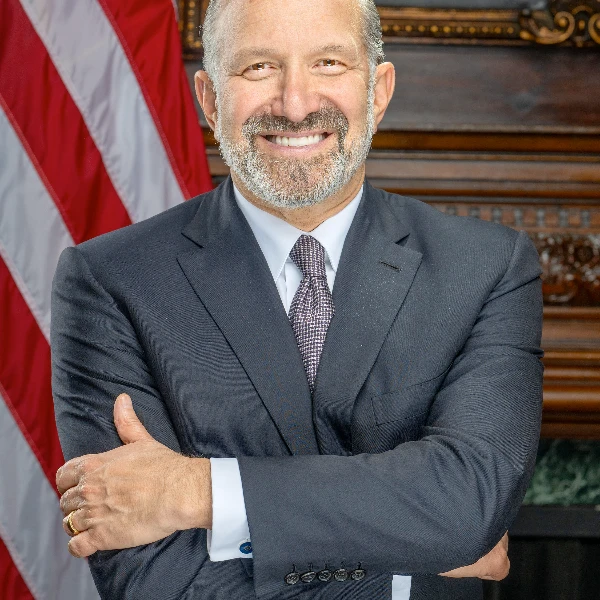
Will Howard Lutnick announce his departure as Commerce Secretary?
Short Answer
1. Executive Verdict
- May 2026 testimony intensified pressure on Lutnick regarding his Epstein ties.
- Bipartisan calls for Lutnick's resignation renewed after May 2026 testimony.
- Congressional calls for Lutnick's departure surged following May 2026 testimony.
- White House affirmed support for Lutnick in early 2026 and February 2026.
- House Oversight Committee actions could precipitate a resignation announcement.
- A prediction market suggests Lutnick's departure is likely before 2027.
Who Wins and Why
| Outcome | Market | Model | Why |
|---|---|---|---|
| Before Jul 1, 2026 | 16.0% | 16.3% | Bipartisan calls for his resignation intensified following May 2026 House testimony on Epstein ties. |
| Before Aug 1, 2026 | 25.0% | 24.7% | Political pressure increased due to May 2026 House testimony concerning Lutnick's Epstein ties. |
Current Context
2. Market Behavior & Price Dynamics
Historical Price (Probability)
3. Significant Price Movements
Notable price changes detected in the chart, along with research into what caused each movement.
Outcome: Before Aug 1, 2026
📈 May 02, 2026: 17.2pp spike
Price increased from 3.8% to 21.0%
Outcome: Before Jul 1, 2026
📈 April 30, 2026: 14.1pp spike
Price increased from 1.9% to 16.0%
📉 April 29, 2026: 17.1pp drop
Price decreased from 19.0% to 1.9%
📈 April 28, 2026: 14.0pp spike
Price increased from 5.0% to 19.0%
4. Market Data
Contract Snapshot
The market resolves to "Yes" if Howard Lutnick publicly announces or officially communicates his departure as Commerce Secretary before August 1, 2026. Otherwise, it resolves to "No" by July 31, 2026, 11:59 PM EDT, which also occurs if the role ceases to exist without a plausible successor. Temporary leaves, suspensions, or recusals do not constitute leaving the role, and in the event of death, contracts may resolve to the last fair price at the Exchange's discretion.
Available Contracts
Market options and current pricing
| Outcome bucket | Yes (price) | No (price) | Last trade probability |
|---|---|---|---|
| Before Jul 1, 2026 | $0.20 | $0.83 | 16% |
| Before Aug 1, 2026 | $0.25 | $0.79 | 25% |
Market Discussion
Other prediction markets indicate a 19% chance of Howard Lutnick leaving his position as Commerce Secretary before July 1, 2026, and a 36% chance before September 1, 2026 [^][^]. Lutnick, who assumed office in February 2025 [^], has faced criticism for comments made in March 2025 regarding Social Security checks [^][^][^], and scrutiny following his May 2026 testimony before the House oversight committee concerning his interactions with Epstein [^][^][^], with advocacy groups calling for his resignation [^].
5. What specific actions by the House Oversight Committee or GOP leadership could precipitate a resignation announcement from Howard Lutnick before the 2026 midterm elections?
| Committee Interview Announced | Early March 2026 [^][^] |
|---|---|
| Closed-door Deposition Held | May 6, 2026 [^] |
| Oversight Chair's Assessment of Truthfulness | Wasn't 100% truthful [^][^] |
6. What evidence from Q2 2026 supports the high probability implied by Polymarket's odds that Howard Lutnick will depart by the end of the year?
| Polymarket Departure Odds | 53% chance of departure before 2027 (February 2026) [^] |
|---|---|
| Epstein Conviction Year | 2008 [^][^][^][^][^] |
| Lutnick's Alleged Tie-Cutting Year | 2005 (inaccurate) [^][^][^][^][^][^] |
7. How does the political pressure on Howard Lutnick regarding his Epstein ties compare to the circumstances that led to the 2017 resignation of HHS Secretary Tom Price?
| Lutnick's Current Status | Grilled by House oversight as of May 8, 2026 (over Epstein ties) [^] |
|---|---|
| Tom Price's Resignation Date | September 29, 2017 [^] |
| Tom Price's Resignation Cause | Travel scandal with costs in the hundreds of thousands to nearly $1 million range [^] |
8. What does a timeline of public resignation calls from members of Congress show about the momentum of the anti-Lutnick campaign since April 2026?
| Resignation calls spike | Early May 2026, tied to House Oversight Committee testimony [^][^][^][^] |
|---|---|
| House Oversight Committee testimony | May 5-6, 2026 [^][^][^][^] |
| Senators' letter on Tether | April 29, 2026 [^] |
9. What public statements or signals from the White House Press Secretary or Chief of Staff would indicate a shift in presidential support for Howard Lutnick through H2 2026?
| Presidential Support Statement | White House Press Secretary asserted continuing presidential backing for Howard Lutnick (Feb 2026) [^][^] |
|---|---|
| Administration Focus Statement | White House spokesman stated entire administration, including Lutnick, focused on delivering (Feb 8, 2026) [^] |
| Prediction Market Odds | 54% YES for Lutnick leaving by Dec 31, 2026 [^][^] |
10. What Could Change the Odds
Key Catalysts
Key Dates & Catalysts
- Expiration: May 08, 2026
- Closes: August 01, 2026
11. Decision-Flipping Events
- Trigger: A Polymarket contract titled "Howard Lutnick out as Secretary of Commerce by December 31?" currently shows an implied probability of approximately ~54% for a YES outcome, indicating he leaves before 12/31/2026, compared to ~46% for a NO outcome [^] [^] .
- Trigger: The resolution of this contract is based on official information from the Trump administration or comparable credible reporting [^] .
- Trigger: On 2026-05-05/06, major reporting described Lutnick being grilled or volunteering for testimony in House Oversight coverage tied to the Epstein files [^] [^] [^] .
- Trigger: This development has kept speculation active regarding his resignation or departure [^] [^] [^] .
13. Historical Resolutions
Historical Resolutions: 1 markets in this series
Outcomes: 0 resolved YES, 1 resolved NO
Recent resolutions:
- KXLUTNICKANNOUNCEOUT-26APR-MAY01: NO (May 01, 2026)
Get Real-Time Research Updates
Sign up for early access to live reports, historical data, and AI-powered market insights delivered to your inbox.
