Short Answer

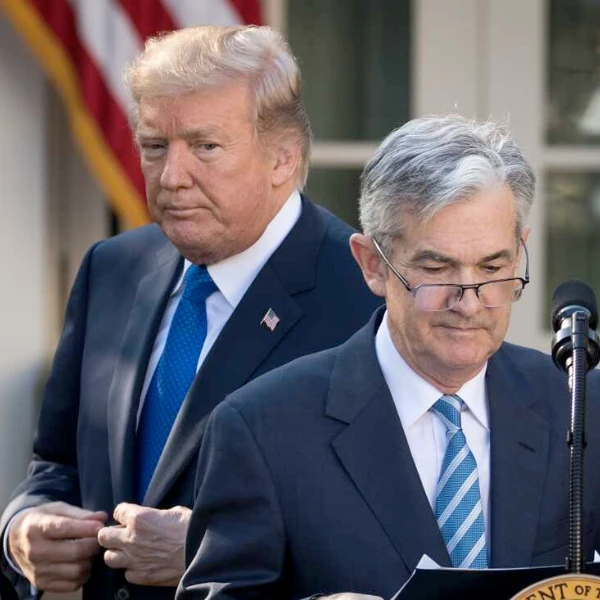
Both the model and the market expect Trump to try and fire Powell as Fed Chair or Governor before 2027, with no compelling evidence of mispricing.

1. Executive Verdict

  • Trump has repeatedly expressed intent to fire Jerome Powell.
  • Project 2025 details legal arguments for presidential removal of Fed governors.
  • Trump administration used non-legislative pressure and investigations against Powell.
  • Trump's criticisms of Powell intensified during significant market downturns.
  • Potential advisor Hassett publicly advocates for Federal Reserve independence.

Who Wins and Why

Outcome Market Model Why
Before May 15, 2026 2.1% 2.6% Trump has repeatedly stated intent to fire Powell, with legal arguments prepared for such an attempt.
Before Jun 1, 2026 6.0% 7.4% Trump's stated intention to fire Powell is backed by a potential administration's legal blueprints.
Before 2027 23.0% 25.8% Trump has repeatedly stated his intention to fire Powell, and a potential administration has prepared legal arguments.

2. Market Behavior & Price Dynamics

Historical Price (Probability)

Outcome probability
Date
Based on the provided chart data, the prediction market for "Will Trump try to fire Powell as Fed Chair or Governor?" has demonstrated a predominantly sideways trend, indicating a stable, long-term assessment of the event's likelihood. The price has traded within a narrow range for most of its history, fluctuating between a low of 1.8% and a high of 18.0%. The most significant price movement occurred on April 15, 2026, when the implied probability spiked sharply by 13.0 percentage points from 5.0% to 18.0%. However, this peak was short-lived, and the price has since retreated significantly, currently trading near its historical low at 2.1%. The cause for this sudden spike is not apparent from the provided context.
The market's price action has established clear technical levels. The peak of 18.0% serves as a strong resistance level, representing the highest probability the market has ever assigned to the event, which was quickly rejected. Conversely, the area between 1.8% and 2.1% has acted as a consistent support floor. The total volume of 34,765 contracts suggests moderate liquidity over the market's lifetime. The recent volume as the price fell back to the lows indicates trader activity confirming the rejection of the higher price, suggesting conviction in the lower probability.
Overall, market sentiment, as reflected by the price chart, is that an attempt by Trump to fire Powell is a low-probability event. The sharp, unsustained spike in April 2026 appears to be an anomaly rather than a fundamental shift in market expectation. The subsequent decline and the current price's proximity to the all-time low suggest that traders have consistently viewed this outcome as unlikely, and the market has effectively faded the only significant rally in its history.

3. Significant Price Movements

Notable price changes detected in the chart, along with research into what caused each movement.

Outcome: Before 2027

📉 April 24, 2026: 18.0pp drop

Price decreased from 34.0% to 16.0%

What happened: No supporting research available for this anomaly.

📈 April 20, 2026: 10.0pp spike

Price increased from 36.0% to 46.0%

What happened: No supporting research available for this anomaly.

Outcome: Before May 15, 2026

📈 April 15, 2026: 13.0pp spike

Price increased from 5.0% to 18.0%

What happened: No supporting research available for this anomaly.

4. Market Data

View on Kalshi →

Contract Snapshot

This market resolves to "Yes" if the President of the United States attempts to fire Jerome Powell as Chair or Member of the Board of Governors of the Federal Reserve System before January 1, 2027. An attempt is broadly defined to include official documents, direct orders, public statements, official announcements, written communication, or formal legal proceedings for removal. The market resolves "No" if no such attempt occurs by the deadline, and it closes early if an attempt is made. The resolution is based solely on the attempt, regardless of its legal validity, success, or whether Powell actually leaves office.

Available Contracts

Market options and current pricing

Outcome bucket Yes (price) No (price) Last trade probability
Before May 15, 2026 $0.02 $0.98 2%
Before Jun 1, 2026 $0.07 $0.94 6%
Before 2027 $0.22 $0.79 23%

Market Discussion

Traders are debating the likelihood of Donald Trump attempting to fire Jerome Powell, with a key point of discussion being the legal authority of the President to do so. Arguments for "Yes" suggest Trump is likely to try regardless of whether it's legally valid, while arguments for "No" frequently cite the President's lack of power to fire a Fed Chair or Governor. The market currently reflects a low probability (23% before 2027) of such an attempt occurring.

5. How Could a President Remove Federal Reserve Governors?

Fed Act Removal ClauseAct's silence implies broader presidential removal power [^]
Governor Role ClassificationPrimarily perform executive functions [^]
"For Cause" InterpretationBroadly includes policy disagreements [^]
Project 2025 argues presidential power extends to Federal Reserve Governor removal. The Heritage Foundation's Project 2025, in its 'Mandate for Leadership,' outlines specific legal arguments for establishing 'cause' to remove a Federal Reserve Governor, asserting a broad presidential removal power [^]. The 'Mandate' contends that the Federal Reserve Act's silence on explicitly stating "for cause" removal implies this broader authority [^]. Project 2025 argues that Governors primarily perform executive functions, such as implementing monetary policy, rather than quasi-legislative or quasi-judicial duties [^]. This interpretation differentiates them from officials protected by the "for cause" standard established in Humphrey’s Executor v. United States (1935), instead referencing Myers v. United States (1926) to affirm the President's inherent Article II power to remove purely executive officers at will [^].
"For cause" can broadly include policy disagreements undermining economic goals. Furthermore, the 'Mandate for Leadership' suggests that even if "for cause" is understood to apply, it can be interpreted broadly to include actions or inactions that undermine the President's economic agenda [^]. Specifically, policy disagreements where a Governor's actions are perceived as hindering presidential economic goals could be deemed "neglect of duty," "inefficiency," or "malfeasance," thus providing sufficient cause for removal [^]. This broad interpretation would allow an incoming administration to assert presidential removal power over Federal Reserve Governors who do not align with its economic vision [^].

6. What Are Potential Advisors' Stances on Federal Reserve Independence?

Kevin Hassett's PositionSupports Fed independence but noted White House probes into firing Fed Chair [^], [^], [^], [^]
Stephen Moore's CriticismConsistently advocated against Fed Chair Jerome Powell since 2021, blaming him for inflation [^], [^], [^], [^]
Judy Shelton's StanceInformation on her publicly stated positions regarding Fed authority or firing a Chair is not available (research results) [^]
Kevin Hassett publicly advocates Federal Reserve independence despite past White House probes. Hassett, a potential economic advisor, has consistently affirmed his belief that Fed monetary policy should operate "fully independent" of presidents, explicitly opposing presidential influence [^], [^]. However, during his time in the White House, he did acknowledge that the administration was investigating both Federal Reserve renovation costs and the presidential authority to dismiss then-Fed Chair Jerome Powell [^], [^]. Despite these inquiries, the provided sources do not indicate that Hassett himself has advocated for the firing of a Fed Chair since 2021.
Stephen Moore frequently criticizes Chair Powell, linking him to inflation, unlike Judy Shelton. Moore, another potential economic advisor, has been a vocal critic of Fed Chair Jerome Powell, particularly since 2021. He has authored multiple articles, including pieces in 2025 titled "The Case Against Jerome Powell," in which he directly attributes inflation to Powell's policies [^], [^], [^], [^]. Moore's consistent public advocacy "against" the sitting Fed Chair, often articulated through platforms like Newsmax, suggests a view that such a removal is warranted or falls within the scope of presidential possibility, though his general position on presidential authority over the Fed's independence is not explicitly detailed in the available sources. Information concerning Judy Shelton's publicly stated positions on presidential authority over the Federal Reserve or any advocacy for firing a Fed Chair since 2021 is not available within the provided research results.

7. Did Market Declines Intensify Trump's Criticisms of Jerome Powell?

Market Correction DefinitionDecline of 10% or more from a recent peak [^]
October 2018 CriticismTrump blamed the Fed for a 'stock market correction' [^]
Early 2020 CriticismTrump accused Fed of being 'slow to act' during coronavirus outbreak [^]
Donald Trump often criticized Jerome Powell during significant market downturns. A direct correlation exists between substantial market downturns, specifically a stock market correction (defined as a decline of 10% or more from a recent peak), and Donald Trump's intensified public criticisms of Federal Reserve Chair Jerome Powell [^]. This consistent pattern indicates a 'market pain' threshold, where a significant decline in the S&P 500 often coincided with renewed or escalated public critiques of the Fed's policies and leadership [^].
Specific instances demonstrate Trump's criticism during market stress. For example, in October 2018, as the S&P 500 and other US stocks experienced a tumble, Trump explicitly attributed the 'stock market correction' to the Federal Reserve's actions, directly blaming them for the market decline [^]. During this period, reports indicated Trump 'ratcheted up' or 'renewed' his criticisms of Powell [^]. This pattern of heightened public scrutiny continued into early 2020; when the coronavirus outbreak began to threaten the US economy and create market instability, Trump publicly attacked Powell, accusing the Fed of being 'slow to act' and advocating for interest rate cuts [^]. These events collectively illustrate a consistent relationship where substantial S&P 500 declines or major economic threats frequently served as catalysts for Trump's public criticisms of Jerome Powell.

8. Did Trump Admin Pressure Federal Reserve Chair Powell With Probes?

DOJ InvestigationInitiated against Powell, described as a "revenge investigation" [^]
Presidential ThreatsPresident Trump threatened to remove Powell from his position if he did not resign [^]
Pressure TacticsInvestigations and probes initiated against Powell [^]
The Trump administration employed non-legislative pressure tactics, including investigations, against officials such as Federal Reserve Chair Jerome Powell. These actions occurred concurrently with public threats from then-President Trump to remove Powell from his position if he did not resign [^]. Such investigations against officials, like the "Trump administration probe of Fed's Powell" [^], served as a means to exert pressure and potentially compel resignation, thus avoiding a formal firing.
A significant instance involved a Department of Justice investigation into Powell, subsequently described as a "revenge investigation" before its conclusion [^] . Prosecutors also reportedly attempted to access the Federal Reserve building amid threats from Trump to fire Powell once his term ended [^]. These investigative efforts, particularly the DOJ's "revenge investigation" [^], demonstrate an intent to apply substantial pressure, paralleling Trump's public statements threatening Powell's removal if he did not resign [^].

9. Can a President Legally Remove a Federal Reserve Governor?

Powell's Chair Term ExpirationMay 2026 [^]
Powell's Governor Term ExpirationJanuary 31, 2028 [^]
Presidential Removal IntentFormer President Trump intends to remove Powell as Governor [^]
Jerome Powell's Federal Reserve tenure faces a potential challenge from a future Trump administration. While his term as Chair of the Federal Reserve concludes in May 2026, his distinct 14-year term as a member of the Board of Governors extends until January 31, 2028 [^]. Former President Trump has repeatedly indicated his intention to dismiss Powell if he continues to serve on the Federal Reserve board as a Governor after his chairmanship ends [^]. The legal basis for a president to remove a Fed Governor is a contentious topic among legal scholars and has no historical precedent; existing Supreme Court decisions suggest limits on removing officials of independent agencies without due cause [^].
Directly influencing Federal Reserve policy is a primary motivation for removal. A potential Trump administration's reasoning for seeking to remove Jerome Powell as a regular Governor, rather than allowing him to complete his term until 2028, centers on influencing the Federal Reserve's monetary policy and the composition of its Board. Even as a Governor, Powell retains a vote on the Federal Open Market Committee (FOMC), which establishes the nation's benchmark interest rates and determines other monetary policy [^]. By removing Powell, a vacancy would be created, enabling the administration to appoint a new Governor whose economic philosophy and policy views are more aligned with its own. This would directly shift the balance of power and increase the administration's influence over future monetary policy decisions during a possible second term, potentially advocating for policies such as lower interest rates or increased monetary stimulus [^].
Removal efforts serve a significant symbolic purpose beyond policy. Attempting to remove Powell would signal an administration's willingness to assert presidential authority over independent agencies and to remove perceived obstacles to its economic agenda. Despite the significant legal hurdles and lack of precedent for such a move, the explicit threats from Trump suggest a determination to eliminate any lingering institutional presence of an official previously criticized for his policy decisions [^]. Such an aggressive action would demonstrate a commitment to shaping economic policy from the top down and could potentially deter future officials from taking positions perceived as contrary to the administration's goals, even if the removal is legally challenged or faces significant political capital expenditure.

10. What Could Change the Odds

Key Catalysts

Catalyst analysis unavailable.

Key Dates & Catalysts

  • Expiration: May 15, 2026
  • Closes: January 01, 2027

11. Decision-Flipping Events

  • Trigger: Catalyst analysis unavailable.

13. Historical Resolutions

No historical resolution data available for this series.