
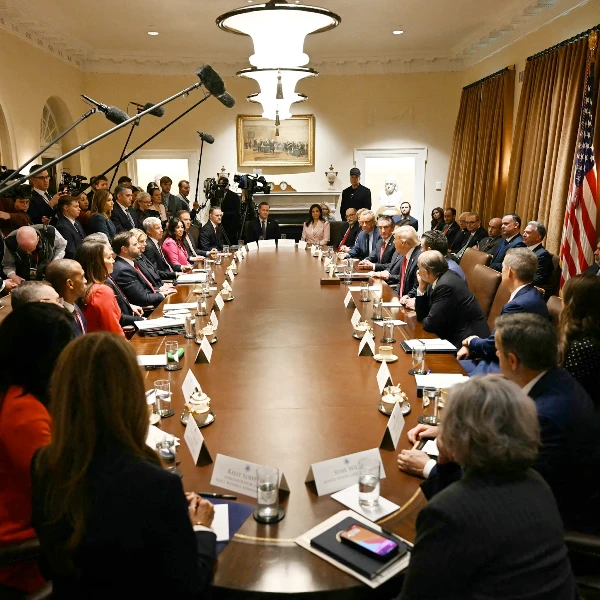
Who will leave their role in the Trump administration in 2026?
Short Answer
1. Market Behavior & Drivers
- Secretary Rubio and Secretary Hegseth strongly disagree on the Iran conflict. FBI Director Kash Patel appears a high-risk candidate for departure. President Trump was reported to question Kash Patel's loyalty in April 2026. Senior staff turnover reached 34% in early 2026, remaining elevated. Susie Wiles faces internal friction; Peter Navarro faces legal battles. Several key officials announced departures in June 2026, including advisors.
Who Wins and Why
| Outcome | Market | Model | Why |
|---|---|---|---|
| Rodney Scott | 20.0% | 10.1% | Research does not highlight strong supporting evidence. |
| Steven Cheung | 44.0% | 31.0% | Research does not highlight strong supporting evidence. |
| Kash Patel | 61.0% | 50.0% | Kash Patel may leave an administration role in 2026. |
| Pete Hegseth | 28.0% | 16.7% | Pete Hegseth could depart an administration role in 2026. |
| Tulsi Gabbard | 99.2% | 99.3% | Tulsi Gabbard is highly likely to leave an administration role in 2026. |
Current Context
Sources (7)
- 1Explainer: Recent Cabinet departures in Trump’s second termwjla.com
- 2Trump suffers spate of Cabinet turnover, but staffing overall remains stable in second termwashingtontimes.com
- 3Donald Trump taps former SEC Chair Jay Clayton to replace Tulsi Gabbard at ODNIthehill.com
- 4Housing official who targeted Trump’s enemies is named director of intelligencenbcnews.com
- 5How Many More People Leave the Trump Cabinet in 2026?lines.com
- 6Who Will Leave Trump's Cabinet Next? Live Odds at Kalshiactionnetwork.com
- 7Who Will Leave Trump Administration Next? Odds & Predictionsdefirate.com
2. Price Chart
Historical Price (Probability)
3. Significant Price Movements
Notable price changes detected in the chart, along with research into what caused each movement.
Outcome: Robert F. Kennedy Jr.
📉 June 14, 2026: 11.0pp drop
Price decreased from 62.0% to 51.0%
📈 June 13, 2026: 8.0pp spike
Price increased from 46.0% to 54.0%
📈 June 12, 2026: 18.0pp spike
Price increased from 27.0% to 45.0%
Outcome: Kash Patel
📈 June 10, 2026: 8.0pp spike
Price increased from 59.0% to 67.0%
Sources (11)
- 1RFK Jr. Seeks To Peek at Americans’ Medical Records for Clues on Autism and Vaccines - KFF Health Newskffhealthnews.org
- 2RFK Jr. melts down over NYT report, admits he blacklists reporters - Ars Technicaarstechnica.com
- 3The White House told RFK Jr to tone down his statements questioning vaccines. That hasn’t stopped him behind the scenes | The Independentindependent.co.uk
- 4Kennedy shows minimal engagement with vast health portfolioinquirer.com
- 5RFK Jr is ‘checked out’ and scrolls his phone despite global health emergencies, workers say | The Independentindependent.co.uk
- 6'Unsettling' Accounts of HHS Leadership Fuel Calls for RFK Jr. to Resign | Common Dreamscommondreams.org
- 7RFK Jr is ‘checked out’ and scrolls his phone despite global health emergencies, workers say | The Independentthe-independent.com
- 8Exit of Trump officials including FBI director Patel under... - Reutersreuters.com
- 9White House officials ‘openly discuss’ firing Kash Patel, journalist says, as FBI chief threatens to sue over report about ‘excessive drinking’ | The Independentindependent.co.uk
- 10Patel exit odds spike on White House rumors - Kalshinews.kalshi.com
- 11Exclusive: Interview with Todd Blanche and Kash Patel | Katie Pavlich Tonightyoutube.com
4. Market Data
Contract Snapshot
Here's a summary of the contract rules for the Robert F. Kennedy Jr. market:
1. YES resolution: The market resolves to "Yes" if Robert F. Kennedy Jr. permanently leaves his role as HHS Secretary at any point before 2027. This includes resignation, retirement, removal, or the natural expiration of his term, requiring an actual departure date. 2. NO resolution: The market resolves to "No" if Robert F. Kennedy Jr. remains in his role as HHS Secretary through 2026. It may also resolve to "No" if the HHS Secretary role ceases to exist without a plausible successor. 3. Key dates/deadlines: The critical period for his departure is before January 1, 2027. The market opened on December 13, 2025, and will close early if he leaves, otherwise by January 1, 2027, at 9:59 AM EST. 4. Special settlement conditions: If Robert F. Kennedy Jr. dies while in the role, contracts may resolve to the last fair price as determined by the Exchange. Temporary leaves, suspensions, or recusals are not considered leaving, and if he vacates and then re-occupies the role, the market may settle on the initial vacation. Insider trading by those with material, non-public information or employees of specified source agencies is prohibited.
Available Contracts
Market options and current pricing
| Outcome bucket | Yes (price) | No (price) | Last trade probability |
|---|---|---|---|
| Steven Cheung | $0.43 | $0.65 | 44% |
| Rodney Scott | $0.23 | $0.80 | 20% |
| Tulsi Gabbard | $1.00 | $0.01 | 99% |
| Todd Blanche | $0.67 | $0.34 | 67% |
| Amy Gleason | $0.64 | $0.37 | 64% |
| Kash Patel | $0.61 | $0.40 | 61% |
| Robert F. Kennedy Jr. | $0.52 | $0.49 | 51% |
| Howard Lutnick | $0.45 | $0.57 | 45% |
| Susie Wiles | $0.41 | $0.61 | 37% |
| Bill Pulte | $0.36 | $0.65 | 36% |
| Karoline Leavitt | $0.33 | $0.68 | 32% |
| Pete Hegseth | $0.28 | $0.73 | 28% |
| Lee Zeldin | $0.32 | $0.73 | 27% |
| Brooke Rollins | $0.27 | $0.78 | 26% |
| Linda McMahon | $0.25 | $0.77 | 26% |
| Chris Wright | $0.30 | $0.75 | 25% |
| Kelly Loeffler | $0.28 | $0.76 | 23% |
| Peter Navarro | $0.23 | $0.81 | 23% |
| Steve Witkoff | $0.23 | $0.81 | 23% |
| Sean Duffy | $0.22 | $0.82 | 22% |
| Stephen Miller | $0.25 | $0.76 | 22% |
| Tom Homan | $0.22 | $0.79 | 22% |
| Brendan Carr | $0.21 | $0.84 | 21% |
| Doug Collins | $0.23 | $0.81 | 20% |
| John Ratcliffe | $0.19 | $0.83 | 19% |
| Mehmet Oz | $0.19 | $0.82 | 19% |
| Mike Huckabee | $0.19 | $0.85 | 19% |
| Scott Bessent | $0.19 | $0.82 | 19% |
| Doug Burgum | $0.18 | $0.83 | 18% |
| Marco Rubio | $0.18 | $0.83 | 18% |
| Jamieson Greer | $0.17 | $0.86 | 17% |
| Russell Vought | $0.20 | $0.83 | 17% |
| Scott Turner | $0.13 | $0.91 | 13% |
| JD Vance | $0.00 | $1.00 | 0% |
Market Discussion
The Trump administration has experienced multiple high-profile departures in 2026, including Cabinet secretaries Kristi Noem (Homeland Security) in March, and Pam Bondi (Justice) and Lori Chavez-DeRemer (Labor) in April [1][2][3][4][5]. White House AI advisor Sriram Krishnan is confirmed to depart at the end of June, and JD Vance's chief of staff, Jacob Reses, is departing at the end of summer [6][7][8][9][10]. Prediction market traders are heavily focused on the potential departure of FBI Director Kash Patel, with significant betting volume suggesting a high probability of his exit before year-end, alongside monitoring Director of National Intelligence Tulsi Gabbard and Commerce Secretary Howard Lutnick [2][3][4][5].
Sources (10)
- 1How Many More People Leave the Trump Cabinet in 2026?lines.com
- 2Who’s next to leave the Trump admin following Chavez-DeRemer’s departure? - Sherwood Newssherwood.news
- 3Prediction Markets Have New Favorites to Leave Trump Administration in 2026thedailybeast.com
- 4Who Will Leave the Trump Administration This Year?next.io
- 5Will Trump Fire Kash Patel? Polymarket, Kalshi Odds Signal Growing Exit Risk - DeFi Ratedefirate.com
- 6JD Vance’s chief of staff, Jacob Reses, to leave Trump administrationnbcnews.com
- 7Sriram Krishnan is leaving his role as White House AI advisor | TechCrunchtechcrunch.com
- 8JD Vance's chief of staff to leave Trump adminstration at the end of summer: report | Just The Newsjustthenews.com
- 9Who is Jacob Reses? JD Vance’s longtime chief of staff to leave Trump administration | Hindustan Timeshindustantimes.com
- 10Top White House AI Adviser Departs Role: List of Resignations Under Trump - Newsweeknewsweek.com
5. Trust Index
Official decision: one office decides and holds the answer before the public
Integrity risk· Information exposure
Includes the cost to trade: a $10,000 order can't be filled here because the order book is too thin.
Weighted blend with hard caps — a critically weak safety pillar, or a severe trading anomaly, caps the total regardless of the rest. Full methodology · About the Trust Index
6. What potential policy disagreements between Donald Trump and key officials like Pete Hegseth or Marco Rubio could trigger a departure before 2027?
| Primary Policy Disagreement | Conflict in Iran and deployment of U.S. ground troops [1][2][3][4] |
|---|---|
| Key Officials in Disagreement | Secretary of State Marco Rubio and Secretary of War Pete Hegseth [1][2][3][4] |
| Presidential Involvement | President Trump's public contradictions of Rubio on foreign policy [1][5] |
Sources (9)
- 1Tensions soar as Hegseth and Rubio feud over US troops in Iran | Middle East Eyemiddleeasteye.net
- 2Marco Rubio and Pete Hegseth 'at each other's throats' over putting boots on the ground in Iran - The Mirror USthemirror.com
- 3The war hit the USA hard! The tension between the two ministers was captured on camera.en.haberler.com
- 4Marco Rubio's Spanish Remark Reveals a Deeper Disrespect for Latinos - Archynewsyarchynewsy.com
- 5Trump Humiliates Rubio With Yet Another Explanation for Warthedailybeast.com
- 6Who will leave Trump Administration before 2027? Trading Odds & Predictions | Polymarketpolymarket.copilot.markets
- 7Who will leave Trump Administration before 2027? Trading Odds & Predictions | Polymarketlmsh7.ggff.net
- 8Who will leave the Trump administration in 2026? — Live odds on Kalshi | Field Estimatefieldestimate.org
- 9Who will leave their role in the Trump admin… | ElectionOddselectionodds.live
7. What recent public statements or insider reports from H2 2026 support the market consensus that FBI Director Kash Patel is a high-risk candidate for departure?
| Probability of Departure | 77% by July 1, 2026 (late April 2026) [1][2][3] |
|---|---|
| White House Official Report | FBI Director likely to be removed (April 2026) [1][3] |
| Senate Leader's Action | Senator Schumer called for resignation (April 2026) [2][4] |
Sources (6)
- 1Patel exit odds spike on White House rumorsnews.kalshi.com
- 2Kash Patel’s Odds of Being Ousted as FBI Director - Newsweeknewsweek.com
- 3Will Donald Trump Fire Kash Patel Next? FBI Director Reportedly On Thin Ice For 'Excessive Drinking' And Targeting Journalists | IBTimes UKibtimes.co.uk
- 4White House officials ‘openly discuss’ firing Kash Patel, journalist says, as FBI chief threatens to sue over report about ‘excessive drinking’ | The Independentindependent.co.uk
- 5Kash Patel Warned He'll Be Fired as FBI Director After Freakout — 'Has Five Weeks' | IBTimes UKibtimes.co.uk
- 6Trump Officials Are ‘Openly Discussing’ Kash Patel’s Replacement as FBI Director: Report - Yahoo News UKuk.news.yahoo.com
8. How do the perceived loyalty levels of long-time Trump ally Kash Patel and newcomer Robert F. Kennedy Jr. compare, based on their public records?
| Kash Patel's Loyalty | Long-term Trump loyalist [1] |
|---|---|
| RFK Jr.'s Alliance Shift | Became Trump ally in 2024 [2][3][4] |
| RFK Jr.'s Current Role | Secretary of Health and Human Services [2][5][3] |
Sources (7)
- 1Why Kash Patel Went All In For Trumptime.com
- 2RFK Jr. Disavows Presidential Run, Pledges Loyalty to...bloomberg.com
- 3As RFK Jr. upends America's public health system, Trump...washingtonpost.com
- 4Robert F Kennedy Jr suspends campaign and backs Trumpbbc.com
- 5Robert F. Kennedy Jr. declares 'loyalty' to Trump, rules out a 2028 presidential bidusatoday.com
- 6How Kash Patel Became Trump’s Ideal FBI Directornymag.com
- 7Kash Patel - Wikipediaen.wikipedia.org
9. How does the 34% senior staff turnover rate observed in early 2026 compare to historical data from Trump's first term and other second-term presidencies?
| Trump's Second Term Senior Staff Turnover | 34% (as of mid-2026) [1] |
|---|---|
| Trump's First Term Senior Staff Turnover (First Two Years) | 66-68% [1][2] |
| Trump's Second Term Cabinet Departures | four (by June 2026) [1] |
Sources (6)
- 1Trump suffers spate of Cabinet turnover, but staffing overall remains stable in second termwashingtontimes.com
- 2Tracking turnover in the second Trump administration | Brookingsbrookings.edu
- 3Assessing President Trump’s second-term staffing record | Brookingsbrookings.edu
- 4Trump White House sees high turnover rate in second term: Brookingswashingtonexaminer.com
- 5[PDF] Significant Cabinet-level turnover after a president's re-election...presidentialtransition.org
- 6Second-term turnover of Bush, Obama political appointeespresidentialtransition.org
10. Which specific political pressures or ongoing controversies in late 2026 pose the most significant threat to the tenures of senior advisors like Susie Wiles or Peter Navarro?
| Susie Wiles internal friction | Over personnel decisions and administrative control [1][2][3] |
|---|---|
| Demands to Susie Wiles | Explanation and documentation on Navarro's role in $620 million Pentagon loan, due June 16, 2026 [4][5] |
| Peter Navarro controversy | Allegations regarding $620 million Pentagon loan to company tied to Donald Trump Jr [4][5][6] |
Sources (7)
- 1Susie Wiles, Trump’s Top Enforcer, Addresses Explosive Report She Will Quitthedailybeast.com
- 2Susie Wiles Addresses Explosive Report She Is Quitting Trump’s White Houseyahoo.com
- 3Trump White House in Turmoil? Insiders Say Susie Wiles Is Ready To Walk Awaypolinews.org
- 4Democrats demand answers after report ties Peter Navarro to Donald Trump Jr-linked $620M loannews.meaww.com
- 5Democrats question reported White House intervention in loan for...thehill.com
- 6White House Trade Adviser Peter Navarro Speaks to Reporters | Video | C-SPAN.orgc-span.org
- 7Susie Wiles Addresses Report She's About To Quit Trump's White House | HuffPost Latest Newshuffpost.com
11. What Could Change the Odds
Key Catalysts
Key Dates & Catalysts
- Expiration: January 07, 2027
- Closes: January 01, 2027
Sources (11)
- 1Sriram Krishnan is leaving his role as White House AI advisor | TechCrunchtechcrunch.com
- 2Josh Gruenbaum, ex-head of the Federal Acquisition Service and international negotiator, leaving governmentjewishinsider.com
- 3JD Vance’s chief of staff, Jacob Reses, to leave Trump administrationnbcnews.com
- 4Will Trump Resign Before December 31, 2026?lines.com
- 5Will Trump resign by December 31, 2026? · Market Aheadmarketahead.com
- 6Odds that Trump resigns by December 31, 2026 • Predictions, Odds & Warningspredictionsandodds.com
- 7Will Trump resign by December 31, 2026? — 6% Odds | OddsShiftoddsshift.com
- 8Trump out as President by June 30? Trading Odds & Predictions 2026 | Polymarketploymarket.com
- 9Trump's push for third megabill faces 'long shot' odds amid GOP skepticism | Fox Newsfoxnews.com
- 10Trump signs $70 billion immigration bill, capping lengthy fight over ICE funding - CBS Newscbsnews.com
- 11WATCH: Trump signs the $70 billion Secure America Act for immigration enforcement | PBS Newspbs.org
13. Historical Resolutions
Historical Resolutions: 1 markets in this series
Outcomes: 1 resolved YES, 0 resolved NO
Recent resolutions:
- KXTRUMPADMINLEAVE-26DEC31-LCHA: YES (Apr 21, 2026)
