Short Answer

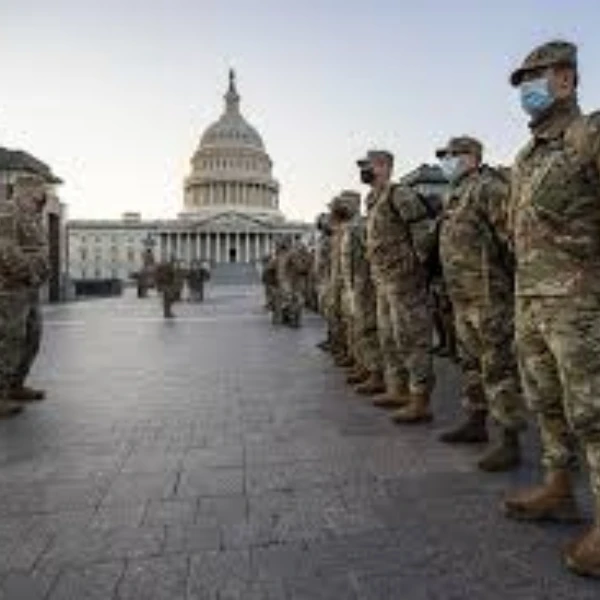
Both the model and the market expect Boston to be a city where the National Guard deploys in 2026, with no compelling evidence of mispricing.

1. Executive Verdict

  • Project 2025 advocates expanded presidential power for Insurrection Act invocation.
  • Minneapolis experienced significant violent crime increases and negative media attention.
  • Some state governors may resist federalization of their National Guard units.
  • DoD and National Guard plan civil disturbance training for 2025-2026.
  • Donald Trump issued no direct warnings to mayors or governors since 2025.

Who Wins and Why

Outcome Market Model Why
Portland 21.0% 13.3% Project 2025 advocates for expansive presidential authority to deploy the National Guard for "civil unrest" and "unlawful obstructions" without state consent, making Portland a plausible target given its history, although the project documents do not specifically name the city.
San Francisco 24.0% 13.0% While Project 2025 outlines an expansive interpretation of the Insurrection Act that could apply to civil unrest in major cities like San Francisco, the provided research explicitly states it does not list specific cities, thus offering no direct evidence to shift the probability relative to the debiased anchor.
Detroit 28.0% 16.1% The background research outlines Project 2025's expansive interpretation of the Insurrection Act, making deployment plausible for major cities if conditions arise, but provides no specific evidence or citations for Detroit being a particular target or likely to meet the deployment criteria, thus offering no specific shift from the debiased anchor.
Chicago 33.0% 21.7% The Project 2025 framework advocates for an expansive interpretation of the Insurrection Act for "civil unrest" in major cities, which increases the general probability for cities like Chicago, though the provided research does not specifically name Chicago.
Houston 25.0% 13.7% The background research outlines Project 2025's general criteria for invoking the Insurrection Act, but offers no specific evidence or citations regarding Houston's likelihood of being deployed to, making the evidence neutral for this specific outcome.

2. Market Behavior & Price Dynamics

Historical Price (Probability)

Outcome probability
Date
This prediction market has exhibited a sideways trading pattern, with the perceived probability of the National Guard deploying to Boston in 2026 oscillating within a narrow 6-point range. The price has moved between a low of 29.0% and a high of 35.0%. The market opened at 32.0% and currently sits at its peak of 35.0%, indicating a slight upward drift over the period. Key levels have been established, with support near the 29.0% mark and resistance at the current 35.0% price. The price action suggests a market in consolidation, without a strong directional trend.
There are no significant price spikes or drops that can be attributed to specific external events, as no news or contextual information has been provided. The gradual movement from 32.0% to 35.0% appears to be driven by internal market dynamics rather than a reaction to a particular catalyst. The total volume of 709 contracts, distributed over 267 data points, suggests relatively low market activity. The lack of significant volume accompanying price changes indicates that there is not strong conviction behind the movements. This low liquidity implies that the market is waiting for new information before establishing a more definitive trend.
Overall, the chart reflects a market sentiment of uncertainty. While the current price of 35.0% is at the top of the trading range, suggesting a slightly higher perceived probability than when the market opened, the sideways trend and low volume indicate a lack of consensus. The market appears to be in a holding pattern, pricing in a relatively stable, roughly one-in-three chance of this event occurring, pending any future developments that could provide a clearer signal.

3. Market Data

View on Kalshi →

Contract Snapshot

For a "Yes" resolution, the National Guard must be officially deployed to Chicago for operational missions between the market's issuance and January 1, 2027, with at least one Guard member physically present. A "No" resolution occurs if deployment is announced but never materializes, if Guard members are on standby, in transit, or involved in training, recruitment, or at permanent facilities not on deployment orders. The market closes early if the event occurs, otherwise by January 1, 2027, with verification from the New York Times.

Available Contracts

Market options and current pricing

Outcome bucket Yes (price) No (price) Last trade probability
Chicago $0.33 $0.69 33%
Detroit $0.28 $0.73 28%
Houston $0.31 $0.75 25%
San Francisco $0.23 $0.84 24%
Portland $0.28 $0.79 21%

Market Discussion

Traders are discussing various cities for potential National Guard deployments in 2026, with current market probabilities listing Chicago (33%), Detroit (28%), and Houston (25%) as the most likely. Arguments for a "Yes" deployment include reports of Guard members being activated and put on standby, while "No" arguments center on specific situations like a potential deployment being for federal military instead of the National Guard (as discussed for Minneapolis) or that the crisis might resolve itself. A key insight from the rules is that only National Guard deployments count, explicitly excluding federal military deployments.

4. How Does Project 2025 Redefine Presidential Insurrection Act Authority?

Project 2025 Insurrection Act StanceAdvocates expansive interpretation to suppress "civil unrest" and "unlawful obstructions," potentially without state consent [^]
Criteria for InvocationBroadly framed for "unlawful obstructions or combinations, or rebellions against the authority of the United States" making it "impracticable to enforce the laws" [^]
Project 2025 DevelopmentDeveloped by hundreds of conservative experts, academics, and former government officials coordinated by the Heritage Foundation [^]
The Heritage Foundation's 'Project 2025' advocates for broader presidential power to invoke the Insurrection Act. The project's "Mandate for Leadership" promotes a unitary executive theory, enabling a president to unilaterally deploy federal troops to suppress civil unrest and assert federal control [^]. While the Heritage Foundation previously characterized the Insurrection Act as a "last resort" [^], Project 2025's framework suggests a lowered threshold for its use against perceived "domestic threats" and to maintain "law and order" [^]. The "Mandate for Leadership" itself was developed by hundreds of conservative experts, academics, and former government officials coordinated by the Heritage Foundation [^]. Figures such as Jeffrey Clark, known for advocating expansive presidential power, align with the unitary executive theories espoused within the project [^].
Invocation criteria focus on federal law enforcement being obstructed or defied. The criteria, broadly outlined by Project 2025 and consistent with the Act's provisions, include situations where "unlawful obstructions or combinations, or rebellions against the authority of the United States" hinder federal law enforcement [^]. The project envisions a restructured Department of Justice and other federal agencies prepared to utilize federal law enforcement, potentially with military support, to enforce federal law and protect federal property [^]. This approach is particularly emphasized in situations where state or local authorities are deemed unwilling or unable to act [^].
General conditions could meet Project 2025's broad intervention thresholds. A direct assessment of how these criteria map onto specific current social or criminal justice conditions is not possible without a provided list of cities. However, based on the interpretations put forth in Project 2025's "Mandate for Leadership" and related commentaries, situations such as widespread protests, significant civil disturbances, or perceived failures of local authorities to control crime or unrest could be construed as meeting the threshold for "unlawful obstructions or combinations" that impede federal law enforcement or constitute "rebellions against the authority of the United States" [^]. Such conditions, within this framework, would justify federal intervention [^].

5. Which U.S. Cities Face Rising Crime and Public Disorder Coverage?

Minneapolis Violent Crime Increase11% (Jan-Sep 2025 vs 2024) [^]
New Orleans Violent Crime Increase14% (Jan-Sep 2025 vs 2024) [^]
Washington D.C. Violent Crime Increase13% (Jan-Sep 2025 vs 2024) [^]
Minneapolis experienced a notable violent crime increase, attracting significant negative media attention. From January to September 2025, the city saw an 11% increase in violent crime compared to the same period in 2024, as reported by the Major Cities Chiefs Association (MCCA) [^]. This rise coincided with conservative news coverage that depicted a "dangerous breakdown amid unrest" and "mob mentality," explicitly linking these conditions to public disorder [^]. During the identical period, other major U.S. cities like New Orleans also reported a 14% increase in violent crime, and Washington D.C. experienced a 13% increase, even though violent crime rates nationally saw a decline in 2025 [^].
Conservative media consistently highlights urban public disorder and crime issues in specific cities. These outlets frequently spotlight cities where public disorder and crime are perceived as significant problems. For example, Chicago has been a focus of coverage for "teen takeover" incidents, which have led to curfew enforcement and are framed as instances of "public disorder" [^]. These sources often claim that "Democrats choose chaos in their cities by encouraging lawlessness" [^], and they generally report that some "major cities see violent crime surge," associating these increases with specific urban areas experiencing disorder [^].

6. What are the National Guard's command structure and federalization views in key states?

State National Guard Commander-in-ChiefState Governor (Illinois, New York, California) [^]
Illinois Governor's Federalization StanceOpposed federalization of Guard members for domestic law enforcement without consent (June 2020) [^]
NY/CA Governors' Federalization StanceNo specific public statements found regarding federalization against consent for domestic law enforcement [^].
Governors command state National Guard units; Adjutant General leads operations. In Illinois, New York, and California, the respective state Governor serves as the Commander-in-Chief of their National Guard forces. The Adjutant General is the highest-ranking military officer in each state's Guard. Specifically, Major General Dennis R. Hayes commands the Illinois National Guard [^]. Major General Raymond F. Shields Jr. leads New York's National Guard [^], and Major General Matthew P. Beevers commands the California National Guard [^].
Governor Pritzker opposed federalizing Illinois Guard without his consent. Illinois Governor J.B. Pritzker publicly objected in June 2020 to the federalization of Illinois National Guard members for domestic law enforcement without his approval. He expressed concern over the Trump administration's intent to federalize approximately 300 of his state's Guard members for deployment to Washington D.C., stating they would be taken "without my consent and against my will" for an "unprecedented" action [^]. No specific public statements or legal positions from the Governors of New York or California regarding the federalization of their Guard units for domestic law enforcement against their consent were identified in the research.

7. What are the DoD and NGB civil disturbance training plans for 2025-2026?

National Guard Training FocusQuick reaction civil disturbance operations by 2026 (Reuters) [^]
Urban Evasion Exercise LocationSan Francisco, January 2026 (19FortyFive) [^]
FY2026 Budget SpecificsSpecific appropriations for large-scale civil disturbance operations not detailed (DoD) [^]
The Department of Defense (DoD) and National Guard Bureau (NGB) are conducting civil disturbance and urban environment training for FY2025-2026. By 2026, National Guard forces are being specifically trained as "quick reaction" forces to address civil disturbances, according to US officials [^]. A notable urban training exercise, "Exercise Sourdough," was conducted by the U.S. Air Force in San Francisco in January 2026, transforming the city into an "urban evasion course" [^]. Additionally, multi-state Air Guard units are involved in training activities such as "CHOP North 2026" [^]. While a multi-state task force completed a training exercise at Fort Hood, the provided information does not detail its specific focus on civil disturbance or urban environments [^].
Specific wargames and dedicated budgets for civil disturbance operations are not detailed. While general wargaming is a recognized area of study [^], the available research does not detail specific DoD or NGB wargames focusing on large-scale, prolonged civil disturbance operations in dense urban environments for FY2025-2026. Public budgetary documents, including the "COLLINS CENTER UPDATE 082025" [^] and the "DoD FY2026 Budget Overview" [^], are available. However, specific appropriations or line items dedicated to extensive, prolonged civil disturbance operations are not explicitly detailed within the provided research [^]. San Francisco is the only city explicitly mentioned as a site for an urban exercise within this timeframe [^].

8. Which Mayors and Governors Received Trump's Direct Warnings?

Federal Non-Intervention WarningLate January/Early February 2026 [^]
Sanctuary City Executive Order ThreatApril 2025 [^]
Chicago DOJ Grant RejectionNovember 2025 [^]
No specific mayors or governors received direct public warnings from Donald Trump or his key allies. Since January 2025, available sources do not identify any individual city leaders as receiving named warnings or ultimatums regarding crime rates or protest management. Instead, general warnings and policy statements were issued to categories of cities. For example, in late January and early February 2026, Trump indicated that the federal government would not intervene during protests in Democratic-led cities "until they ask us for help" [^]. This approach positioned city leadership as primarily responsible, making federal assistance contingent on an explicit request. Furthermore, in April 2025, the White House issued threats to sanctuary cities via an Executive Order, often concerning federal funding tied to immigration policies and public safety [^].
Chicago notably refused federal grants tied to Trump's immigration policies. In November 2025, Chicago rejected Department of Justice (DOJ) grants because they were linked to Trump's immigration policies [^]. While this action involved refusing federal funding that could support local law enforcement, the research does not detail a direct prior warning specifically to Chicago's mayor about crime rates or protest management that immediately preceded this rejection. Chicago is a Democratic-led and sanctuary city, thus falling under the general categories targeted by the aforementioned warnings [^].

9. What Could Change the Odds

Key Catalysts

Catalyst analysis unavailable.

Key Dates & Catalysts

  • Expiration: January 01, 2027
  • Closes: January 01, 2027

10. Decision-Flipping Events

  • Trigger: Catalyst analysis unavailable.

12. Historical Resolutions

Historical Resolutions: 4 markets in this series

Outcomes: 4 resolved YES, 0 resolved NO

Recent resolutions:

  • KXNGUARDCITY-26-NYC: YES (Feb 24, 2026)
  • KXNGUARDCITY-26-CHA: YES (Mar 03, 2026)
  • KXNGUARDCITY-26-BOS: YES (Feb 27, 2026)
  • KXNGUARDCITY-26-BAL: YES (Mar 03, 2026)