
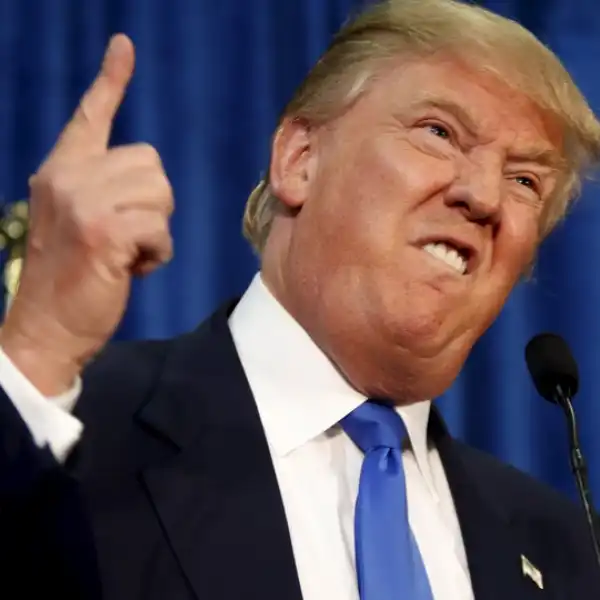
How many Cabinet members will Trump say he fired in 2026?
Short Answer
1. Executive Verdict
- Trump's first term consistently avoided "fired" for Cabinet member departures.
- He instead used language implying resignation or thanking for service.
- No direct evidence suggests a shift to explicitly state "fired" in 2026.
- Project 2025 outlines explicit ideological loyalty tests for personnel.
- Cabinet departures frequently occurred under pressure or due to disagreements.
- Accelerated Cabinet turnover followed the 2018 midterm elections.
Who Wins and Why
| Outcome | Market | Model | Why |
|---|---|---|---|
| 0 | 64.0% | 64.3% | Trump consistently avoided explicitly stating he "fired" Cabinet members in his first term. |
| 2 | 20.0% | 10.2% | Trump's precedent shows he avoids explicitly saying he fired Cabinet members, making two instances improbable. |
| 1 | 3.2% | 15.3% | Trump's first-term pattern of avoiding "fired" statements makes a single instance unlikely. |
| 3 | 9.2% | 6.1% | Trump's past communication style avoids explicitly stating he fired Cabinet members, including three. |
| 4 | 2.9% | 3.1% | Historically, Trump consistently avoids explicitly stating he fired Cabinet members, making four instances unlikely. |
2. Market Behavior & Price Dynamics
Historical Price (Probability)
3. Market Data
Contract Snapshot
This Kalshi market resolves to 'Yes' if President Trump publicly announces the firing or request for resignation of exactly zero non-acting Cabinet members before January 1, 2027; otherwise, it resolves to 'No'. An announcement is valid even if the Cabinet member does not actually depart, and is defined by Trump's direct communication (e.g., social media, video, direct quote), concerning non-acting members of a specifically defined Cabinet. The market closes on January 1, 2027, at 10:00 am EST, with a projected payout shortly thereafter.
Available Contracts
Market options and current pricing
| Outcome bucket | Yes (price) | No (price) | Last trade probability |
|---|---|---|---|
| 0 | $0.65 | $0.36 | 64% |
| 2 | $0.20 | $0.85 | 20% |
| 3 | $0.14 | $0.91 | 9% |
| 1 | $0.08 | $0.94 | 3% |
| 4 | $0.03 | $0.99 | 3% |
| 5 | $0.06 | $0.99 | 3% |
Market Discussion
Traders are heavily discussing the strict interpretation of the market rules, which require former President Trump to explicitly state he "fired" or "asked for the resignation" of a Cabinet member for it to count. The majority (61%) believes he will say he fired 0 members, arguing that even forced departures might not meet the explicit verbalization requirement, citing past examples. Conversely, some traders express frustration with the market's perceived misleading nature, with one user strongly betting that Trump will explicitly claim at least one firing despite the strict criteria.
4. How Do Project 2025 Loyalty Tests Compare to 2016 Vetting?
| Project 2025 Vetting | Explicit loyalty tests and ideological screening for all roles [^] |
|---|---|
| 2016 Vetting Approach | Unconventional cabinet amidst internal contention; no explicit formalized loyalty testing [^] |
| Project 2025 Goal | To fill thousands of positions with 'fiercely loyal' individuals [^] |
5. What Were the Reasons for Trump's First Ten Cabinet Departures?
| Management/Personal Conduct Issues | 5 officials [^], [^], [^], [^] |
|---|---|
| Public Policy Disagreements | 4 officials [^], [^], [^], [^] |
| Perceived Disloyalty (Investigations) | 1 official [^], [^], [^], [^] |
6. How did Donald Trump announce Cabinet member departures?
| Times 'fired'/'terminated' used by Trump | Zero times [^] |
|---|---|
| Cabinet departures examined | Seven instances [^] |
| Trump's preferred language | Implied resignation, acceptance of resignation, or retirement [^] |
7. What is Russell Vought's Influence on Cabinet Nominees?
| Key Policy Stance | Aggressive interpretation of 'unitary executive theory' [^] |
|---|---|
| Organization Policy | Center for Renewing America (CRA) known for unitary executive theory [^] |
| Potential Future Role | Tapped to lead the Office of Management and Budget (OMB) [^] |
8. How did the 2018 midterms impact Trump's Cabinet turnover?
| 2018 Midterm Elections Date | November 6, 2018 [^] |
|---|---|
| Key Post-Midterm Turnover Period | November 7, 2018 - January 6, 2019 [^] |
| Total Cabinet Departures (Trump 1st Term) | 14 [^] |
9. What Could Change the Odds
Key Catalysts
Key Dates & Catalysts
- Expiration: January 01, 2027
- Closes: January 01, 2027
10. Decision-Flipping Events
- Trigger: Catalyst analysis unavailable.
12. Historical Resolutions
No historical resolution data available for this series.
Get Real-Time Research Updates
Sign up for early access to live reports, historical data, and AI-powered market insights delivered to your inbox.
