Short Answer

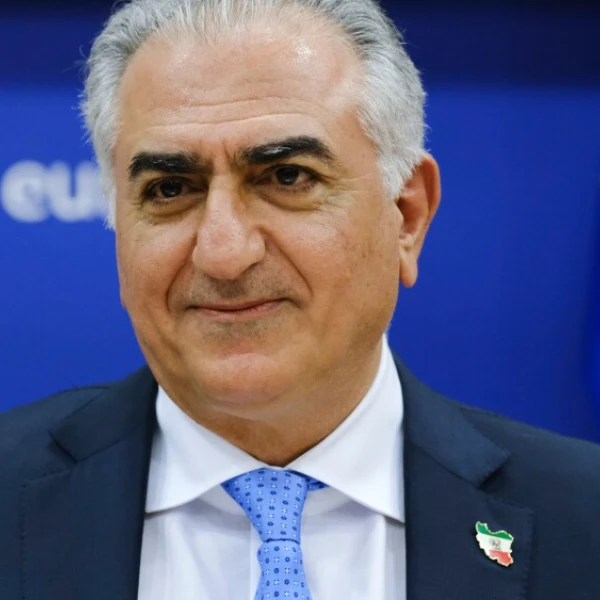
Both the model and the market expect the United States to recognize Reza Pahlavi as the leader of Iran in 2026, with no compelling evidence of mispricing.

1. Executive Verdict

  • No confirmed meetings between Pahlavi and US officials on governance.
  • Major non-monarchist opposition groups actively reject Pahlavi's leadership.
  • The Iran Prosperity Project has not secured major financial commitments.
  • US has not signaled intent to challenge Iran's UNGA credentials.
  • Domestic protests and war could destabilize the current Iranian regime.
  • Pahlavi seeks international visibility through speeches and US envoy meetings.

Who Wins and Why

Outcome Market Model Why
Before 2027 18.0% 18.0% The U.S. rarely recognizes exiled opposition without significant regime collapse or a clear path to power.

Current Context

The United States has not recognized Reza Pahlavi as Iran's leader as of March 2026. As of March 30, 2026, the United States has not recognized Reza Pahlavi as the leader of Iran and shows no indication of doing so before 2027. A prediction market tracking US recognition before January 1, 2027, reflects low expectations, with a 25% "Yes" and 76% "No" [^].
US officials express skepticism despite Pahlavi's efforts to position himself. Former President Trump has repeatedly expressed skepticism about Pahlavi's support inside Iran, describing him as "very nice" but questioning whether the country would accept his leadership [^]. Amid the US-Israel conflict with Iran [^], Pahlavi has actively positioned himself for a leadership transition through speeches, including at CPAC 2026 [^], and initiatives like the "Iran Prosperity Project" [^]. However, the US strategy focuses on supporting protesters and weakening the current regime, rather than endorsing Pahlavi [^]. Despite the death of Khamenei, remnants of the Iranian regime persist, and no full collapse or recognition has been reported [^].

2. Market Behavior & Price Dynamics

Historical Price (Probability)

Outcome probability
Date
This prediction market shows a consistent and clear downward trend, with the probability of the U.S. recognizing Reza Pahlavi in 2026 declining from a starting point of 24% to a current price of 18%. The market has traded within a narrow range of 16% to 28%, establishing a historical support level around 16%. The price decline reflects the market's reaction to the prevailing political context, specifically the lack of any official movement or positive signaling from the United States. Reports of skepticism from influential figures, such as former President Trump questioning Pahlavi's internal support in Iran, have likely reinforced this bearish sentiment and contributed to the steady erosion of the "Yes" contract price throughout March.
The significant total trading volume of over 116,000 contracts suggests robust market participation and a strong conviction behind the downward trend. The persistent selling pressure indicates that traders are increasingly confident that recognition will not happen by the resolution date. The price currently sitting near the historical low of 16% encapsulates a strong market consensus against the proposition. Overall, the price action communicates a deeply skeptical sentiment, with traders consistently pricing in a low and diminishing probability of a U.S. policy shift regarding Iranian leadership within the specified timeframe.

3. Market Data

View on Kalshi →

Contract Snapshot

This market resolves to "Yes" if the United States government takes official action explicitly recognizing Reza Pahlavi as the rightful or legitimate individual leader of Iran before January 1, 2027. If this explicit recognition does not occur by December 31, 2026, the market resolves to "No." The market will close and expire early if the "Yes" event occurs, otherwise, it closes by December 31, 2026, at 11:59 PM EST.

Available Contracts

Market options and current pricing

Outcome bucket Yes (price) No (price) Last trade probability
Before 2027 $0.18 $0.83 18%

Market Discussion

Traders are predominantly betting against the United States recognizing Reza Pahlavi as the leader of Iran by 2027, with the market showing an 83% chance for "No." Arguments for "Yes" suggest it could be the "best option" for US and Israeli interests, with some speculating a potential Trump administration might make such a move. Conversely, "No" arguments highlight the US's past reluctance to officially recognize opposition figures, citing the example of Venezuela's Machado, and question Pahlavi's capacity to establish the necessary on-the-ground leadership to warrant recognition.

4. Were Reza Pahlavi's Meetings with Trump Officials on Governance Confirmed?

Confirmed Meetings (June-Oct 2026)None reported by diplomatic sources (Web Research Results) [^]
Pahlavi-Witkoff Meeting (Date/Topic)January 2026, focused on Iran protests, not post-conflict governance [^]
Steve Witkoff's Official RoleNot an NSC or State Department official [^]
No confirmed meetings regarding post-conflict governance met the specified criteria. Research found no reports from established diplomatic sources like Foreign Policy or Axios detailing confirmed meetings between Reza Pahlavi's representatives and senior officials in the Trump administration's National Security Council or State Department, focused on post-conflict governance, between June and October 2026. While an Axios report from January 2026 did detail a secret meeting, it involved Pahlavi himself and Trump envoy Steve Witkoff [^]. This meeting occurred outside the specified June-October 2026 timeframe, Witkoff was not identified as an NSC or State Department official, and the substance of their discussion centered on Iran protests, not post-conflict governance [^].
Other reports also did not fulfill the specific meeting requirements. Similarly, a Foreign Policy article from January 2026 discussed Pahlavi's role but did not report any meetings matching the specified criteria regarding officials, topic, or timeframe [^]. While other sources mentioned general engagements between Pahlavi and Trump officials or Congress, these lacked the specific details—such as the involvement of senior NSC or State Department officials, a focus on post-conflict governance, or occurrence within the June to October 2026 period—required by the query [^]. Consequently, the available research indicates no evidence to suggest the United States recognized Reza Pahlavi as the leader of Iran in 2026 based on such confirmed meetings.

5. Do Major Non-Monarchist Iranian Opposition Coalitions Support Reza Pahlavi?

Supreme Leader Khamenei's DeathFebruary 28, 2026 [^]
Kurdish Opposition StanceExplicitly rejected Pahlavi's leadership (Web Research Results) [^]
NCRI/MEK PositionOpposes monarchy, announced own provisional government (Web Research Results, 8) [^]
Major non-monarchist opposition groups actively reject Pahlavi's leadership. Following the death of Iranian Supreme Leader Ali Khamenei on February 28, 2026 [^], major non-monarchist opposition groups have actively opposed Reza Pahlavi as a singular transitional leader. The Coalition of Political Forces of Iranian Kurdistan, for instance, has explicitly rejected Pahlavi, describing his dynasty as oppressive [^]. Similarly, the National Council of Resistance of Iran (NCRI/MEK), a secular democratic council, announced its own provisional government, firmly opposing monarchy and any return of the Pahlavi dynasty [Web Research Results, 8].
Widespread opposition fragmentation prevents formal allegiance to Pahlavi. While Pahlavi has actively presented his case for leadership [^], sources indicate significant friction and fragmentation among the broader Iranian opposition. Many secular and republican groups advocate for alternative forms of governance, maintaining their own distinct visions for a post-Khamenei Iran [^]. As of November 1, 2026, major non-monarchist coalitions have not declared formal allegiance to Pahlavi. These groups actively oppose a monarchical restoration and present rival claims to leadership [5, 7, 8, Web Research Results]. Although some individuals or minor pro-monarchist secular groups may have expressed support, this does not extend to major non-monarchist coalitions [Web Research Results].

6. What Is the Status of Iran's Provincial Capital Control in Q4 2026?

Provincial Capital Control (Q4 2026)No exact percentage specified by US intelligence, Janes, or Bellingcat reports [^].
National Institutions ControlVery likely for Iranian government to retain control (Janes, early March 2026) [^]
Police Stations Targeted in TehranAt least 15 (Bellingcat, March 1-3, 2026) [^]
No specific data exists for Q4 2026 provincial capital control. As of Q1 2026, neither US intelligence assessments nor established open-source intelligence trackers, such as Janes or Bellingcat, have released specific percentages regarding the operational control of Iran's 31 provincial capitals by pre-war Islamic Republic forces for Q4 2026. However, Janes assessed in early March 2026 that the Iranian government was very likely to retain control over national political, ideological, and religious institutions [^].
US-Israeli strikes have targeted regime security infrastructure in major cities. While a precise figure for provincial capital control remains unavailable, ongoing US-Israeli strikes have targeted regime security infrastructure across the country. These strikes have included police stations and Islamic Revolutionary Guard Corps (IRGC) bases in major cities such as Tehran, Shiraz, Tabriz, and Esfahan [^]. Bellingcat's satellite imagery analysis confirmed that at least 15 police stations or police-related buildings in Tehran were targeted between March 1 and March 3, 2026 [^]. Despite these strikes, open sources indicate that IRGC provincial devolved commands continue to sustain resistance [^].

7. Did Iran Prosperity Project Receive Major NGO Funding by Q3 2026?

AEI Financial CommitmentsNo multi-million dollar commitments (Web Research Results) [^]
Heritage Foundation EndorsementsNone (Web Research Results) [^]
Iran Prosperity Project Primary FunderNUFDI [^]
The Iran Prosperity Project has not secured major financial commitments from key policy entities. By the end of Q3 2026, the Iran Prosperity Project has not received tangible multi-million dollar financial commitments or public endorsements from non-governmental organizations such as the Heritage Foundation or the American Enterprise Institute (AEI). Although AEI has published op-eds and analyses related to Reza Pahlavi, including discussions like "How Will Reza Pahlavi Return to Iran?" and a "Q&A: Reza Pahlavi," these do not constitute financial commitments or explicit endorsements of the Iran Prosperity Project itself [^]. Furthermore, research indicates no mention of Reza Pahlavi or the Iran Prosperity Project on the Heritage Foundation's platforms [Web Research Results].
The Iran Prosperity Project advocates for a democratic Iran, primarily funded by NUFDI. The Iran Prosperity Project aims to establish a "roadmap for a free, democratic, and secular Iran" and was launched with the support of Reza Pahlavi, featuring keynote remarks and various events [^]. Its primary financial backing comes from the National Union for Democracy in Iran (NUFDI), a non-profit organization [^]. Despite these foundational activities and objectives, the project has not obtained specified multi-million dollar financial commitments or public endorsements from prominent organizations like AEI or the Heritage Foundation [Web Research Results].

8. Will US Challenge Iran's UNGA 81 Credentials or Recognize Pahlavi?

US UNGA 81 Credentials ChallengeNo evidence of US intent (September 2026) [^]
US UNGA 80 Delegation ActionsMovement restrictions and visa reviews (2025) [^], [^]
Odds of US Recognizing Pahlavi15% in 2026 [^]
The United States has not signaled any intent to formally challenge the credentials of the sitting Iranian delegation for the September 2026 UN General Assembly (UNGA 81). Current information from official UNGA agendas and high-level diplomatic leaks does not indicate such a procedural step, which would be required before recognizing an alternative government [^]. While the U.S. has taken various actions concerning Iranian delegations in the past, these have not constituted a formal challenge to credentials for the purpose of recognizing an alternative government. For instance, prior to the 2025 UNGA (UNGA 80), the U.S. imposed movement restrictions on Iran's delegation [^] and subjected their visas to security reviews [^]. A general statement regarding Iran was also issued by the UN Secretary-General in February 2026 [^].
The U.S. has not signaled support for an alternative Iranian government, despite increased advocacy. Notable figures like Reza Pahlavi addressed CPAC in 2026, advocating for a free Iran [^], but there has been no indication from the U.S. of formal recognition or the initiation of procedural steps towards an alternative Iranian government in 2026. This absence of official action aligns with prediction market data, where the odds for the United States recognizing Reza Pahlavi as the leader of Iran in 2026 are currently at 15% [^].

9. What Could Change the Odds

Key Catalysts

Potential catalysts that could increase the likelihood of U.S. recognition for Reza Pahlavi include continued domestic protests and the ongoing war, which could destabilize the current Iranian regime [^]. Pahlavi's efforts to gain international visibility, such as his speech at CPAC 2026 and meetings with U.S. envoys, alongside his "Iran Prosperity Project" transition plan, aim to bolster his legitimacy and support [^]. The death of Supreme Leader Khamenei in February 2026 represents a significant event that could create a power vacuum and potentially shift U.S. policy if internal conditions drastically change [^].
Despite these factors, significant headwinds make U.S. recognition unlikely. The Iranian regime has demonstrated considerable resilience against protests and external pressures, including US-Israel strikes [^]. U.S. leadership, particularly former President Trump, has expressed skepticism about Pahlavi's domestic support, preferring internal figures or models similar to Venezuela's opposition strategy [^]. Analysts note the fragmented nature of the Iranian opposition and the historical U.S. reluctance to endorse a specific leader without a clear overthrow of the existing government [^]. Current Polymarket odds reflect this sentiment, showing only a 15% probability of U.S. recognition in 2026, with a strong consensus of 85% against it, driven by these persistent challenges [^].

Key Dates & Catalysts

  • Expiration: January 08, 2027
  • Closes: January 01, 2027

10. Decision-Flipping Events

  • Trigger: Potential catalysts that could increase the likelihood of U.S.
  • Trigger: Recognition for Reza Pahlavi include continued domestic protests and the ongoing war, which could destabilize the current Iranian regime [^] .
  • Trigger: Pahlavi's efforts to gain international visibility, such as his speech at CPAC 2026 and meetings with U.S.
  • Trigger: Envoys, alongside his "Iran Prosperity Project" transition plan, aim to bolster his legitimacy and support [^] .

12. Historical Resolutions

Historical Resolutions: 1 markets in this series

Outcomes: 0 resolved YES, 1 resolved NO

Recent resolutions:

  • KXRECOGPERSONIRAN-25: NO (Jan 01, 2026)