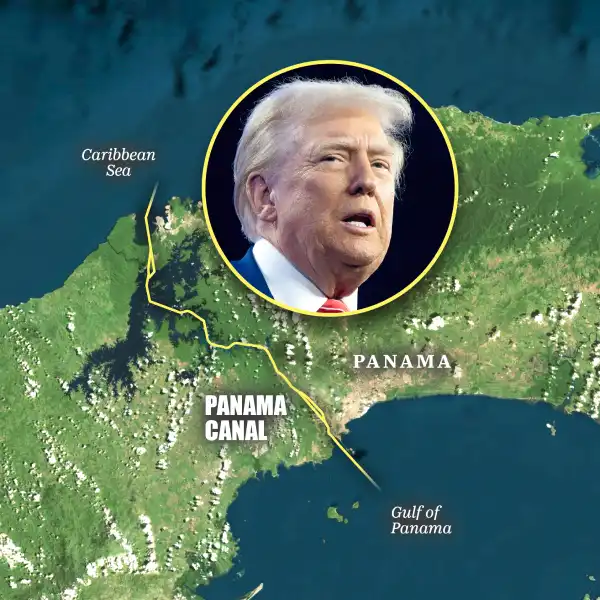
Short Answer

Both the model and the market expect Trump to take back the Panama Canal during his term, with no compelling evidence of mispricing.

1. Executive Verdict

  • A US policy group advocates re-examining Panama Canal treaties.
  • Panama canceled contracts related to Chinese-linked port operations.
  • Panama's new administration reduced engagement with Chinese infrastructure investment.
  • Many Republican voters support Trump's idea of "taking back" the Canal.
  • Panama Canal Authority plans to maintain current capacity through 2025.

Who Wins and Why

Outcome Market Model Why
During Trump's term 30.0% 30.0% Reacquiring the Panama Canal would require overturning international treaties and likely military action.

2. Market Behavior & Price Dynamics

Historical Price (Probability)

Outcome probability
Date
This market has demonstrated a stable, sideways trading pattern since its inception. The price has been confined to a narrow 5-point range, moving between a high of 35.0% and a low of 30.0%. The market opened at 34.0% and has since drifted down to the current price of 30.0%, which appears to be acting as a key support level. The upper end of the range, 35.0%, has served as resistance. The overall trend is flat, indicating a lack of significant new information or changing perspectives among traders.
Given the absence of provided context or recent news, there are no specific external events to which the minor price fluctuations can be attributed. The slight decline from 34.0% to 30.0% seems to reflect a gradual drift in sentiment rather than a reaction to a specific catalyst. The total traded volume of 8,188 contracts suggests a moderate level of initial interest, but the low volume in recent data points indicates a quiet market with low conviction and little new activity.
The consistent trading within this low-probability range suggests that market participants have maintained a steady consensus that the event is unlikely. The price action reflects a stable sentiment of skepticism, with traders seeing roughly a 30-35% chance of this outcome. The lack of volatility or significant volume spikes implies the market is waiting for new information before any potential re-evaluation of these odds occurs.

3. Market Data

View on Kalshi →

Contract Snapshot

This market resolves to YES if the U.S. government assumes new primary operational authority over any part of the Panama Canal before January 20, 2029, with verification from The New York Times. If this condition is not met by the deadline, the market resolves to NO. The market closes either upon the event's occurrence or by January 20, 2029, at 10:00 AM EST, and individuals with insider information or employment by Source Agencies are prohibited from trading.

Available Contracts

Market options and current pricing

Outcome bucket Yes (price) No (price) Last trade probability
During Trump's term $0.32 $0.70 30%

Market Discussion

The market discussion is divided, with some traders strongly asserting a "Yes" outcome, claiming the Panama Canal has "already been taken back" or will be (PhilE, Russ22). Conversely, "No" traders express skepticism and surprise at the rising "Yes" probability, with some cynically suggesting such an action might be a political "distraction" (Myshkin, boomhauer). Despite confident "Yes" claims in the comments, the market price indicates a low probability of Trump retaking the canal.

4. Do Policy Groups Advocate Revisiting Panama Canal Treaties?

Group advocating treaty reviewCenter for Renewing America [^]
Individual identifying Canal as priorityJoshua Treviño (America First Policy Institute) [^]
Specific military presence advocatedMove U.S. Southern Command (SOUTHCOM) back to Panama [^]
The Center for Renewing America directly advocates re-examining Panama Canal treaties. This policy group published "Primer: The American Canal - The Case for Revisiting the Panama Canal Treaties," which explicitly calls for re-examining the Torrijos-Carter Treaties governing the Panama Canal [^]. While the provided sources do not explicitly link this organization to Project 2025, its policy proposal directly addresses re-negotiation of these treaties.
America First Policy Institute emphasizes U.S. influence, not direct canal control. Joshua Treviño, a team member at the America First Policy Institute (AFPI), has publicly highlighted the Panama Canal's strategic importance as a national security priority requiring U.S. leadership
For over 85 years, America built and protected this critical gateway. Today, the stakes are rising again as foreign adversaries seek greater control in our hemisphere.

5. Are Panama's Port Changes Linked to Chinese State Influence?

Panama Port Contracts StatusCancelled with CK Hutchison, February 2026 [^]
Port of Balboa OperatorAPM Terminals (Maersk subsidiary) began temporary operations in February 2026 [^]
Port of Cristóbal OperatorTIL (MSC subsidiary) expected to take over operations [^]
Panama has significantly altered port operations at Balboa and Cristóbal. In February 2026, Panama officially voided and annulled its contracts with CK Hutchison for the operation of these key Canal terminals [^]. Following this action, APM Terminals, a subsidiary of Maersk, initiated temporary operations at the Port of Balboa in February 2026, with the aim of supporting operational continuity and advancing into an operational scalability phase [^]. Similarly, Terminal Investment Limited (TIL), a subsidiary of MSC, is expected to take over operations at the Port of Cristóbal [^]. Despite these changes, CK Hutchison is intensifying its legal efforts in response to Panama's move to seize the ports [^].
Hutchison Port Holdings is not identified as a Chinese state-owned enterprise. The available information indicates that Hutchison Port Holdings (HPH) is a subsidiary of CK Hutchison Holdings, which is described as a Hong Kong-based multinational conglomerate [^]. The provided sources do not identify CK Hutchison Holdings or HPH as a Chinese state-owned enterprise. Furthermore, the web research results contain no credible intelligence reports or mentions of these entities being used to facilitate Chinese naval movements or intelligence gathering that could potentially trigger the Deconcini Reservation of the Panama Canal Treaty.

6. How Is Panama Reshaping Its Foreign Policy Regarding China?

BRI Withdrawal2025 [^]
Port Concessions VoidedFebruary 2026 [^]
Mulino's Stance on Chinese ControlDismissed as "nonsense" [^]
The administration of Panamanian President José Raúl Mulino has significantly reduced engagement with Chinese infrastructure investment. In 2025, President Mulino personally decided for Panama to formally exit China's Belt and Road Initiative (BRI) [^]. This strategic shift was further solidified in February 2026 when the Panamanian Supreme Court voided port concessions near the Canal that were held by the Chinese firm CK Hutchison [^]. These actions directly address concerns about Chinese influence over key strategic assets, signaling Mulino's intent to manage national infrastructure independently [^]. President Mulino has also publicly dismissed claims regarding Chinese control of the Canal as "nonsense" [^].
Panama strengthens U.S. alliances, prioritizing sovereignty and democratic partnerships. Concurrently with its re-evaluation of Chinese economic ties, the Mulino administration has actively sought to enhance its strategic alliances with the United States [^]. This repositioning is seen by some analyses as creating "new opportunities" for the U.S. in its regional competition with China [^]. U.S. officials, including Senator Marco Rubio, welcomed Panama's decision to exit the BRI, as Rubio had previously urged Panama to "reduce China influence" over the Canal [^]. This approach, termed the "Mulino Doctrine," redefines Panama's small state strategy, aiming for a more independent foreign policy that prioritizes alignment with democratic partners while robustly safeguarding national sovereignty and economic interests [^]. The administration emphasizes Panama's full sovereign control over the Canal, pushing back against external threats or claims of influence [^]. The voiding of the CK Hutchison port concessions exemplifies this commitment to independent management of critical infrastructure, mitigating potential risks associated with foreign control over strategic assets vital for the Canal's operation and global trade [^]. This strategic re-alignment reflects a deliberate weighing of U.S. security partnerships and democratic alignments against extensive Chinese investment and loans, indicating a clear preference for partnerships that reinforce Panama's sovereignty and long-term strategic independence [^].

7. What is Republican Support for US Panama Canal Control?

Republican Voter Support for US 'Taking Back' Canal66% (Rasmussen Reports via Newsmax) [^], [^]
House GOP Policy Committee Memo on Chinese InfluencePublished October 2024 [^]
Current Statements from Senate Ranking Members on Treaty AlterationsNot found in provided sources [^]
Many Republican voters support Donald Trump's idea of "taking back" the Panama Canal. A Rasmussen Reports poll, cited by Newsmax, indicates that 66% of Republican voters support the concept of the U.S. reacquiring the Panama Canal [^], [^]. This suggests that when framed by Donald Trump, the idea resonates with a significant portion of the Republican base, making it a salient political point for this demographic, at least as a proposal backed by their preferred leader [^].
Direct, current statements from likely Republican ranking members on the Senate Foreign Relations and Armed Services committees regarding altering the Panama Canal treaty arrangements are not provided in the research. However, broader Republican concerns about the Canal's strategic importance and potential Chinese influence are evident. For example, the House Republican Policy Committee (RPC) published a memo in October 2024, emphasizing that preserving U.S. access to the Panama Canal is a vital national security interest and highlighting potential Chinese leveraging of power there [^]. Historically, Republican Senate leaders such as Barry Goldwater and Strom Thurmond opposed the 1977 Panama Canal Treaties, arguing for the strategic necessity of continued U.S. control [^].

8. How is the Panama Canal Authority managing drought and capacity?

Current capacity planMaintained through 2025 with monthly adjustments (ACP) [^]
Drought mitigation investment$8.5 billion mega-project (ACP) [^]
US Administration interestConsidering "all options" by early 2025, Pentagon asked for military options (U.S. officials) [^]
The Panama Canal Authority (ACP) plans to maintain current capacity through 2025. The authority adjusts transit numbers monthly, basing decisions on prevailing water levels [^]. Despite facing severe drought conditions, the ACP reported strong economic health and minimized immediate concerns about congestion in late 2024 [^]. The ACP is proactively managing these challenges through operational adjustments and significant contingency planning to ensure continued functionality.
The Panama Canal Authority invests heavily in long-term drought solutions. To combat severe drought exacerbated by climate change, the ACP is investing $8.5 billion in a comprehensive "mega-project plan" [^]. This initiative aims to secure the Canal's future trade viability and ensure its long-term operational stability [^]. Despite these extensive proactive measures and no public reports of the ACP requesting international assistance, by early 2025, the U.S. administration was reportedly considering "all options" regarding the Canal [^], and the Pentagon was asked to provide military options for accessing the waterway [^].

9. What Could Change the Odds

Key Catalysts

Catalyst analysis unavailable.

Key Dates & Catalysts

  • Expiration: January 20, 2029
  • Closes: January 20, 2029

10. Decision-Flipping Events

  • Trigger: Catalyst analysis unavailable.

12. Historical Resolutions

No historical resolution data available for this series.