Short Answer

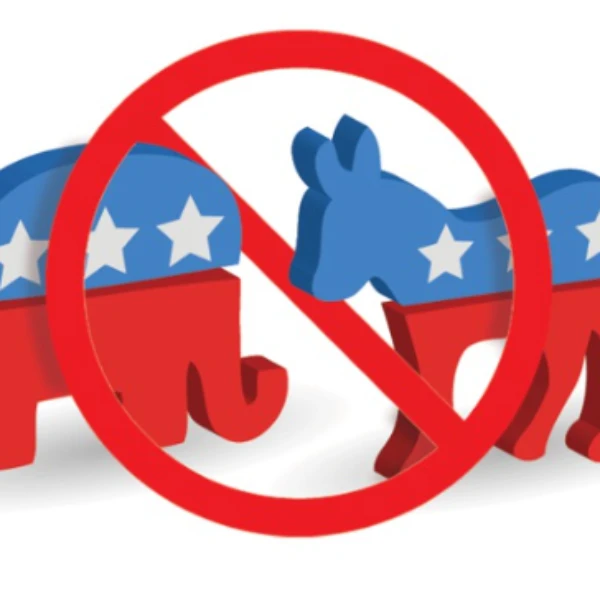
Both the model and the market expect that an independent or 3rd party candidate will win a House or Senate race in 2026, with no compelling evidence of mispricing.

1. Executive Verdict

  • Senator Joe Manchin is not running in the 2026 West Virginia Senate race.
  • Predicting specific divisive 2026 primaries remains challenging currently.
  • Independent candidate Seth Bodnar is polling above 15% in Montana.
  • Four independents won Alaska House seats using non-partisan primaries and RCV.
  • Independent candidate filing deadlines and post-primary windows vary by state.
  • The market observed an 8-point surge on April 28, 2026.

Who Wins and Why

Outcome Market Model Why
Yes 44.0% 34.5% Voter dissatisfaction with major parties could create an opening for a strong independent candidate.

2. Market Behavior & Price Dynamics

Historical Price (Probability)

Outcome probability
Date
This market has exhibited a sideways trading pattern, with the probability fluctuating within a defined 8-point range. The price has established a clear support level at 36.0% and a resistance level at 44.0%. For most of its history, the market has hovered near its starting price of 42.0%. The most significant price action was a sharp 8.0 percentage point spike on April 28, 2026, which propelled the price from the bottom of its range at 36.0% to the top at 44.0%. The provided context does not offer a specific news event or development to explain this sudden upward movement.
The total trading volume of 855 contracts across the market's lifespan is relatively light, suggesting limited participation or conviction among traders. The sample data points, including the date of the significant price spike, show zero volume, which could indicate the price move was driven by a small number of trades or an adjustment in a market maker's posted odds rather than a broad wave of new activity. This low volume pattern implies that while the market has reacted, the conviction behind the move may not be strong.
Overall, the chart reflects a market sentiment that assigns a significant, but less than even, chance to an independent or third-party victory. The current price of 44.0% suggests traders believe this outcome is plausible. However, the sideways trend and low volume indicate a state of uncertainty. The market appears to be waiting for a more definitive catalyst, such as the emergence of a viable candidate or a major political shift, before establishing a clear directional trend. The recent spike shows a brief surge in optimism for a "Yes" resolution, but the price remains capped at the 44.0% resistance level for now.

3. Significant Price Movements

Notable price changes detected in the chart, along with research into what caused each movement.

📈 April 28, 2026: 8.0pp spike

Price increased from 36.0% to 44.0%

Outcome: Yes

What happened: No supporting research available for this anomaly.

4. Market Data

View on Kalshi →

Contract Snapshot

This market resolves to YES if any candidate not officially affiliated with the Democratic or Republican parties wins a U.S. House or Senate election in 2026, even if endorsed by major parties or joining a party caucus after the election; otherwise, it resolves to NO. The market opens on January 15, 2026, and will close early upon the official declaration or certification of election winners, otherwise by November 3, 2027. Resolution is based on official certification by the relevant electoral authority, with an option for accelerated determination two days after a consensus of media projections; trading is prohibited for persons employed by the Source Agencies.

Available Contracts

Market options and current pricing

Outcome bucket Yes (price) No (price) Last trade probability
Yes $0.48 $0.61 44%

Market Discussion

Traders are exploring scenarios for an independent or third-party victory, referencing historical examples and considering the possibility of established politicians running independently after losing a primary. However, a significant counter-argument emerged, noting that "sore loser laws" in states like Kentucky and Louisiana would prevent primary losers from running in the general election, thus limiting one potential pathway for an independent win. The discussion reflects an understanding of the legal and structural challenges faced by independent candidates.

5. Are Manchin, Sinema, or King Running in 2026 Senate Elections?

Joe Manchin's 2026 Senate CandidacyNot seeking re-election [^]
Kyrsten Sinema 2026 Poll DataNo Q1-Q2 2026 head-to-head polls available [^]
Angus King 2026 Re-election StatusNot up for re-election [^]
Senator Joe Manchin is not a factor in the 2026 West Virginia Senate race. Senator Joe Manchin (D-WV) has publicly announced his decision not to seek re-election in 2024, thereby effectively eliminating him as a potential candidate for the 2026 West Virginia Senate election [^]. This confirms that he will not be a participant in the upcoming race in his state, despite previous discussions regarding potential independent candidacies.
Q1-Q2 2026 head-to-head poll data is unavailable for Kyrsten Sinema. For Senator Kyrsten Sinema (I-AZ), current research does not include specific Q1-Q2 2026 head-to-head poll data addressing her as a potential independent candidate in the Arizona Senate election [^]. The focus of available information concerning Arizona's 2026 race primarily centers on Democratic Senator Mark Kelly's efforts to defend his seat [^].
Senator Angus King is not a candidate in the 2026 Maine Senate election. Senator Angus King (I-ME) is not up for re-election in 2026, as his term concluded in January 2025 following his 2018 re-election [^]. Therefore, Senator King will not be among the candidates in the 2026 Senate elections, with attention in Maine focused on Senator Susan Collins's potential re-election bid [^].

6. Which 2026 US Elections Could See Divisive Primaries?

Most Probable 2026 Divisive PrimaryTexas Senate race [^]
Texas Historical Primary Parallel2012 Republican Senate primary (Ted Cruz vs. David Dewhurst) [^]
Kentucky Historical Primary Parallel2012 Republican KY-04 primary (Thomas Massie vs. David Lewis) [^]
Predicting specific intensely divisive 2026 primaries remains challenging currently. While identifying particular races at this early stage is difficult, the continued influence of Donald Trump suggests a high probability of "MAGA vs. establishment GOP" contests within major parties. A strong candidate for such a primary in 2026 is the Senate race in Texas, considering its political dynamics and Trump's history of primary endorsements. Furthermore, House races could also witness significant incumbent primary defeats stemming from these intra-party divisions [^].
Historical parallels offer insight into intensely divisive intra-party struggles. The 2012 Republican Senatorial primary in Texas serves as a relevant example, where conservative insurgent Ted Cruz successfully defeated establishment candidate David Dewhurst [^]. Another instance of a similarly divisive primary is the 2012 Republican primary for Kentucky's 4th Congressional District, where conservative outsider Thomas Massie triumphed over establishment Republican David Lewis [^].
Specific independent/third-party vote share data is unavailable for these historical races. The provided sources do not contain the precise vote share for independent or 3rd-party candidates in the general elections that followed the aforementioned 2012 Texas Senate race or Kentucky's 4th Congressional District contest.

7. How is Independent Senate Candidate Seth Bodnar Polling and Fundraising?

Seth Bodnar Polling21% against Steve Daines (49%) [^]
Seth Bodnar Fundraising TotalOver $1.2 million through December 31, 2025 [^]
Out-of-State Contributions (Bodnar)Approximately 35% through December 31, 2025 [^]
Seth Bodnar is the only independent candidate polling above 15%. Seth Bodnar, an Independent candidate for the U.S. Senate in Montana, is currently the sole declared independent candidate polling above the 15% threshold. Recent polling places Bodnar at 21%, while the incumbent Republican, Steve Daines, stands at 49% [^].
Bodnar has raised significant funds, with a notable portion from out-of-state. As of December 31, 2025, Bodnar's fundraising data shows he has raised over $1.2 million, concluding 2026 with $950,000 cash on hand. Approximately 35% of his individual contributions came from out-of-state donors, with the remaining 65% originating from Montana residents [^].
Q2 2026 FEC filing data is unavailable for all candidates. Specific fundraising totals and the percentage of funding from out-of-state donors by the Q2 2026 FEC filing deadline were not available in the provided sources. No polling or fundraising data meeting the specified criteria were found for other independent candidates such as David Alan Evans (Maine) or Dexter Bland (Delaware) [^].

8. How Did Independent Candidates Perform in 2022 Ranked-Choice Voting Elections?

Alaska State Legislative Wins (2022)4 independent/non-partisan candidates (Alaska House of Representatives) [^]
Alaska State Legislative Close Races (2022)3 independent candidates within 5% margin (Alaska House of Representatives) [^]
Maine Federal House Results (2022)No independent/third-party candidates won or came within 5% (Maine 1st & 2nd Congressional Districts) [^]
Four independents won Alaska House seats using non-partisan primaries and RCV. In Alaska's 2022 state legislative elections, which utilized a top-four primary and ranked-choice voting system, four independent or non-partisan candidates secured victories in the Alaska House of Representatives: Calvin Schrage (District 19), Alyse Galvin (District 26), Dan Ortiz (District 28), and Rebecca Himschoot (District 29) [^].
Alaska independents came close, while Maine's federal races lacked similar outcomes. Three other independent candidates in Alaska's State House races came within a 5-point margin of the winner, losing by narrow percentages: Walter Featherly (District 14) lost by 1.0%, Mark Ewing (District 20) by 0.8%, and Jamie Josephson (District 27) by 4.4% [^]. In contrast, Maine, which also used ranked-choice voting in 2022 for federal House races, did not see any independent or third-party candidates win or come within a 5-point margin in its 1st or 2nd Congressional Districts [^].
2024 election results for Alaska's state and federal races are pending. The general election for the 2024 cycle in Alaska, covering both state legislative and federal House races, is scheduled for November 5, 2024, and results are not yet available [^].

9. How Do 2026 Independent Candidate Deadlines Vary by State?

Arizona Post-Primary Window1 day [^], [^], [^]
West Virginia Post-Primary Window81 days [^], [^]
Montana Post-Primary WindowDeadline before primary [^]
Independent candidate filing deadlines and post-primary windows vary widely across key states. The timeframe for independents to file after major party primary elections, which could allow for protest candidacies, ranges significantly among Arizona, Montana, West Virginia, and Utah. This critical window spans from an extremely narrow 1 day in Arizona to a much more substantial 81 days in West Virginia. Montana presents a unique scenario where its independent filing deadline occurs four days before its primary election, effectively eliminating any post-primary window for such candidacies [^], [^], [^], [^], [^], [^].
Specific deadlines reveal a short 1-day window in Arizona. Arizona's independent candidate filing deadline is August 6, 2026, which is just one day after its August 5, 2026 primary election [^], [^], [^]. In contrast, West Virginia offers a considerably longer 81-day period for independent candidates, with its August 1, 2026 filing deadline following the May 12, 2026 primary election [^], [^]. Utah provides a 50-day window, as its independent filing deadline is August 19, 2026, after the June 30, 2026 primary election [^], [^], [^]. Montana's independent candidate filing deadline is May 29, 2026, which precedes the state's June 2, 2026 primary election by four days, thereby creating no post-primary opportunity for independent candidates [^].

10. What Could Change the Odds

Key Catalysts

Catalyst analysis unavailable.

Key Dates & Catalysts

  • Expiration: November 03, 2027
  • Closes: November 03, 2027

11. Decision-Flipping Events

  • Trigger: Catalyst analysis unavailable.

13. Historical Resolutions

No historical resolution data available for this series.