Short Answer

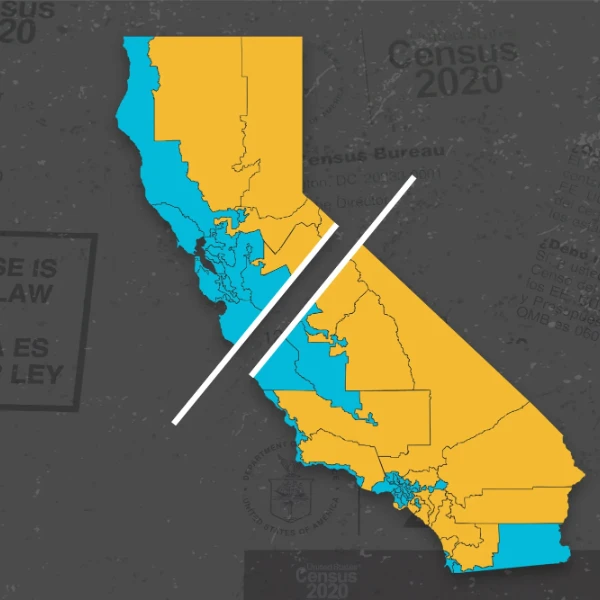
Both the model and the market expect California to redistrict before the midterms, with no compelling evidence of mispricing.

1. Executive Verdict

  • Federal lawsuits challenge congressional maps under Section 2 VRA.
  • State Supreme Courts in three states invalidated gerrymandered maps.
  • Louisiana is the sole state with divided government and redistricting challenges.
  • Redistricting commissions in Virginia and Washington deadlocked, shifting to courts.
  • U.S. Supreme Court used its shadow docket to pause a New York redraw.

Who Wins and Why

Outcome Market Model Why
Virginia 70.0% 51.1% The provided background research, which details states facing active federal VRA lawsuits post-Allen v. Milligan that could lead to redistricting, explicitly names only Louisiana and North Carolina, thereby indicating that Virginia is not currently subject to such challenges, suggesting a lower probability of redistricting than the market anticipates.
California 96.5% 95.4% The provided background research focuses on VRA lawsuits in Louisiana and North Carolina and contains no specific information regarding redistricting efforts in California, offering no evidence to support or contradict the market's high probability.
Missouri 72.0% 53.8% The provided background research identifies active Section 2 VRA lawsuits challenging congressional maps in Louisiana and North Carolina following *Allen v. Milligan*, but it makes no mention of Missouri, strongly suggesting Missouri is not currently facing this specific legal pressure to redistrict, which contrasts with the market's high probability.
New York 8.0% 2.1% The background research identifies active VRA Section 2 lawsuits challenging congressional maps in Louisiana and North Carolina, explicitly omitting New York, which suggests a significantly lower probability of redistricting based on this specific legal mechanism, although other reasons for redistricting in New York may exist outside the scope of this research.
Texas 97.7% 95.2% The market's high 97% probability for Texas to redistrict directly conflicts with the provided background research, which, while focusing on VRA challenges as a primary driver, explicitly lists only Louisiana and North Carolina as states facing such active lawsuits, completely omitting any mention of Texas.

2. Market Behavior & Price Dynamics

Historical Price (Probability)

Outcome probability
Date
This market has demonstrated a stable, sideways trading pattern since its inception. The price has been confined to a very narrow range, fluctuating between a low of 6.6% and a high of 7.9%. The market opened at 7.9% and has since drifted slightly lower to its current price of 6.9%, indicating a marginal increase in skepticism over time. The most notable movement was a drop from 7.9% to 6.6% in mid-April, though without specific news or external context, this shift appears to be driven by internal market dynamics rather than a specific event. The price has established a clear support level around 6.6% and resistance at the 7.9% peak.
The total trading volume of 397 contracts is relatively low, suggesting limited market participation and conviction. The price fluctuations have occurred on minimal trading activity, which indicates that a small number of trades can move the price within its established channel. Overall, the chart reflects a strong and stable market consensus. Traders have consistently priced the probability of states redistricting before the 2026 midterms as very low, with the market sentiment remaining firmly bearish and the probability never breaking the 8% threshold.

3. Market Data

View on Kalshi →

Contract Snapshot

For a "Yes" resolution, Virginia must formally adopt and enact new Congressional district maps into law for the 2026 elections. These maps must not be fully enjoined, vacated, stayed, or struck down by any court with jurisdiction as of the Expiration Date, and must be in effect for the first scheduled federal election after adoption; maps temporarily stayed but later upheld resolve to "Yes."

The market resolves to "No" if new maps are not adopted by the date, or if adopted maps are completely redrawn by a court/special master, or withdrawn by the Legislature before implementation. The market opened on September 10, 2025, and will close early if the event occurs, otherwise by November 1, 2026, at 12:59 AM EDT, with a projected payout 30 minutes after closing.

Available Contracts

Market options and current pricing

Outcome bucket Yes (price) No (price) Last trade probability
Texas $0.98 $0.07 98%
California $0.96 $0.07 97%
Ohio $0.95 $0.09 95%
North Carolina $0.92 $0.13 87%
Utah $0.94 $0.14 87%
Florida $0.74 $0.27 74%
Missouri $0.73 $0.29 72%
Virginia $0.71 $0.30 70%
Georgia $0.15 $0.92 14%
Louisiana $0.14 $0.89 14%
Wisconsin $0.11 $0.95 11%
South Carolina $0.16 $0.89 10%
New Jersey $0.08 $0.94 8%
New York $0.08 $0.96 8%
Washington $0.08 $0.96 8%
Indiana $0.07 $0.93 7%
Illinois $0.07 $0.95 7%
Nebraska $0.12 $0.96 4%
Kansas $0.04 $0.97 4%
Minnesota $0.08 $0.97 4%
Maryland $0.06 $0.98 2%

Market Discussion

Traders are heavily discussing the prospects of Virginia redistricting, with recent market activity showing a significant drop in the 'Yes' probability. Arguments for 'No' center on the belief that the Virginia Supreme Court is unlikely to strike down the current maps despite ongoing legal challenges, with one trader suggesting 'No' is currently underpriced. Conversely, a circuit court's decision to flip the hold on maps indicates a potential 'Yes' outcome, while some users also question why states like Illinois and Texas haven't resolved to 0% 'Yes' after their primaries.

4. What VRA Lawsuits Challenge Congressional Maps Post-Allen v. Milligan?

Louisiana VRA Case StatusSupreme Court stayed Fifth Circuit ruling on April 30, 2024 [^]
North Carolina VRA Case StatusSecond complaint filed April 28, 2024, in District Court [^]
VRA Precedent CaseAllen v. Milligan affirmed Section 2 violation in Alabama [^]
Federal lawsuits challenging congressional maps under Section 2 of the Voting Rights Act (VRA), leveraging the precedent of Allen v. Milligan, are active in Louisiana and North Carolina. Allen v. Milligan affirmed that Alabama's 2021 congressional map likely violated Section 2 [^]. Louisiana's case has seen recent action from the Supreme Court, while North Carolina's is in its initial District Court phase. Based on available information, no new Circuit Court hearing dates are currently scheduled for either case.
Louisiana's VRA challenge is currently before the Supreme Court. The case, Robinson v. Landry (also referred to as Robinson v. Ardoin), actively challenges the state's congressional map under Section 2 of the VRA [^]. A federal district court initially struck down Louisiana's map, but the Fifth Circuit Court of Appeals reversed that decision. However, the Supreme Court subsequently stayed the Fifth Circuit's ruling on April 30, 2024, which effectively kept the district court's original order requiring a new map in place, pending further review [^]. An interlocutory notice of appeal was filed on May 1, 2024, indicating ongoing legal activity [^].
North Carolina's VRA lawsuit is in its initial district court phase. The state has an active federal lawsuit, Williams v. [Defendant], challenging its 2023 congressional redistricting plan under Section 2 of the VRA and the Fourteenth Amendment [^]. The second complaint in this case, filed on April 28, 2024, explicitly references the Allen v. Milligan decision as precedent for its VRA Section 2 claims [^]. Since this case is in the early stages, with the second complaint recently filed in the District Court, it has not yet reached the Circuit Court level for appeal [^]. Consequently, no scheduled hearing dates exist in a Circuit Court for this case at present.

5. Which State Supreme Courts Invalidated Gerrymandered Maps, And What Are Their Makeups?

States invalidating gerrymandered mapsNorth Carolina, Ohio, New York [^]
Ohio Supreme Court current makeup5 Republicans, 2 Democrats [^]
New York Court of Appeals current makeup7 judges appointed by Democratic governors [^]
State Supreme Courts in three states invalidated gerrymandered maps. In the last two redistricting cycles, since 2010, the state Supreme Courts of North Carolina, Ohio, and New York have invalidated congressional or legislative maps due to partisan gerrymandering [^]. North Carolina's Supreme Court twice struck down maps, in 2019 and 2022, citing violations of the state constitution's free elections, equal protection, and freedom of speech and assembly clauses [^]. However, a subsequent North Carolina Supreme Court, with a new conservative majority, overturned the 2022 decision in April 2023, ruling that partisan gerrymandering claims are non-justiciable under the state constitution [^]. The Ohio Supreme Court invalidated congressional and state legislative maps four times in early 2022, finding them to be unconstitutional partisan gerrymanders [^]. Similarly, New York's Court of Appeals, the state's highest court, invalidated the state’s congressional and legislative maps in 2022, determining they were drawn with an unconstitutional partisan intent [^].
The partisan makeup of these state supreme courts varies significantly. As of November 2024, the Ohio Supreme Court consists of 5 Republican justices and 2 Democratic justices, reflecting a shift from a 4-3 Republican majority [^]. The North Carolina Supreme Court currently has a majority of 5 Republican justices and 2 Democratic justices [^]. For the New York Court of Appeals, all seven judges were appointed by Democratic governors and are generally considered to lean Democratic [^].

6. Which States With Redistricting Challenges Have Divided Government?

Louisiana Government TypeDivided (Democratic Governor, Republican Legislature) [^]
Georgia Government TypeUnified (Republican trifecta) [^]
Louisiana Redistricting MandateRedraw map for second majority-Black district [^]
Louisiana is the sole state with divided government amidst redistricting challenges. Among states with active court challenges regarding redistricting, Louisiana is the only one operating under a divided government, a situation that could significantly delay the implementation of a court-ordered map redraw [^]. Its government features Democratic Governor Jeff Landry and Republican-controlled State Senate and State House [^]. A federal court has ordered the state legislature to redraw its congressional map to include a second majority-Black district, following legal challenges alleging Voting Rights Act violations [^]. This divided structure could result in political stalemates or prolonged negotiations between the Democratic Governor and Republican-dominated legislature, potentially delaying the new maps required to satisfy both the court order and political factions [^].
Georgia's unified Republican government avoids political stalemates despite court challenges. Unlike Louisiana, Georgia also faces active court challenges regarding its congressional and legislative maps but operates under a unified Republican government [^]. Although a federal court ruled that Georgia's maps violated the Voting Rights Act, leading to new maps being signed into law, its unified Republican control eliminates inherent political stalemates between the executive and legislative branches regarding map implementation [^].

7. How Do State Redistricting Commissions Handle Deadlocks?

Virginia Commission OutcomeDeadlocked, Supreme Court drew maps [^]
Washington Commission OutcomeDeadlocked, Supreme Court drew maps [^]
New Jersey Deadlock ResolutionInternal tie-breakers, avoids judicial map-drawing [^]
Virginia and Washington commissions deadlocked in 2021, shifting map-drawing to courts. Both states employ independent or bipartisan commissions for redistricting. In 2021, Virginia's bipartisan efforts broke down due to a partisan stalemate, leading the Supreme Court of Virginia to become responsible for creating the state's congressional and legislative districts [^]. Similarly, Washington state's bipartisan five-member redistricting commission failed to approve new maps by its 2021 deadline. As a result, the Washington State Supreme Court was given the responsibility to draw these maps, following a direct procedural rule that transfers authority to the state's highest court upon commission failure [^]. These instances from 2021 established a clear precedent for redistricting commissions deadlocking and subsequently ceding map-drawing authority to the state's judiciary.
New Jersey avoids judicial map-drawing through internal tie-breaking mechanisms. In contrast to Virginia and Washington, New Jersey's redistricting commissions are specifically designed with internal procedures to prevent a complete deadlock from escalating to direct judicial map-drawing [^]. For congressional redistricting, if the commission cannot agree on a map, an independent tie-breaking member is responsible for drawing it [^]. For legislative redistricting, an 11-member bipartisan commission operates, and if it cannot reach an agreement, the Chief Justice of the New Jersey Supreme Court appoints a 12th member to break the tie and finalize the map [^]. This system is intended to resolve impasses within the commission itself, thereby avoiding the transfer of the map-drawing task entirely to the judiciary [^].

8. Which Redistricting Cases Are on Supreme Court's Shadow Docket?

New York Redistricting Case StatusU.S. Supreme Court granted request to pause redraw order [^]
Louisiana & Georgia Redistricting StatusNo petition for writ of certiorari filed, granted, or pending on "shadow docket" [^]
Florida Redistricting StatusOngoing challenges, but not currently before U.S. Supreme Court "shadow docket" [^]
The U.S. Supreme Court recently used its "shadow docket" to pause a New York redraw. In March 2026, the Supreme Court granted Republicans' request, pausing an order that would have required a redraw of New York's congressional map [^]. This decision, made through an emergency application, effectively blocked an immediate redraw and exemplifies the Court's use of its "shadow docket" powers, where swift rulings can significantly impact election timelines and outcomes [^]. While this specific action halted a redraw rather than mandating one, it demonstrates the Court's willingness to intervene quickly in redistricting disputes, potentially influencing future election cycles [^].
Louisiana, Georgia lack Supreme Court "shadow docket" redistricting petitions. Available research indicates no redistricting cases from Louisiana or Georgia currently have a petition for writ of certiorari filed, granted, or pending on the U.S. Supreme Court's "shadow docket." For Florida, ongoing redistricting challenges exist, including the "Cubanos Pa’Lante" case and the "Florida Redistricting Special Session Challenge" [^]. However, current sources do not suggest that these Florida cases have reached the U.S. Supreme Court with a petition for writ of certiorari on the "shadow docket" that would necessitate a redraw in time for the 2026 election cycle.

9. What Could Change the Odds

Key Catalysts

Catalyst analysis unavailable.

Key Dates & Catalysts

  • Expiration: November 08, 2026
  • Closes: November 01, 2026

10. Decision-Flipping Events

  • Trigger: Catalyst analysis unavailable.

12. Historical Resolutions

No historical resolution data available for this series.