
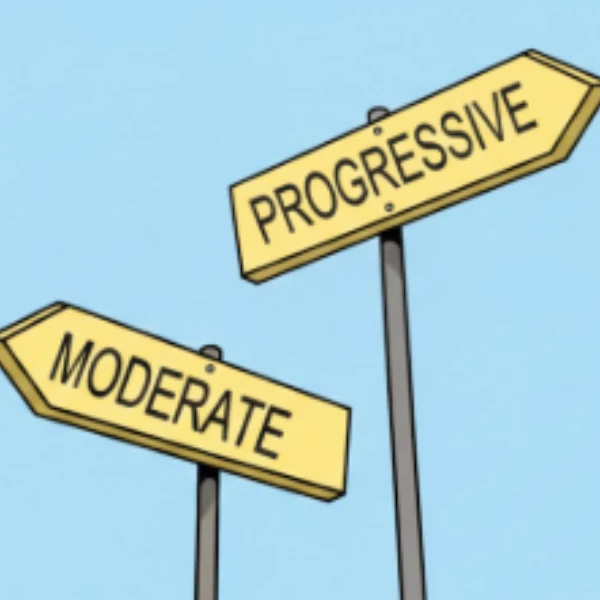
Democratic Senate primaries: progressives sweep?
Yes refers to: Yes
Short Answer
1. Executive Verdict
- Michigan's Democratic Senate primary shows limited fundraising disparity.
- Moderate candidates collectively lead Michigan; many voters remain undecided.
- Early primary results show no clear evidence of a widespread progressive sweep.
- Local media frames Democratic primaries through a national progressive-moderate lens.
- DSCC publicly maintains neutrality in crucial Democratic Senate primaries.
Who Wins and Why
| Outcome | Market | Model | Why |
|---|---|---|---|
| Yes | 43.0% | 31.8% | Progressive candidates are building stronger grassroots campaigns and attracting significant small-dollar donations. |
Current Context
2. Market Behavior & Price Dynamics
Historical Price (Probability)
3. Significant Price Movements
Notable price changes detected in the chart, along with research into what caused each movement.
📈 March 18, 2026: 29.0pp spike
Price increased from 17.0% to 46.0%
Outcome: Yes
4. Market Data
Contract Snapshot
The market resolves to "Yes" if Juliana Stratton (IL), Graham Platner (ME), Mallory McMorrow OR Abdul El-Sayed (MI), Peggy Flanagan (MN), and Ed Markey (MA) all win their 2026 Democratic Senate primary elections. If any one of these candidates fails to win their primary, the market resolves to "No." The market opened on February 10, 2026, and will close upon election certification or by November 3, 2027, with payouts 30 minutes after closing; an accelerated determination is possible two days after media projections.
Available Contracts
Market options and current pricing
| Outcome bucket | Yes (price) | No (price) | Last trade probability |
|---|---|---|---|
| Yes | $0.43 | $0.60 | 43% |
Market Discussion
Traders are divided on the likelihood of a progressive sweep, with some seeing a "Yes" outcome as "easy money" and questioning why the market probability for "No" is currently high. Arguments for "Yes" focus on the belief that most specified candidates are likely to win their primaries, with Juliana Stratton in Illinois potentially being the main exception. Conversely, arguments for "No" highlight Stratton as a difficult hurdle and suggest that the Michigan primary, with the possible presence of other candidates not listed, also presents a tough path for the specified progressives.
5. What Fundraising Disparities Exist in Democratic Senate Primaries?
| Haley Stevens Q4 2025 Fundraising (MI) | $2.1 million (Q4 2025) [^] |
|---|---|
| Mallory McMorrow Q4 2025 Fundraising (MI) | $1.74 million (Q4 2025) [^] |
| Shrewsbury Q4 2025 Fundraising (WV) | $260,000 (as of December 2025) [Web Research Results] [^] |
6. How Do Progressive and Moderate Campaigns Fundraise Grassroots Support?
| Iowa Moderate Small-Dollar Support | 45% of Q4 2025 contributions under $200 [^] |
|---|---|
| Iowa Progressive Small-Dollar Support | 31% unitemized for the cycle [^] |
| Michigan Progressive Small-Dollar Support | 45% unitemized in Q4 2025 [^] |
7. Who Leads the Michigan Democratic Senate Primary Race?
| Mallory McMorrow Poll Support | 22-24% (January 2026 Emerson [^], RealClearPolling [^]) |
|---|---|
| Abdul El-Sayed Poll Support | 16-20% (January 2026 Emerson [^], RealClearPolling [^]) |
| Undecided Voters | 30-38% (January 2026 Emerson [^], RealClearPolling [^]) |
8. How Do Media Frame 'Progressive vs. Moderate' Democratic Senate Races?
| Iowa Primary Narrative | Framed as Zach Wahls (progressive) vs. Josh Turek (moderate) [^] |
|---|---|
| Michigan Primary Narrative | Characterized as a 'proxy war' or 'identity crisis' [^] |
| Dominant Media Lens | Progressive vs. moderate conflict and general election electability [^] |
9. How Does the DSCC Influence Democratic Senate Primary Outcomes?
| Official DSCC Stance | Public neutrality in primaries (March 2026) [^] |
|---|---|
| Private DSCC Strategy | Steers resources to moderate candidates [Web Research Results] [^] |
| Centrist Senator Preferences | Favor candidates like Josh Turek (IA) and Haley Stevens (MI) [^] |
10. What Could Change the Odds
Key Catalysts
Key Dates & Catalysts
- Expiration: November 03, 2027
- Closes: November 03, 2027
11. Decision-Flipping Events
- Trigger: Several factors could influence the upcoming Senate elections.
- Trigger: President Trump's ongoing unpopularity, potential backlash against ICE policies, and historical midterm dynamics favoring the opposition party are significant catalysts that could benefit Democratic candidates.
- Trigger: Furthermore, the Republican Party faces a challenging Senate map, which could be bearish for their overall prospects [^] .
- Trigger: Conversely, internal dynamics within the Democratic Party could also play a crucial role.
13. Historical Resolutions
No historical resolution data available for this series.
Get Real-Time Research Updates
Sign up for early access to live reports, historical data, and AI-powered market insights delivered to your inbox.
