Short Answer

Both the model and the market expect Miguel Díaz-Canel to leave office before September 1, 2026, with no compelling evidence of mispricing.

1. Executive Verdict

  • Severe economic distress and unprecedented electrical blackouts plague Cuba.
  • Díaz-Canel struggles to consolidate authority, hardliners retain influence.
  • Raúl Castro continues to exert powerful influence behind the scenes.
  • Preparations are underway for the upcoming April 2026 Party Congress.
  • Non-state media report visible changes in Díaz-Canel's physical appearance.

Who Wins and Why

Outcome Market Model Why
Before May 1, 2026 1.0% 0.9% Research does not highlight strong supporting evidence.
Before June 1, 2026 19.0% 14.7% Research does not highlight strong supporting evidence.
Before September 1, 2026 47.0% 37.1% Research does not highlight strong supporting evidence.

2. Market Behavior & Price Dynamics

Historical Price (Probability)

Outcome probability
Date
This market shows a distinct and rapid downward trend, indicating a significant decrease in the perceived probability of Miguel Díaz-Canel leaving office before 2027. The price opened at 7.9% and experienced a steep decline over its initial weeks, falling to the 1.0% level where it currently trades. The market has established a very narrow trading range between a low of 0.5% and a high of 11.0%, with the current price sitting at the bottom of this range. The most significant movement was the initial sharp drop from its opening price. Without specific news or external events provided in the context, the direct cause for this initial re-pricing is not apparent from the chart data alone; it reflects an immediate and strong correction by early traders against the opening odds.
The total volume of over 22,000 contracts suggests a reasonable level of participation and financial commitment to the market's outcome. The price action has established a clear support level between 0.5% and 1.0%. The market has consistently found buying interest at this floor, preventing the probability from dropping to zero. Conversely, the opening price of 7.9% now acts as a distant resistance level. Overall, the chart indicates a strong and stable market consensus. Sentiment is overwhelmingly bearish on the prospect of an early departure, with traders consistently pricing the event as a very low-probability outcome, reflecting high conviction that Díaz-Canel will remain in his position through the resolution date.

3. Significant Price Movements

Notable price changes detected in the chart, along with research into what caused each movement.

📉 April 28, 2026: 11.0pp drop

Price decreased from 56.0% to 45.0%

Outcome: Before September 1, 2026

What happened: No supporting research available for this anomaly.

📉 April 27, 2026: 8.0pp drop

Price decreased from 55.0% to 47.0%

Outcome: Before September 1, 2026

What happened: No supporting research available for this anomaly.

4. Market Data

View on Kalshi →

Contract Snapshot

This market resolves to "Yes" if Miguel Díaz-Canel leaves office before September 1, 2026, as reported by a list of specified news sources; otherwise, it resolves to "No." The market opens on January 6, 2026, and will close by September 1, 2026, at 10:00 AM EDT, or earlier if the event occurs. If his departure is solely due to death, the market will settle at the last traded price prior to death, or at a fair value determined by the Exchange if the last price is unavailable or inconsistent.

Available Contracts

Market options and current pricing

Outcome bucket Yes (price) No (price) Last trade probability
Before May 1, 2026 $0.03 $0.99 1%
Before June 1, 2026 $0.20 $0.81 19%
Before September 1, 2026 $0.52 $0.53 47%

Market Discussion

Traders are divided on the market for Miguel Díaz-Canel leaving office before September 2026, with current odds at 47% for 'Yes'. Arguments for his departure often express anti-Díaz-Canel sentiment and optimism for change or intervention in Cuba, while 'No' arguments question the lack of compelling external or internal reasons for his removal, beyond mere preference.

5. Who Controls Cuba's Military and Intelligence Services?

President and Party First SecretaryMiguel Díaz-Canel (Struggles with consolidating authority) [^]
Enduring InfluenceRaúl Castro (Maintains significant control over military and intelligence services) [^]
Key Intelligence FigureAlejandro Castro Espín (Powerful in intelligence and security, potential successor) [^]
Miguel Díaz-Canel holds formal power, but hardliners maintain significant behind-the-scenes influence. Díaz-Canel serves as Cuba's President and First Secretary of the Communist Party, marking him as the first civilian leader in over six decades, having been personally selected by Raúl Castro [^]. Despite these official roles, reports indicate that Díaz-Canel has encountered difficulties in fully consolidating his personal authority, with some hardliners viewing him as an outsider [^]. The true balance of power frequently resides with veteran hardliners, particularly Raúl Castro, who, even after his retirement from formal leadership, remains a highly influential figure behind the scenes, maintaining substantial control over the military and intelligence services [^]. His son, General Alejandro Castro Espín, often referred to as "Cuba's prince in the shadows," further reinforces this hardline influence, wielding considerable sway within intelligence and security, advising his father, and identified as a potential successor to Díaz-Canel [^].
Recent MININT appointments demonstrate Raúl Castro's continued hardline authority. Personnel changes within the Ministry of the Interior (MININT) highlight the sustained hardline influence and Raúl Castro's active role. In June 2025, Raúl Castro publicly promoted General Lázaro Alberto Álvarez Casas to the position of Minister of the Interior [^]. This direct intervention in a crucial security appointment underscores Castro's ongoing authority and the hardliners' sustained control over MININT, solidifying their alignment within the institution [^]. While Álvaro López Miera holds the title of Minister of the Revolutionary Armed Forces (MINFAR) [^], the overarching control of the military and intelligence apparatus is broadly attributed to Raúl Castro and the hardline faction [^]. These developments confirm that the Castro family and their hardline allies retain substantial sway over Cuba's critical security and military establishments, influencing the operational context for Díaz-Canel's leadership [^].

6. Are Cuba's Economic Distress Indicators Worsening by 2025?

Daily Electrical BlackoutsUp to 20 hours [^]
Projected Real Annual Inflation (2025)70% [^]
Electricity DeficitExceeded 1,300 MW [^]
Cuba currently experiences severe electrical blackouts, reaching unprecedented levels. Some areas are facing outages of up to 20 hours daily [^]. The electricity shortfall has reached record levels, with power outages exceeding a 1,300 MW deficit [^]. While specific average daily blackout hours immediately prior to the July 2021 protests are not detailed, the current "record levels" and "up to 20-hour daily blackouts" observed in 2024 indicate a significantly more severe situation than that period [^].
Inflation projections indicate a substantial increase in the cost of essential goods. The real annual inflation rate in Cuba is projected to reach 70% in 2025 [^]. This figure stands in stark contrast to the Cuban government's officially reported 14% [^]. Such high projected inflation indicates a highly distressed economic environment, where the costs of essential goods, including food, are likely to increase at rates exceeding those that previously contributed to social unrest [^].

7. What are the reported changes in Miguel Díaz-Canel's physical state?

2026 Physical DescriptionPaler, thinner, and with bags under his eyes (March 2026 [^])
Sociologist's ObservationSigns of wear and fatigue (November 2025 [^])
Brief Absence ReportSilent weekend (March 2026 [^])
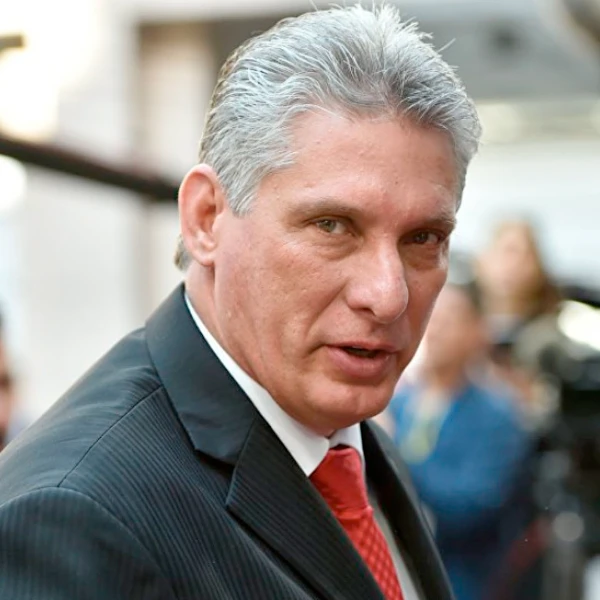
Non-state media consistently report visible changes in Miguel Díaz-Canel's physical appearance. Independent outlet CiberCuba highlighted in March 2026 his "physical deterioration," which has fueled online discussions and memes about the stress on the Cuban regime [^]. Cuban sociologist Rafael Rojas also observed "signs of wear and fatigue" in November 2025, contrasting Díaz-Canel's current look with his earlier image [^]. Specific descriptions from 2026 note him appearing "paler, thinner, and with bags under his eyes," a significant shift from his physical state when he assumed the presidency in 2018 [^]. These changes are largely interpreted by the public as "wear and tear" from his demanding role [^].
Reported absences are brief, not indicative of significant health issues. While a "reappearance after a silent weekend" was noted in March 2026 [^], the short duration of this absence and the accompanying context do not strongly suggest it resulted from a prolonged or unexplained health problem [^]. The credible reporting from non-state-controlled media primarily centers on his visible physical condition and public interpretations of "wear and tear," rather than evidence of significant health declines leading to extended periods out of public view [^].

8. Are Elite Cuban MININT Units Experiencing Internal Dissent or Disloyalty?

Internal Military OppositionReported "Cuban military officials opposed to the regime" by Daína Chaviano (April 2026) [^]
External Security WithdrawalThousands of Cuban security operatives, including MININT personnel, withdrew from Venezuela (early 2026) [^]
Government Support for SecurityPresident Díaz-Canel publicly embraced State Security, stating "We owe them so much" (March 2026) [^]
Direct evidence of elite MININT unit disloyalty remains scarce. While direct evidence concerning the morale and loyalty of elite Ministry of the Interior (MININT) units within Cuba is limited, broader opposition within the Cuban military apparatus has been noted, with a Cuban writer reporting in April 2026 about "Cuban military officials opposed to the regime" [^]. Concurrently, Cuba significantly weakened its security presence abroad through the withdrawal of thousands of Cuban security forces, including MININT personnel, from Venezuela in early 2026 [^]. This exodus is primarily understood as a strategic withdrawal under pressure, rather than an indication of widespread internal disloyalty or refusal to follow orders from within Cuba's elite MININT brigades operating domestically.
Government support for security forces underscores their continued importance. Cuban President Miguel Díaz-Canel publicly embraced State Security in March 2026, stating, "We owe them so much," thereby highlighting the government's reliance on these forces [^]. Despite Cuba's economic challenges, a January 2026 assessment by the CIA offered a mixed view on the government's stability, noting no immediate signs of institutional collapse due to widespread disloyalty [^]. Furthermore, there have been no widespread reports from dissident groups or foreign intelligence indicating unusual purges, large-scale defections, or widespread refusals to follow orders specifically within the elite MININT brigades operating inside Cuba.

9. What Are Key Preparations for Cuba's 9th Communist Party Congress?

9th PCC Congress DateApril 2026 [^]
Preparatory StepsProvincial extraordinary plenary sessions held [^]
Internal Party IssueLack of unity acknowledged by Díaz-Canel [^]
Preparations for the 9th Congress are underway, involving provincial sessions and leadership [^] . The 9th Congress of the Communist Party of Cuba (PCC) is scheduled for April 2026, with procedural preparations already underway [^]. As part of these preparations, provincial extraordinary plenary sessions have been held across Cuba to establish working methods for the year 2026 [^]. Miguel Díaz-Canel, President and First Secretary of the PCC, has actively participated in these stages, including chairing a plenary session in eastern Cuba where he underscored the importance of municipal prosperity [^].
Díaz-Canel acknowledged internal party issues but faces no clear challenge [^] . He has publicly noted internal issues within the Communist Party, specifically mentioning a "lack of unity" and calling for "change from within the Party" [^]. He has also, at times, assigned blame for these issues to the party membership [^]. However, available sources do not indicate any unusual public statements or private maneuvers by provincial party leaders or key military figures that directly suggest a challenge to Díaz-Canel's expected re-nomination. On the contrary, Díaz-Canel has echoed calls for military readiness and focused on national defense against external aggression, which suggests alignment rather than dissent from prominent figures [^].

10. What Could Change the Odds

Key Catalysts

Catalyst analysis unavailable.

Key Dates & Catalysts

  • Expiration: March 01, 2026
  • Closes: September 01, 2026

11. Decision-Flipping Events

  • Trigger: Catalyst analysis unavailable.

13. Historical Resolutions

Historical Resolutions: 2 markets in this series

Outcomes: 0 resolved YES, 2 resolved NO

Recent resolutions:

  • KXDIAZOUT-MDC-26MAR01: NO (Mar 01, 2026)
  • KXDIAZOUT-MDC-26APR01: NO (Apr 01, 2026)