Short Answer

Both the model and the market expect Mamdani to freeze the rent in 2026, with no compelling evidence of mispricing.

1. Executive Verdict

  • Mamdani's appointed RGB majority supports his rent freeze promise.
  • Landlord groups plan injunctions targeting RGB's outdated methodology.
  • NYC faces a significant budget gap triggering high-stakes state negotiations.
  • RGB's preliminary vote for 2026 rent guidelines is projected for late April.
  • Tenant advocacy groups will exert public pressure during RGB hearings.

Who Wins and Why

Outcome Market Model Why
In 2026 72.0% 71.5% Mamdani's political platform strongly supports a rent freeze for affordability.

Current Context

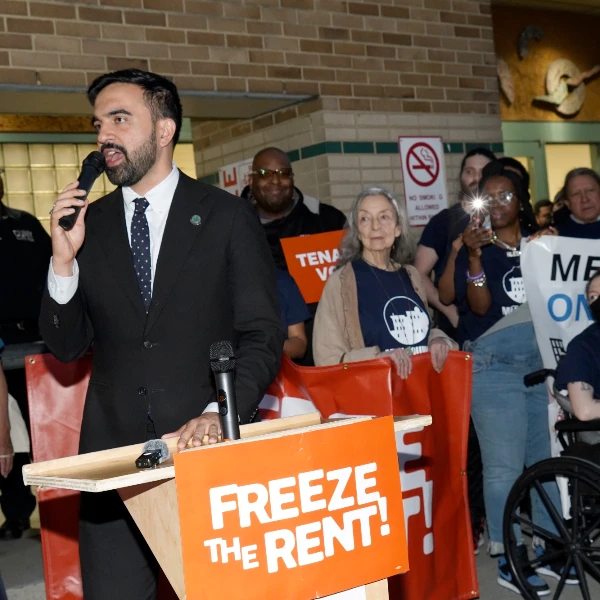
New York City Mayor Zohran Mamdani recently advanced his rent freeze campaign promise. On February 18, 2026, Mayor Mamdani appointed six new members, including Chantella Mitchell as chair, to the nine-member Rent Guidelines Board (RGB), securing a majority for his selections [^], [^], [^], [^]. This move significantly progresses his pledge to implement a rent freeze for the city's approximately one million rent-stabilized apartments, which impact an estimated 2.4 million tenants [^], [^], [^]. These units constitute about 40% of all occupied rental units in NYC and had a vacancy rate below 1% in 2023, half that of market-rate rentals [^]. The typical asking rent in NYC reached $3,585 by December 2025, an increase of $223 from the previous year [^].
The proposed rent freeze faces strong opposition and economic concerns from various stakeholders. Tenant advocates, such as the New York State Tenant Bloc, lauded the RGB appointments, viewing the freeze as a necessary response to "unchecked rent increases" [^]. Conversely, landlord groups, including the Small Property Owners of New York (SPONY) and the New York Apartment Association, vehemently oppose the measure, arguing it would be "devastating" for rent-stabilized landlords and could "drive the final nail in the coffin" for small property owners [^], [^], [^]. They assert that "tens of thousands of rent-stabilized buildings are in severe fiscal distress" [^]. Housing market analysts also suggest a freeze could exacerbate the housing crisis by reducing inventory turnover [^]. Mayor Mamdani has indicated a potential 9.5% property tax increase if state lawmakers do not raise taxes on wealthier residents and corporations, a point highlighted by opponents [^]. The RGB is scheduled to conduct deliberations and hear testimony throughout the spring before voting on final rent adjustments in June 2026, with any approved changes applying to leases effective between October 1, 2026, and September 30, 2027. Concerns also persist regarding legal challenges from landlord groups against a predetermined freeze and its impact on the long-term housing supply.
Discussions regarding rent adjustments in Ontario, Canada, differ significantly from New York City's situation. For 2026, the Ontario government has set a Rent Increase Guideline of 2.1%, which acts as a cap, not a freeze, for most rental units occupied before November 15, 2018 [^], [^], [^], [^], [^]. This provincial measure is determined by the Ontario Consumer Price Index and reflects cooling inflation [^], [^]. Toronto Mayor Olivia Chow's 2026 budget focuses on affordability initiatives like Rent Bank grants and increased RentSafeTO inspectors, but it does not include a rent freeze [^], [^], [^], [^]. Similarly, while Ontario NDP politician Kristyn Wong-Tam advocates for broader "real rent control," this does not entail a specific 2026 rent freeze initiative attributed to her [^], [^].

2. Market Behavior & Price Dynamics

Historical Price (Probability)

Outcome probability
Date
This prediction market has demonstrated a clear upward trend, with the probability of a rent freeze increasing from a starting point of 64.0% to its current level of 71.0%. The most significant price action occurred on February 16, 2026, when the market experienced a sharp 10.0 percentage point spike from 63.0% to 73.0%. This movement was a direct reaction to the increasing certainty that Mayor Mamdani would secure a majority on the Rent Guidelines Board (RGB). The market priced in this high-impact event just ahead of the official February 18 announcement, viewing the appointment of six new members as a decisive step that makes the implementation of a rent freeze highly likely.
The total trading volume of 23,192 contracts indicates healthy liquidity and active participation in the market. The significant price spike was likely accompanied by a surge in volume, reflecting strong conviction among traders regarding the news about the RGB. In terms of key price levels, the market has established a new support floor around the pre-spike level of 62-64%, while the recent high of 73-75% is acting as an area of resistance. The current price of 71.0% suggests that overall market sentiment is very confident that a rent freeze will be enacted. Traders have largely accepted the RGB appointments as a near-guarantee of the outcome, and the price now reflects a sustained, high probability of the market resolving to "YES".

3. Significant Price Movements

Notable price changes detected in the chart, along with research into what caused each movement.

📈 February 16, 2026: 10.0pp spike

Price increased from 63.0% to 73.0%

Outcome: In 2026

What happened: The primary driver of the prediction market price spike on February 16, 2026, was the increasing likelihood of Mayor Zohran Mamdani achieving a rent freeze in New York City [^]. Although the official announcement of Mamdani appointing six new members to the Rent Guidelines Board (RGB), thereby securing a majority to advance his rent freeze pledge, occurred on February 18, 2026, the market likely reacted to strong anticipation or unofficial reports of this development [^]. This strategic shift in the RGB's composition made a rent freeze "much closer to reality." No specific, influential social media activity directly preceding or coinciding with the February 16th price spike has been identified [^]. Therefore, social media was mostly noise or irrelevant as a primary driver [^].

4. Market Data

View on Kalshi →

Contract Snapshot

Based on the provided page content, the detailed contract rules for a YES or NO resolution, key dates/deadlines, and special settlement conditions are not available. The content only states the market question: "Will Mamdani freeze the rent this year?" and indicates "2026" in its title. To determine resolution triggers and other conditions, the full contract details would be required.

Available Contracts

Market options and current pricing

Outcome bucket Yes (price) No (price) Implied probability
In 2026 $0.72 $0.29 72%

Market Discussion

The debate surrounding Mayor Zohran Mamdani's potential rent freeze in 2026 is highly charged, with significant division among stakeholders [^]. Mamdani, having made a rent freeze a central campaign promise, has solidified his position by appointing a new majority to the Rent Guidelines Board (RGB), which is set to vote in June 2026 on rent adjustments for stabilized apartments [^]. Tenant advocates enthusiastically support a rent freeze, viewing it as crucial for providing financial relief to struggling renters who have faced years of increasing costs [^]. Conversely, landlord and property owner groups staunchly oppose the measure, contending that it would financially cripple building owners grappling with rising operating, insurance, and maintenance expenses, potentially leading to property deterioration and increased rents for non-stabilized units [^].

5. Are New Rent Guidelines Board Appointments Signaling a 2026 Rent Freeze?

Projected PIOC Increase4.8%
RGB Final Determination ExpectedJune 2026
Mayor's RGB Majority5 out of 9 members
The new RGB appointees lack prior PIOC-based voting records. Mayor Mamdani's appointments of Chantella Mitchell (Chair), Sina Sinai, and Lauren Melodia to the New York City Rent Guidelines Board (RGB) establish a mayoral majority on the nine-member board. This move is widely interpreted as an effort to fulfill a campaign promise of a rent freeze. The appointees have no prior voting records on Price Index of Operating Costs (PIOC)-based adjustments, allowing them to align with the Mayor's rent freeze agenda without contradiction. The PIOC, which measures landlord expenses, is projected to increase by 4.8% for the upcoming period.
Individual members' backgrounds suggest a critical, tenant-centric approach to PIOC data. Chair Mitchell's public statement emphasized service to "New York City's housing market," which is interpreted as protecting the city's two million rent-stabilized tenants through Mayor Mamdani's perspective. Sina Sinai, associated with the Jain Family Institute, is expected to deconstruct PIOC methodology and introduce alternative data concerning tenant affordability. Lauren Melodia, from the Center for New York City Affairs, is anticipated to advocate for a holistic, policy-driven approach, questioning the necessity of an increase despite PIOC projections and prioritizing broader economic and social justice goals.
The new majority will prioritize housing stability over automatic rent increases. With their secured board majority, the appointees are expected to critically examine the PIOC and prioritize housing stability over a direct cost pass-through. There is no information suggesting that any of these members have publicly supported a rent adjustment above 0% based on PIOC data; instead, their appointments and anticipated actions strongly point toward a rent freeze. The probability of a rent freeze for one-year leases in 2026 is exceptionally high, contingent on the unity of this newly formed majority.

6. How Likely Is an Injunction Against the 2026 NYC Rent Freeze?

HUD Methodology Update Year2023 [^]
Colorado Rental Transparency RegulationsEffective January 1, 2026 [^]
Prediction Market ResolutionJanuary 1, 2027 [^]
Landlord groups target RGB's outdated methodology and data in 2026. Landlord groups, including SPONY and the New York Apartment Association, are expected to challenge the 2026 NYC Rent Guidelines Board (RGB) determination through an Article 78 proceeding. Their core argument will assert that the Board's methodology is "arbitrary and capricious" due to its failure to adopt modern, data-driven standards. The legal attack will specifically target the RGB's traditional reliance on its Price Index of Operating Costs (PIOC) as a lagging indicator and challenge the representativeness of its Income and Expense (I&E) Study, contrasting these with more sophisticated data approaches. This challenge positions the RGB's methods as inferior to current benchmarks [^], [^].
Outdated RGB methods conflict with federal standards and national transparency trends. A central component of the legal argument will highlight a disconnect between the RGB's analysis and federal standards, particularly the U.S. Department of Housing and Urban Development's (HUD) 2023 update, which incorporates dynamic, private-sector data into its Fair Market Rent calculations [^]. This comparison suggests the RGB insists on an inferior methodology, thereby rendering its resulting guidelines "arbitrary and capricious." Furthermore, a national trend toward greater rental data transparency, observed in states like Colorado and Massachusetts [^], provides a benchmark for what constitutes a rational and evidence-based rulemaking process, reinforcing the procedural vulnerabilities.
Injunction odds higher, driven by data arguments and potential freezes. The likelihood of securing a preliminary injunction against a potential rent freeze in 2026 is assessed as moderately higher than in previous legal challenges, especially if the Board adopts a low or zero-percent increase. To obtain an injunction, plaintiffs must demonstrate a high likelihood of success on the merits, irreparable harm, and a favorable balance of equities. The data-centric arguments, notably the comparison with HUD's updated methodology [^] and the broader trend toward data transparency [^], are expected to significantly strengthen the "likelihood of success" prong. The existence of a prediction market resolving by January 1, 2027, further underscores the pivotal nature of the preliminary injunction hearing, as its outcome could resolve the market before a final legal decision on the merits.

7. Will NYC See a Rent Freeze and Property Tax Hike Amid Budget Talks?

NYC Budget Gap (FY2027)$5.4 billion [^]
Proposed Property Tax Increase9.5% [^]
NYS Executive Budget (SFY 2027)$260 billion [^]
New York City faces a significant budget gap triggering high-stakes state negotiations. The city projects a $5.4 billion budget shortfall for Fiscal Year 2027, even after accounting for Governor Kathy Hochul's initial aid proposal [^]. Mayor Zohran Mamdani has publicly stated that without adequate recurring state aid from Albany, a 9.5% property tax levy increase will be necessary to fund city services and enable a rent freeze for the city's nearly one million rent-stabilized apartments [^]. This situation establishes a critical negotiation between city and state leadership, with the state budget constitutionally due by April 1, 2026 [^].
State aid offers non-recurring funds, clashing with city's demands. Governor Hochul's Executive Budget, totaling $260 billion for State Fiscal Year 2027, proposes over $1.5 billion in new aid for NYC over two years, though only $510 million is recurring [^], [^]. This distinction between recurring and one-time funding is a major point of contention, as the city asserts its budget gaps are structural and require permanent financial solutions [^]. Furthermore, the Governor's strong opposition to new taxes conflicts with Mayor Mamdani's request for state authorization to allow NYC to impose taxes on corporations and high-income earners [^].
Property tax hike and rent freeze hinge on state compromise. The proposed combination of a rent freeze and a 9.5% property tax increase could significantly impact property owners, potentially reducing net operating income and leading to deferred maintenance and decreased housing quality [^]. While the 9.5% property tax increase falls within NYC's legal authority under state constitutional limits, the final resolution of this scenario, including the rent freeze, is largely contingent on the outcome of the ongoing Albany budget negotiations [^]. A compromise from Albany, particularly involving increased recurring aid, could lead to adjustments in the city's approach.

8. How Could Maksim Wynn Influence NYC's 2026 Rent Freeze Decision?

RGB AppointmentFebruary 18, 2026 [^]
Current RoleDirector of Development & Supportive Housing [^]
Past FellowshipRappaport Public Policy Summer Fellow, City of Boston (Summer 2018) [^]
Maksim Wynn was appointed an Owner Representative to the New York City Rent Guidelines Board (RGB) on February 18, 2026 [^] . His professional identity is unique for this role, shaped by experience in public policy, data analysis, and subsidized housing development. Wynn’s background includes positions at the NYC Department of Housing Preservation and Development (HPD) and the Department of Homeless Services (DHS) [^]. Academically, he holds a Bachelor of Arts from UCLA, where he contributed to economic impact research, and a Master of Public Policy from Harvard Kennedy School [^]. Currently, Wynn serves as Director of Development and Supportive Housing at Procida Development Group, a firm specializing in affordable, supportive, and transitional housing [^].
Wynn's professional approach is data-centric, diverging from traditional market-rate real estate lobbying [^] . Although structurally aligned with landlord groups who generally oppose rent freezes, his expertise in affordable housing development suggests he will frame his opposition to rent freezes through the lens of housing preservation and operating cost viability [^]. This pragmatic perspective is distinct in the context of typical owner representatives.
His unique position allows him to propose a nominal, non-zero "compromise" increase [^] . This potential increase, meticulously justified by the board's own data, would aim to prevent physical and financial distress in the housing stock [^]. Leveraging his credibility as an affordable housing expert, Wynn's argument introduces a non-trivial risk factor for predictions concerning a 2026 rent freeze [^]. While a politically driven rent freeze remains highly probable, his data-driven case could potentially persuade a public member swing vote, leading to a minimal increase instead of a hard freeze [^].

9. When is the 2026 NYC Rent Guidelines Board Preliminary Vote Scheduled?

Projected 2026 Prelim VoteLate April / Early May 2026 [^]
2025 Preliminary Vote DateTuesday, April 30, 2025 [^]
Rent-Stabilized ApartmentsApproximately one million [^]
The Rent Guidelines Board's 2026 preliminary vote is projected for late April or the first week of May [^] . This vote establishes the permissible range for final rent adjustments [^]. This projection is based on consistent historical patterns, such as the April 30, 2025 preliminary vote, which typically occur on a weekday during this period [^]. While the official 2026 meeting schedule has not yet been released [^], this preliminary vote is a reliable component of the board's annual cycle, following core data analysis [^].
Rent adjustment proposals rely on specific financial and market data. These proposals are fundamentally informed by the Income and Expense (I&E) Study and the Housing Supply Report. The most critical metric from the I&E Study is the Net Operating Income (NOI), which serves as the primary indicator of the financial health of rent-stabilized building owners managing approximately one million rent-stabilized apartments [^]. Fluctuations in NOI, driven by operating expenses such as property taxes, insurance, and utility costs relative to rental income, form the basis for arguments regarding rent increases. Furthermore, the overall rental vacancy rate from the Housing Supply Report is a key external indicator of market conditions, influencing the delicate balance between owner viability and tenant affordability [^].

10. What Could Change the Odds

Key Catalysts

Mayor Zohran Mamdani's commitment to a rent freeze, a central campaign promise, is strongly supported by his appointed majority on the Rent Guidelines Board (RGB). Tenant advocacy groups, including the Legal Aid Society, are expected to exert significant public pressure during RGB hearings in Spring 2026 [^], emphasizing continued housing unaffordability. A final vote by the Mamdani-appointed RGB in June 2026 to implement a 0% rent increase would directly fulfill this promise, serving as a primary bullish catalyst [^].
Conversely, strong opposition from landlord groups presents significant bearish catalysts. They argue that a rent freeze, especially when coupled with Mayor Mamdani's proposed nearly 10% property tax hike for fiscal year 2027 [^], would lead to fiscal distress, reduced maintenance, and potential legal challenges [^]. Landlords will present economic arguments during the Spring 2026 RGB hearings [^], highlighting concerns about property viability and the independence of the board. Should the RGB approve even a modest rent increase in June 2026 instead of a full freeze, it would be a bearish indicator. The effectiveness of any RGB decision would become apparent for leases renewed on or after October 1, 2026 [^].

Key Dates & Catalysts

  • Expiration: January 01, 2027
  • Closes: January 01, 2027

11. Decision-Flipping Events

  • Trigger: Mayor Zohran Mamdani's commitment to a rent freeze, a central campaign promise, is strongly supported by his appointed majority on the Rent Guidelines Board (RGB).
  • Trigger: Tenant advocacy groups, including the Legal Aid Society, are expected to exert significant public pressure during RGB hearings in Spring 2026 [^] , emphasizing continued housing unaffordability.
  • Trigger: A final vote by the Mamdani-appointed RGB in June 2026 to implement a 0% rent increase would directly fulfill this promise, serving as a primary bullish catalyst [^] .
  • Trigger: Conversely, strong opposition from landlord groups presents significant bearish catalysts.

13. Historical Resolutions

No historical resolution data available for this series.