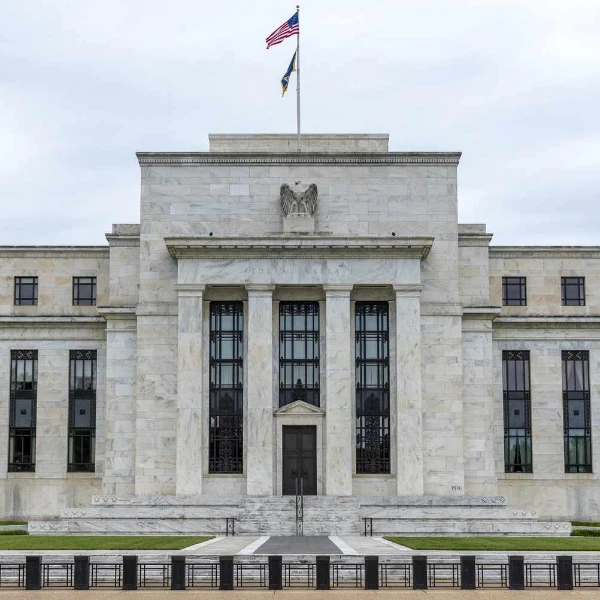
Short Answer

Both the model and the Kalshi market overwhelmingly agree that the Fed will maintain rates at its March 2026 meeting, with only minor residual uncertainty.

1. Executive Verdict

  • Dovish dissenters Waller and Miran continue to advocate for accommodation.
  • Incoming economic data showing further cooling could prompt rate cuts.
  • Kevin Warsh's nomination for Fed Chair introduces unique policy variables.
  • Stronger inflation or robust employment could support a hawkish Fed stance.
  • Economists largely anticipate two Federal Funds Rate cuts in 2026.
  • Resilient high-yield spreads make a financial stability cut less likely.

Who Wins and Why

Outcome Market Model Why
Cut 25bps 14% 9.4% Recent economic data and FOMC communications suggest a 25bps rate cut is possible.
Fed maintains rate 90% 87.5% The market consensus heavily favors the Fed maintaining interest rates.
Hike 25bps 2% 1% Current economic conditions and FOMC guidance do not suggest a rate hike.
Cut >25bps 2% 1.6% Analysis of recent economic data and FOMC communications suggests a larger rate cut is possible.
Hike >25bps 1% 52.2% Current economic data and policy statements provide little indication of a substantial rate hike.

Current Context

The Federal Reserve's March 2026 decision focuses on rate cuts and leadership changes. Discussions are actively centered on whether the central bank will resume interest rate cuts after pausing in January 2026, following three consecutive cuts in late 2025. At its January 2026 meeting, the Federal Reserve held its benchmark interest rate steady at 3.50%-3.75%, a decision that was largely expected. Federal Reserve Chair Jerome Powell offered an optimistic outlook on the U.S. economy, noting its "strength" and "firm footing," while highlighting signs of stabilization in the unemployment rate. However, he refrained from commenting on future rate cuts. Governors Stephen Miran and Christopher Waller dissented at the January meeting, advocating for a 25 basis point rate cut, scaling back from their previous calls for 50 basis point cuts in earlier 2025 meetings. The impending change in Fed leadership is also a prominent topic, with President Trump nominating Kevin Warsh, a former Fed governor, to replace Jerome Powell when his term expires on May 15, 2026. This nomination is significant, as Warsh's approach is expected to differ from traditional appointments, potentially influencing future policy, particularly balance sheet reduction. Senate confirmation hearings for Warsh are anticipated to begin in March 2026.
Key economic data and expert views inform the Fed's March decision. The Federal Open Market Committee (FOMC) will closely monitor indicators related to its dual mandate of maximum employment and price stability. Crucial data points include trends in the Consumer Price Index (CPI) and Personal Consumption Expenditures (PCE) inflation, as inflation remains "somewhat elevated" above the Fed's 2% target. Labor market data, such as job gains, the unemployment rate, private sector payrolls, and signs of increasing layoffs, are also critical, with the January FOMC statement noting "job gains have remained low, and the unemployment rate has shown some signs of stabilization". Consensus estimates project average monthly job growth of around 67,000 in 2026. Overall economic expansion and consumer spending will also be assessed. The Summary of Economic Projections (SEP), including FOMC members' forecasts for the federal funds rate, will be released at the March meeting, offering insight into future policy expectations. Expert opinions vary: J.P. Morgan strategists anticipate one more rate cut in 2026, despite low market odds for March. Oren Klachkin of Nationwide Financial Market Economists believes a near-term cut would require "clear labor market deterioration". Jim Baird of Plante Moran Financial Advisors suggests a rise in layoffs could motivate cuts. Goldman Sachs Research previously forecasted pauses in January, followed by cuts in March and June. The Conference Board suggests the Fed's post-January language implies a potential delay until June or later for further action.
Upcoming events and widespread concerns shape the Fed's future outlook. The next scheduled FOMC meeting is on March 17-18, 2026, with the policy announcement set for March 18, 2026, which will include an updated Summary of Economic Projections. Common questions revolve around whether the Fed will cut rates in March 2026, with market sentiment generally leaning towards a pause, and many experts expecting cuts later in the year, potentially in June. Prediction markets like Jupiter and Kalshi are actively trading on this outcome. The futures market, according to CME FedWatch, generally anticipates two cuts or fewer by the end of 2026. The impact of new Fed leadership is also a significant concern, given the nomination of Kevin Warsh and the potential for differing monetary policy, especially regarding balance sheet reduction and long-term interest rates. Debates include stagflation risks due to balancing high inflation and a weakening job market, particularly with tariff-induced price pressures. The extent of labor market deterioration needed for further rate cuts remains a key concern. Worries also exist about potential government shutdowns disrupting economic data releases and bond market anxiety, as the 30-year Treasury yield's behavior signals inflation risk.

2. Market Behavior & Price Dynamics

No historical price data available.

3. Market Data

View on Kalshi →

Contract Snapshot

The provided page content is extremely limited and does not contain any specific contract rules. It only presents the market title: "Fed decision in March? Odds & Predictions 2026."

Therefore, based solely on the provided text, it is not possible to determine: 1. What exactly triggers a YES resolution. 2. What triggers a NO resolution. 3. Any key dates/deadlines for resolution beyond the implied "March 2026." 4. Any special settlement conditions.

Available Contracts

Market options and current pricing

Outcome bucket Yes (price) No (price) Implied probability
Fed maintains rate $0.90 $0.11 90%
Cut 25bps $0.14 $0.87 14%
Cut >25bps $0.02 $0.99 2%
Hike 25bps $0.02 $1.00 2%
Hike >25bps $0.01 $1.00 1%

Market Discussion

Regarding the Federal Reserve's March 2026 decision, the prevailing sentiment in prediction markets suggests a high probability (around 90%) of the Fed maintaining its current interest rates of 3.5%-3.75% at the upcoming March 17-18 meeting . Expert opinions are somewhat divided; while some strategists still anticipate one rate cut in 2026 despite low odds for March, others believe the Fed may be done with cuts for the year, with a potential hike in 2027 . Discussions also highlight internal disagreements among Fed officials, with some advocating for rate cuts to bolster the labor market and others preferring to hold steady due to inflation concerns and a robust economy, with Fed Chair Powell emphasizing a data-driven, meeting-by-meeting approach.

4. How Could Kevin Warsh's Testimony Impact the March 2026 FOMC Decision?

FOMC Meeting DateMarch 18, 2026
Current Fed Balance Sheet~$6.6 trillion
Predicted Fed Funds Rate Cuts (2026)50-75 basis points
Kevin Warsh advocates significant balance sheet reduction and a unique policy framework. His nomination for Federal Reserve Chair suggests a major shift in monetary policy, proposing an aggressive reduction of the approximately $6.6 trillion balance sheet. Warsh's "policy barbell" framework combines quantitative tightening on the long end to restore the term premium with potential federal funds rate cuts on the short end to support Main Street lending and reduce borrowing costs.
Warsh's policy approach faces significant risks and ideological divisions. This strategy could lead to substantial liquidity stress in funding markets, reminiscent of the September 2019 repo turmoil, and is likely to cause internal division within the Federal Open Market Committee (FOMC). During his March 2026 Senate Banking Committee testimony, ideological divides will become evident, with Chairman Tim Scott supporting aggressive quantitative tightening for accountability, while Senator Sherrod Brown is expected to closely examine financial stability risks and consumer protection.
The upcoming FOMC meeting will signal future monetary policy direction. The March 18, 2026 FOMC meeting, scheduled shortly after Warsh's hearings, will be crucial for indicating the committee's path forward. Outcomes, influenced by economic data and the reception of Warsh's testimony, could range from a dovish signal with a formal review of the monetary policy framework to an explicit commitment for an expedited balance sheet review, potentially leading to a steeper yield curve and increased market volatility.

5. What Would Cause FOMC Dissenters to Abandon Rate Cut Calls?

January 2026 FOMC Vote10-2 vote to hold rates at 3.50%-3.75%
Dissenting Governors' StanceAdvocated for 25-basis-point rate cut
December 2025 Core PCE3.0% year-over-year [learnings]
Governors Waller and Miran dissented from the January rate decision. At the January 2026 FOMC meeting, Governors Christopher Waller and Stephen Miran voted for a 25-basis-point rate cut, while the majority opted to maintain the federal funds rate at 3.50%-3.75%. This decision was made despite December 2025 core Personal Consumption Expenditures (PCE) inflation standing at 3.0% year-over-year, which is above the Federal Reserve's 2% target. Governor Waller specifically highlighted a weakening labor market and argued that underlying inflation is closer to 2% when adjusted for tariff effects.
Miran attributes high inflation readings to measurement issues. Governor Stephen Miran asserts there is "no inflation problem at the moment," attributing elevated readings to "measurement quirks" and advocating for over 100 basis points of rate cuts in 2026. For both governors to abandon their current dissenting stance and vote for a hold, incoming data would need to demonstrate a significant, broad-based re-acceleration in core inflation, particularly within sticky services categories. Specifically, this would entail a persistent 3-month annualized core PCE reading above 3.5%. Such a development would directly contradict their current interpretations that inflation is merely transitory or mismeasured.

6. Will High Yield Spreads Trigger a Fed Financial Stability Cut by March 2026?

Current US High Yield OAS2.85% as of Feb 3, 2026
BB-Rated Sub-Index OAS1.64% in January 2026
Single-B Sub-Index OAS3.09% on February 3, 2026
High-yield spreads currently show resilience, making rapid widening unlikely. As of early February 2026, the ICE BofA US High Yield Index Option-Adjusted Spread (OAS) stands at 2.85%, reflecting historically compressed levels significantly below its long-term average of approximately 5.21%. A minor 11 basis point widening occurred from 2.77% on January 29 to 2.88% on January 31 before settling. However, the credit quality breakdown, including the BB-Rated Sub-Index OAS at 1.64% in January 2026 and the Single-B Sub-Index OAS tightening to 3.09% by February 3, indicates underlying resilience. These conditions do not support a high probability of a rapid and disorderly increase of over 50 basis points by the March 2026 FOMC meeting.
A modest spread widening won't prompt a Fed financial stability cut. A 50 basis point widening in the high-yield OAS, pushing it to around 3.38% from its recent peak, is highly unlikely to trigger a Federal Reserve 'financial stability' rate cut. Historically, such interventions have been reserved for much larger, rapid dislocations that threaten the broader financial system, far beyond a modest repricing of risk. Furthermore, prediction markets currently reflect a strong consensus, with a 90% probability, that the Federal Reserve will maintain its target rate at 3.5%-3.75% at the March 17-18, 2026, FOMC meeting, aligning with the observed stability in credit markets and contained risk premia.

7. Will the Fed Signal Hawkish Balance Sheet Changes in March 2026?

Probability of Hawkish Balance Sheet SignalExtremely Low (negligible)
QT Program ConclusionDecember 1, 2025
Powell's Term ConclusionMay 15, 2026
The probability of the Federal Reserve explicitly signaling a change in balance sheet runoff at the March 2026 FOMC press conference is exceptionally low, bordering on negligible. This assessment is based on the fact that the Federal Reserve's Quantitative Tightening (QT) program officially concluded on December 1, 2025. By January 2026, the FOMC had already transitioned to actively purchasing short-term Treasuries to maintain ample reserves. Consequently, signaling a change in the pace of balance sheet runoff would be an irrelevant option, contradicting an established policy already oriented towards future monetary easing, not tightening.
Institutional and communication factors strongly militate against such a hawkish move. Chair Jerome Powell's term concludes on May 15, 2026, making it historically improbable for a chair to introduce a major, disruptive policy shift so close to their departure. The Fed's established communication doctrine for major balance sheet adjustments involves extensive forward guidance; for instance, Chair Powell began signaling the end of QT months in advance in October 2025 before its seamless conclusion in December 2025. A surprise hawkish announcement in March would violate this precedent and severely damage the Fed's credibility.
Market and analysts overwhelmingly anticipate future rate cuts, not tightening. Both primary dealer surveys (inferred) and synthesized Fed-watcher commentary consistently reinforce a focus on the timing and magnitude of future rate cuts. The December 2025 median Summary of Economic Projections indicated one 25-basis-point cut for 2026, with some analysts, like Goldman Sachs, projecting two cuts beginning in June. A hawkish balance sheet action would be fundamentally incompatible with this prevailing easing bias, which suggests the FOMC is in an easing-biased 'hold' pattern. Prediction markets heavily favor a rate hold for March 2026, reflecting a lack of groundwork for any hawkish balance sheet turn.

8. How Will FOMC Projections for 2026 Federal Funds Rate Evolve?

Economist 2026 Rate CutsTwo 25bp cuts (50bps total)
FOMC 2026 Rate Cuts (Dec 2025)One 25bp cut (3.4% end-2026)
Current Federal Funds Target Range3.50%–3.75%
Economists anticipate two 2026 rate cuts, diverging from the Fed's prior view. Bloomberg surveys of economists project a median of two 25-basis-point rate cuts for 2026, implying a total of 50 basis points of easing. This contrasts with the FOMC's December 2025 Summary of Economic Projections (SEP), which indicated a median expectation for only one 25-basis-point rate cut for the entire year, targeting a 3.4% federal funds rate by end-2026. Currently, market pricing leans more towards the economists' consensus, anticipating between two to three cuts over the year.
The March SEP will clarify the Fed's 2026 policy outlook. The upcoming March 18, 2026, FOMC meeting and the release of its updated SEP are pivotal for clarifying the Committee's current outlook. The FOMC's median dot for 2026 is critical; if it shifts to imply two or more rate cuts, it would align with market and economist expectations, validating a more accommodative stance. However, if the median projection remains at one cut, it would signal a more hawkish position, potentially leading to a repricing in financial markets.
Economic data will heavily influence the FOMC's revised 2026 projections. Economic data released in early 2026, including inflation (Consumer Price Index and Personal Consumption Expenditures), employment figures (nonfarm payrolls, unemployment rate, wage growth), and broader growth indicators, will significantly impact the FOMC's revised projections. A cooling economy with lower inflation and softer labor markets would support a dovish shift, while persistent inflation or resilient employment could reinforce a cautious, hawkish hold scenario from the Fed.

9. What Could Change the Odds

Key Catalysts

The Federal Reserve's March 2026 decision will be heavily influenced by upcoming economic data. Stronger-than-expected inflation, as indicated by elevated Consumer Price Index (CPI), Producer Price Index (PPI), and Personal Consumption Expenditures (PCE) reports for January and February 2026, could signal persistent price pressures, supporting a more hawkish stance. Conversely, a sustained decline in these inflation measures towards the Fed's 2% target would bolster arguments for a dovish policy or potential rate cuts. Similarly, robust employment figures, such as significant job growth or a lower unemployment rate, or resilient economic growth—with the Atlanta Fed's GDPNow model estimating Q4 2025 growth at 4.2% —could reduce the likelihood of immediate rate cuts. Conversely, weak employment reports, which Vice Chair Bowman noted on January 30, 2026, highlighted labor market fragility, or slowing economic growth, evidenced by the Conference Board's Leading Economic Index declining in late 2025, would increase the probability of accommodative monetary policy.
Statements from Federal Reserve officials will also play a crucial role in shaping market expectations. Hawkish commentary emphasizing the need to combat inflation or downplaying recession risks could lead to expectations of higher rates or fewer cuts. Conversely, dovish remarks expressing concern about economic weakness, or a strong commitment to full employment through rate cuts, such as Vice Chair Bowman's indication on January 30, 2026, that her Summary of Economic Projections includes three cuts for 2026, would signal a more accommodative outlook. The Federal Open Market Committee (FOMC) meeting on March 17-18, 2026, is a pivotal event, as it includes a Summary of Economic Projections (SEP) and a press conference by the Fed Chair, providing direct insight into the committee's collective outlook. Unforeseen geopolitical events or significant financial instability could also prompt the Fed to adopt a more accommodative stance.

Key Dates & Catalysts

  • Strike Date: March 18, 2026
  • Expiration: June 17, 2026
  • Closes: March 18, 2026

10. Decision-Flipping Events

  • Trigger: The Federal Reserve's March 2026 decision will be heavily influenced by upcoming economic data.
  • Trigger: Stronger-than-expected inflation, as indicated by elevated Consumer Price Index (CPI), Producer Price Index (PPI), and Personal Consumption Expenditures (PCE) reports for January and February 2026, could signal persistent price pressures, supporting a more hawkish stance.
  • Trigger: Conversely, a sustained decline in these inflation measures towards the Fed's 2% target would bolster arguments for a dovish policy or potential rate cuts.
  • Trigger: Similarly, robust employment figures, such as significant job growth or a lower unemployment rate, or resilient economic growth—with the Atlanta Fed's GDPNow model estimating Q4 2025 growth at 4.2% [^] —could reduce the likelihood of immediate rate cuts.

12. Historical Resolutions

No historical resolution data available for this series.