Short Answer

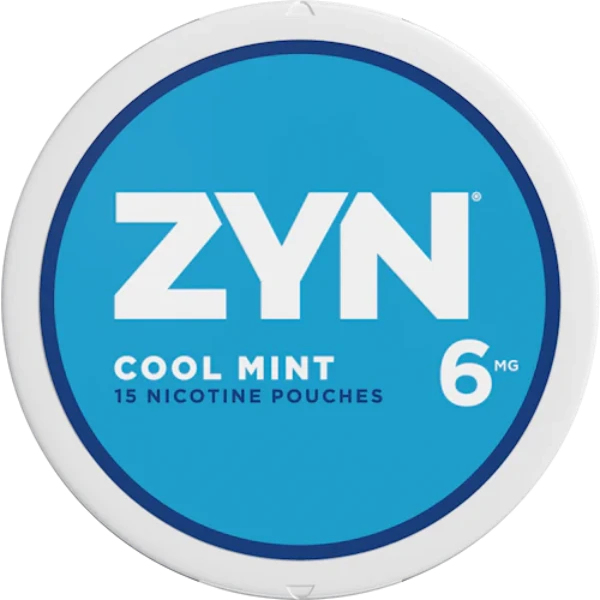
Both the model and the market expect Zyn US shipment volume to be above 200 million cans in Q1 2026, with no compelling evidence of mispricing.

1. Executive Verdict

  • PMI significantly expanded Zyn U.S. manufacturing capacity to 375 million cans.
  • Consistent strong consumer Zyn sell-through persisted throughout 2025.
  • No immediate federal flavor or concentration limits affect nicotine pouches.
  • No new national Zyn distribution agreements were explicitly confirmed.
  • PMI carefully managed Zyn trade inventory to meet strong demand.

Who Wins and Why

Outcome Market Model Why
above 205 million 50.0% 51.6% Model higher by 1.6pp
above 200 million 70.0% 70.5% Model higher by 0.5pp
above 210 million 40.0% 42.2% Model higher by 2.2pp
above 225 million 3.0% 3.8% Model higher by 0.8pp
above 220 million 13.0% 15.3% Model higher by 2.3pp

2. Market Behavior & Price Dynamics

Historical Price (Probability)

Outcome probability
Date
This market experienced an extremely abrupt and significant upward trend. For most of its early history, the price remained at a floor of 1.0%, indicating a near-zero perceived probability. This changed dramatically on April 6, 2026, with an explosive 71.0 percentage point spike to 72.0%. This was immediately followed by another 8.0 percentage point spike to 80.0% on April 7. Since this peak, the price has pulled back slightly and is currently consolidating around the 73.0% level. The overall price action reflects a fundamental and sudden re-evaluation of the market's outlook.
The provided context does not offer a specific news event or development to explain the cause of the monumental price spikes on April 6 and 7. Such a drastic repricing, from 1.0% to 72.0% in a single day, is typically driven by a major information catalyst, but the reason is not apparent from the data supplied. The total traded volume of 1,128 contracts suggests significant market participation and conviction behind the new price level. The bulk of this volume likely occurred during the rapid ascent, signaling that the move was backed by substantial capital flows rather than being a low-liquidity anomaly.
From a technical perspective, the market has established a new potential support level around the 72.0% to 73.0% range, which was the endpoint of the initial major spike and the area where the price has recently settled. The price range high of 93.0% serves as the primary resistance level. The current price of 73.0% indicates that market sentiment has shifted from overwhelmingly negative to strongly positive. Traders now assign a high probability to Zyn's US shipment volume meeting the resolution criteria for Q1 2026.

3. Significant Price Movements

Notable price changes detected in the chart, along with research into what caused each movement.

Outcome: above 210 million

📈 April 09, 2026: 9.0pp spike

Price increased from 31.0% to 40.0%

What happened: No supporting research available for this anomaly.

Outcome: above 200 million

📈 April 07, 2026: 8.0pp spike

Price increased from 72.0% to 80.0%

What happened: No supporting research available for this anomaly.

📈 April 06, 2026: 71.0pp spike

Price increased from 1.0% to 72.0%

What happened: No supporting research available for this anomaly.

4. Market Data

View on Kalshi →

Contract Snapshot

This market resolves to "Yes" if Philip Morris International Inc reports Zyn US shipment volume above 200 million for Q1 2026; otherwise, it resolves to "No." The outcome will be verified by Fiscal.ai. The market closes early if the event occurs, or by May 22, 2026, at 6:00 am EDT if it has not, with payouts projected 30 minutes after closing.

Available Contracts

Market options and current pricing

Outcome bucket Yes (price) No (price) Last trade probability
above 200 million $0.78 $0.78 70%
above 205 million $0.50 $0.75 50%
above 210 million $0.75 $0.96 40%
above 215 million $0.98 $0.96 19%
above 220 million $0.96 $0.97 13%
above 225 million $0.06 $0.98 3%
above 230 million $0.95 $0.98 0%
above 235 million $0.08 $0.98 0%

Market Discussion

Limited public discussion available for this market.

5. How is PMI increasing Zyn manufacturing capacity in the U.S.?

Total Investment$832 million [^]
Total Annual U.S. Capacity1.5 billion cans by early 2026 [^]
New U.S. Jobs Created950 new jobs [^]
Philip Morris International (PMI) is significantly expanding its U.S. Zyn manufacturing capacity. With an investment exceeding $800 million, these strategic efforts aim to meet increasing demand [^]. The company projects its total annual U.S. Zyn manufacturing capacity to reach 1.5 billion cans by early 2026 [^]. This expansion strategy involves establishing a new facility in Aurora, Colorado, and upgrading an existing plant in Owensboro, Kentucky [^].
A new Aurora, Colorado facility forms a major part of this expansion. Representing a $600 million investment, this new manufacturing plant is expected to create 500 jobs [^]. It is slated to become operational in late 2025 and is designed to contribute 1 billion cans annually to PMI's overall capacity [^].
The Owensboro, Kentucky facility also contributes significantly to capacity growth. PMI is investing an additional $232 million to expand its existing Zyn facility in Owensboro, Kentucky, following an initial $150 million investment [^]. This Kentucky expansion, anticipated to be completed in 2025, will add an annual capacity of 500 million cans and create 450 new jobs [^]. These combined initiatives are set to bring PMI's total U.S. manufacturing capacity for Zyn nicotine pouches to 1.5 billion cans annually by early 2026 [^]. Consequently, the targeted quarterly output for their U.S. facilities is projected to reach 375 million cans for Q1 2026 [^].

6. Are Nicotine Pouch Flavor Bans or Concentration Limits Expected?

Proposed Federal Nicotine Pouch RegulationsNo flavor bans or concentration limits with scheduled implementation prior to March 2026 [^]
FDA Marketing AuthorizationsMultiple nicotine pouch products, including flavored ones, authorized [^]
FDA Review Scheme StatusFast-track scheme for nicotine pouch review has slowed due to youth use concerns [^]
No immediate federal flavor or concentration limits affect nicotine pouches. As of early 2026, no specific proposed federal regulations or U.S. Food and Drug Administration (FDA) marketing orders with scheduled implementation dates prior to March 2026 address flavor bans or nicotine concentration limits for nicotine pouches. While the FDA has proposed rules to reduce nicotine levels, these primarily target cigarettes and other combusted tobacco products, not nicotine pouches [^]. Similarly, draft guidance for premarket applications regarding flavored electronic nicotine delivery systems (ENDS) pertains to vapes, not nicotine pouches [^].
FDA has authorized flavored pouches but now scrutinizes new applications. The FDA has previously authorized multiple nicotine pouch products for marketing, including flavored varieties, such as Zyn pouches [^]. Despite these existing authorizations, the regulatory environment for nicotine pouches is experiencing increased scrutiny. Reuters reported a slowdown in the FDA's 'fast-track scheme' for reviewing nicotine pouches due to mounting concerns about youth use and their potential to create new addicts [^]. This indicates a more cautious approach to future product authorizations, though no formal flavor bans or concentration limits with upcoming implementation dates for nicotine pouches have been identified.

7. How Did Altria's 'on!' Nicotine Pouch Market Share Grow in 2025?

on! Market Share Q1 20256.9% (IRI scanner data) [^]
on! Market Share Q4 20258.5% (IRI scanner data) [^]
on! Shipment Volume Growth (9M Sep 2025)28% (vs. prior-year period) [^]
Altria's 'on!' nicotine pouches achieved consistent market share growth in 2025. Throughout the year, 'on!' demonstrated quarter-over-quarter retail market share growth in major convenience store and gas station channels. Its share began at 6.9% in the first quarter [^], increased to 7.5% in Q2 [^], further grew to 8.1% in Q3 [^], and concluded the year at 8.5% in the fourth quarter [^]. This performance reflected quarter-over-quarter growth rates of 8.7% for Q2 versus Q1, 8.0% for Q3 versus Q2, and 4.9% for Q4 versus Q3. Additionally, 'on!'s shipment volume expanded by 28% for the nine months ending September 30, 2025, compared to the prior year [^].
Specific quarter-over-quarter data for BAT's 'Velo' was not available. While BAT's 'Velo' nicotine pouches experienced rapid growth and contributed to the overall market expansion in the U.S. during 2025 [^], the research did not include precise quarter-over-quarter growth rates from Nielsen or IRI scanner data for its performance in key retail channels. The broader nicotine pouch category itself showed robust expansion throughout 2025, with brands such as 'on!' playing a significant role in this market growth [^].

8. Are New Zyn Distribution Deals with Major Retailers Confirmed?

Zyn at KrogerAvailable as of March 2025 [^]
New Zyn Production PlantOpens February 2026 [^]
New National Distribution Agreements (Q4 2025/Q1 2026)No explicit announcements for Walmart, Costco, or Kroger within provided sources [^]
No explicit national distribution agreements for Zyn were found for the specified timeframe. Research indicates no explicit announcements of newly signed or expanded distribution agreements for Zyn with major national retail chains such as Walmart, Costco, or Kroger, specifically scheduled for initial 'channel fill' shipments during Q4 2025 or Q1 2026. While Zyn is reportedly available at Kroger as of March 2025 [^], and the availability of Zyn pouches at Walmart has been discussed [^], these provided sources do not detail new national distribution deals with these queried retailers for the specified future timeframe. Philip Morris International's (PMI) 2025 Fourth-Quarter & Full-Year Results press release [^], a likely source for such strategic developments, did not contain explicit details regarding new national distribution agreements for the stated timeframe within the provided information.
Philip Morris International is expanding Zyn production significantly to meet future demand. Philip Morris International (PMI), the parent company of Zyn, is substantially increasing its production capacity with a new $600 million plant in Aurora, Colorado, which is slated to open in February 2026 [^]. This production expansion aims to boost supply for potential market growth. However, this information does not include announcements of specific new retail partnerships with Walmart, Costco, or Kroger for initial channel fill during Q4 2025 or Q1 2026.

9. What Were Zyn's U.S. Inventory Levels and Sales Trends in 2025?

Zyn U.S. Sell-Through 2025Robust and strong consumer demand (PMI management commentary) [^]
Q1 2025 Inventory LevelsSome distributor restocking, healthy adjustment (PMI management commentary) [^]
Q2-Q4 2025 Inventory LevelsWell-managed, optimized, lean, or optimal relative to demand (PMI management commentary) [^]
PMI managed Zyn's trade inventory carefully to meet strong demand in 2025. In the first quarter of 2025, Philip Morris International reported robust Zyn sell-through rates in the U.S., reflecting strong consumer demand. A slight increase in distributor inventory levels early in the year was described as strategic stocking to meet accelerating demand and ensure product availability. Management characterized this as a healthy adjustment rather than an excessive build-up [^]. PMI explicitly focused on ensuring that trade inventory remained aligned with consumer purchasing trends, thereby actively avoiding overstocking [^].
Strong Zyn sell-through persisted, maintaining optimized, lean trade inventory levels. Throughout the remainder of 2025, including Q2, Q3, and Q4, PMI consistently reiterated Zyn's strong sell-through rates, frequently highlighting market share gains and continued growth [^]. Management maintained that trade inventory levels were well-managed and optimized, demonstrating a close correlation with consumer demand and strong replenishment cycles [^]. There were no indications of an inventory glut or significant disconnect between shipments and sell-through, reinforcing a pattern of efficient supply chain management designed to keep pace with high consumption rates [^]. By the second half of 2025, commentary consistently described Zyn's trade inventory as lean or at optimal levels relative to the sustained high sell-through rates [^]. Shipments were directly responsive to accelerating consumer demand, indicating that product moved quickly off shelves [^]. Overall, PMI's statements throughout 2025 consistently pointed to a healthy, demand-driven pipeline where inventory at the distributor and retailer level was kept tight, aligning with strong sell-through rather than reflecting an inventory build-up [^].

10. What Could Change the Odds

Key Catalysts

Catalyst analysis unavailable.

Key Dates & Catalysts

  • Expiration: May 22, 2026
  • Closes: May 22, 2026

11. Decision-Flipping Events

  • Trigger: Catalyst analysis unavailable.

13. Historical Resolutions

No historical resolution data available for this series.