Short Answer

Both the model and the market overwhelmingly agree that the Steam Machine will cost at least $500, with only minor residual uncertainty.

1. Executive Verdict

  • Core Steam Machine BOM projects $220-$300 for Q1 2026.
  • Valve uses flexible hardware pricing for market penetration.
  • Q1 2026 high-end consoles set a strong price anchor.
  • Steam Machine unlikely to launch with a sub-$700 model.
  • Persistent component shortages and AI demand increase costs.

Who Wins and Why

Outcome Market Model Why
At least $900 38% 38.5% Model higher by 0.5pp
At least $800 78% 74.5% Market higher by 3.5pp
At least $1000 12% 11% Market higher by 1.0pp
At least $700 86% 0.9% The severe and quantified impact of component shortages (DRAM up 178-258%) provides a powerful market-correct argument for a price increase, which outweighs the counterargument that AMD's production assurances imply cost control.
At least $600 1% 94.5% Model higher by 93.5pp

Current Context

Valve's Steam Machine launch faces uncertainty amid rising component costs and undisclosed pricing. While AMD CEO Lisa Su affirmed on February 3rd and 4th, 2026, that Valve's new AMD-powered Steam Machine is "on track" to begin shipping in early 2026, Valve itself has stated it is "not confident" enough to share specific pricing or exact release dates for the device, along with the Steam Frame and Steam Controller,,,,,,,,. This hesitation is attributed to "rapidly" increasing memory (RAM) and storage shortages across the industry, partly due to heightened demand from AI data centers,,,,,. Reports indicate DRAM contract prices have surged by over 170% year-over-year, directly impacting the estimated retail cost,. Despite these challenges, Valve maintains its goal of shipping all three products in the first half of 2026,,.
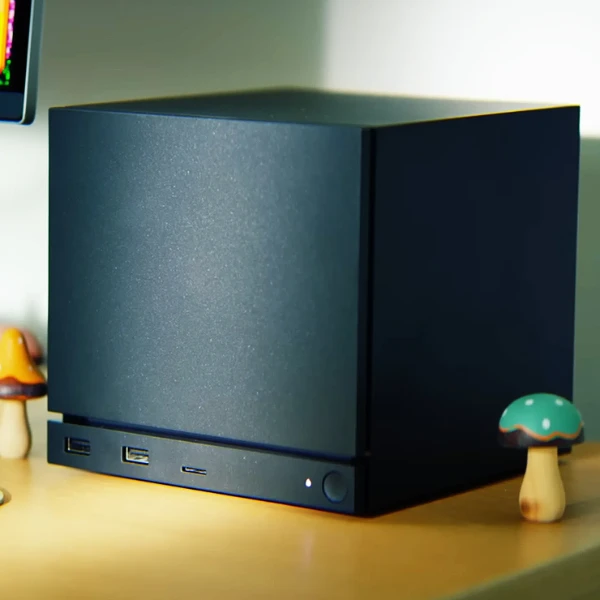
The Steam Machine promises strong performance but will be priced like a PC rather than a subsidized console. It is described as a compact, living-room-focused gaming PC running SteamOS, expected to be significantly more powerful than the Steam Deck, potentially up to six times in some workloads. Key specifications include a semi-custom AMD APU with Zen 4 CPU architecture and RDNA 3 graphics, 16GB of DDR5 system memory, 8GB of GDDR6 VRAM, and 28 Compute Units, aiming to deliver 4K gaming at 60 frames per second with FSR upscaling. A notable feature is user upgradeability for NVMe 2230 or 2280 SSDs and DDR5 RAM sticks. Speculation from analysts and recent retailer leaks suggests a starting price between $700 and $800, with some estimates for a 2TB model exceeding $1000,. Linus Tech Tips predicted a $699.99 price in November 2025, deeming it "compelling" value but warning a launch price above the PlayStation 5 could lead to a "very rough launch",. Valve's stated pricing philosophy is to sell the Steam Machine "like a PC with the same level of performance," meaning consumers will bear the full hardware cost.
Market concerns center on price, competition, and timely availability, despite reassurances. A primary concern for potential buyers is whether the final price will be too high, particularly given the rising component costs and Valve's non-subsidized pricing strategy,. This raises questions about its competitiveness against mid-tier gaming PCs and current-generation consoles like the PlayStation 5 and Xbox Series X/S,. The impact of "exploding" RAM and storage prices on both the final retail price and overall availability remains a significant worry,,. Although AMD has reassured that the device is on track, Valve's delay in confirming specific pricing and dates introduces uncertainty regarding its ability to meet the "early 2026" shipping window,,,. Many observers interpret "early 2026" as Q1 (January-March), anticipating potential launch announcements or pre-orders around March or April,. Future competition, such as a new Xbox console potentially arriving in 2027, also contributes to market discussions.

2. Market Behavior & Price Dynamics

Historical Price (Probability)

Outcome probability
Date
The prediction market for the Steam Machine's price has followed a volatile, long-term upward trend, moving from a 26.0% initial probability to its current 37.0% level, within a broad range of 20.0% to 65.0%. The most significant price action occurred in January 2026, beginning with a series of sharp spikes between January 9th and 21st that lifted the probability from 30.0% to a high of 58.0%. This surge was driven by widespread reporting of leaked pricing information that suggested a high-cost device. However, this bullish sentiment reversed abruptly, culminating in a 10.0 percentage point drop on January 30th. This decline was a direct market reaction to Valve's official statements expressing a lack of confidence in announcing a final price due to component cost uncertainty, which tempered the earlier speculation.
From a technical perspective, the 60-65% probability level has established itself as a strong resistance ceiling where upward momentum has consistently failed. The market is currently trading near a key pivot zone between 37.0% and 43.0%, which could act as a near-term support level. The total traded volume of over 14,000 contracts, which has grown over the market's lifetime, suggests increasing conviction and participation as the early 2026 release window nears. Overall, the chart indicates that market sentiment has cooled significantly from its speculative peak. While the market initially priced in a high probability of a $900+ price point based on leaks, Valve's official caution has introduced substantial doubt, leading traders to currently assess the odds of that outcome at just 37.0%.

3. Significant Price Movements

Notable price changes detected in the chart, along with research into what caused each movement.

Outcome: At least $900

📉 January 30, 2026: 10.0pp drop

Price decreased from 53.0% to 43.0%

What happened: The primary driver of the 10.0 percentage point drop in the "How much will the Steam Machine cost? (At least $900)" prediction market on January 30, 2026, was likely the growing uncertainty stemming from Valve's failure to announce a definitive price for the new Steam Machine by the anticipated end of January timeframe for an "early 2026" launch. While official news from Valve confirming delays due to memory and storage shortages, and the inability to share specific pricing, emerged in early February, the market movement on January 30 suggests participants were reacting to the absence of the expected announcement. This lack of a price reveal, contrasting with earlier leaks suggesting prices around $950-$1070, introduced significant doubt regarding the "at least $900" outcome. Social media activity prior to the official Valve statements (around February 4-5) does not appear to be the primary driver; rather, the market reacted to the lack of expected information. Therefore, social media was (d) irrelevant as a direct, primary driver for this specific price move on January 30.

📈 January 21, 2026: 9.0pp spike

Price increased from 49.0% to 58.0%

What happened: The primary driver of the 9.0 percentage point spike in the "At least $900" outcome for the "How much will the Steam Machine cost?" prediction market on January 21, 2026, was the widespread reporting of leaked pricing information. Around January 9-10, 2026, news outlets and social media, notably "trusted hardware insider @Pirat_Nation on X," reported price listings from Czech retailer Smarty.cz, indicating the 512GB Steam Machine model would cost approximately $950 and the 2TB model around $1,070. These figures significantly exceeded prior expectations and directly preceded the market movement, suggesting social media was the primary driver, leading the price spike.

Outcome: At least $800

📉 January 26, 2026: 10.0pp drop

Price decreased from 82.0% to 72.0%

What happened: The 10.0 percentage point drop in the "At least $800" outcome for the "How much will the Steam Machine cost?" prediction market on January 26, 2026, was primarily driven by negative social media reactions to leaked high price points. Throughout January 2026, several reports and YouTube videos discussed "leaked" placeholder pricing from a Czech retailer suggesting the Steam Machine could cost between $950 and $1100. This information was met with significant user concern on platforms like Reddit, with comments indicating the price was "too expensive" and the product might be "dead on arrival" (DOA). This widespread negative sentiment likely led market participants to believe Valve would be compelled to price the Steam Machine below $800 to ensure market viability, thereby reducing the probability of the "$800 or more" outcome. Social media activity appeared to LEAD the price move, as the critical discussion about the high leaked prices occurred in the weeks prior to the price drop.

Outcome: At least $700

📈 January 23, 2026: 10.0pp spike

Price increased from 75.0% to 85.0%

What happened: The primary driver for the 10.0 percentage point spike in the "At least $700" outcome for the "How much will the Steam Machine cost?" prediction market on January 23, 2026, was widespread social media activity and news coverage reacting to leaked pricing information. Around January 9, 2026, a Czech retailer, Smarty.cz, reportedly leaked Steam Machine prices of approximately $950 for a 512GB model and $1,070 for a 2TB model. These leaks sparked significant concern and discussion on platforms like Reddit and YouTube, with content creators publishing videos as late as January 21, 2026, expressing worry over the "insane" leaked prices and the potential impact of ongoing "RAM-aggedon" and component shortages. This virality and alarm, leading up to and coinciding with the market movement, directly signaled a strong likelihood of the Steam Machine exceeding the $700 price point. Social media was the primary driver.

📉 January 22, 2026: 16.0pp drop

Price decreased from 91.0% to 75.0%

What happened: The 16.0 percentage point drop in the "At least $700" Steam Machine prediction market on January 22, 2026, was primarily driven by widespread negative social media reaction to leaked high prices and subsequent speculation of a potential delay. A YouTube video published on January 21, 2026, highlighted significant public concern, quoting comments like "Okay. that's too expensive. if true or people praying that this is indeed a placeholder price" in response to leaked prices around $950. This video also noted speculation that Valve "might delay the launch. and hope that they might wait for component prices to drop," indicating a perceived need for Valve to re-evaluate pricing in light of public sentiment and rising component costs. This social media activity directly preceded and likely influenced the market's decreasing confidence in a price point of $700 or higher. Social media was the primary driver.

4. Market Data

View on Kalshi →

Contract Snapshot

The provided page content is limited to the market title: "How much will the Steam Machine cost? Odds & Predictions 2026." It does not contain information regarding YES/NO resolution triggers, specific key dates or deadlines, or any special settlement conditions.

Available Contracts

Market options and current pricing

Outcome bucket Yes (price) No (price) Implied probability
At least $500 $1.00 $0.08 100%
At least $600 $1.00 $0.08 100%
At least $400 $0.99 $0.07 99%
At least $700 $0.86 $0.16 86%
At least $800 $0.78 $0.24 78%
At least $900 $0.38 $0.63 38%
At least $1000 $0.12 $0.89 12%
At least $1100 $0.12 $1.00 12%
At least $1200 $0.08 $1.00 8%

Market Discussion

Discussions surrounding the Steam Machine's cost primarily revolve around Valve's intention to price it as a comparable PC, rather than a subsidized console, leading to estimates often falling between $600 and $800, with some predictions reaching over $900 due to current memory and storage shortages . This pricing strategy sparks debate about its market viability, with some arguing it will be too expensive to attract console players while PC enthusiasts might prefer building more powerful, upgradable custom rigs for a similar or lower cost . Many initially hoped for a sub-$500 price point, viewing anything higher as potentially hindering its success against established consoles.

5. What is the Projected BOM Cost for Valve's Steam Machine?

Core Components BOM Cost$220 - $300 (Q1 2026)
System Memory (16GB DDR5) Price$80 - $130 (Q1 2026 contract)
Primary Storage (512GB NVMe) Price$40 - $70 (Q1 2026 contract)
Core Steam Machine BOM projects $220-$300 for Q1 2026. The total projected Bill of Materials (BOM) cost for the three core components (AMD APU, 16GB DDR5, and 512GB NVMe SSD) of Valve's Steam Machine base model is estimated to be in the range of $220 to $300 for Q1 2026. This projection is largely influenced by unprecedented volatility in the semiconductor market, primarily driven by the explosive growth of the AI and data center sectors. This demand has created a severe supply crunch for key memory components, leading to a forecast of record quarter-over-quarter (QoQ) price hikes for both DRAM and NAND flash memory.
Memory component prices show significant increases due to market distress. Specifically, the 16GB DDR5-6000 system memory is projected to have a contract price of $80$130 for Q1 2026, reflecting a market in severe distress with forecasted QoQ increases of +55–95% for DDR5 modules. Similarly, the 512GB Gen4 NVMe SSD is expected to cost $40$70, due to an anticipated QoQ contract price increase of +40–55%. These surges are primarily due to AI and data center prioritization absorbing high-performance memory output, coupled with strategic underproduction by manufacturers and the industry's rapid transition from DDR4 to DDR5, resulting in critically low inventory levels.
Total Steam Machine BOM and retail prices face significant upward pressure. The total estimated BOM for the Steam Machine, including other essential components, is approximately $315$450, leading to a Total Cost of Goods Sold (COGS) in the range of $380$550. Given Valve's historical approach of minimizing upfront profit on hardware, a break-even retail price would fall between $399 and $549. However, accounting for these severe cost pressures, a plausible retail price point for the base model is $499 to $599, balancing unprecedented component costs with consumer value, especially as retail PC prices are expected to increase by 20% or more in 2026 due to this memory crisis.

6. How Will Valve Strategically Price a Future Steam Machine Console?

Steam Deck Base Model MSRP$399
Steam Deck Mid-Tier BOM (parts only)approximately $298–$300
Steam Software Gross Margin~75%
Valve employs a flexible hardware pricing strategy for market penetration, evident in products like the Steam Deck and Valve Index. The base Steam Deck, priced at $399, was considered "painful" but "critical" for market penetration. This entry-level device operates at near break-even or a slight loss, estimated to have a gross margin between 0–25% after all costs. This "razor and blades" model leverages higher-capacity Steam Deck models, which carry gross margins of 30–50%, to subsidize the initial entry-level device.
Steam's significant profitability enables Valve's calculated hardware risks. This strategic flexibility is largely supported by the immense profitability of the Steam platform itself, which generates estimated gross margins of approximately 75% on software sales. This financial backstop allows Valve to take measured risks on hardware, ensuring the overall hardware program remains financially viable. Valve's approach contrasts with the deep, long-term subsidies characteristic of traditional console manufacturers, as it instead aims for hardware products to be self-sustaining through tiered pricing within their own product lines.
Valve would strategically price a future "Steam Machine" as a PC-console hybrid. Applying these historical precedents suggests Valve would position such a device not as a direct console competitor, but as a strategically priced PC-console hybrid. The goal would be to maximize market penetration and ecosystem growth while maintaining a modest but positive overall margin on the hardware program, leveraging its direct-to-consumer model. This strategy aims to capture the living room by offering a strong value proposition, drawing on Valve's established model of balancing aggressive pricing with internal profitability.

7. What is the Projected Price of High-End Gaming Consoles in Q1 2026?

Projected Q1 2026 Price Anchor$599-$699 USD (Report forecast)
True Next-Gen Console LaunchPS6 (late 2027 ), Next-gen Xbox (2027-2028 )
Memory Price Increase ImpactUp to 80% increase in memory prices
Sony and Microsoft's Q1 2026 consoles will set a high price anchor. In Q1 2026, the highest-end consumer gaming console actively marketed and sold by Sony or Microsoft is projected to be a mid-generation "Pro" refresh, rather than a full next-generation system. True next-generation consoles, such as the PlayStation 6, are rumored for a late 2027 launch, while the next-generation Xbox is anticipated between 2027 and 2028, partly due to challenges like RAM availability and cost. The official retail price for these Q1 2026 premium consoles is forecast to serve as a primary psychological price anchor for competitors, falling between $599 and $699 USD.
Component cost inflation is significantly driving these increased prices. This elevated price point for Q1 2026 consoles is primarily driven by severe and persistent component cost inflation, particularly for memory, which has seen increases of up to 80%. Such substantial increases fundamentally alter manufacturing cost structures, necessitating that these costs are passed onto consumers. Broader macroeconomic headwinds, including global inflation and rising costs in related technology sectors like PC components, have also conditioned the market to accept higher prices for premium technology.
Future next-generation consoles are projected to reach even higher price points. This pricing trend established by mid-generation refreshes sets a new precedent and acts as a prelude to even higher costs for future true next-generation consoles. Rumors suggest that the PlayStation 6 could cost around $600, while the next-generation Xbox might range from $800 to over $1,200 due to advanced specifications and larger memory allocations. This indicates a significant upward shift in the console market towards a super-premium tier, thereby establishing a challenging benchmark for new entrants such as Valve.

8. What is Valve's 2026 Steam Machine Pricing and SKU Strategy?

Leaked Pricing (Unconfirmed)512GB model for ~$950 USD, 1TB/2TB model for ~$1,070 USD (Czech retailers)
Adjusted Price Projections~$814 USD (512GB) and ~$916 USD (1TB/2TB) (after 15-20% markup adjustment)
Estimated Bill of Materials (BOM)~$700 USD
The research suggests Valve's 2026 Steam Machine is unlikely to launch with a sub-$700 model. Preliminary listings from Czech retailers, when adjusted for an estimated 15-20% regional markup, project effective prices of approximately $814 USD for a 512GB model and $916 USD for a 1TB/2TB model. This aligns with an earlier Bill of Materials (BOM) estimate of around $700 USD and Valve's stated philosophy that the device will be priced like a PC with equivalent performance, not subsidized.
Credible leaks for the 2026 Steam Machine are currently absent from major retailers. There is no evidence from North American or European sources, such as GameStop, Best Buy, or Amazon, signaling inventory or shipping manifest leaks. The primary pricing information originates from Czech retail websites, which are considered placeholder listings and are not corroborated by other sources. A credible leak would typically involve internal inventory screenshots, shipping manifest data, or API data scrapes from major launch partners, none of which have emerged.
Valve positions the Steam Machine as a premium, high-performance SFF PC. This strategy aims to establish the device as an "optimized Small Form Factor PC" rather than a direct console competitor, thereby avoiding direct comparisons with subsidized console pricing. The device appears positioned to disrupt both the high-end console market and the expensive boutique SFF PC market, offering significant value and performance for its projected $800-$850 entry price point. While a sub-$700 SKU at launch is improbable, it remains a plausible long-term strategy as component costs decrease.

9. What Key Deadlines Could Impact Steam Machine 2026 Launch and Pricing?

Original Price Announcement TargetEarly January 2026
Estimated Price Range ShiftFrom $700 to $950+
Primary Delay FactorAI-fueled RAM and storage shortage
Valve's Steam Machine launch faces significant delays and price increases. Valve's Steam Machine 2026 launch and its price announcement, originally scheduled for early January 2026, have been significantly delayed. This setback is primarily due to an unprecedented industry-wide shortage of RAM and storage, driven by substantial demand from the AI sector. Consequently, the device's estimated price has potentially increased from $700 to over $950, impacting Valve's ability to commit to a final cost structure.
Finalizing H1 2026 launch requires a critical March 2026 deadline. Despite the ongoing component volatility, Valve must adhere to stringent manufacturing deadlines. To achieve a late H1 2026 launch, specifically by June 30, the absolute final lock-in date for the bill of materials, pricing, and retail packaging logistics is projected to be late February to early March 2026. This crucial deadline dictates when Valve must finalize its component purchase orders and publicly announce the final retail price to initiate pre-orders and manage distribution effectively.
Valve balances market volatility against its looming H1 2026 deadline. The current delay suggests Valve is waiting for potential component market stabilization. However, the company cannot postpone decisions beyond early March without compromising its commitment to an H1 2026 release. The forthcoming price announcement will clarify the product's market position, resolve related prediction markets, and reflect the state of the volatile component market at the moment Valve is compelled to finalize costs and execute supply chain contracts in the coming weeks.

10. What Could Change the Odds

Key Catalysts

The price of the new Steam Machine, announced by Valve in November 2025, is primarily influenced by two major opposing forces: component costs and strategic pricing decisions. On the bullish side, persistent global shortages and rising prices of memory and storage components, currently driven by AI server demand, could force Valve to set a higher price point. Furthermore, if Valve equips the Steam Machine with more powerful hardware specifications than currently anticipated (e.g., for optimal 4K gaming at 60 fps), or if strong consumer demand meets limited supply, prices could be pushed upwards. Broader economic inflation throughout 2026 would also contribute to higher costs.
Conversely, several factors could lead to a lower price. An unexpected resolution of the memory and storage component shortages in mid-to-late 2026 would reduce production costs, allowing Valve to price more aggressively. The emergence of competitively priced living-room gaming PCs from other manufacturers could pressure Valve to lower its price to maintain market share. Valve might also strategically choose to heavily subsidize the hardware to drive adoption of its SteamOS ecosystem. Finally, if the Steam Machine's real-world performance, especially for 4K gaming, falls short of high market expectations, Valve might need to lower the price to attract buyers.

Key Dates & Catalysts

  • Expiration: January 08, 2027
  • Closes: January 01, 2027

11. Decision-Flipping Events

  • Trigger: The price of the new Steam Machine, announced by Valve in November 2025, is primarily influenced by two major opposing forces: component costs and strategic pricing decisions.
  • Trigger: On the bullish side, persistent global shortages and rising prices of memory and storage components, currently driven by AI server demand, could force Valve to set a higher price point [^] .
  • Trigger: Furthermore, if Valve equips the Steam Machine with more powerful hardware specifications than currently anticipated (e.g., for optimal 4K gaming at 60 fps), or if strong consumer demand meets limited supply, prices could be pushed upwards.
  • Trigger: Broader economic inflation throughout 2026 would also contribute to higher costs.

13. Historical Resolutions

No historical resolution data available for this series.