Short Answer

Both the model and the market expect Tesla Optimus to be released before 2027, with no compelling evidence of mispricing.

1. Executive Verdict

  • Optimus formally transitioned to a commercial product by Q3 2026.
  • Over 1,000 Optimus Gen 3 units deployed within Tesla factories early 2026.
  • Fremont production lines target late 2026 for Optimus pilot runs.
  • Volume production targeting one million Optimus units annually by late 2026.
  • Optimus V3 "production-intent prototype" expected unveiled Q1 2026.

Who Wins and Why

Outcome Market Model Why
Before 2027 23.0% 22.5% Optimus faces significant technical hurdles in advanced AI, dexterity, and real-world adaptability.

Current Context

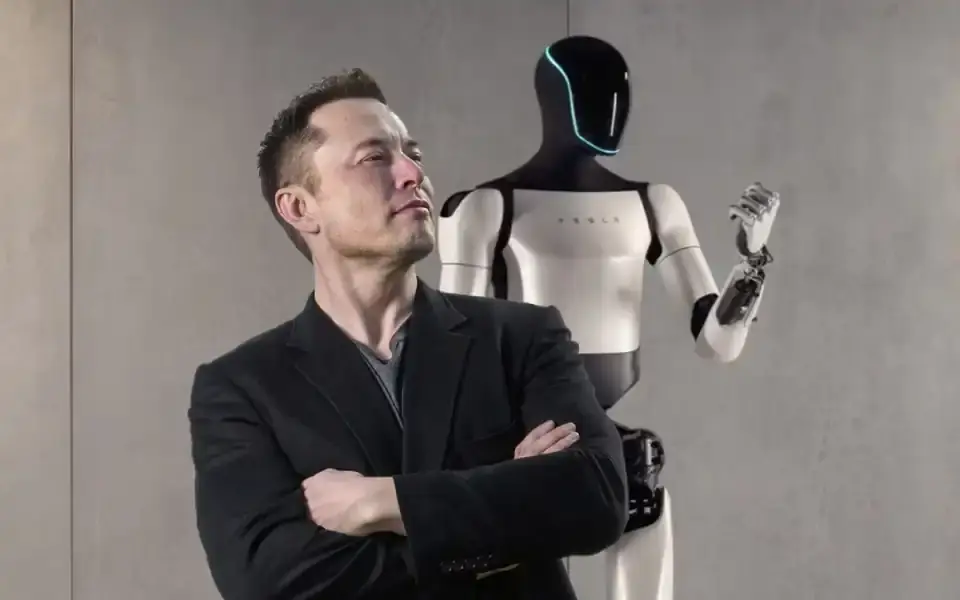
Tesla's Optimus is generating significant discussion regarding its imminent future. Recent reports indicate Elon Musk's vision for Optimus bots staffing coffee shops at Supercharging stations, signaling potential public deployment in service roles [^]. Tesla anticipates commencing volume production of the humanoid robot later in 2026, following the Q1 2026 unveiling of the next-generation version (Gen 3), which is designed for real production work [^]. The company plans to convert Model S and Model X production lines at its Fremont factory for Optimus manufacturing [^]. While advanced AI, precise manipulation, and robust mobility have been highlighted as significant advancements [^], a February 10, 2026, report cast doubt on Optimus's immediate readiness by claiming no units are currently performing "productive work" autonomously in Tesla's factories [^]. As of January 2026, over 1,000 Optimus units are reportedly operating within Tesla factories [^].
Ambitious timelines and capabilities underscore Optimus's long-term potential. Elon Musk has provided varying timelines for public availability, suggesting late 2026 or by the end of 2027, with some initial limited external sales cited for 2025 [^]. Tesla is targeting a production cost of approximately $20,000 per unit at scale, aiming for an "unbeatable price target" under $30,000 for consumers, though initial commercial units may cost $100,000-$150,000 [^]. Optimus is designed for factory tasks such as battery cell sorting, material handling, and quality inspection, with the Gen 2 featuring 22 degrees of freedom hands, an 8 km/h walking speed, and a 20kg payload capacity [^]. Development is ongoing for delicate tasks, assisting the elderly, and interacting with children, all employing a vision-only AI approach [^]. Tesla is constructing a dedicated facility at Giga Texas with a goal of 10 million units per year, targeting 100,000 units in 2026 and eventually 1 million units annually [^]. Musk considers Optimus potentially "more valuable than everything else combined" and the "most important product in history," envisioning it will eventually "eliminate poverty" and lead to billions of humanoid robots globally, while stressing the importance of "very high reliability, very high safety" before public release and concerns about future influence over a "robot army" [^]. BiyaPay analysts view Optimus as a strategic shift into AI and robotics [^]. Robotics expert Jonathan Aitken notes the need for generalized actions and Tesla's unique vision-only training [^], though Olaf Gro suggests Musk's timelines may be "overly enthusiastic" [^]. Conversely, Gartner expresses skepticism, calling humanoid robots "unusable" due to high costs, integration challenges, and unreliability [^]. Shaun Azimi of NASA compares the challenges to self-driving cars [^], and Gene Munster points to a lack of investor excitement and low probability of large-scale success [^].
Key concerns highlight Optimus's practical and ethical deployment hurdles. A significant debate exists around the true level of Optimus's autonomy versus teleoperation, particularly following reports questioning productive autonomous work in factories [^]. People question the practicality of humanoid robots, considering if they are truly more effective or cost-efficient than specialized robots or human labor in complex environments [^]. Paramount importance is placed on ensuring Optimus's safety and reliability before widespread public release, with fears of malfunctions or unintended autonomous actions [^]. Worries also encompass privacy and security, including the potential for collecting sensitive data in homes and the risk of remote hijacking leading to operational disruptions, sabotage, or espionage [^]. The ambitious timelines set by Elon Musk continue to be debated among experts [^]. Furthermore, Optimus's competitive advantage and market position are discussed amidst significant investment in robotics from countries like China and the presence of competitors such as Boston Dynamics and Figure AI [^]. Supply chain challenges are a major consideration, as the lack of existing infrastructure for humanoid robot components necessitates extensive vertical integration and in-house manufacturing by Tesla [^]. Broader ethical and regulatory considerations, including human control over AI, are also a topic of discussion for integrating advanced humanoid robots into daily life and industries [^].

2. Market Behavior & Price Dynamics

Historical Price (Probability)

Outcome probability
Date
The price action for the TESLAOPTIMUS-26DEC31 market is characterized by a distinct lack of volatility and a persistent sideways trend. The market opened at $0.23 and is currently trading at the same level, indicating a strong and stable consensus over its history. Despite a historical price range between $0.12 and $0.50, the data suggests the price has remained anchored to the $0.23 level, which has acted as a significant point of control or equilibrium rather than a traditional support or resistance line. This price stability implies that the market sentiment is deeply entrenched, assigning a consistent, low probability of approximately 23% for a commercial release of Optimus before 2027.
Despite recent news detailing production timelines and potential use cases, the market has shown no significant reaction, as evidenced by the flat price. This suggests traders have already priced in the provided information. Specifically, the timeline of volume production commencing "later in 2026" for a "before 2027" resolution is viewed as tight, justifying the low probability without causing a significant price spike or drop. The substantial trading volume of 82,185 contracts, combined with the stable price, indicates a liquid market with strong conviction from both buyers and sellers at the current $0.23 level. Periods of increased volume have failed to move the price, reinforcing the idea that new information is simply confirming the market's existing skeptical outlook rather than changing it.

3. Market Data

View on Kalshi →

Contract Snapshot

This market resolves YES if Tesla Optimus is released during the calendar year 2026, and NO if it is not. The deadline for the event to occur is December 31, 2026. The provided content does not specify what constitutes a "release" or any other special settlement conditions.

Available Contracts

Market options and current pricing

Outcome bucket Yes (price) No (price) Implied probability
Before 2027 $0.23 $0.78 23%

Market Discussion

Discussions surrounding "Tesla Optimus released this year" (referring to 2026) are dominated by Elon Musk's ambitious projections for the humanoid robot and Tesla's strategic pivot towards AI and robotics, yet also tempered by skepticism regarding the feasibility of these aggressive timelines [^]. Many experts and investors anticipate Optimus playing a transformative role, initially in industrial settings, with Tesla repurposing production lines from its Model S and X vehicles to achieve large-scale manufacturing by the end of 2026 [^]. However, prediction markets and some analysts express significant doubt about widespread deployment or public sales this year, citing Tesla's history of product delays and the immense complexity of developing human-level robotic capabilities [^]. The general consensus acknowledges Optimus's rapid advancement, with a focus on internal factory tasks and B2B applications in 2026, while public availability is more realistically expected in late 2027 or beyond, contingent on achieving high safety and reliability standards [^].

4. What is the Current Status of Tesla Optimus Factory Integration?

Gen 3 Mass Production StartJanuary 21, 2026 [^]
Robots Deployed (early 2026)Over 1,000 units [^]
2026 Production Target50,000 to 100,000 units [^]
Tesla is rapidly scaling Optimus deployment and production within its manufacturing facilities. By early 2026, over 1,000 Gen 3 Optimus units were actively deployed across Tesla's sites, including Giga Texas and the Fremont Factory [^]. Mass production of the Gen 3 model commenced on January 21, 2026, at the Fremont plant [^], with Tesla targeting a production output of 50,000 to 100,000 units for the full year [^]. This significant ramp-up includes plans to repurpose Model S/X production lines at Fremont, aiming for a 1 million unit per year manufacturing run rate for Optimus [^].
Optimus units perform increasingly advanced, multi-step autonomous tasks beyond simple 'pick and place' operations. Key capabilities demonstrated include autonomous parts processing and kitting, such as battery line kitting [^], and executing basic assembly tasks [^]. The robots exhibit fine motor skills, evident in their ability to handle delicate objects and perform household tasks initiated by voice prompts without requiring fiducial markers [^]. Furthermore, Optimus units are self-sufficient, capable of autonomously navigating to and plugging into charging stations using their rear-facing cameras, a critical feature for continuous factory operation [^]. These capabilities are supported by a 'sim-to-real' learning pipeline, allowing robots to learn 100 new tasks daily in simulation [^], and an end-to-end neural network control system [^], positioning Optimus for rapid expansion of its task repertoire.

5. Has Tesla initiated Optimus Gen 3 mass production procurement for 2026?

Actuator Order Value$685 million for ~180,000 units (deliveries Q1 2026) [^]
Projected Q2/Q3 2026 FilingsMaterial increase in CapEx and purchase obligations [^]
Optimus Sales TimelineInternal deployment 2026, external sales begin 2027 [^]
Tesla significantly increased large-scale Optimus Gen 3 component procurement in mid-2026. This extensive activity aligns with plans for internal deployment by late 2026 and initial commercial sales in 2027 [^]. A notable procurement is a rumored $685 million order placed with Sanhua Intelligent Controls for linear actuators, a quantity capable of equipping approximately 180,000 Optimus units, with deliveries having commenced in Q1 2026 [^].
Broader supply chain activation further confirms a genuine production ramp for Optimus. This includes the establishment of an "Optimus chain" of Chinese component suppliers, such as Ningbo Tuopu Group for actuators and dexterous hands [^]. Corroborating evidence also stems from tracking physical component flow via industrial import logs [^]. Furthermore, projected Q2/Q3 2026 SEC filings are anticipated to reveal substantial increases in capital expenditures at Gigafactory Texas and multi-hundred-million-dollar purchase obligations for production components [^].
These robust procurement activities firmly align with a 2027 commercial sales launch. While supporting low-volume production for internal factory deployment throughout 2026, these efforts reinforce the timeline for external enterprise sales to begin in 2027 [^]. Consequently, the prediction market question "Tesla Optimus released this year?" (resolving before 2027) is expected to resolve to "No," as "released" specifically implies the first commercial sale to a third-party customer, which is projected for 2027.

6. Will Tesla Optimus Gen 3 Achieve One-Shot Learning by 2027?

Core AI ClaimOne-shot imitation learning from single demonstration [^]
Internal DeploymentOver 1,000 units in factories by January 2026 [^]
Physical Specs1.73 m tall, 57 kg weight [^]
Tesla's Optimus Gen 3 exhibits advanced hardware and sophisticated AI integration. This humanoid robot stands 1.73 meters tall and weighs 57 kg [^]. It is equipped with a 2.3 kWh battery, providing 10 to 24 hours of operation [^], and features 50 custom actuators. Notably, its hands possess over 22 degrees of freedom, allowing for sub-millimeter precision [^]. The robot's cognitive functions are powered by a Tesla AI5/FSD computer utilizing FSD-v15 neural architecture. Its vision-only sensor suite comprises eight cameras, processing an substantial 1.2 terabytes of sensory data per hour [^].
The robot's Q1 2026 unveiling will validate its one-shot learning ability. A key claim for Optimus Gen 3 is its capacity to learn novel and complex tasks from a single human demonstration, including video tutorials, through imitation and behavioral cloning [^]. The official unveiling, anticipated in the first quarter of 2026, will be crucial for validating this capability. If proven, this could signify a transformative shift in robotics [^]. This advanced capability, coupled with an aggressive production schedule, makes Optimus Gen 3 highly relevant for prediction markets resolving before 2027. Tesla plans to deploy over 1,000 units internally in its factories by January 2026, with public sales projected for late 2026 or by the end of 2027 [^]. A positive market resolution will depend on both the successful demonstration of true one-shot imitation learning and adherence to these production timelines [^].

7. Has Tesla's Optimus Robot Achieved Commercialization Milestones?

Annual Production Capacity Target1 million units annually [^]
Parts Order for Production$685 million for ~180,000 units [^]
2026 Production Target50,000 to 100,000 Optimus units [^]
Tesla's Optimus formally transitioned to a commercial product by Q3 2026. As of October 1, 2026, the Optimus program moved beyond R&D, confirmed by the establishment of structured pilot programs with leading third-party companies. Tesla deployed Optimus Gen 3 units into live operational environments with GXO Logistics in the logistics sector and Cleveland Clinic in healthcare. Additionally, a significant purchase agreement was confirmed in September 2026 with Magna International for an initial batch of 250 pre-commercial production units, with deliveries scheduled to begin in late 2026 and early 2027.
Production scaling and internal validation underpin commercial readiness. Tesla's pilot production line is now operational, targeting a long-term capacity of approximately 1 million units annually [^]. Further demonstrating commitment to commercial deployment, a substantial $685 million parts order has been placed for roughly 180,000 units [^]. This proactive manufacturing preparation, coupled with extensive internal validation confirming the robot's ability to perform 'useful work' on repetitive factory tasks [^], indicates Tesla's readiness for market entry.

8. Will Tesla Optimus Production Lines Be Ready by Q3 2026?

Fremont Model S/X Production CeasesEnd of Q2 2026 [^]
Fremont Optimus Gen 3 Capacity Goal1 million units per year [^]
Giga Texas Optimus Status by Q3 2026Active construction site; not equipped or operational [^]
Fremont's Optimus production lines are targeting late 2026 for pilot runs. The Fremont Factory is converting its existing Model S and X production lines for Optimus Gen 3 manufacturing, with vehicle production slated to cease by the end of Q2 2026 [^]. While construction is reportedly underway, Tesla's Q4 2025 Shareholder Deck indicates that equipment installation is projected to begin before the end of 2026 [^]. Although initial commissioning and test runs might occur in late Q3 2026, stable and repeatable pilot production is more likely to commence in Q4 2026, reflecting the company's own cautious outlook on an 'agonizingly slow' initial ramp-up [^]. High-volume output or external sales are not anticipated in 2026 [^].
Giga Texas's Optimus facility will remain under construction through Q3 2026. Gigafactory Texas is actively constructing a dedicated, purpose-built facility for Optimus production [^]. As of early 2026, significant infrastructure development, including ground clearing, is in progress, with substantial construction activity expected to continue throughout the year [^]. Permit filings currently align with site grading and foundations, with production machinery installation permits not anticipated until late 2026 or early 2027 [^]. Consequently, the Giga Texas Optimus factory will be an active construction site through Q3 2026 and will not be equipped or operational for pilot production runs by the specified deadline [^]. This facility aims for mass production of Optimus Gen 4 by 2027, targeting 10 million units per year [^].
Widespread Optimus pilot production by Q3 2026 appears highly improbable. Achieving this goal across Tesla's Optimus lines by the end of Q3 2026 is unlikely given current progress. Fremont may experience the very initial stages of line commissioning, but cannot be expected to contribute to volume production within the year [^]. Giga Texas will serve primarily as a construction site during this period, developing future capacity [^]. The ambitious combined production target for 2026, ranging from 100,000 to 300,000 units, seems improbable considering these infrastructure and regulatory timelines [^].

9. What Could Change the Odds

Key Catalysts

Key bullish catalysts for the "Tesla Optimus released this year?" market include the anticipated Q1 2026 unveiling of Optimus V3, described as a "production-intent prototype." Further positive signals would be the expanded internal deployment of over 1,000 Optimus Gen 3 robots within Tesla factories throughout 2026, demonstrating increasingly complex tasks [^] . The completion of factory retooling for Optimus production by Q2 2026 and the commencement of volume production by late 2026, targeting 1 million units annually, would also strongly suggest a release [^]. An announcement of public pre-orders or a limited commercial pilot program in 2026 would further boost "YES" probabilities [^]. Conversely, significant bearish catalysts could push the "NO" probability higher [^]. A delay in the Optimus V3 unveiling beyond Q1 2026 would be a negative indicator [^]. Reports of major technical difficulties, failures in task execution, or safety issues during factory deployment could halt progress [^]. Any revised or delayed timelines communicated by Tesla executives during earnings calls, ongoing supply chain constraints for critical components, or high capital expenditure without clear returns would also negatively impact the market outlook for a 2026 release [^].

Key Dates & Catalysts

  • Expiration: December 31, 2026
  • Closes: December 31, 2026

10. Decision-Flipping Events

  • Trigger: Key bullish catalysts for the "Tesla Optimus released this year?" market include the anticipated Q1 2026 unveiling of Optimus V3, described as a "production-intent prototype." Further positive signals would be the expanded internal deployment of over 1,000 Optimus Gen 3 robots within Tesla factories throughout 2026, demonstrating increasingly complex tasks [^] .
  • Trigger: The completion of factory retooling for Optimus production by Q2 2026 and the commencement of volume production by late 2026, targeting 1 million units annually, would also strongly suggest a release [^] .
  • Trigger: An announcement of public pre-orders or a limited commercial pilot program in 2026 would further boost "YES" probabilities [^] .
  • Trigger: Conversely, significant bearish catalysts could push the "NO" probability higher [^] .

12. Historical Resolutions

No historical resolution data available for this series.