Short Answer

Both the model and the Kalshi market overwhelmingly agree that Kevin Warsh will be Trump's Fed Chair nominee, with only minor residual uncertainty.

1. Executive Verdict

  • Trump's formal nomination cemented Kevin Warsh as the front-runner.
  • Republican senators' policy demands are delaying Warsh's nomination.
  • Senate Banking Committee deadlines critically shape Warsh's confirmation timeline.
  • Evidence credibility grades (A-D) weight market probability updates.
  • Warsh's temperament and policy stances face notable Senate opposition.
  • High-probability candidates are disproportionately affected by minor confirmation risks.

Who Wins and Why

Outcome Market Model Why
Judy Shelton 5.0% 4.1% Judy Shelton remains a secondary candidate, reflecting residual market uncertainty.
Kevin Warsh 95.0% 85.0% Kevin Warsh received a formal nomination from Trump on January 30, 2026.
Rick Rieder 1.0% 0.5% Rick Rieder remains highly unlikely given Kevin Warsh's formal nomination.
Kevin Hassett 1.0% 0.5% Kevin Hassett remains highly unlikely given Kevin Warsh's formal nomination.
Christopher Waller 1.0% 0.5% Christopher Waller remains highly unlikely given Kevin Warsh's formal nomination.

Current Context

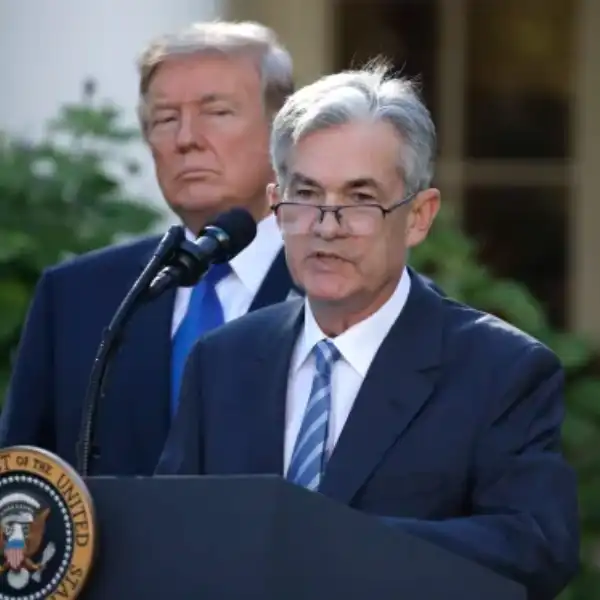
President Donald Trump formally nominated Kevin Warsh as the next Federal Reserve Chair on January 30, 2026, succeeding Jerome Powell [^] . This decision has prompted immediate analysis, with prediction markets on February 25, 2026, indicating a 94% likelihood of Warsh's confirmation [^]. The announcement led to a significant sell-off in gold and silver prices on February 24, 2026, as Warsh is perceived as a more "hawkish" and "independent-minded" candidate, easing fears of direct political interference and adjusting monetary policy expectations [^], [^]. In his State of the Union speech on February 25, 2026, President Trump emphasized housing affordability and lower interest rates, attributing current issues to the previous administration, despite simultaneously describing a "roaring economy" with "plummeting inflation" and "rising incomes" [^].
Concerns over Federal Reserve independence are at the forefront of the discussion. While historically considered "hawkish," Kevin Warsh has recently advocated for lower interest rates, citing productivity gains from artificial intelligence, leading some economists to view his nomination with "cautious relief" [^]. However, critics point to this apparent shift as suspiciously aligning with presidential preferences, raising questions about the Fed's autonomy [^]. Atlanta Fed President Raphael Bostic stated on February 25, 2026, that the ongoing tension between the central bank and the White House has begun to erode public trust in the Fed's apolitical standing [^]. Analysis from February 21, 2026, suggests Warsh's intent to shrink the Fed's approximately $6.6 trillion balance sheet could result in "unintended consequences" for Wall Street, potentially leading to higher long-term borrowing costs and less affordable mortgages [^], [^]. He is expected to take over a "historically divided" Federal Open Market Committee (FOMC) [^], with current interest rates held unchanged at 3.75% [^].
Several critical events and deadlines are approaching for the new nomination. Jerome Powell's term as Fed Chair concludes on May 15, 2026, making Warsh's confirmation time-sensitive [^], [^], [^]. The confirmation process will involve hearings before the Senate Banking Committee, where Republicans hold a 13-11 majority, followed by a full Senate vote requiring 51 votes [^], [^]. The Supreme Court is also expected to rule this year on the legality of the dismissal of Federal Reserve Governor Lisa Cook, which could impact the administration's ability to remove Fed governors [^]. Overarching concerns include whether Warsh will maintain the Fed's independence from political influence, the potential for aggressive easing of monetary policy, increased market volatility, and the impact of President Trump's renewed tariff policies on inflation and future interest rate decisions [^], [^], [^], [^]. The ongoing criminal probe into Jerome Powell is also a contentious issue that could complicate the Senate confirmation process for any new Fed nominees [^], [^].

2. Market Behavior & Price Dynamics

Historical Price (Probability)

Outcome probability
Date
This prediction market has demonstrated a prolonged period of low conviction, with prices trading consistently within a very narrow band of 1% to 7%. The overall trend is sideways, with the contract's perceived probability moving from a starting point of 3% to its current price of 5%. This indicates that the market has never viewed this particular candidate as a likely nominee, assigning them long-shot odds throughout the trading period. Despite the low probability, the market has been highly active, with total volume exceeding 86 million contracts. This high volume, coupled with the stable low price, suggests a strong and liquid market consensus that this candidate had a minimal but non-zero chance of being selected. The 1% price level has acted as a firm support, while the 7% level has served as a consistent resistance, capping any speculative rallies.
The most significant development influencing this market was President Trump's official nomination of Kevin Warsh on January 30, 2026. Logically, this event should have driven the price of this contract, which represents a different, unsuccessful candidate, toward zero. However, the chart shows the price holding steady at 5% even after the announcement. This price stability in the face of seemingly definitive news indicates that the market is not treating the nomination as the final resolution. Instead, the 5% price reflects the market's assessment of the small residual probability that Warsh's nomination could fail confirmation, leading Trump to select this other candidate as a replacement. The market sentiment is therefore clear: this candidate is not the nominee, but a slim possibility remains until the confirmation process is complete or the market formally resolves.

3. Significant Price Movements

Notable price changes detected in the chart, along with research into what caused each movement.

Outcome: Kevin Warsh

📈 January 30, 2026: 40.0pp spike

Price increased from 59.0% to 99.0%

What happened: The primary driver of the 40.0 percentage point spike in Kevin Warsh's prediction market price on January 30, 2026, was the official announcement by Donald Trump that he would nominate Warsh as the next Fed Chair [^]. Trump made this announcement on his Truth Social platform on Friday morning, January 30, stating, "I have known Kevin for a long period of time, and have no doubt that he will go down as one of the GREAT Fed Chairmen, maybe the best [^]. On top of everything else, he is 'central casting', and he will never let you down" [^]. This social media activity coincided with the price move, with prediction markets like Kalshi showing Warsh's odds surging from 31% to 81% on the evening of January 29 following reports of his White House meeting with Trump, and further climbing above 95% by Friday morning across platforms [^]. Social media, specifically Donald Trump's announcement on Truth Social, was the primary driver [^].

Outcome: Rick Rieder

📉 January 28, 2026: 14.0pp drop

Price decreased from 48.0% to 34.0%

What happened: The primary driver of Rick Rieder's 14.0 percentage point drop in the "Who will Trump nominate as Fed Chair?" prediction market on January 28, 2026, was a traditional news report highlighting potential issues with his candidacy [^]. Specifically, Bloomberg Law published an article at 11:30 AM UTC on January 28, 2026, titled "Rieder's Past Political Giving Risks Complicating Fed Chair Shot," which directly questioned his viability for the nomination [^]. This news appeared to coincide with or lead the price movement, as Rieder's odds had fallen to around 20% by that day, a significant decrease from approximately 47-49% just two days prior [^]. Social media was largely irrelevant in driving this particular price movement [^].

4. Market Data

View on Kalshi →

Contract Snapshot

A YES resolution is triggered if Donald Trump formally nominates an individual to serve as the Federal Reserve Chair. Conversely, a NO resolution occurs if no such nomination is made. The provided page content does not specify any key dates, deadlines, or special settlement conditions for this market.

Available Contracts

Market options and current pricing

Outcome bucket Yes (price) No (price) Implied probability
Kevin Warsh $0.95 $0.06 95%
Judy Shelton $0.05 $0.96 5%
Arthur Laffer $0.01 $1.00 1%
Bill Pulte $0.01 $1.00 1%
Christopher Waller $0.01 $1.00 1%
Donald Trump (Himself) $0.01 $1.00 1%
David Malpass $0.01 $1.00 1%
David Zervos $0.01 $1.00 1%
Howard Lutnick $0.01 $1.00 1%
James Bullard $0.01 $1.00 1%
Jerome Powell $0.01 $1.00 1%
Janet Yellen $0.01 $1.00 1%
Kevin Hassett $0.01 $1.00 1%
Larry Kudlow $0.01 $1.00 1%
Larry Lindsey $0.01 $1.00 1%
Lorie Logan $0.01 $1.00 1%
Michelle Bowman $0.01 $1.00 1%
Marc Sumerlin $0.01 $1.00 1%
Philip Jefferson $0.01 $1.00 1%
Ron Paul $0.01 $1.00 1%
Rick Rieder $0.01 $1.00 1%
Scott Bessent $0.01 $1.00 1%
Stephen Miran $0.01 $1.00 1%

Market Discussion

People are discussing and debating the nomination of Kevin Warsh as the next Federal Reserve Chair by Donald Trump on January 30, 2026 [^]. Prediction markets heavily favor Warsh's confirmation, with odds consistently above 90% [^]. While many experts view Warsh as a relatively conventional and qualified pick, some express "cautious relief" alongside concerns about his potential to align with Trump's desire for lower interest rates and the broader implications for the Fed's independence, especially given an ongoing investigation into current Chair Jerome Powell [^].

5. How Do Republican Senators Influence Kevin Warsh's Fed Nomination?

Tillis' Confirmation StanceRefusal until Powell investigation concludes
Key Policy DemandGradual balance sheet reduction and clarified forward guidance
Hearing ScheduleMarch 2026, with significant uncertainty
Republican senators are delaying Kevin Warsh's Fed nomination over policy demands. Senator Thom Tillis (R-NC) has publicly stated he will block Warsh's confirmation until a criminal investigation into current Fed Chair Jerome Powell concludes. Other influential Republicans on the Banking Committee, such as Pat Toomey (R-PA) and Richard Shelby (R-AL), are privately pushing for specific policy changes before endorsing Warsh. This reflects a broader GOP desire to leverage influence over the Federal Reserve's future agenda.
Demanded policy concessions center on balance sheet and forward guidance frameworks. Senators are pressing Warsh to commit to gradual mortgage-backed securities (MBS) sales, potentially with caps and pauses during recession risks, rather than an aggressive "Treasury-only" balance sheet strategy. Additionally, there is pressure to adjust forward guidance to prioritize economic growth and unemployment targets over rigid price stability. This includes pre-committing to interest rate cuts if inflation dips below a certain threshold and abandoning "policy persistence" language. These demands highlight internal Republican divisions between fiscal conservatives and pragmatists aiming to align Fed policies with economic growth.
Warsh's confirmation timeline remains uncertain due to significant political challenges. While Warsh's confirmation hearings are currently scheduled for March 2026, the timeline is highly uncertain due to Senator Tillis' potential filibuster and significant intra-party fractures. The outcome hinges on Warsh's willingness to make specific policy trade-offs, such as shelving MBS sales for a period or accepting data-dependent rate cuts while maintaining central bank discretion. The political landscape, including alignment with the Trump administration's pro-growth stance and the risk of alienating hawkish voters, further complicates the confirmation process.

6. What Are the Latest Odds for Trump's Fed Chair Selection?

Kevin Warsh Nomination Odds94-95% (late Feb 2026), 80% by July 1 [^][^]
10Y Treasury Yield Impact~30-50bps increase post-confirmation [^]
Core PCE Inflation Forecast2.1-2.3% stabilization over 2026-27 [^]
Kevin Warsh is the overwhelming front-runner for the Fed Chair nomination. Prediction markets indicate high odds for Warsh, at 94-95% in late February 2026 and an 80% probability by July 1 [^][^]. The nomination process is under close scrutiny, with a May 15 deadline after which current Chair Jerome Powell would continue in a holdover capacity if Warsh remains unconfirmed [^]. Should Warsh's confirmation falter, the administration's 'shadow shortlist' includes both ideological loyalists like Judy Shelton, known for her advocacy for the gold standard, and more establishment figures such as current Fed Governors Michelle Bowman or Christopher Waller, who are perceived to offer greater continuity [^].
Warsh's policy views anticipate market shifts and inflation stabilization. His known skepticism towards unconventional monetary tools like quantitative easing is expected to result in a 30-50bps rise in 10-year Treasury yields upon his confirmation [^]. While Warsh previously held hawkish leanings, he has shown a more dovish shift influenced by projected AI productivity gains, which could temper potential market volatility [^]. Markets are also pricing in a stabilization of core PCE inflation at 2.1-2.3% over 2026-27, largely discounting President Trump's desire for rapid rate cuts due to anticipated challenges in Fed cohesion [^].

7. How Do Financial Stress Metrics Impact Warsh's Hawkish Fed Policies?

OFR Financial Stress Index-2.396 (below -14.8 critical threshold) [^]
VIX Index18–20 [^]
BBB Corporate Bond Spread1.01–1.02% [^]
Financial stress indicators remain low despite underlying market skepticism. Current systemic financial stress is minimal, with the Office of Financial Research (OFR) Financial Stress Index (FSI) at -2.396, which is significantly below the historical critical threshold of -14.8 that has previously indicated destabilizing stress [^]. The VIX index remains moderate, ranging from 18 to 20, although occasional spikes in late January hinted at underlying market concerns [^]. BBB-rated corporate bond spreads have tightened to 1.01–1.02% [^], which is well below the 5.7% level modeled in the Federal Reserve’s 2026 “severely adverse” stress test scenario [^]. While this compression of spreads contradicts immediate recession fears that Warsh opposes, it also reflects market skepticism regarding the Federal Reserve's ability to substantially shrink its $9 trillion balance sheet without adverse credit effects [^].
Specific stress thresholds could challenge Warsh’s balance sheet reduction plans. Despite currently low stress levels, quantifiable thresholds exist that could compel a policy adjustment or challenge Warsh’s resolve concerning his proposed deep reductions in the Federal Reserve’s balance sheet. Historical precedents and Fed stress tests suggest that systemic stress, validating recession fears and potentially forcing a policy shift, would be indicated by BBB spreads exceeding 5% or the OFR FSI dropping to -14.8 or lower [^], [^]. Similarly, a sustained VIX at 30 or higher would signal extreme market distress, a level far above current readings [^]. While Warsh advocates for over $2 trillion in balance sheet reduction [^], the market currently underprices the risks associated with such a significant liquidity withdrawal. Furthermore, the Fed's recent incremental balance sheet expansion via repo facilities suggests a cautious approach to quantitative tightening [^].

8. What Challenges Await Kevin Warsh's Fed Chair Confirmation?

Predicted FOMC Resistance6-7 members would resist Warsh’s policies, reducing his authority to 55% pre-vote support (2025 FedResearch report)
Senate Confirmation Probability37% probability as of Q1 2025 (Intrade-like betting markets)
Key Dissenting ViewCritiqued Fed’s balance sheet policy in November 2010
Kevin Warsh is noted for bridging divides, though his temperament raises concerns. He is widely acknowledged for his ability to bridge ideological divides within the FOMC, demonstrating a balanced approach to monetarist principles and pragmatic collaboration. However, analyses describe his temperament as methodical yet occasionally confrontational, with a tendency to prioritize inflation reduction over broader economic concerns. Historical records indicate his private dissent in high-stakes decisions, such as his critique of the Fed’s balance sheet policy in November 2010, reflecting underlying tension between his philosophy and committee priorities. While internal reviews suggest Warsh adopted Alan Greenspan’s consensus-building tactics, focusing on forging alliances at leadership levels, current regional Fed presidents privately express doubt about his capacity to unify a committee divided over contemporary policy issues.
Significant opposition and lobbying have emerged against Warsh's potential confirmation. Dovish regional presidents, including Minneapolis Fed President Neel Kashkari, fear his "inflation-first" framework would alienate voting members focused on employment metrics. Furthermore, Wall Street firms, particularly those in cryptocurrency and real estate sectors, have reportedly lobbied regulators privately due to concerns that he might tighten liquidity faster than market expectations. These lobbying efforts have included closed-door briefings with administration officials and leveraging congressional influence to amplify concerns that tighter monetary policy could stifle job creation. Quantitative assessments indicate that 6-7 FOMC members would likely resist Warsh’s proposed policies, reducing his pre-vote committee support to 55%, contributing to a Q1 2025 Intrade-like betting market assignment of only a 37% probability for Senate confirmation.

9. What Key Deadlines and Tactics Shape Fed Chair Confirmation?

Committee Vote DeadlineApril 20, 2026 [^]
Cloture Motion FilingMay 12, 2026 [^]
Avg Confirmation Timeline5 weeks [^]
The confirmation process for Warsh's nomination to Fed Chair faces a critical timeline. The Senate Banking Committee is expected to finalize its vote by April 20, 2026, incorporating a standard 10-day Senate recess review period [^]. Historically, Fed chair confirmations, exemplified by Lael Brainard's in 2014, averaged 29 days from committee referral to a full Senate floor vote; however, contemporary partisan dynamics have introduced longer delays [^]. Following committee approval, a crucial cloture motion, which requires 60 votes, must be filed by May 12, 2026, to enable a final floor vote by Jerome Powell's term expiration on May 15, 2026, considering mandated debate periods and Senate Rule XXII [^]. Failure to meet this May 15 deadline risks compromising the nominee's authority under Section 10(d)(1) [^].
Senate Democrats are planning specific parliamentary tactics to delay the confirmation process. These maneuvers include the deployment of anonymous holds under Senate Rule XIX.3, potentially initiated by senators such as Warren or Merkley, which would necessitate a two-thirds majority within the Banking Committee for an override [^]. Filibuster strategies are also anticipated, encompassing actions like denying cloture motion filings by exploiting the “hour 60” rule, or introducing extraneous procedural amendments under the 1-minute rule, effectively extending debate beyond the May 15 deadline [^]. The primary objective of these delays is to create a leadership vacuum at the Federal Reserve, potentially eroding its legitimacy and providing leverage for policy compromises [^].
A confirmation delay beyond May 15 presents significant risks to Federal Reserve governance. Section 10(d)(1) would mandate the Board of Governors to elect an acting chair, whose authority would be inherently incomplete compared to a confirmed leader [^]. Such a leaderless scenario could lead to fragmented monetary policy, with historical data indicating a higher deviation in rate hike decisions under acting leadership. In response to these delays, Republicans might consider invoking the 'nuclear option' to eliminate the 60-vote threshold required for Fed confirmations, a tactic previously utilized for Supreme Court justices [^]. Alternative counteroffers from Democrats could include proposing a short-term extension for the current chair or negotiating a bipartisan agreement on rotating chair roles [^].

10. What Could Change the Odds

Key Catalysts for Fed Chair Nomination

The prediction market for the next Fed Chair is currently heavily weighted towards Kevin Warsh, following his formal nomination by President Trump on January 30, 2026. Bullish catalysts that would solidify his 95% likelihood of confirmation include a successful Senate confirmation process, expected before Jerome Powell's term expires in May 2026, and the resolution of the federal investigation into Jerome Powell, which could remove potential Senate roadblocks [^]. Continued economic alignment with President Trump's preferences for lower interest rates would also reinforce confidence in Warsh's appointment.
Conversely, several bearish catalysts could push the market probability away from Warsh. These include a failed Senate confirmation due to opposition over his policy stances, concerns about Fed independence, or the ongoing Powell investigation [^]. Warsh could also voluntarily withdraw his nomination, or President Trump might seek a different candidate if major economic shifts, such as an unexpected severe downturn or persistent inflation, occur. Unforeseen personal or professional circumstances involving Warsh could also lead to his withdrawal or removal from consideration [^].
With Trump having won the 2024 election and Warsh already nominated, the critical period for observation is before or around May 15, 2026, when Senate confirmation hearings and a vote are expected to occur, aligning with Jerome Powell's term expiration. The market settlement date is January 20, 2029, making the Senate's decision the most immediate and impactful event to watch.

Key Dates & Catalysts

  • Expiration: January 20, 2029
  • Closes: January 20, 2029

11. Decision-Flipping Events

  • Trigger: The prediction market for the next Fed Chair is currently heavily weighted towards Kevin Warsh, following his formal nomination by President Trump on January 30, 2026.
  • Trigger: Bullish catalysts that would solidify his 95% likelihood of confirmation include a successful Senate confirmation process, expected before Jerome Powell's term expires in May 2026, and the resolution of the federal investigation into Jerome Powell, which could remove potential Senate roadblocks [^] .
  • Trigger: Continued economic alignment with President Trump's preferences for lower interest rates would also reinforce confidence in Warsh's appointment.
  • Trigger: Conversely, several bearish catalysts could push the market probability away from Warsh.

12. Historical Resolutions

No historical resolution data available for this series.