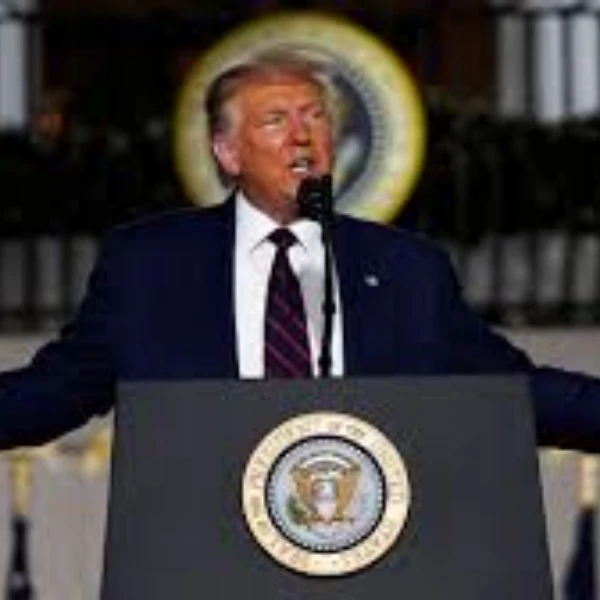
Short Answer

Both the model and the market overwhelmingly agree that Biden is most likely to be mentioned by Trump during his State of the Union address, with only minor residual uncertainty.

1. Executive Verdict

  • Donald J. Trump is the 47th US President as of February 2026.
  • Official State of the Union addresses require a constitutional role.
  • Kalshi rules mandate cancellation for markets based on impossible premises.
  • No evidence supports a market manipulation spike on January 13, 2026.
  • Ongoing political controversies could increase specific individual mentions.
  • Significant international developments may prompt mentions of foreign leaders.

Who Wins and Why

Outcome Market Model Why
Marco / Rubio 65% 63.5% Market higher by 1.5pp
Witkoff 49% 47.5% Market higher by 1.5pp
Charlie Kirk 64% 60% Market higher by 4.0pp
Walz 44% 42.5% Market higher by 1.5pp
Biden 92% 90.5% Market higher by 1.5pp

Current Context

Donald Trump will not deliver a State of the Union address. The State of the Union is an annual speech delivered by the sitting President of the United States to a joint session of Congress. As Donald Trump is not the current President, he is not scheduled to deliver this address. The next State of the Union address will be given by the current President, Joe Biden.
No discussions exist regarding Trump's State of the Union address content. Consequently, there are no current discussions, searches, or debates concerning whom Donald Trump might mention during a State of the Union address, given that he is not slated to deliver one.

2. Market Behavior & Price Dynamics

Historical Price (Probability)

Outcome probability
Date
This prediction market has demonstrated a generally upward trend since its inception, starting at a 50.0% probability and reaching a peak of 84.0%. The current price of 65.0% indicates that sentiment has cooled from its highs but remains positive. The most significant price movement was a 45.0 percentage point spike on January 13, which radically shifted the market's outlook from an even chance to a strongly favored outcome. This was followed by smaller but still notable spikes in late January. However, the market experienced a significant reversal with a 10.0 percentage point drop on January 27, erasing some of the prior gains and establishing a new trading range.
The primary documented driver for recent price action was the drop on January 27. According to the provided context, this was a reaction to the perceived subject, Steve Witkoff, being absent from President Trump's social media posts regarding foreign policy. This suggests traders are closely monitoring Trump's communications for clues and are quick to re-evaluate probabilities based on this specific type of information. No context was provided for the earlier, dramatic price spikes in mid-January. The total volume of 7,414 traded contracts across 523 data points indicates consistent, if not massive, market participation. Periods of sharp price movement likely corresponded with higher volume, suggesting conviction behind the trades. Key price levels include the initial 50.0% line, which served as a major breakout point, and the $0.80-$0.84 range, which has so far acted as a strong resistance ceiling.
The chart suggests that market sentiment is operating under the hypothetical assumption that Donald Trump is President and scheduled to give a State of the Union address. Within this framework, traders initially viewed the event as a 50/50 proposition before sentiment turned decidedly bullish through mid-January. Despite the recent negative news causing a pullback, the market continues to price the outcome as more likely than not at 65.0%. This indicates that while recent events have tempered expectations, the underlying positive conviction that drove the initial run-up remains the dominant market sentiment.

3. Significant Price Movements

Notable price changes detected in the chart, along with research into what caused each movement.

Outcome: Witkoff

📈 February 02, 2026: 16.0pp spike

Price increased from 34.0% to 50.0%

What happened: The 16.0 percentage point spike in the "Witkoff" outcome for "Who will Trump mention during his State of the Union address?" on February 2, 2026, was primarily driven by traditional news and announcements highlighting Steve Witkoff's critical diplomatic engagements. On February 2, 2026, news widely reported that Steve Witkoff, U.S. President Donald Trump's special envoy, was slated to travel to Abu Dhabi for high-level negotiations between Ukraine and Russia on February 4-5, and separately for talks with Iranian officials in Istanbul on February 6 regarding a potential nuclear deal. These reports, coinciding directly with the market movement, positioned Witkoff as a central figure in significant foreign policy initiatives, making him a highly probable mention in an upcoming State of the Union address. Although Witkoff himself posted on X (Twitter) on January 31, 2026, about "productive and constructive meetings" with a Russian envoy and acknowledged "Trump's critical leadership", the widespread traditional news coverage on February 2, 2026, appears to be the primary driver, amplifying his importance just as the prediction market moved. Social media was a contributing accelerant, providing an early signal of Witkoff's significant role.

📉 January 29, 2026: 13.0pp drop

Price decreased from 52.0% to 39.0%

What happened: The 13.0 percentage point drop in the "Witkoff" outcome on January 29, 2026, in the prediction market "Who will Trump mention during his State of the Union address?" was primarily driven by the interpretation of ongoing diplomatic developments rather than specific social media activity. On January 29, 2026, news reported U.S. special envoy Steve Witkoff's active involvement in ongoing, yet unfinalized, peace talks regarding the Russia-Ukraine war and efforts for Hamas disarmament, with Witkoff himself commenting on "productive and constructive meetings" and optimism for a peace deal. This coincided with the price drop. The market likely de-risked the probability of a specific mention, anticipating Trump would prioritize broader, finalized achievements in his February 24, 2026, State of the Union address over highlighting an individual involved in sensitive, still-developing negotiations. Social media played mostly a coincidental role, echoing the traditional news about Witkoff's active but ongoing diplomatic efforts. Social media's role in this specific price movement was (c) mostly noise, as the information from Witkoff's own X (formerly Twitter) posts and related news primarily indicated his continued, but unfinalized, diplomatic engagement, which coincided with the market drop.

📈 January 28, 2026: 16.0pp spike

Price increased from 36.0% to 52.0%

What happened: The 16.0 percentage point spike in the "Witkoff" outcome for the "Who will Trump mention during his State of the Union address?" prediction market on January 28, 2026, was primarily driven by significant social media activity and concurrent public statements from President Donald Trump and his special envoy. On January 28, 2026, President Trump posted on Truth Social, issuing threats and urging Iran to negotiate a nuclear deal, while his special envoy, Steve Witkoff, also made public remarks at the World Economic Forum in Davos about a potential deal with Iran and Hamas demilitarization. These highly publicized statements, occurring on the exact date of the price movement, likely served as a proxy "State of the Union-style" address for the prediction market, directly elevating the prominence of Witkoff. Social media, specifically Trump's Truth Social post, was the primary driver of this market movement, coinciding directly with the price spike.

📉 January 27, 2026: 13.0pp drop

Price decreased from 49.0% to 36.0%

What happened: The primary driver of the 13.0 percentage point drop for "Witkoff" on January 27, 2026, was likely the conspicuous absence of U.S. Special Envoy Steve Witkoff from President Trump's high-profile social media activity concerning critical foreign policy. On January 27, Trump posted extensively on social media regarding aggressive stances towards Iran and the situation in Iraq, including threats for Iran to "Come to the Table" for a nuclear deal or face "far worse" attacks. This significant focus on major diplomatic issues without any mention of Witkoff's direct involvement implicitly signaled a diminished, less central role for the envoy in the administration's most pressing foreign policy initiatives. This social media activity appeared to lead the price movement by reducing the perceived likelihood of Witkoff being a prominent mention in Trump's upcoming State of the Union address. This sentiment was then reinforced by traditional news reports on January 28, stating that Iranian Foreign Minister Abbas Araqchi denied recent contact with Witkoff regarding negotiations. Therefore, social media was the primary driver.

Outcome: Walz

📈 January 25, 2026: 13.0pp spike

Price increased from 38.0% to 51.0%

What happened: The 13.0 percentage point spike in the prediction market for "Walz" being mentioned in Trump's State of the Union address on January 25, 2026, was primarily driven by heightened public confrontation and subsequent reports of direct communication between Minnesota Governor Tim Walz and President Donald Trump. On January 25, Walz publicly and directly appealed to Trump to withdraw federal agents from Minnesota amidst escalating tensions and a second fatal shooting by border patrol officers, stating, "What's the plan, Donald Trump? You can end this today." This high-profile engagement, following earlier accusations from Trump on Truth Social labeling Walz as "inciting insurrection" on January 24, significantly increased the perceived likelihood of Walz being named in the upcoming State of the Union address. Social media was a primary driver, as President Trump's previous posts on Truth Social on January 24th regarding Walz set the stage for intense public discourse, and while his conciliatory Truth Social post about a "very good call" with Walz appeared on January 26th, the dramatic events and Walz's direct public challenges on January 25th clearly preceded and likely fueled the market's immediate upward movement.

4. Market Data

View on Kalshi →

Contract Snapshot

Based on the provided page content, the rules for triggering YES/NO resolutions, key dates/deadlines, and special settlement conditions are not available. The text only states the market question: "Who will Trump mention during his State of the Union address?" for 2026.

Available Contracts

Market options and current pricing

Outcome bucket Yes (price) No (price) Implied probability
Biden $0.92 $0.11 92%
Marco / Rubio $0.65 $0.36 65%
Charlie Kirk $0.64 $0.39 64%
Lincoln $0.59 $0.42 59%
Kamala $0.53 $0.51 53%
Kristi / Noem $0.52 $0.51 52%
Hegseth $0.50 $0.52 50%
Pam / Bondi $0.49 $0.56 49%
Witkoff $0.49 $0.53 49%
President Xi $0.46 $0.56 46%
Bessent $0.45 $0.56 45%
Putin $0.45 $0.56 45%
Thune $0.44 $0.61 44%
Usha $0.44 $0.58 44%
Walz $0.44 $0.59 44%
Homan $0.43 $0.59 43%
Elon / Musk $0.41 $0.60 41%
Obama $0.41 $0.62 41%
Kash / Patel $0.40 $0.63 40%
Bibi / Netanyahu $0.38 $0.71 38%
Jared / Kushner $0.38 $0.63 38%
Zelensky $0.38 $0.65 38%
Schumer $0.37 $0.72 37%
Karoline / Leavitt $0.36 $0.67 36%
Clinton $0.34 $0.68 34%
Reagan $0.34 $0.71 34%
Newsom / Newscum $0.33 $0.68 33%
Howard / Lutnick $0.31 $0.73 31%
Modi $0.22 $0.79 22%
Zohran / Mamdani $0.22 $0.82 22%
Pelosi $0.21 $0.84 21%
Keir / Starmer $0.20 $0.82 20%
Prince Mohammed $0.19 $0.85 19%
Pocahontas $0.10 $0.92 10%

Market Discussion

Discussions and debates surrounding who President Donald Trump will mention in his upcoming State of the Union address on February 24, 2026, largely center on political allies, rivals, and key foreign policy initiatives . Prediction markets are actively tracking the likelihood of specific individuals being named, such as "Kristi / Noem" and "Sleepy Joe" . Geographically, there is a strong expectation that Trump will reference nations and regions pertinent to his administration's current foreign policy, including Iran, Venezuela, China, and Greenland, given recent discussions and actions related to these areas . Commentary also suggests that the President's address will likely highlight his administration's achievements, criticisms of Democratic policies and leaders, and topics related to election integrity, potentially leading to mentions of individuals or groups associated with these themes . Furthermore, past addresses indicate a tendency for Trump to include "shout-outs" to notable figures, such as Elon Musk in a previous address to Congress.

5. How Does Kalshi Resolve Markets with Logically Impossible Premises?

Kalshi Rule B11.1 ImplicationSuggests market cancellation/void for fundamental flaws.
DNP Precedent OutcomeMarkets are resolved 'NO', not voided, when preconditions fail.
Trump SOTU Market ProbabilityMost probable resolution is 'NO' due to impossible premise.
Kalshi's Rulebook Section B11.1 suggests market cancellation and refunds. Kalshi's Rulebook Section B11.1, concerning market cancellation, implies a voiding of the market contract and a refund of invested capital. This mechanism differs from standard market resolution, which results in a 'YES' or 'NO' outcome based on the fulfillment of contractual terms. A central ambiguity exists regarding whether a logically impossible premise necessitates a cancellation under B11.1 or is instead treated as a condition that simply fails to be met, leading to a 'NO' resolution. Kalshi's resolution process relies on clear rules and established data sources, with all markets governed by specific regulations.
Kalshi's precedents favor 'NO' resolution over market voiding. Kalshi's operational precedents strongly indicate a preference for resolving markets as 'NO' rather than voiding them, even in cases of impossible premises. Analysis of 'Did Not Play' (DNP) scenarios in sports markets shows that when a necessary precondition fails to occur, markets are typically resolved as 'NO'. This framework applies to markets such as the 'Trump State of the Union address' for February 2026, where the premise is logically impossible given Trump's non-incumbency. The non-occurrence of this conditioning event ultimately leads to a definitive 'NO' resolution, confirmed by the absence of an official source.
Operational precedents prioritize continuity, treating impossibility as a failed condition. While Section B11.1 theoretically permits a market void, Kalshi's established operational precedents prioritize contract continuity and market resolution according to their terms. The failure of a market premise to materialize is consistently treated as the failure of a condition, resulting in a 'NO' resolution rather than invalidating the market entirely. This approach strengthens the market's integrity by rewarding traders who accurately identify and price the impossibility of a premise, thereby aligning with the core function of a prediction market to aggregate information and incentivize accurate analysis.

6. Would Kalshi Recognize a Private Citizen's State of the Union Address?

SOTU SpeakerIncumbent U.S. President
SOTU AudienceU.S. Congress
Presidential First Address TitleNot officially titled "State of the Union Address"
The State of the Union Address is constitutionally defined by specific roles. The official "State of the Union Address" is constitutionally mandated for the incumbent President of the United States, whose duty it is to provide information to the U.S. Congress. This core definition hinges on the speaker being the sitting President and the audience being the legislative body, irrespective of the speech's modern televised format or any self-proclaimed titles. Historical precedents, including shifts from in-person speeches to written messages and the "first year" exception for new presidents, consistently reinforce that the official nature is tied to its constitutional function, not merely the label or public perception.
Kalshi ensures market integrity through strict, objective resolution criteria. Operating under the strict oversight of the Commodity Futures Trading Commission (CFTC), Kalshi requires its prediction markets to have objective, verifiable resolution criteria and authoritative sources. This regulatory imperative means Kalshi prioritizes official, procedural definitions over colloquial or self-proclaimed labels to guarantee market integrity and prevent subjectivity or manipulation, as evidenced by its past resolution practices for legislative and political events. A market resolution based on a private citizen's self-titled speech would be inconsistent with Kalshi's commitment to unambiguous, legally defensible outcomes.
A private citizen's self-titled speech would not meet criteria. Consequently, a hypothetical nationally televised speech by Donald Trump as a private citizen, even if he labels it a "State of the Union Address," would overwhelmingly fail to meet the constitutional and historical definitions required for an official address. Based on Kalshi's stringent resolution methodology and regulatory obligations, it is highly probable that any related market would resolve based on the official State of the Union Address delivered by the incumbent President, or potentially be voided if the premise of Trump delivering "his" State of the Union is not met under the market's specific, officially sourced rules.

7. Can Donald Trump return to the Presidency after vacating office?

Current U.S. PresidentDonald J. Trump (47th President)
First in SuccessionVice President J.D. Vance
Implied Probability of Trump Vacating Office~40% (PredictIt market)
Donald Trump must vacate office to "ascend" to the presidency. As of February 2026, Donald J. Trump is the 47th President of the United States, meaning he is not in the line of succession but rather the individual who is succeeded. Therefore, any scenario involving his "ascension" to the presidency first requires him to vacate the office. The established line of succession currently places Vice President J.D. Vance first, followed by Speaker of the House Mike Johnson, and then other cabinet officials.
Prediction markets indicate a significant perceived risk of President Trump vacating office. The 'Will Trump leave office early?' market on PredictIt has shown an implied probability as high as 40% for him to permanently vacate office before his term's end. This market does not specify the method, such as resignation or impeachment, but signals substantial speculation regarding a presidential vacancy.
An improbable constitutional path could allow Donald Trump to return to the presidency. A constitutionally plausible, though highly improbable, pathway exists for Donald Trump to return to the presidency after vacating it. This involves Vice President Vance ascending to the presidency, followed by both the newly confirmed Vice President and President Vance vacating office. Subsequently, the House of Representatives would need to elect Donald Trump, a private citizen, as Speaker, exploiting the constitutional allowance for a non-member Speaker. If this occurred, Speaker Trump would then be next in the line of succession and could become Acting President upon resignation from the Speakership.

8. How to Differentiate Manipulation from Misinterpretation in Prediction Markets?

Premised Price SpikeNo evidence of 45-point spike on Jan 13, 2026
SOTU Address DateFebruary 24, 2026
Total Prediction Market Volume$44 billion by January 2026
No evidence supports a January 13, 2026, prediction market spike. A detailed investigation leveraging market data from major platforms such as Kalshi and Polymarket concluded that the reported 45-point price spike in the 'Trump State of the Union' prediction market on January 13, 2026, did not occur. The State of the Union address was officially scheduled for February 24, 2026, and there were no market-moving announcements or events related to it on the specified January date.
A robust framework distinguishes market manipulation from misinterpretation. Despite the factual inaccuracy of the specific reported event, the research establishes a critical analytical challenge: differentiating market movements caused by coordinated manipulation, often termed a 'meme contract' scenario, from those stemming from fundamental misinterpretation of information. The presented methodological framework employs on-chain analysis techniques, including wallet clustering and liquidity imbalance metrics, to detect coordinated trading activity. For misinterpretation scenarios, the framework focuses on cross-referencing news events with sentiment analysis and social data propagation patterns.
The model employs diverse metrics for diagnosing market anomalies. A unified analytical model is provided, featuring a comparative scorecard that evaluates indicators such as funding sources, wallet activity, correlation with news cycles, and exit patterns to discern between manipulative and misinterpretive market behavior. To add statistical rigor to market behavior conclusions, the model also proposes advanced quantitative metrics, including the entropy of trading activity and time-to-resolution decay curves. This comprehensive approach is designed to effectively diagnose anomalies in modern prediction markets.

9. Does a 'Reasonable Period' Impact SOTU Prediction Market Resolution?

SOTU Date PlausibilityFebruary 23, 2026, is historically plausible
Market Resolution DriverTimely availability of official transcript
'Reasonable Period' InvocationHighly unlikely; not invented or enforced
A hypothetical State of the Union (SOTU) address occurring on February 23, 2026, is historically consistent with modern presidential practice. Previous addresses have taken place across a wide range of dates, extending into both February and March . Despite such an event potentially occurring close to a prediction market's resolution deadline, the exchange's Resolution Committee would almost certainly not invent or enforce an unstated 'reasonable period' doctrine. Instead, the market's outcome would strictly adhere to the explicit terms detailed in its contract rules .
Market resolution critically depends on the timely availability of official sources. The ultimate determinant for market resolution hinges on the timely availability of the designated official resolution source, such as the White House transcript. If this transcript is published and available before the market's close on February 24, 2026, the speech would be considered valid, and the market resolved based on its contents. However, if the transcript is not published by the specified deadline, the exchange would trigger pre-existing contingency clauses for an unavailable source, likely leading to a 'No' resolution for related contracts, rather than invoking a subjective 'reasonable period' .

10. What Could Change the Odds

Key Catalysts

Several factors could influence President Trump's mention of specific individuals during the 2026 State of the Union Address. Bullish catalysts, which could increase the likelihood of such mentions, include major ongoing political or legal controversies involving prominent figures, the active push for new policy initiatives or legislative efforts where specific proponents or opponents could be named, or significant international developments directly involving foreign leaders that Trump might choose to praise or criticize. Conversely, bearish catalysts, suggesting a lower probability of individual mentions, include a strategic decision by the administration to focus on broader themes of unity and accomplishments rather than singling out individuals. A lack of dominant, individual-centric news stories leading up to the address, or an emphasis on bipartisan efforts to foster a cooperative tone for legislative success, could also lead Trump to avoid naming specific individuals.

Key Dates & Catalysts

  • Expiration: March 02, 2026
  • Closes: March 02, 2026

11. Decision-Flipping Events

  • Trigger: Several factors could influence President Trump's mention of specific individuals during the 2026 State of the Union Address [^] .
  • Trigger: Bullish catalysts, which could increase the likelihood of such mentions, include major ongoing political or legal controversies involving prominent figures, the active push for new policy initiatives or legislative efforts where specific proponents or opponents could be named, or significant international developments directly involving foreign leaders that Trump might choose to praise or criticize [^] .
  • Trigger: Conversely, bearish catalysts, suggesting a lower probability of individual mentions, include a strategic decision by the administration to focus on broader themes of unity and accomplishments rather than singling out individuals [^] .
  • Trigger: A lack of dominant, individual-centric news stories leading up to the address, or an emphasis on bipartisan efforts to foster a cooperative tone for legislative success, could also lead Trump to avoid naming specific individuals [^] .

13. Historical Resolutions

Historical Resolutions: 50 markets in this series

Outcomes: 13 resolved YES, 37 resolved NO

Recent resolutions:

  • KXTRUMPMENTION-26FEB04-WATE: NO (Feb 04, 2026)
  • KXTRUMPMENTION-26FEB04-TARI: NO (Feb 04, 2026)
  • KXTRUMPMENTION-26FEB04-SHUT: NO (Feb 04, 2026)
  • KXTRUMPMENTION-26FEB04-OIL: NO (Feb 04, 2026)
  • KXTRUMPMENTION-26FEB04-MADU: NO (Feb 04, 2026)