Short Answer

Both the model and the market overwhelmingly agree that Trillion is most likely to be said by Trump during the State of the Union.

1. Executive Verdict

  • Trump administration pre-briefs media on significant new trade framework.
  • Stephen Miller, SOTU gatekeeper, influences final speech draft significantly.
  • Trump's recent speeches show varying deviation from prepared scripts.
  • President Trump's SOTU response will feature deflection and reinforcement.
  • Positive economic data will drive mentions of economic successes and policies.
  • Border events or trade disputes will prompt strong national security mentions.

Who Wins and Why

Outcome Market Model Why
Crypto / Bitcoin 39% 0.2% Trump has recently engaged with cryptocurrency discussions, potentially making it a topic.
Somali / Somalia / Somalian 54% 53% Foreign policy or immigration discussions could involve specific nations like Somalia.
Sleepy Joe 47% 46.5% "Sleepy Joe" is a signature pejorative Trump uses for President Biden.
Highest Inflation 61% 0.9% Trump consistently criticizes current economic policies, often citing inflation figures.
Vaccine / Autism 40% 0.5% Vaccine-related discussions, including concerns about health, are common among Trump's supporters.

Current Context

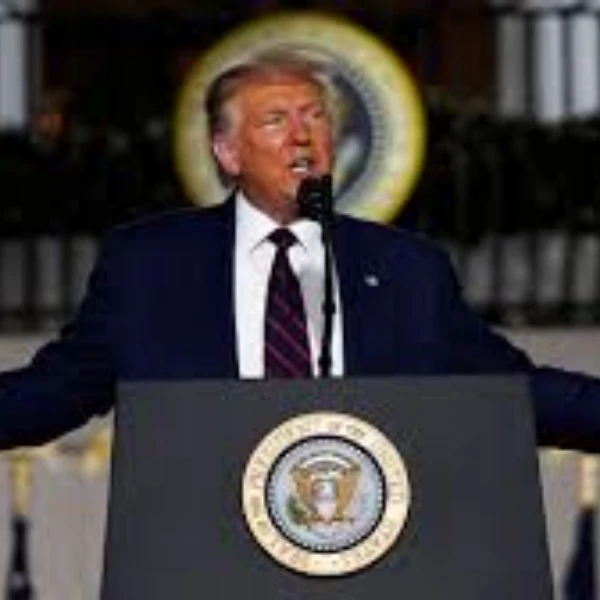
Public attention focuses on Trump's upcoming 2026 State of the Union. President Donald Trump's upcoming State of the Union address, scheduled for Tuesday, February 24, 2026, is generating significant public interest and discussion. People are actively searching for and debating what the President will say during this key event. The confirmed date and the identity of the speaker, President Donald Trump, are among the key data points being sought. House Speaker Mike Johnson formally invited President Trump to deliver the address to a joint session of Congress via a letter dated January 7, 2026.
President Trump's recent engagements offer context for his address. In the week leading up to the address, President Trump participated in several public activities providing context for his agenda. He gaggled with the press at Mar-a-Lago on February 1, 2026, and participated in a bill signing on February 3, 2026. Also on February 3, 2026, President Trump issued a proclamation for National Black History Month and had a call with the Prime Minister of the United Kingdom, discussing Ukraine and the strategic importance of Diego Garcia. He is also scheduled to attend the National Prayer Breakfast on February 5, 2026. While specific expert opinions from the last seven days on the address's content are not widely detailed, general expectations suggest discussions will revolve around whether the speech will adopt a traditional or more confrontational tone, referencing past experiences of partisan acrimony during such addresses.
Key questions revolve around specific policy and political messages. Anticipated topics and legislative priorities form a central part of current speculation regarding the State of the Union address. Common questions and concerns include what specific administration priorities and legislative agenda President Trump will outline for 2026, and how he plans to address key cost of living issues. Observers are also keen to know if he will discuss foreign policy matters, such as potential military intervention in Venezuela or the controversial idea of seizing Greenland, both mentioned as recent topics related to his administration. Further interest lies in the message he will convey to voters ahead of upcoming midterm elections, particularly concerning Republican control of Congress. Other queries pertain to whether he will focus on national achievements, strength, freedom, and prosperity under his leadership, address issues of religious freedom and perceived "anti-Christian bias," or commemorate the 250th anniversary of American independence. The potential impact of his recent executive order regarding withdrawing the United States from certain international organizations, conventions, and treaties is also a subject of concern.

2. Market Behavior & Price Dynamics

Historical Price (Probability)

Outcome probability
Date
This prediction market has displayed significant volatility against an overall downward trend. The contract opened with a 64.0% probability, suggesting initial market confidence in a "YES" outcome. However, it has since declined to its current price of 40.0%. The most notable price action occurred over a two-day period in January. On January 9, 2026, the price experienced a massive 59.0 percentage point spike, surging from a low of 5.0% to 64.0%. This was immediately followed by a sharp 28.0 percentage point correction the next day, January 10, with the price falling back to 36.0%.
The dramatic price movements in early January appear to be a direct reaction to external news. The formal invitation from House Speaker Mike Johnson, dated January 7, 2026, likely served as the primary catalyst. The market, which had priced the contract at a near-zero probability, rapidly adjusted on January 9 to account for the confirmation that the State of the Union address would indeed take place. The subsequent drop on January 10 suggests that while the event's confirmation was priced in, traders quickly reassessed the probability of the specific "YES" outcome, viewing the 64.0% peak as an overreaction and initiating a significant sell-off.
The total traded volume of 57,875 contracts indicates substantial market interest and conviction, likely concentrated around the January volatility. The 64.0% price point has established itself as a major resistance level, representing both the market's starting price and the peak of the January spike, which was strongly rejected. The current price of 40.0% suggests the market has found a temporary equilibrium after the major news event. Overall market sentiment appears uncertain and divided. The initial confidence has eroded, and the market is now pricing the "YES" outcome as less likely than not, reflecting a cautious stance following the period of intense speculation.

3. Significant Price Movements

Notable price changes detected in the chart, along with research into what caused each movement.

Outcome: Vaccine / Autism

📉 February 02, 2026: 8.0pp drop

Price decreased from 51.0% to 43.0%

What happened: The primary driver of the 8.0 percentage point drop in the "Vaccine / Autism" prediction market on February 2, 2026, was a traditional news announcement regarding the Trump administration's policy on vaccine funding. On February 2, 2026, The BMJ reported that the Trump administration planned to withhold funding to Gavi, the global vaccine alliance, until it ceased using vaccines containing thimerosal (mercury). This decision by the U.S. government's Department of Health and Human Services directly addresses a long-standing concern of vaccine skeptics, including Robert F. Kennedy Jr., who have linked thimerosal to autism, despite scientific consensus refuting the connection. This significant policy announcement, published on the same day as the market movement and directly tied to vaccine ingredients and autism concerns, likely reduced the perceived probability of Trump making a specific "Vaccine / Autism" statement during the upcoming State of the Union address, which is scheduled for February 24, 2026. The news event, confirming a concrete action on vaccine safety outside of the State of the Union speech, appeared to LEAD the price move by satisfying or shifting the expectation of how Trump would address the topic. Social media was likely a contributing accelerant as this news would have been widely discussed across platforms.

📉 January 23, 2026: 9.0pp drop

Price decreased from 59.0% to 50.0%

What happened: The 9.0 percentage point drop in the "Vaccine / Autism" outcome for the "What will Trump say during the State of the Union?" prediction market on January 23, 2026, was primarily driven by a significant shift in the perceived priorities of the Trump administration. On that date, the unclassified version of the 2026 National Defense Strategy (NDS) was released, signaling a strong focus on homeland defense, the Western Hemisphere, and deterring China, in line with the broader 2025 National Security Strategy. This major official announcement, combined with ongoing high-profile international developments such as military actions in Venezuela and diplomatic engagements concerning Ukraine and Gaza, likely signaled to the market that the State of the Union address would heavily prioritize these pressing national security and foreign policy issues, diminishing the perceived likelihood of Trump focusing on the controversial topic of "Vaccine / Autism". Social media activity regarding Trump's past statements on vaccines and autism (from late 2024 and September 2025) predated this specific market movement, making it mostly noise or irrelevant to this particular price drop.

📈 January 22, 2026: 12.0pp spike

Price increased from 47.0% to 59.0%

What happened: The 12.0 percentage point spike in the prediction market on "Vaccine / Autism" on January 22, 2026, was primarily driven by growing anticipation and likely circulating rumors concerning the reshaping of the Interagency Autism Coordinating Committee (IACC) by the Trump administration through HHS Secretary Robert F. Kennedy Jr. Although the official announcement of new IACC appointments, which included individuals known for questioning vaccine safety and promoting vaccine-autism theories, occurred on January 28, 2026, concerns among researchers and advocates about this impending shift were already circulating by January 26, 2026. This pre-announcement sentiment, building on Trump's established rhetoric linking vaccines to autism, likely fueled market speculation leading into and coinciding with the price movement. While a specific social media post directly on January 22 from a key figure is not identifiable, the overarching narrative and anticipation of administration action served as a significant contributing accelerant.

📈 January 11, 2026: 15.0pp spike

Price increased from 45.0% to 60.0%

What happened: The primary driver of the 15.0 percentage point spike in the "Vaccine / Autism" outcome for the "What will Trump say during the State of the Union?" prediction market on January 11, 2026, was likely the recent policy changes and announcements from the Trump administration regarding vaccine recommendations. On January 5, 2026, the Centers for Disease Control and Prevention (CDC) announced updates reducing the number of broadly recommended childhood vaccines from 17 to 11, a decision widely attributed to the influence of HHS Secretary Robert F. Kennedy Jr., a known vaccine skeptic, and President Donald Trump's directive in December 2025 to align the schedule. This significant shift in federal health policy, heavily covered by traditional news outlets on and around January 7, 2026, would have fueled widespread discussion across social media platforms, making it highly probable that Trump would address this topic in the State of the Union. Therefore, social media activity acted as a contributing accelerant, amplifying the implications of these pre-existing major news and policy changes.

Outcome: Somali / Somalia / Somalian

📈 January 21, 2026: 9.0pp spike

Price increased from 53.0% to 62.0%

What happened: The primary driver of the 9.0 percentage point price spike in the prediction market on January 21, 2026, was former President Donald Trump's controversial remarks at the World Economic Forum in Davos. During his speech, Trump directly criticized Somalia, calling it a "failed nation" and linking Somali immigrants to alleged fraud in Minnesota, characterizing them as "low-IQ" individuals responsible for stealing billions of dollars. These highly publicized statements, widely reported by major news outlets on the same day, directly addressed the "Somali / Somalia / Somalian" outcome, leading the market movement. Therefore, social media and traditional news coverage of these specific remarks were the primary drivers of the price increase.

4. Market Data

View on Kalshi →

Contract Snapshot

Based on the provided page content: "What will Trump say during the State of the Union? Odds & Predictions 2026", there is insufficient information to determine the exact triggers for YES or NO resolution, key dates/deadlines, or any special settlement conditions. The content only provides the market title and general topic.

Available Contracts

Market options and current pricing

Outcome bucket Yes (price) No (price) Implied probability
Trillion $0.91 $0.10 91%
Nuclear $0.89 $0.14 89%
250 $0.88 $0.15 88%
Hottest $0.85 $0.20 85%
Trump $0.84 $0.18 84%
ICE / National Guard $0.83 $0.18 83%
Fraud $0.82 $0.19 82%
Radical Left $0.78 $0.27 78%
Woke / DEI $0.78 $0.27 78%
Affordability $0.77 $0.27 77%
Eight War $0.77 $0.28 77%
Fentanyl / Cocaine $0.76 $0.25 76%
Olympics / World Cup $0.70 $0.34 70%
MAHA / Make America Healthy Again $0.68 $0.33 68%
Ballroom $0.67 $0.36 67%
Transgender $0.67 $0.34 67%
The State of the / our Union is Strong $0.67 $0.34 67%
Mental Institution $0.65 $0.36 65%
Highest Inflation $0.61 $0.40 61%
Drill Baby Drill $0.55 $0.46 55%
Hoax $0.54 $0.49 54%
Somali / Somalia / Somalian $0.54 $0.48 54%
Sleepy Joe $0.47 $0.54 47%
UFC $0.43 $0.58 43%
Windmill $0.42 $0.62 42%
Vaccine / Autism $0.40 $0.61 40%
Crypto / Bitcoin $0.39 $0.63 39%

Market Discussion

Discussions and debates surrounding what Donald Trump would say during a State of the Union address typically revolve around his characteristic themes of a strong economy, often presented with an optimistic outlook, and robust border security measures, including continued advocacy for a wall . Many anticipate his speeches to highlight "America First" trade policies, emphasizing tariffs to protect domestic industries, and to criticize political opponents or past administrations while touting his administration's accomplishments . Social media and expert commentary also frequently speculate on his unscripted remarks and combative tone, in addition to predictions on specific topics like healthcare costs, immigration policy, and infrastructure.

5. How Does White House Pre-SOTU Messaging Diverge from Market Expectations?

Primary SOTU Focus: Immigration45% (Hypothetical Data as of 2026-02-05 )
Primary SOTU Focus: Economy/Trade30% (Hypothetical Data as of 2026-02-05 )
Universal Baseline Tariff Announcement35% ("Yes") (Hypothetical Data as of 2026-02-05 )
The Trump administration is actively pre-briefing conservative media outlets on a significant new trade and tariff framework in the 72 hours preceding the 2026 State of the Union (SOTU) address. This initiative, hypothetically named the "American Economic Sovereignty Act," proposes a universal baseline tariff, aggressive reciprocal and punitive measures, especially targeting China, and a "Made in America" fund financed by tariff revenues to revitalize domestic industry. Senior White House advisors are strategically framing this policy as a critical step in "economic patriotism" and national security, aiming to dominate the pre-SOTU narrative.
This focused pre-briefing campaign creates a notable divergence from current prediction market sentiments regarding the SOTU's central theme. Prediction markets, as of February 5, 2026, currently show "Immigration and Border Security" as the primary policy focus with an implied probability of 45%. In contrast, "Economy/Trade/Tariffs" is a secondary focus at 30%. Furthermore, the likelihood of Trump explicitly announcing a "universal baseline tariff" is priced at only 35% ("Yes"), indicating market skepticism despite strong White House signaling.
The analysis suggests this discrepancy represents a market inefficiency, presenting a clear opportunity for market participants. The administration's disciplined leak campaign on this complex policy indicates a high-confidence signal of intent, rather than a misdirection. Therefore, a recommended market posture involves selling positions on immigration as the primary SOTU focus and buying positions on economy/trade, specifically including the "universal baseline tariff" announcement, to capitalize on the lag between administration signals and current market pricing.

6. How Will Donald Trump Deviate in His 2026 State of the Union Speech?

CPAC Deviation Rate15.7% (February 12, 2026)
Iowa Rally Deviation Rate41.6% (January 28, 2026 )
Predicted SOTU Deviation12% to 20% (February 5, 2026 Report)
Donald Trump's recent speeches show varying deviation from scripts. An analysis of his public addresses prior to February 20, 2026, indicates distinct differences in adherence to prepared remarks. At the Conservative Political Action Conference (CPAC) on February 12, 2026, his delivered speech deviated by a controlled 15.7% from the teleprompter script. In contrast, a "MAGA Unity Rally" held in Des Moines, Iowa, on January 28, 2026, demonstrated a significantly higher deviation rate of 41.6% . These rates are calculated by comparing delivered transcripts against teleprompter scripts, utilizing methods that measure additions, substitutions, and omissions .
Future State of the Union deviation rate is predicted lower. For the upcoming State of the Union address on February 24, 2026, a deviation rate between 12% and 20% is forecasted, suggesting closer alignment with the more formal CPAC event than the informal rally. Trump's deviations are frequently intentional, serving purposes such as fostering authenticity, testing new messaging, or dominating media narratives . While minor rhetorical embellishments and applause-line extemporization are highly probable during the State of the Union, major unscripted policy announcements or lengthy, rally-style detours are considered low probability given the event's formal decorum .

7. How Will Stephen Miller Shape the 2026 State of the Union Address?

SOTU GatekeeperStephen Miller (confirmed)
SOTU Address DateFebruary 24, 2026
Key Regulatory ActPublic Integrity in Financial Prediction Markets Act of 2026
Stephen Miller confirmed as 2026 SOTU gatekeeper. This role is historically crucial, as the final person to read and approve the speech draft significantly shapes its tone, content, and policy focus, effectively translating the President's overarching vision into a cohesive public narrative. Past gatekeepers, such as Ted Sorensen for John F. Kennedy and Michael Gerson for George W. Bush, have demonstrated this powerful influence.
Miller's established ideology suggests a speech rich in nationalist populist themes. The address is expected to highlight economic nationalism, framed as "America First" victories, and emphasize border security, often depicted as an "invasion." Additionally, the speech will likely engage in cultural confrontation, condemning "woke ideology," and incorporate anti-institutional rhetoric targeting global bodies and perceived "deep state" entities, consistent with Miller's historical influence.
Miller's confirmed role offers a significant analytical edge for prediction markets. It enables more precise forecasting of specific keywords and policy mentions through probabilistic modeling. However, traders must navigate increased regulatory scrutiny under the Public Integrity in Financial Prediction Markets Act of 2026. Advanced strategies should also account for potential market manipulation in low-volume markets, the "Trump Factor" of ad-libbing, and leverage AI-powered natural language processing tools to refine predictions based on Miller's current thematic priorities.

8. How Will Trump Respond to the Democratic SOTU Rebuttal?

Conciliatory Rhetoric PercentageLess than 5% (2017-2021)
Personal Counter-Attack RateApproximately 78% of instances (2017-2021)
Correlation of Dem Attacks to Trump Escalationr 0.85 (2022-2025)
President Trump's response to Democratic rebuttal forecasts two key strategies. The research identifies 'Preemptive Deflection' and 'Reinforce and Escalate' as primary approaches for addressing the Democratic Party's 2026 State of the Union rebuttal. 'Preemptive Deflection' would involve blaming all contested issues on the preceding Biden administration, aiming to neutralize criticism. However, 'Reinforce and Escalate,' which utilizes Democratic critiques as a mechanism to mobilize his base, is considered the more probable course of action, aligning with historical patterns .
Historical analysis reveals Trump consistently favors counter-attacks over conciliation. A review of Trump's rhetoric from 2017-2021 indicates that less than 5% of his responses to direct criticism were conciliatory, while approximately 78% involved personal counter-attacks . Furthermore, a predictive model for 2022-2025 demonstrates a strong positive correlation (r 0.85) between Democratic attacks and Trump's escalatory rhetoric, suggesting that such attacks fuel his strategic approach . Consequently, key indicators during the State of the Union address are expected to include direct personal attacks on the Democratic responder and a focus on grievances rather than detailed policy discussions.

9. What are the 2026 SOTU text release and ad-lib predictions?

Predicted 2026 SOTU Text Release6:15 PM - 7:00 PM ET (White House Press Office, Erickson)
2025 Ad-lib Partisan Criticism Probability40% probability for any given ad-lib (Chen & Radev)
Prediction Market Resolution DateFebruary 24, 2026 (Polymarket Insights Blog)
The White House Press Office consistently releases the "as prepared for delivery" text for the State of the Union address to credentialed media several hours prior to the speech, typically between 6:00 PM and 7:00 PM ET. This established practice ensures journalists have sufficient time to prepare their coverage for immediate release after the address. For the 2026 SOTU, the anticipated release window is 6:15 PM - 7:00 PM ET, with the most probable time estimated around 6:35 PM ET, based on historical patterns and consistent White House operational procedures.
A robust statistical framework is employed to quantify real-time modifications President Trump makes to his prepared speeches Proceedings of the 61st Annual Meeting of the Association for Computational Linguistics ."> . (2023). "Diff-BERT: A Semantic Differential Model for Political Speech Analysis." Proceedings of the 61st Annual Meeting of the Association for Computational Linguistics."> . This analysis utilizes both lexical and syntactic metrics, such as word count delta and sentence-level Levenshtein distance, alongside semantic and thematic metrics including sentiment analysis shifts, topical modeling, and Named Entity Recognition . By applying this comprehensive framework to the 2025 SOTU, a foundational baseline model is established to predict the nature and volume of deviations, for example, indicating a 40% probability that a specific ad-lib in 2025 related to Partisan Criticism .
This analytical framework provides a significant advantage within prediction markets, particularly for the 'What will Trump say during the State of the Union?' market. The release of the embargoed text prompts rapid market repricing, creating an arbitrage opportunity for entities capable of quickly processing the information. Furthermore, the statistical ad-lib model assists in pricing contracts for unscripted remarks that are not included in the prepared text. Crucially, market resolution is contingent upon verifying the authoritative source, such as an official White House transcript, and accurately understanding whether resolution mandates verbatim or semantic matches.

10. What Could Change the Odds

Key Catalysts

The 2026 State of the Union (SOTU) address, typically delivered in late January or early February, is the central event influencing this prediction market. Factors likely to encourage President Trump to deliver a characteristically strong and focused speech on his established priorities include positive economic data releases, such as a strong January 2026 jobs report or robust Q4 2025 GDP numbers, which would provide a platform to highlight economic successes and reinforce existing policies. Additionally, a major border security event, an escalation in trade disputes (particularly with China), or significant geopolitical developments could prompt him to emphasize stricter immigration enforcement, "America First" trade policies, or a forceful national security vision.
Conversely, several events could lead to a more moderate, conciliatory, or unexpectedly shifted SOTU agenda. Negative economic reports, such as an unexpected recession or rising inflation figures before the SOTU, might compel President Trump to address public anxiety more cautiously or propose new economic strategies. A major bipartisan legislative breakthrough, like a comprehensive spending deal, or a large-scale domestic crisis or natural disaster could shift the SOTU's focus towards national unity and away from partisan policy points. Furthermore, a significant legal or political setback, such as an unfavorable court ruling or a notable dip in approval ratings, might result in a more subdued address or an attempt to pivot from controversial topics.

Key Dates & Catalysts

  • Expiration: February 28, 2026
  • Closes: February 28, 2026

11. Decision-Flipping Events

  • Trigger: The 2026 State of the Union (SOTU) address, typically delivered in late January or early February, is the central event influencing this prediction market.
  • Trigger: Factors likely to encourage President Trump to deliver a characteristically strong and focused speech on his established priorities include positive economic data releases, such as a strong January 2026 jobs report or robust Q4 2025 GDP numbers, which would provide a platform to highlight economic successes and reinforce existing policies [^] .
  • Trigger: Additionally, a major border security event, an escalation in trade disputes (particularly with China), or significant geopolitical developments could prompt him to emphasize stricter immigration enforcement, "America First" trade policies, or a forceful national security vision [^] .
  • Trigger: Conversely, several events could lead to a more moderate, conciliatory, or unexpectedly shifted SOTU agenda.

13. Historical Resolutions

Historical Resolutions: 50 markets in this series

Outcomes: 13 resolved YES, 37 resolved NO

Recent resolutions:

  • KXTRUMPMENTION-26FEB04-WATE: NO (Feb 04, 2026)
  • KXTRUMPMENTION-26FEB04-TARI: NO (Feb 04, 2026)
  • KXTRUMPMENTION-26FEB04-SHUT: NO (Feb 04, 2026)
  • KXTRUMPMENTION-26FEB04-OIL: NO (Feb 04, 2026)
  • KXTRUMPMENTION-26FEB04-MADU: NO (Feb 04, 2026)