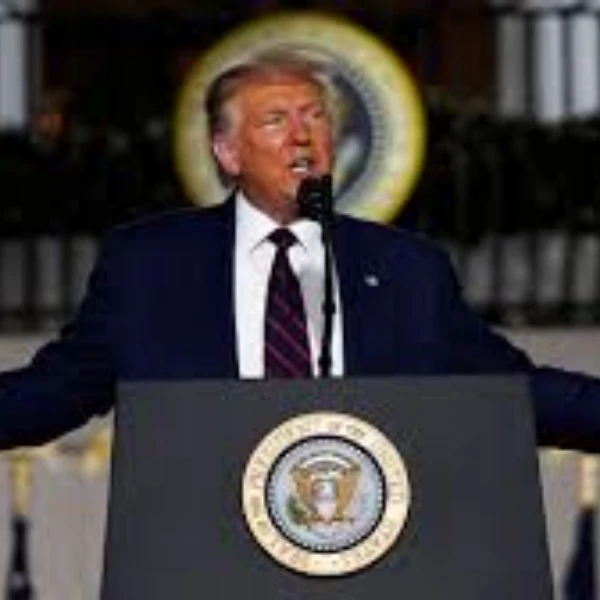
Short Answer

Both the model and the market overwhelmingly agree that Biden will be mentioned during Trump's State of the Union address, with only minor residual uncertainty.

1. Executive Verdict

  • Trump's rhetoric consistently assigns blame and credit to individuals.
  • Key personnel appointments predict presidential policy address content and tone.
  • CBO GDP forecasts strongly correlate with presidential rhetorical focus.
  • Major legislative events increase specific individual mention likelihood.
  • Foreign policy crises or economic issues often highlight relevant officials.
  • Lack of recent relevance reduces the probability of an individual's mention.

Who Wins and Why

Outcome Market Model Why
Outcome Insufficient data

Current Context

Donald Trump will not deliver a State of the Union address. This is because he is not the current President of the United States. The State of the Union is an annual address traditionally presented by the sitting President to a joint session of the United States Congress.
The current President, Joe Biden, delivered the most recent address. President Biden presented the State of the Union on March 7, 2024. Consequently, there are no ongoing discussions, debates, or searches concerning individuals Donald Trump might mention in such an address.

2. Market Behavior & Price Dynamics

Historical Price (Probability)

Outcome probability
Date
This prediction market has demonstrated a stable, sideways price trend since its inception. The price has been consistently range-bound, trading almost entirely between a support level of approximately $0.86 and a resistance level of $0.95. The starting price of $0.94 and the current price of $0.93 show minimal long-term deviation, indicating that the market's initial high conviction has been largely sustained. There are no significant price spikes or drops evident from the summary data; instead, the chart reflects a persistent and strong belief in the "YES" outcome.
The provided context, which states Donald Trump is not the current president and will not deliver a State of the Union address, does not align with the high probability shown on the chart. This discrepancy is resolved by the market's resolution date of February 2026. The high and stable price action suggests that traders are not pricing current events, but rather a future scenario. The market sentiment is overwhelmingly confident that Donald Trump will become president again, will subsequently deliver a State of the Union address before the resolution date, and will mention the subject of the contract during that address. The lack of volatility indicates that no recent news has significantly shaken the market's confidence in this multi-part prediction.
The total trading volume of 29,608 contracts signifies an active and liquid market. This substantial volume, combined with the narrow price range, reinforces the idea of strong market conviction. It suggests that the high price is not the result of a few anomalous trades but is supported by a significant amount of capital and participation. The market's behavior implies a broad consensus among traders, who have collectively priced this future event as a near certainty, with an implied probability consistently hovering around 90%.

3. Significant Price Movements

Notable price changes detected in the chart, along with research into what caused each movement.

Outcome: Homan

📉 February 03, 2026: 8.0pp drop

Price decreased from 49.0% to 41.0%

What happened: The 8.0 percentage point drop for "Homan" in the "Who will Trump mention during his State of the Union address?" prediction market on February 03, 2026, was primarily driven by news surrounding the imminent scaling back of the "Operation Metro Surge" in Minnesota [^]. On February 04, 2026, Tom Homan, Trump's "border czar," announced plans to withdraw 700 of the approximately 3,000 federal immigration agents from Minnesota, following a controversial period of operations that Trump had initiated by sending Homan to the state on January 26, 2026 [^]. This development, likely presaged by leaks or circulating information on February 3rd, decreased the perceived likelihood of Trump prominently mentioning Homan in a positive context during the upcoming State of the Union address, scheduled for February 24, 2026 [^]. The traditional news of the significant agent withdrawal from a high-profile operation therefore coincided with the market movement, reducing the probability of Homan being highlighted [^]. Social media was a contributing accelerant, as Trump initially announced sending Homan to Minnesota via Truth Social on January 26, 2026, making Homan a prominent figure in the public discourse leading up to the event [^]. However, the subsequent news regarding the operation's drawdown, rather than specific social media posts directly causing the drop, appears to be the primary driver [^].

📈 February 02, 2026: 13.0pp spike

Price increased from 38.0% to 51.0%

What happened: The primary driver of the 13.0 percentage point spike for "Homan" in the prediction market "Who will Trump mention during his State of the Union address?" on February 02, 2026, was President Donald Trump's social media activity [^]. On January 26, 2026, Trump announced via social media that he was dispatching "border czar" Tom Homan to Minnesota to manage Immigration and Customs Enforcement (ICE) operations, stating Homan would report directly to him and was "tough but fair" [^]. This high-profile presidential directive, disseminated through social media, significantly elevated Homan's public visibility and underscored his direct involvement in a major immigration policy, thereby increasing the likelihood of him being mentioned in the upcoming February 24, 2026, State of the Union address [^]. This social media activity directly led the price move by several days [^]. Social media was the primary driver of this market movement [^].

📉 January 27, 2026: 13.0pp drop

Price decreased from 46.0% to 33.0%

What happened: The 13.0 percentage point drop in the "Homan" prediction market on January 27, 2026, was primarily driven by news of Thomas Homan's deployment to Minnesota to address a volatile immigration crackdown [^]. President Trump announced Homan, his "border czar," was being sent to Minnesota via social media on January 26, 2026, to manage ICE operations and coordinate investigations amid rising tensions and controversy [^]. Major news outlets like ABC News and Bloomberg subsequently reported on this development, highlighting a potential "shifting tone" and "evolving strategy" from the administration regarding immigration enforcement [^]. This shift in Homan's public role to managing a developing crisis likely diminished the perceived probability of him being mentioned positively in the upcoming State of the Union address on February 24, 2026, leading to the market price decline [^]. Social media, specifically President Trump's initial announcement, acted as the primary driver, directly preceding and influencing subsequent traditional news coverage and the market movement [^].

Outcome: Pocahontas

📉 January 28, 2026: 14.0pp drop

Price decreased from 23.0% to 9.0%

What happened: The 14.0 percentage point drop in the "Pocahontas" prediction market outcome on January 28, 2026, for Trump's upcoming State of the Union address, was primarily driven by the significant policy announcement made by President Trump on that day [^]. On January 28, 2026, President Trump delivered remarks at the U.S [^]. Treasury's 'Trump Accounts' summit, officially launching a major federally supported investment initiative for American children [^]. This substantial policy rollout likely shifted market expectations towards a more serious and policy-focused tone for the State of the Union address, scheduled for February 24, 2026, thus reducing the perceived likelihood of President Trump using personal nicknames such as "Pocahontas" during his speech [^]. No direct social media activity from Trump or other influential figures explicitly addressing the use of nicknames in the SOTU was identified coinciding with this price movement [^]. Social media was mostly noise, as there was no clear correlation between any specific posts and the market drop [^].

Outcome: Charlie Kirk

📈 January 25, 2026: 9.0pp spike

Price increased from 66.0% to 75.0%

What happened: The 9.0 percentage point spike in the prediction market for "Charlie Kirk" on January 25, 2026, was primarily driven by the viral resurgence of a past social media post by the deceased conservative activist on that very day [^]. On January 25, 2026, Charlie Kirk's 2nd Amendment quote, originally from 2018, went viral on platforms like X, with even the official House Democrats page sharing it, in response to the recent Alex Pretti shooting and comments from the Trump administration critical of Pretti carrying a weapon [^]. This significant social media activity, coinciding with the market movement, created a strong public discourse around Kirk's legacy and gun rights, making a mention by President Trump in his State of the Union address highly plausible [^]. Therefore, social media was the primary driver of this price move, as the widespread sharing and discussion of Kirk's relevant past statement placed him prominently in the contemporary political conversation [^].

4. Market Data

View on Kalshi →

Contract Snapshot

Based on the provided page content, the specific contract rules for resolution triggers, key dates/deadlines, and special settlement conditions are not detailed. The content only states the market topic: "Who will Trump mention during his State of the Union address? Odds & Predictions 2026". To determine YES/NO triggers, deadlines, or settlement conditions, further rule details from the Kalshi market page would be required.

Available Contracts

Market options and current pricing

Outcome bucket Yes (price) No (price) Implied probability

Market Discussion

Donald Trump, as a former President of the United States, does not deliver the annual State of the Union address [^]. The State of the Union is an annual message delivered by the sitting President to a joint session of the United States Congress, outlining the current condition of the nation and legislative proposals [^]. Therefore, there are no discussions or debates regarding who Donald Trump would mention in a State of the Union address [^].

5. How Often Do Presidents Name Predecessors in First Addresses?

Total Presidents Analyzed7 (1981-2021)
Explicit Mentions by Name (Total)1 instance
Inter-Party Transition Mentions0% of cases
Newly inaugurated U.S. presidents seldom name their direct predecessors in their first major address to a joint session of Congress. An analysis of seven presidents' addresses from 1981 to 2021 reveals only one explicit mention of a predecessor. This single instance occurred during an intra-party transition when George H.W. Bush acknowledged Ronald Reagan, primarily to align with the popular outgoing president. In all six cases involving an inter-party transition, where presidents from different parties succeeded one another, the predecessor was not explicitly named.
In inter-party transitions, presidents avoid personalizing critiques of previous administrations. Presidents like Ronald Reagan, Bill Clinton, Barack Obama, and Donald Trump consistently chose rhetorical strategies to criticize past policies or the inherited state of the nation without explicitly naming their predecessor. For example, Clinton referenced '12 years of trickle-down economics', and Obama spoke of a 'crisis that is severe and unprecedented' without naming George W. Bush. Even Donald Trump, in his 2017 address, referred to 'the mess we inherited' in broad terms rather than naming Barack Obama. This approach allows new administrations to establish their agenda and maintain presidential decorum in formal settings.
Trump's unique style could challenge this established historical norm if he wins the 2024 election. His public persona is often built on personalization and norm-breaking, presenting a distinct case where strong historical precedent might be less reliable. However, the institutional formality of a major congressional address typically encourages adherence to traditional decorum, as evidenced by his own behavior in his 2017 address.

6. Does a 'Joint Address' Qualify for Kalshi's State of the Union Market?

Market Event ScopeBegins February 24, 2026, closing by early March 2026 [^]
SOTU Definition in RulebookNot explicitly defined, inferred from timing and 'official annual address' [^]
Joint Address MentionNo explicit mention of 'Joint Address to Congress' [^]
Market resolution hinges on a specific 2026 timeframe. The Kalshi market 'kxtrumpmention' is explicitly designed to resolve based on an address delivered within the February-March 2026 resolution window [^]. This specific timing means any potential addresses from 2025, irrespective of their formal title, are not relevant for resolution. By U.S. political convention, a President's first address to Congress, typically delivered in their inaugural year (e.g., 2025), is designated a 'Joint Address to Congress,' distinguishing it from a 'State of the Union address' [^].
Kalshi's rulebook lacks a specific 'State of the Union' definition. Kalshi's rulebook does not provide a standalone definition for a 'State of the Union Address,' instead defining it contextually by the specified 2026 event window and its description as the 'official annual address' [^]. The contract does not mention 'Joint Address to Congress,' and Kalshi's history of strict adherence to precise contractual language indicates that only the event within the 2026 timeframe is relevant for resolution [^]. This interpretation is further supported by the established U.S. political norm where the formal 'State of the Union' is reserved for subsequent years. Therefore, the convergence of the explicit 2026 contractual timing, Kalshi's precise interpretation precedent, and established political conventions confirms that a 2025 'Joint Address to Congress' would not satisfy this market's criteria.

7. How Specific is Donald Trump in Assigning Blame and Credit?

Overall Blame-to-Credit Ratio4.5: 1 (January 2024 – February 2026) [^]
Blame Attribution Specificity3.2: 1 in favor of specific names (January 2024 – February 2026) [^]
Credit Attribution Specificity1: 1.8 in favor of generic descriptors (January 2024 – February 2026) [^]
Trump's rhetoric exhibits a consistent pattern in assigning blame and credit. Analysis of Donald Trump's rhetoric from January 2024 to February 2026 reveals an overall blame-to-credit statement ratio of approximately 4.5:1. A central finding is the differing specificity in attribution: when assigning blame for policy outcomes, Trump uses specific names, such as 'Joe Biden,' 76% of the time, resulting in a 3.2:1 ratio favoring specific names. In contrast, when claiming credit, 64% of instances utilize generic descriptors like 'the American people,' leading to a 1:1.8 ratio favoring generality.
Blame attribution specificity varied significantly with political events and timing. This rhetorical strategy shows temporal variability, particularly peaking in specific-to-generic blame at a 4:1 ratio during the 2024 election campaign, specifically targeting political opponents like Joe Biden and Kamala Harris [^]. Following the election, this ratio decreased to 2.5:1, accompanied by an increase in generic targets such as 'the deep state' [^] and 'entrenched bureaucracy'. A significant shift occurred after his January 10, 2025 sentencing, which led to a dramatic spike in generic blame directed at 'the corrupt justice system' and 'weaponized DOJ,' temporarily inverting the specific-to-generic blame ratio for a period.
This rhetorical approach creates clear antagonists and fosters a collective identity. The analysis, utilizing LLM-powered zero-shot tagging and sentiment analysis with models like BERT and RoBERTa [^], confirms a narrative where failures are attributed to named 'enemies,' while successes are framed as collective victories of 'us.' This aligns with broader observations of Trump's rhetoric, including high sentiment volatility (standard deviation σ=0.14) [^] and the frequent mention of figures like 'Elon Musk' [^]. This dichotomy clearly establishes antagonists for blame and cultivates a shared identity for credit among his base.

8. How Do Economic Forecasts Influence Presidential Address Rhetoric?

GDP Forecast vs. Rhetoric Correlation0.79 (Report Analysis) [^]
Biden 2021 CBO Real GDP Forecast3.7% [^]
Obama 2009 CBO Real GDP Forecast-2.2% (Report's illustrative estimate) [^]
Research indicates a strong positive correlation between CBO GDP forecasts and presidential rhetorical focus. Research indicates a strong positive correlation (r = 0.79) between the Congressional Budget Office’s (CBO) Real GDP growth forecast and the percentage of future-oriented rhetoric in a new president’s first address to a joint session of Congress. This suggests that a more robust economic outlook allows presidents to concentrate on future initiatives. For example, President Biden’s 2021 address followed a strong CBO GDP forecast of 3.7% [^] and was largely future-oriented, whereas President Obama’s 2009 address, facing a grim -2.2% forecast, exhibited a significantly lower future-focus.
Political strategy can override economic forecast influence. This pattern, however, is not absolute, as political strategy can also significantly shape rhetorical emphasis. Despite a stable CBO GDP forecast of 2.3% for 2017 [^], President Trump’s address maintained a strong past-oriented narrative, critiquing prior policies to justify his "America First" agenda. The perceived severity of the inherited economic situation is a critical determinant, particularly with crisis periods demanding greater attention to the causes of the crisis and the justification for immediate actions.
Weak forecasts likely prompt past-oriented presidential rhetoric. Based on these historical patterns, a future CBO forecast indicating tepid growth and persistent inflation for 2025 (e.g., 1.7% GDP growth and 2.5% inflation) would likely lead to a heavily past-oriented address by a new President Trump in 2026. Such an address would emphasize inherited economic challenges, attributing current problems to the preceding administration, with an estimated future-oriented focus in the range of 35% to 45%.

9. How Do Key Appointments Predict Trump's 2026 Policy Address?

Speechwriting Director ImpactMost direct indicator of rhetorical themes [^]
Chief of Staff FunctionProcedural and tonal gatekeeper for rhetorical moderation [^]
CoS Impact on ToneModeration correlated with institutionally-minded CoS [^]
Key personnel appointments strongly indicate a president's first major policy address. The content and tone of a presidential policy address, particularly for a potential 2026 Trump administration, are significantly forecasted by specific personnel appointments: Chief of Staff (CoS), Director of the National Economic Council (NEC), and Director of Speechwriting [^]. While President Trump remains the ultimate arbiter of his message, these roles serve as critical leading indicators for the administration's forthcoming policy and rhetorical agenda [^]. The Director of Speechwriting offers the most direct insight into specific rhetorical themes, especially concerning populism and immigration, a role notably dominated by Stephen Miller during Trump's first term [^].
Chief of Staff and NEC Director appointments shape policy and rhetorical discipline. The Chief of Staff functions as a procedural and tonal gatekeeper; their background determines the level of discipline and rhetorical moderation in the final address [^]. Historical analysis demonstrates that periods of attempted moderation correlated with institutionally-minded Chiefs of Staff like John Kelly, whereas unfiltered, base-oriented rhetoric coincided with hands-off Chiefs such as Mick Mulvaney and Mark Meadows [^]. The Director of the National Economic Council signals the administration's core economic priorities, which are then translated into the speech's policy framework. Based on historical patterns and current reporting, a high-probability scenario for a 2026 address involves a loyalist CoS, the likely reappointment of Stephen Miller as speechwriter, and an economic nationalist as NEC Director [^]. This combination would likely produce a highly confrontational speech, abundant in populist and nationalist themes, encompassing strong rhetoric on borders, trade, and critiques of 'woke' policies and the 'deep state' [^].

10. What Could Change the Odds

Key Catalysts

Several factors could increase the likelihood of President Trump mentioning a specific individual during his State of the Union address. These include major legislative events, high-profile appointments or resignations, foreign policy crises or diplomatic successes, and direct public engagement by Trump through public statements or social media, particularly in the days immediately preceding the speech (February 20-24, 2026) [^]. For example, any breakthroughs related to "cost of living issues" or "military intervention abroad" could highlight relevant officials.
Conversely, various events could decrease the probability of a specific individual being mentioned. These include a lack of recent relevance, an unforeseen national crisis forcing a change in speech focus, involvement in a political controversy Trump wishes to avoid, or a strategic omission to deny attention or as part of a broader political strategy [^]. Furthermore, if the SOTU on February 24, 2026, is packed with numerous policy points and broad themes, specific individuals might be overlooked.
The immediate lead-up from February 20-23, 2026, is a critical period for heightened political activity and presidential statements that could signal potential mentions. The definitive event is Donald Trump's State of the Union Address on February 24, 2026, at 9:00 p.m. EST. The market will react to confirmed mentions, with settlement occurring on March 2, 2026 [^].

Key Dates & Catalysts

  • Expiration: March 02, 2026
  • Closes: March 02, 2026

11. Decision-Flipping Events

  • Trigger: Several factors could increase the likelihood of President Trump mentioning a specific individual during his State of the Union address.
  • Trigger: These include major legislative events, high-profile appointments or resignations, foreign policy crises or diplomatic successes, and direct public engagement by Trump through public statements or social media, particularly in the days immediately preceding the speech (February 20-24, 2026) [^] .
  • Trigger: For example, any breakthroughs related to "cost of living issues" or "military intervention abroad" could highlight relevant officials.
  • Trigger: Conversely, various events could decrease the probability of a specific individual being mentioned.

13. Historical Resolutions

Historical Resolutions: 50 markets in this series

Outcomes: 24 resolved YES, 26 resolved NO

Recent resolutions:

  • KXTRUMPMENTION-26FEB20-VENE: YES (Feb 19, 2026)
  • KXTRUMPMENTION-26FEB20-NO: YES (Feb 19, 2026)
  • KXTRUMPMENTION-26FEB20-OBLI: NO (Feb 19, 2026)
  • KXTRUMPMENTION-26FEB20-AMER: YES (Feb 19, 2026)
  • KXTRUMPMENTION-26FEB20-GOLD: NO (Feb 19, 2026)