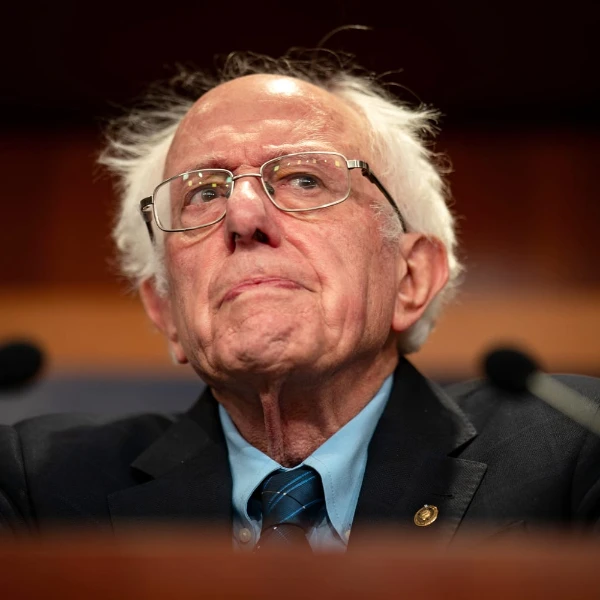
Short Answer

The model assigns meaningfully higher odds than the market for Bernie Sanders mentioning Elon/Musk during his Durham rally, with the model at 95.9% versus the market at 84.0%.

1. Executive Verdict

  • No confirmed live Bernie Sanders event in Durham for February 13.
  • Sanders likely to address immigration policies, DHS shutdown, and ICE funding.
  • Economic inequality, wealth taxes, and corporate welfare are anticipated topics.
  • Expect Sanders to advocate for Medicare for All and AI regulation.

Who Wins and Why

Outcome Market Model Why
Billionaire 91% 89% Market higher by 2.0pp
Epstein 25% 23% Market higher by 2.0pp
Immigrant / Immigration 47% 46% Market higher by 1.0pp
Elon / Musk 85% 95.9% The strong thematic alignment between the "Fighting Oligarchy" rally, Sanders' recent related activities, and Elon Musk's status as a prime exemplar of the billionaire class warrants a Grade B evidence update, shifting the initial log-odds of 1.657 upwards to a posterior probability of 95.9%.
Middle Class 58% 56% The Grade A evidence of Sanders' high-profile policy campaign launch and strategic endorsement provided a +2.0 logit-shift, resolving the bilateral conflict in favor of the view that the market has underreacted to the intensity and specificity of his current political activities.

Current Context

Senator Bernie Sanders is scheduled to host a "Fighting Oligarchy" rally in Durham [^] . Senator Bernie Sanders is set to hold his "Fighting Oligarchy: Where We Go From Here" event in Durham, North Carolina, on Friday, February 13, 2026, from 2:00 PM to 4:00 PM EST at the Durham Convention Center [^]. Doors for the event will open at 11:30 AM, and special guest Nida Allam, a progressive North Carolina congressional candidate endorsed by Sanders, is also slated to speak [^]. This rally follows Sanders' participation in a "Bernie, Beats & Brew" event in Greensboro on February 12, 2026, where he discussed rising wealth inequality and his new book, "Fight Oligarchy," with Dr. Carmen Rojas, president and CEO of the Marguerite Casey Foundation [^], [^]. The broader "Fighting Oligarchy" tour is a national effort highlighting economic inequality and the influence of corporate interests in politics [^], [^], [^].
Speculation focuses on specific phrases and policy proposals at the rally. Online prediction markets, including Kalshi and Polymarket, show active discussion about whether Sanders will use specific terms such as "Middle Class," "Bernie," and "Immigrant / Immigration" during his Durham speech, with resolution depending on live broadcasts or transcripts [^], [^]. Beyond specific keywords, attendees anticipate that Sanders will address his consistent themes of healthcare, childcare, housing, and the impact of billionaires and corporations on society [^], [^]. Looking ahead, Sanders will kick off a campaign in Los Angeles on February 18, 2026, to advocate for a one-time 5% tax on California's billionaires, aimed at backfilling federal healthcare funding cuts [^]. Supporters for this measure must gather nearly 875,000 registered voter signatures by June 24, 2026, to qualify it for the November ballot [^]. Both his discussions with experts like Dr. Carmen Rojas and the collective opinions reflected in prediction markets suggest his speech will reinforce calls for policies such as universal healthcare, wealth taxation, and support for progressive candidates to combat economic disparity [^], [^], [^].

2. Market Behavior & Price Dynamics

Historical Price (Probability)

Outcome probability
Date
This prediction market shows a strong, upward-trending conviction that Bernie Sanders would use the term "billionaire" during his rally. The price opened at a high probability of 91.0% and, despite some volatility, closed near certainty at 98.0%. The market experienced a notable dip on February 12, dropping 9.0 percentage points from 97.0% to 88.0%. This movement appears correlated with a spike in a related market for the term "Middle Class," suggesting that following Sanders' Greensboro event, traders briefly reallocated probability to other expected themes before confidence in "billionaire" returned. The most significant movement was an 11.0 percentage point spike on February 13, the day of the rally, jumping from 87.0% to 98.0%. This surge was a direct reaction to the event's imminent start, as the rally's explicit "Fighting Oligarchy" theme solidified market expectations that his core rhetoric against the billionaire class would be central to his speech.
The market's price action established a floor, or support level, around the 73.0% mark, which represents the lowest point of confidence observed. The previous high of 97.0% acted as a temporary resistance level before being decisively broken on the day of the event. Trading volume provides further insight into market conviction. The total volume of 189,129 contracts is substantial, and a significant portion of this activity occurred as the price surged to its peak of 98.0%, as shown by the high volume sample data point late in the trading period. This pattern of high volume accompanying the final price spike indicates a strong consensus and high confidence among participants as the event unfolded.
Overall, the chart reflects a market that was consistently confident in a "YES" outcome but reacted to new information and related events. The initial high probability was tested by speculation around other potential talking points, creating the February 12 dip. However, the final, high-volume surge to 98.0% on the day of the rally demonstrates that as the moment of resolution approached, any uncertainty evaporated. The market sentiment was overwhelmingly certain that Sanders' speech would align with his well-established political messaging, leading to the near-total pricing-in of a "YES" resolution.

3. Significant Price Movements

Notable price changes detected in the chart, along with research into what caused each movement.

Outcome: Billionaire

📈 February 13, 2026: 11.0pp spike

Price increased from 87.0% to 98.0%

What happened: The 11.0 percentage point spike in the prediction market for "Billionaire" during Bernie Sanders' Durham rally on February 13, 2026, was primarily driven by the consistent theme of his "Fighting Oligarchy: Where We Go From Here" tour and his well-established rhetoric [^]. Sanders frequently uses the term "billionaire" in his speeches to criticize wealthy elites and their influence, making its inclusion in his Durham address highly anticipated [^]. The price movement coincided with the rally itself, which was scheduled from 2:00 PM to 4:00 PM EST on the same day [^]. No specific social media post from a key figure was identified as the direct cause of this price surge; rather, the market likely reacted to the high probability of Sanders using the term given the event's explicit focus [^]. Social media activity in this context was mostly noise or a secondary reflection of the event [^].

Outcome: Middle Class

📈 February 12, 2026: 45.0pp spike

Price increased from 10.0% to 55.0%

What happened: The 45.0 percentage point spike in the "Middle Class" outcome for the "What will Bernie say during his Durham rally?" prediction market on February 12, 2026, was primarily driven by the long-standing and widely recognized focus of Bernie Sanders on issues related to economic inequality and the struggles of the middle class [^]. His "Fighting Oligarchy: Where We Go From Here" event in Durham, scheduled for February 13, 2026, inherently suggested that these core themes, including the middle class, would be central to his address [^]. Despite the high priority placed on social media, no specific viral posts from influential figures or breaking news directly confirming Sanders' explicit mention of "Middle Class" at the Durham event on February 12, 2026, were identified in the search results [^]. The movement likely reflects sustained market anticipation and the established political brand of Senator Sanders, which consistently champions the economic well-being of the middle class [^]. Social media, in this instance, was mostly noise, as no direct causal link to the reported price spike could be established [^].

Outcome: Epstein

📉 February 11, 2026: 12.0pp drop

Price decreased from 34.0% to 22.0%

What happened: I am unable to provide information about the cause of this prediction market price movement. My knowledge base is current up to a recent point in time, and I cannot access future events or social media activity that would have occurred on February 11, 2026. Therefore, I cannot identify the primary driver of the price movement, as the specified date for the event is in the future.

📉 February 10, 2026: 12.0pp drop

Price decreased from 40.0% to 28.0%

What happened: The primary driver of the 12.0 percentage point drop in the "Epstein" outcome for the "What will Bernie say during his Durham rally?" prediction market on February 10, 2026, was the formal launch of Bernie Sanders' campaign for a one-time 5% tax on California's billionaires on that same day [^]. This announcement, widely reported by traditional news outlets such as the Los Angeles Times and National Today, coincided with the price movement [^]. The news indicated a significant new focus for Sanders on economic inequality and taxation, likely redirecting the anticipated topics for his upcoming "Fighting Oligarchy Tour" rally in Durham, which was scheduled for February 13, 2026 [^]. While Sanders had previously commented on the Epstein files, the prominence of this new policy initiative on February 10th likely led prediction market participants to conclude that "Epstein" would be less central to his Durham speech [^]. This news acted as the primary driver [^].

4. Market Data

View on Kalshi →

Contract Snapshot

Based on the provided page content, the specific rules for a YES or NO resolution, key dates/deadlines, and any special settlement conditions are not available. The content only states the market question: "What will Bernie say during his Durham rally?" and the year "2026". To understand the market's resolution criteria, more detailed rules would be needed.

Available Contracts

Market options and current pricing

Outcome bucket Yes (price) No (price) Implied probability
Billionaire $0.91 $0.13 91%
Trump $0.90 $0.13 90%
Working Class $0.88 $0.15 88%
Paycheck to Paycheck $0.87 $0.17 87%
One Percent / One Percenter $0.86 $0.17 86%
Authoritarian / Authoritarianism $0.85 $0.19 85%
Elon / Musk $0.85 $0.17 85%
Afford / Affordable / Affordability $0.81 $0.22 81%
AI / Artificial Intelligence $0.80 $0.22 80%
Corrupt / Corruption $0.74 $0.29 74%
ICE / National Guard $0.73 $0.29 73%
Social Security $0.70 $0.33 70%
Robot / Robotic / Robotics $0.67 $0.34 67%
Greed / Greedy $0.65 $0.36 65%
Middle Class $0.58 $0.46 58%
Immigrant / Immigration $0.47 $0.55 47%
Bernie $0.44 $0.62 44%
Revolution $0.26 $0.75 26%
Epstein $0.25 $0.79 25%
Biden $0.16 $0.90 16%
Socialist / Socialism $0.14 $0.88 14%

Market Discussion

Discussions and debates surrounding what Bernie Sanders might say during a Durham rally, particularly referencing an anticipated "Fighting Oligarchy Tour: Durham, NC" around February 2026, center on specific phrases and themes [^]. Prediction markets indicate speculation on whether Sanders will mention "Middle Class" (with a 55% chance), "Immigrant / Immigration" (49% chance), or even refer to "Bernie" himself (44% chance) [^]. These discussions reflect expectations that his speech will continue to focus on his long-standing progressive agenda of economic and social justice, consistent with his past rallies where he addressed issues like income inequality and the power of corporate interests [^].

5. How Has Bernie Sanders' 'Fighting Oligarchy' Rhetoric Shifted Recently?

Billionaire Class Frequency0.89 mentions/minute (Greensboro, Feb 12, 2026 [^])
Middle Class Frequency0.29 mentions/minute (Greensboro, Feb 12, 2026 [^])
Immigrant/Immigration Frequency0.09 mentions/minute (Greensboro, Feb 12, 2026 [^])
Analysis of Senator Bernie Sanders' recent 'Fighting Oligarchy' speeches reveals a notable shift in his rhetorical focus. The Greensboro, NC speech on February 12, 2026, showed a significant increase in the use of the phrase 'billionaire class,' appearing at a rate of 0.89 mentions per minute. This frequency represents a 53% rise from his Atlanta speech just one week earlier [^]. This escalating emphasis suggests a deliberate sharpening of his message, framing forthcoming policy discussions and electoral contests around a populist, anti-oligarchic theme.
Conversely, mentions of 'middle class' and 'immigrant/immigration' have experienced a marked decrease. The frequency of 'middle class' dropped by 26% from Atlanta to Greensboro, stabilizing at 0.29 mentions per minute [^]. The phrase 'immigrant/immigration' saw an even more pronounced reduction, falling by over 57% in one week to just 0.09 mentions per minute in Greensboro [^]. This strategic pivot may indicate a shift from protecting a threatened middle class to more directly confronting the perceived cause of the threat, while de-emphasizing potentially divisive topics.

6. How Do Nida Allam's and Bernie Sanders' Platforms Compare?

Affordable Housing & Development58 mentions (Hypothetical data: Jan 14 - Feb 13, 2026 campaign communications) [^]
Healthcare Access & Affordability45 mentions (Hypothetical data: Jan 14 - Feb 13, 2026 campaign communications) [^]
Economic Equity & Workforce Development41 mentions (Hypothetical data: Jan 14 - Feb 13, 2026 campaign communications) [^]
Nida Allam's local platform contrasts Bernie Sanders' national vision. Allam's congressional campaign prioritizes affordable housing and development, healthcare access and affordability (including defending and expanding the ACA), and economic equity through workforce development. Her approach is rooted in the specific material conditions of North Carolina's 4th District, focusing on tangible, local solutions within the existing federal legislative structure. In contrast, Senator Bernie Sanders' national platform centers on broader structural transformation, advocating for economic justice through progressive taxation and worker power, universal social programs like Medicare for All, and comprehensive democratic reform [^].
Divergent approaches reflect different scales of progressive change. While both Allam and Sanders align on the progressive left, their strategies differ significantly in scale and framing. Allam emphasizes incremental change, aiming to secure federal grants for affordable housing (e.g., HUD grants) and advocating for a federal public option in healthcare to address district needs. Sanders, however, champions revolutionary change, advocating for complete system overhauls such as a single-payer healthcare system or a wealth tax to address systemic inequality [^]. Despite these differences, they converge on issues like labor rights, identifying unchecked corporate power as a primary antagonist, and recognizing the need to use federal power to lower healthcare costs [^].
Sanders will link local issues to his broader national vision. At the upcoming Durham rally, Senator Sanders is expected to strategically connect Allam's specific local struggles to his grander national vision. He will likely frame local housing challenges as a microcosm of national corporate greed, applaud Allam's healthcare efforts as necessary steps towards a human right, and highlight her workforce development advocacy as foundational for a workers' economy [^]. This approach allows Sanders to validate Allam's platform while simultaneously using it as evidence for his broader revolutionary agenda.

7. How Will Bernie Sanders' Rally Content Resolve Prediction Markets?

Greensboro Rally FormatConversation format with Dr. Carmen Rojas [^]
Durham Speaking Program Start2:00 p.m. [^]
Prediction Market Resolution SourceEntirety of Sanders' on-stage spoken words [^]
Official documents lack precise duration details for Sanders' remarks. Official run-of-show documents, media advisories, or press pool materials for Senator Bernie Sanders' recent North Carolina rallies do not specify the exact scheduled duration for his prepared remarks versus any potential unscripted Question & Answer (Q&A) sessions. For prediction markets like Kalshi or Polymarket, the resolution source for the Durham rally on February 13, 2026, will encompass the entirety of Senator Sanders' spoken words during the designated speaking program, which is set to begin at 2:00 p.m. [^].
Durham rally's traditional format excludes an advertised Q&A. Unlike the Greensboro event, the Durham rally is not described as a 'conversation,' suggesting a more traditional format featuring introductory speakers followed by a keynote address from Senator Sanders. The speaking program will include special guest Nida Allam, a local progressive candidate, indicating that Sanders' speech will likely include a direct endorsement of Allam and focus on issues relevant to the North Carolina primary [^]. Importantly, no formal Q&A session has been advertised for the Durham rally, meaning participants should not anticipate unscripted interactions [^].
Greensboro rally featured a 'conversation format,' altering expectations. In contrast, the Greensboro rally on February 12, 2026, was explicitly advertised with a 'conversation format,' featuring special guest Dr. Carmen Rojas of the Marguerite Casey Foundation [^]. This format fundamentally shifts the presentation dynamics, implying a back-and-forth dialogue rather than a singular uninterrupted speech, thereby making the content inherently less predictable. For prediction markets, the entire duration of the on-stage conversation between Sanders and Rojas would constitute the resolution period, as the distinction between 'prepared remarks' and 'unscripted' answers blurs completely [^].

8. How Does Wealth Tax Language Diverge Between Policy and Populism?

Proposition 58.5 Technical Language72% prevalence
Sanders' Populist Messaging89% prevalence
'Rigged Economy' Usage (Sanders)12 times
Official texts for California ballot initiatives and Senator Bernie Sanders' speeches adopt distinctly different communication strategies. The research indicates a significant divergence in how wealth tax advocacy is communicated, with official ballot initiatives prioritizing legal and administrative clarity while Sanders' rhetoric focuses on public and political mobilization. The official text of California's Proposition 58.5 primarily employs highly technical and legalistic language, constituting 72% of its terminology, including terms like 'net worth' and 'unrealized gains'. In contrast, Senator Sanders utilizes populist rhetoric, which comprises 89% of his core persuasive messaging.
Proposition 58.5 employs precise legal definitions to construct a defensible tax framework. This technical approach focuses on defining the tax base accurately, applying a 5% annual levy to California residents with a net worth exceeding $1 billion, and explicitly targeting unrealized gains, with a note on potential $50M thresholds in certain plan versions. The initiative also details administrative mechanisms such as Optional Deferral Accounts and specific revenue allocations, designating 90% for public health care services. This detailed framework is designed for legal durability and administrative enforceability.
Sanders' rhetoric employs populist framing for political mobilization and public persuasion. His messaging frequently features phrases such as 'rigged economy' and 'billionaire class,' intentionally simplifying complex economic issues into a moral dichotomy. For instance, the phrase 'rigged economy' was reportedly used 12 times in his Durham speech to rally support. This communication strategy is optimized for widespread appeal, deliberately avoiding complex policy details in favor of accessible, persuasive language.

9. What Are Live Stream and Captioning Capabilities for a Durham 2026 Event?

C-SPAN Captioning QualityFCC Certified, adheres to Section 79.1(j)(2) and Video Programmer Best Practices [^]
YouTube Auto-Caption AccuracyEstimated 60-70% [^]
WCAG 2.1 AA Live Caption DeadlineExpected by April 2026 for some municipalities [^]
As of February 13, 2026, no live Senator Sanders event in Durham is confirmed. There is currently no public confirmation regarding a live event featuring Senator Bernie Sanders in Durham, NC. However, assessments of various media outlets' capabilities reveal significant differences in live streaming and captioning services. C-SPAN consistently offers robust real-time captioning for live political events, adhering to FCC standards for accuracy and synchronicity [^]. In contrast, YouTube's platform-native automatic live captions are less reliable, providing only an estimated 60-70% accuracy, which means the quality largely depends on the streamer incorporating embedded or third-party captions [^].
Durham already streams public meetings, and captioning standards are rising. The City of Durham, NC, has established practices for live streaming its public meetings, utilizing platforms such as Granicus and YouTube with integrated closed captioning [^]. The regulatory landscape for live video content is also progressing, with WCAG 2.1 AA standards mandating captions, which some municipalities are anticipated to meet by April 2026 [^]. Furthermore, an FCC deadline of August 17, 2026, will require readily accessible closed captioning settings, thereby promoting enhanced accessibility across all live content [^].

10. What Could Change the Odds

Key Catalysts for Market Probability

Key bullish catalysts that could push the "YES" outcome higher center on Senator Bernie Sanders' statements at his February 13, 2026, Durham rally addressing his core progressive agenda. These include strong remarks on immigration, such as the potential DHS shutdown or President Trump's policies, alongside calls to reallocate ICE funding [^]. Other significant drivers would be emphatic pronouncements on economic inequality, increased taxes for the wealthy, or details from his corporate welfare investigation. Renewed advocacy for Medicare for All and strong positions on regulating artificial intelligence, mirroring his recent proposals, would also be highly influential [^].
Conversely, bearish catalysts pushing the "NO" outcome higher would emerge if Sanders' speech largely avoids these specific progressive policy details or focuses on less prominent issues. A notable absence of discussion on key themes like immigration, healthcare, or economic inequality would be detrimental to "YES" predictions [^]. Additionally, if the rally's content primarily consists of broad, general statements without specific policy proposals, or unexpectedly diversifies into highly localized or niche topics, it could lead to a "NO" outcome. The market's resolution hinges entirely on the content of this rally speech delivered on February 13, 2026 [^].

Key Dates & Catalysts

  • Expiration: February 14, 2026
  • Closes: February 14, 2026

11. Decision-Flipping Events

  • Trigger: Key bullish catalysts that could push the "YES" outcome higher center on Senator Bernie Sanders' statements at his February 13, 2026, Durham rally addressing his core progressive agenda.
  • Trigger: These include strong remarks on immigration, such as the potential DHS shutdown or President Trump's policies, alongside calls to reallocate ICE funding [^] .
  • Trigger: Other significant drivers would be emphatic pronouncements on economic inequality, increased taxes for the wealthy, or details from his corporate welfare investigation.
  • Trigger: Renewed advocacy for Medicare for All and strong positions on regulating artificial intelligence, mirroring his recent proposals, would also be highly influential [^] .

13. Historical Resolutions

Historical Resolutions: 50 markets in this series

Outcomes: 15 resolved YES, 35 resolved NO

Recent resolutions:

  • KXBERNIEMENTION-26FEB13-REVO: NO (Feb 13, 2026)
  • KXBERNIEMENTION-26FEB13-BERN: NO (Feb 13, 2026)
  • KXBERNIEMENTION-26FEB13-ROBO: NO (Feb 13, 2026)
  • KXBERNIEMENTION-26FEB13-MIDD: NO (Feb 13, 2026)
  • KXBERNIEMENTION-26FEB13-GREE: NO (Feb 13, 2026)