Short Answer

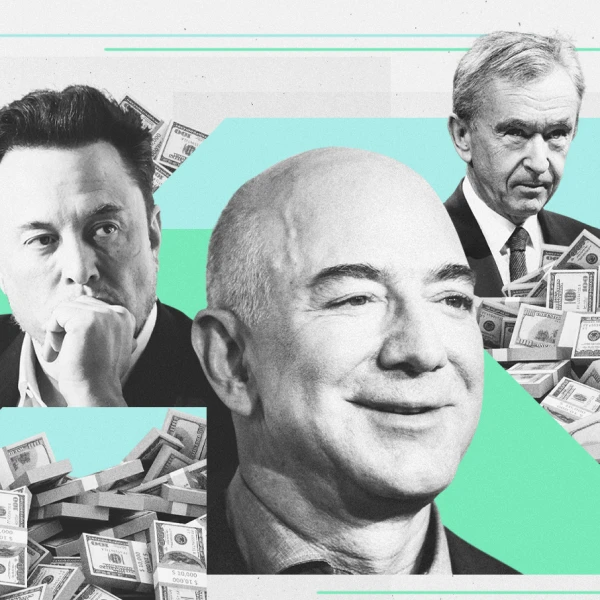
Both the model and the market expect Elon Musk to be the world's first trillionaire, with no compelling evidence of mispricing.

1. Executive Verdict

  • SpaceX and xAI merged with a $1.25 trillion valuation in early 2026.
  • SpaceX targets a multi-trillion-dollar IPO by mid-to-late 2026.
  • Elon Musk's substantial 2018 Tesla compensation package was fully reinstated.
  • Nvidia's data center growth significantly fuels Jensen Huang's wealth.
  • The AI revolution is projected to generate $15.7 trillion by 2030.

Who Wins and Why

Outcome Market Model Why
Elon Musk 90.0% 92.0% Elon Musk maintains his lead through high-growth ventures like Tesla and SpaceX.
Jensen Huang 5.0% 2.7% Jensen Huang benefits from NVIDIA's strong performance and dominance in the rapidly growing AI market.
Jeff Bezos 4.0% 2.3% Jeff Bezos's substantial stake in Amazon and investments like Blue Origin support his wealth.
Larry Ellison 2.0% 1.0% Larry Ellison's substantial stake in Oracle continues to be a primary driver of his wealth.
Sam Altman 1.0% 0.3% Sam Altman's position leading OpenAI in the burgeoning AI industry offers substantial future wealth prospects.

Current Context

Elon Musk is currently at the forefront of discussions regarding the world's first trillionaire, with significant developments in recent weeks indicating he is nearing this milestone. As of February 2026, his net worth is widely reported to be between $849 billion and $852 billion, marking him as the first person to exceed the $800 billion threshold [^]. A major catalyst for this recent surge is the acquisition of his artificial intelligence firm, xAI, by SpaceX, a deal that reportedly valued the combined entity at $1.25 trillion [^]. Musk's approximately 43% ownership in the merged firm contributes over $530 billion to his fortune [^]. Tesla's continued strong performance, where he holds around a 12% stake, also remains a key driver of his wealth [^]. His net worth saw an estimated $244 billion increase in a single month earlier in 2026, primarily due to SpaceX's private valuation and restored Tesla stock options, representing a nearly 30-fold growth since 2020 [^].
Prediction markets widely anticipate Musk's trillionaire status, while other contenders trail significantly behind. Platforms like Kalshi assign high probabilities for Musk to become a trillionaire as early as 2026, with estimates ranging from 75% odds this year to a near-certain chance before 2029 [^]. Polymarket, based on December 2025 data, indicated a 53% probability for him to reach this status before 2027 [^]. Key data points people monitor include Musk's current net worth, the $1.25 trillion valuation of SpaceX after its merger with xAI, and Tesla's market capitalization, which has climbed above $1.5 trillion [^]. While Elon Musk dominates recent discussions, other individuals frequently mentioned as potential future trillionaires include Jeff Bezos, Larry Page, Sergey Brin, Mark Zuckerberg, Larry Ellison, Bernard Arnault, and Jensen Huang [^]. However, their current net worths, as of February 2026, generally fall within the $150 billion to $270 billion range, placing them considerably behind Musk [^].
Experts foresee a trillionaire emerging soon, raising important societal and economic concerns. Many economists and financial analysts believe the emergence of a trillionaire, particularly Elon Musk, is imminent, possibly as early as 2026 or 2027 [^]. David Himelfarb, a managing partner at Himelfarb Proszanski LLP, views this prospect not merely as an economic milestone but as "a warning sign about the fundamental imbalance in how we value work in our society" [^]. Artificial intelligence is consistently cited as a major driver of future wealth accumulation [^]. Billionaire Mark Cuban predicted in July 2025 that the world's first trillionaire would come from someone who masters AI, potentially "some dude in a basement," rather than established tech giants [^]. Barclays analysts project the "Physical AI" market, encompassing robots and robotaxis like Tesla's Optimus, could reach $1 trillion by 2035, significantly boosting companies such as Tesla and Nvidia [^]. A potential SpaceX public offering (IPO) is frequently mentioned as a critical event that could substantially increase Musk's net worth, with some analysts projecting his fortune could exceed $1.5 trillion under favorable market conditions [^]. Musk himself has stated his net worth is almost entirely tied to his ownership stakes in Tesla and SpaceX, with less than 0.1% as cash, highlighting that much of his wealth is "paper rich, cash poor" [^]. Experts discuss the "ripple effects worldwide across commerce, finance, culture, and human equity" a trillionaire would have, potentially triggering a "massive societal backlash" due to economic equity concerns [^]. Oxfam International, in November 2024, projected at least five trillionaires within the next decade, cautioning about wealth concentration [^]. Upcoming events like a potential SpaceX IPO in 2026, continued strong performance of Tesla stock, and growth in Musk's AI ventures (xAI, Optimus robots) are ongoing factors influencing his wealth trajectory [^]. Economic forecasts for 2026 predict strong growth in the global AI market, potentially reaching $312 billion to $539 billion, fueling wealth accumulation in related sectors, alongside a generally positive global economic outlook with steady growth and rising equity markets, particularly in the US [^]. Concerns also persist about the implications for democratic governance and the potential for a "trillionaire tax" [^].

2. Market Behavior & Price Dynamics

Historical Price (Probability)

Outcome probability
Date
This prediction market has exhibited a sideways trading pattern, consolidating within a well-defined and narrow range between $0.81 and $0.92. The price has consistently found strong support near the $0.81 level, indicating a floor where buying interest has historically prevented further declines. Conversely, the $0.92 mark has served as a firm resistance ceiling, capping upward momentum. The market opened at $0.83 and is currently trading at $0.85, reinforcing the overall lack of a sustained directional trend. This price action suggests a mature market where participants have reached a strong consensus, with the probability of a "YES" outcome remaining consistently high throughout its history.
The market sentiment is one of confident and stable expectation. The recent fundamental developments, specifically the news of the SpaceX and xAI merger boosting Elon Musk's net worth to approximately $850 billion in February 2026, have not caused a dramatic breakout but have instead served to solidify the price at the higher end of its established range. This indicates that traders had already priced in a very high likelihood of this outcome, and the news acted as a confirmation of existing beliefs rather than a catalyst for a significant re-evaluation. The total traded volume of 12,884 contracts points to a reasonably liquid market, but the absence of major volume spikes alongside the positive news flow suggests that conviction is high and the outcome is largely seen as inevitable, with the price primarily reflecting the small time-based risk remaining before the 2030 resolution.

3. Market Data

View on Kalshi →

Contract Snapshot

Based solely on the provided page content:

This market resolves to YES if someone becomes the world's first trillionaire. It resolves to NO if this event does not occur. The market's timeframe is associated with the year 2030. No specific definitions for "trillionaire" or "first," nor any special settlement conditions, are detailed in the provided text.

Available Contracts

Market options and current pricing

Outcome bucket Yes (price) No (price) Implied probability
Elon Musk $0.90 $0.15 90%
Jensen Huang $0.05 $0.97 5%
Jeff Bezos $0.04 $0.97 4%
Larry Ellison $0.02 $0.99 2%
Larry Page $0.02 $0.99 2%
Bernard Arnault & family $0.01 $1.00 1%
Mark Zuckerberg $0.01 $1.00 1%
Sam Altman $0.01 $1.00 1%
Steve Ballmer $0.01 $1.00 1%
Sergey Brin $0.01 $1.00 1%
Warren Buffett $0.01 $1.00 1%

Market Discussion

The discussion surrounding the world's first trillionaire heavily points towards Elon Musk as the most likely candidate, with several prediction markets and expert opinions suggesting he could reach this milestone as early as 2026 or 2027, primarily driven by the growth of SpaceX and Tesla, particularly after the SpaceX-xAI merger [^]. While others like Jeff Bezos, Jensen Huang, and Mark Zuckerberg are also mentioned as possibilities, there is debate on social media about the feasibility of such rapid wealth accumulation, with some questioning the ethical implications of extreme wealth inequality and others suggesting the first trillionaire might emerge from breakthroughs in AI [^]. Musk himself has noted that his net worth is largely tied to company ownership rather than liquid assets, benefiting employees and investors as well [^].

4. What is the Post-Merger Valuation of SpaceX-xAI in Secondary Markets?

Internal Merger Valuation$1.25 trillion [^]
Post-Merger Implied Share Price$526.59 per share [^]
Current Secondary Market Share Price$587.07 [^]
The SpaceX and xAI merger established a $1.25 trillion valuation. This combined entity valuation, set in early February 2026, was internally negotiated, with SpaceX valued at approximately $1 trillion and xAI at $250 billion [^]. The merger implied a common stock price of $526.59 per share [^] and utilized a tax-free triangular merger structure [^]. This integration aimed to combine SpaceX's space infrastructure with xAI's advanced AI models, seeking significant synergies such as orbital data centers [^].
Secondary markets indicate a significant premium over this initial valuation. As of February 19, 2026, shares of the combined entity were trading at $587.07 on platforms like Forge Global [^], representing an 11.5% premium compared to the merger's implied price. Furthermore, active buyer interest has been reported at approximately $675 per share [^], indicating a 28.2% premium. This robust secondary market activity projects the combined SpaceX/xAI entity's valuation to be in the range of $1.39 trillion to $1.60 trillion for its next significant transaction.
Pre-IPO anticipation primarily drives the projected valuation difference. Institutional investors are actively seeking to secure positions ahead of a potential Initial Public Offering (IPO) targeted for June 2026, which is estimated to value the company at $1.5 trillion [^]. This strong investor appetite, coupled with the scarcity of available private shares in the technology and AI sectors, contributes to the observed premium. However, the valuation also faces considerable risks, including the immense technical challenges of integration, xAI's substantial $1 billion monthly cash burn [^], and potential regulatory and governance concerns [^].

5. Can Jensen Huang's Wealth Surpass Elon Musk's by 2028?

Nvidia Data Center Revenue (FY2028 High-End)$450 billion (Projected) [^]
Hyperscaler Capital Expenditures (2026)$870 billion (Estimated) [^]
AI Data Center GPU Market (2033)$52 billion (Projected) [^]
Nvidia's data center segment fuels significant growth for Jensen Huang's wealth. Huang's financial trajectory is closely tied to Nvidia's data center segment, which analysts project to generate between $320 billion and $450 billion in revenue by Fiscal Year 2028 [^]. This substantial growth is driven by considerable capital expenditures from hyperscalers, expected to reach $600 billion to $870 billion in 2026 [^], alongside expanding demand across enterprise and emerging sovereign AI markets. The total addressable market for AI data center infrastructure is estimated to be a staggering $3 trillion to $4 trillion opportunity by 2030, providing a significant and sustained growth runway for Nvidia [^].
Elon Musk's wealth projection significantly outpaces Huang's, even with constraints. Conversely, Elon Musk's wealth, predominantly linked to Tesla and SpaceX, was analyzed under specific limitations: Tesla's stock price is assumed to stagnate through 2028, and SpaceX's valuation growth is capped at less than 20% annually. Even with these stringent conditions, Musk's net worth is projected to reach approximately $713.6 billion by the end of 2028. In comparison, Huang's wealth is projected to reach approximately $263.9 billion in a high-end scenario for the same period. This analysis indicates that Musk maintains a substantial lead in the race to become the world's first trillionaire by 2030, with Huang's path considered exceptionally improbable without unforeseen, drastic market shifts.

6. How Does Tornetta v. Musk Precedent Affect Elon Musk's SpaceX/xAI Equity?

Tesla Compensation Outcome2018 compensation package restored, valued at $139 billion (December 19, 2025 [^], [^]).
SpaceX/xAI Combined Valuation$1.25 trillion - $1.5 trillion, Musk's stake over 40% (early 2026) [^].
SpaceX Equity Rescission RiskSubstantially diminished for performance-based equity following Supreme Court reversal (December 19, 2025 [^]).
Musk's 2018 Tesla compensation, initially rescinded, was ultimately reinstated. In January 2024, the Delaware Chancery Court in Tornetta v. Musk initially invalidated Elon Musk's 2018 Tesla compensation package, citing a deeply flawed process and his status as a controlling stockholder despite owning less than 22% [^], [^]. This decision established a stringent "Entire Fairness" standard for executive compensation in similar situations. However, on December 19, 2025, the Delaware Supreme Court reversed this ruling, thereby restoring the approximately $139 billion package [^], [^]. The Supreme Court deemed rescission an inequitable remedy, particularly because Musk had met all performance milestones and generated substantial value for Tesla [^].
SpaceX/xAI compensation faces heightened scrutiny, though complete invalidation risk is low. For SpaceX and its subsidiary xAI, the Tornetta precedent means any future challenges to compensation will be evaluated under the stringent "Entire Fairness" standard [^]. This is especially relevant given Musk's significant control, holding over 40% of the company and exercising absolute operational control [^]. While the initial threat of rescinding his over $500 billion equity in SpaceX/xAI has been significantly reduced by the Supreme Court's reversal, the risk of complete invalidation of his ownership stake is now considered low [^]. Instead, potential future litigation could seek lesser remedies, such as damages or repricing options, while indirect financial impacts like litigation costs or a governance discount on SpaceX's valuation also remain potential considerations [^]. The raw research output does not indicate any currently pending lawsuits specifically challenging Musk's ownership stake derived from performance awards in SpaceX/xAI.

7. What is Elon Musk's Margin Call Risk on Pledged Tesla Shares?

Pledged Tesla Shares238.4 million [^]
Maximum Loan Cap$3.5 billion [^]
Percentage of Shares Pledged57% of direct shareholdings [^]
Musk has pledged a substantial portion of his direct Tesla shares. Approximately 238.4 million Tesla (TSLA) shares are currently pledged as collateral for personal loans [^], representing about 57% of his direct shareholdings [^]. Despite the substantial market value of these pledged shares, which was around $98.15 billion as of mid-February 2026, Tesla's corporate policy limits his maximum borrowing against them to $3.5 billion [^]. This conservative loan cap results in an exceptionally low effective loan-to-value (LTV) ratio of approximately 3.57%, providing a significant buffer against potential stock price fluctuations.
A 30% Tesla stock drop would not trigger a margin call. Analysis indicates that even a 30% decline in Tesla's stock price from its recent highs would not initiate a margin call due to this conservative loan structure. Based on a $3.5 billion loan and a hypothetical 40% maintenance margin requirement, a margin call would only be activated if TSLA's stock price fell to approximately $36.70 per share. This threshold represents a drastic decline of over 90% from current levels, suggesting a very low systemic risk of a forced liquidation event from his disclosed personal loans.
Undisclosed liabilities pose the main unquantified financial risk. While the risk of a margin call on Musk's disclosed loans is low, the primary unquantifiable risk remains the potential existence of other, undisclosed liabilities that could increase his overall leverage. The stability of Musk's financial position is crucial for his potential to become the world's first trillionaire by 2030, as a forced liquidation could significantly derail his wealth trajectory by directly reducing his ownership stake and impacting market confidence in his ventures [^]. Ultimately, his trillionaire status hinges more on the fundamental operational success and market valuation of his core companies than on immediate margin call risk [^].

8. What is SpaceX IPO's Timeline and Elon Musk's Trillionaire Path?

IPO Target WindowMid-to-late 2026, potentially Q2 2026 [^]
Projected IPO Valuation Range$1 trillion to $1.5 trillion [^]
Target Capital Raise$25 billion to $50 billion [^]
SpaceX aims for an IPO in mid-to-late 2026. SpaceX is targeting an Initial Public Offering (IPO) in mid-to-late 2026, with internal ambitions for a possible launch as early as Q2 2026 [^]. This timeline remains fluid and could extend into 2027, depending on market conditions and critical Starship development milestones [^]. To manage the process, the company has engaged prominent underwriters, including Bank of America, Goldman Sachs, JPMorgan Chase, and Morgan Stanley [^]. The IPO aims to raise a substantial $25 billion to $50 billion, earmarked for strategic initiatives such as expanding the Starlink constellation, accelerating Starship development, and potentially funding interplanetary missions and AI infrastructure [^].
The projected IPO valuation ranges from $1 trillion to $1.5 trillion. The IPO's projected public valuation range is between $1 trillion and $1.5 trillion [^]. For Elon Musk's net worth to definitively surpass the $1 trillion threshold, SpaceX would need to achieve a public valuation of approximately $1.633 trillion, based on his 49% ownership stake [^]. This ambitious valuation is largely driven by the exponential growth of Starlink, which generated an estimated $10 billion in revenue in 2025 and is projected to reach $18 billion by 2026 [^]. Starlink's user base is also expected to double from 9.2 million in late 2025 to 18.4 million by the end of 2026 [^].

9. What Could Change the Odds

Key Catalysts

The race to a trillion-dollar net worth is significantly driven by a confluence of bullish factors. The ongoing Artificial Intelligence revolution is projected to be a monumental wealth generator, with estimates suggesting it could contribute $15.7 trillion to the global economy by 2030 [^]. Generative AI alone is expected to add between $2.6 trillion and $4.4 trillion annually [^], fueling the rapid wealth growth of individuals heavily invested in leading AI companies. Furthermore, a potential mega IPO for SpaceX, which was valued at around $800 billion in early 2026 and could climb to $1.5 trillion, could substantially boost Elon Musk's net worth [^]. Sustained strong performance of major tech companies, coupled with new technological breakthroughs in areas such as advanced robotics, quantum computing, and sustainable energy, are also expected to accelerate wealth accumulation. These factors, alongside broader global economic expansion and asset appreciation, provide strong tailwinds for the ultra-wealthy.
Conversely, several bearish catalysts could impede the path to trillionaire status. Increased regulatory scrutiny on big tech, exemplified by the EU AI Act with phased implementation starting in 2025 [^], could impose significant costs and limitations on tech giants, hindering their growth. Economic downturns or severe recessions, along with growing calls for higher taxation on the ultra-rich, could reduce market valuations and slow wealth accumulation. Geopolitical instability, global conflicts, and the potential for major tech project failures or an "AI winter" — with a significant portion (e.g., 30%) of enterprise AI projects expected to stall [^] — also pose substantial risks. Finally, increasing public and political backlash against the perceived "tech oligarchy" could lead to more stringent regulations and decreased public trust, impacting company valuations and individual fortunes.

Key Dates & Catalysts

  • Expiration: January 01, 2030
  • Closes: January 01, 2030

10. Decision-Flipping Events

  • Trigger: The race to a trillion-dollar net worth is significantly driven by a confluence of bullish factors.
  • Trigger: The ongoing Artificial Intelligence revolution is projected to be a monumental wealth generator, with estimates suggesting it could contribute $15.7 trillion to the global economy by 2030 [^] .
  • Trigger: Generative AI alone is expected to add between $2.6 trillion and $4.4 trillion annually [^] , fueling the rapid wealth growth of individuals heavily invested in leading AI companies.
  • Trigger: Furthermore, a potential mega IPO for SpaceX, which was valued at around $800 billion in early 2026 and could climb to $1.5 trillion, could substantially boost Elon Musk's net worth [^] .

12. Historical Resolutions

No historical resolution data available for this series.