Short Answer

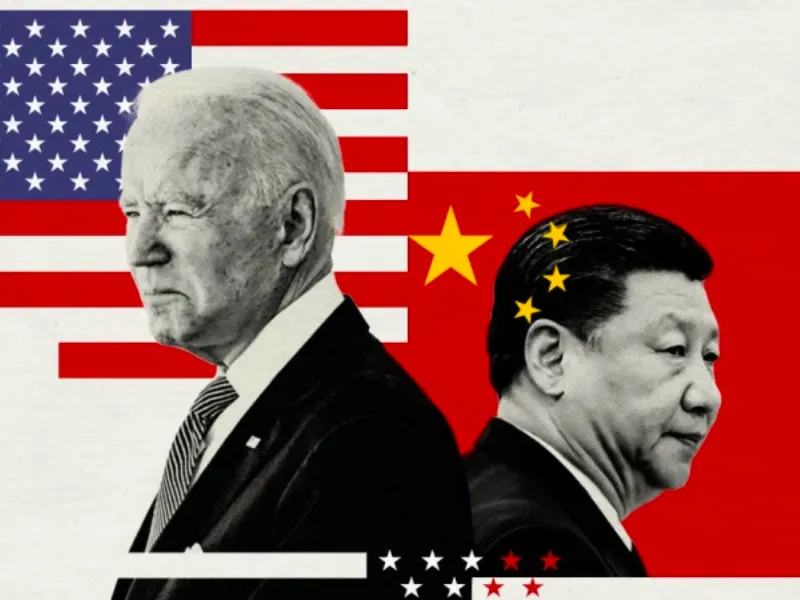
Both the model and the market expect China to overtake the USA's economy by 2030, with no compelling evidence of mispricing.

1. Executive Verdict

  • PBoC prioritizes stable, managed Yuan fluctuations through 2028.
  • China targets 3% property NPL by 2027, resolving financial risk.
  • US labor productivity growth remained weak since 2010.
  • China's 15th FYP prioritizes broad technological self-reliance.
  • High-tech development, state investment could accelerate China's growth.
  • Effective Common Prosperity stimulates domestic demand and reduces inequality.

Who Wins and Why

Outcome Market Model Why
By 2030 22% 20% China faces significant economic headwinds from an aging population and real estate crisis.

Current Context

Recent developments highlight intensifying economic competition and shifting global perceptions between the US and China. The two nations are actively engaged in economic competition, marked by recent global trade rulings and strategic financial initiatives. In a notable development, the World Trade Organization (WTO) ruled on February 4, 2026, that US domestic content bonuses for clean energy components are "prohibited" under WTO rules and recommended their withdrawal by October 1, 2026; the US has indicated it is unlikely to comply. Concurrently, China is building a climate-aligned financial infrastructure, with its central bank systematically supporting clean energy domestically and in the Global South through tools like the Carbon Emission Reduction Facility (CERF). China is also significantly expanding its energy generation capacity, projected to add over 3.4 terawatts in the next five years, nearly six times that of the US, a crucial factor for AI deployment as highlighted by Elon Musk and Jensen Huang. China's industrial policy is expected to further shift towards strategic sectors, R&D, and consumption. Its economy met its 5% growth target for 2025, with a 4.5% to 5% target likely for 2026. The ongoing "silent asymmetric economic war" between the two nations, particularly in semiconductor fabrication, sees China projected to control 40% by 2030, compared to the US's current 12%. China's trade surplus expanded by 20% in 2025 to $1.2 trillion despite US tariffs, with strong export growth to ASEAN and the EU. Public perception in the US suggests a belief that China will eventually surpass the US in global power, with 62% of Americans indicating their lives would not worsen if this occurred, implying a reluctance to bear significant costs to prevent it.
Economic forecasts present a mixed outlook, with varying projections on China's timeline to surpass the US. While China's economy in purchasing power parity (PPP) terms has exceeded that of the US since 2014, the US still significantly leads in nominal GDP, projected at $30,507 billion in 2025 compared to China's $19,232 billion (exchange rate basis),,. In PPP terms, China's economy is 1.33 times that of the US as of 2025 IMF projections. GDP growth forecasts for 2026 include China at 4.8% (Goldman Sachs) and 4.5-5.5% annually through 2035. The US is projected at 1.9% (Deloitte) and 2.5% (Goldman Sachs) for 2026, averaging 1.9% over the next decade,. China is projected to outspend the US on PPP-adjusted R&D by 30-58% by 2030, potentially crossing over as early as 2027. However, China's per capita GDP remains less than 30% of the US. Expert opinions diverge significantly: Justin Lin Yifu reaffirmed his prediction that China's economy will surpass the US by 2030, or 2035 at the latest, a view echoed by the Centre for Economics and Business Research (CEBR) and Euler Hermes. Conversely, US President Joe Biden stated in January 2025 that China "will never surpass us" economically on its current course. Some economists question the inevitability, citing China's slowing productivity growth, a shrinking workforce, stringent party control, and the "middle-income trap" as potential impediments or delays,,. Concerns regarding US national debt are present, alongside China's mounting local government debt.
Future trends, including demographics and innovation, will shape long-term economic trajectories. Upcoming events, such as China's next Five-Year Plan, expected to be unveiled in March 2026, will provide further insights into its strategic economic direction,. Key questions and concerns persist regarding China's ability to avoid the "middle-income trap" and sustain growth amid demographic challenges like a shrinking workforce. The debate extends to China's capacity for original technological innovation compared to its manufacturing dominance, and the long-term sustainability of its growth model given weak domestic demand, a property slump, and local government debt. Geopolitical tensions, including the ongoing "economic cold war" and trade disputes, remain critical factors influencing economic forecasts and global stability,. Ultimately, defining economic power extends beyond total GDP to encompass per capita GDP, technological leadership, military strength, and global influence, with different metrics yielding varied conclusions about which nation is ahead. The resilience of the US economy and the impact of investments in areas like AI are also central to these discussions.

2. Market Behavior & Price Dynamics

Historical Price (Probability)

Outcome probability
Date
The prediction market for "China overtakes USA’s economy by 2030?" has established a clear, sideways trading range between support at $0.18 and resistance at $0.31. Since its inception at $0.25, the price has experienced a slight downward drift to its current level of $0.21, suggesting a modest decline in market confidence over time. Overall sentiment remains skeptical, with the market consistently pricing the outcome as unlikely, never moving above a 31% probability. The price is currently situated near the lower end of its historical range, indicating that bearish sentiment is more dominant at present.
The recent news from early February 2026, including the WTO ruling against US subsidies and China's strategic green finance initiatives, has not catalyzed a significant price move or a breakout from the established range. The market's stability around $0.21 in the face of these developments suggests that traders may have already priced in this type of ongoing strategic competition, viewing it as part of the baseline forecast rather than a game-changing event. The total traded volume of 10,439 contracts spread over the market's history points to moderate but not overwhelming liquidity. The absence of a major volume surge accompanying the recent news indicates a lack of strong market conviction that these events fundamentally alter the long-term economic trajectory enough to meet the 2030 deadline.

3. Market Data

View on Kalshi →

Contract Snapshot

A YES resolution occurs if China's Gross Domestic Product (GDP) overtakes the USA's GDP. This event must take place by the end of 2030. If China's GDP does not surpass the USA's GDP by this deadline, the market resolves NO, and no other special settlement conditions are mentioned.

Available Contracts

Market options and current pricing

Outcome bucket Yes (price) No (price) Implied probability
By 2030 $0.22 $0.82 22%

Market Discussion

Debates surrounding China's potential to overtake the USA's economy by 2030 reveal two main viewpoints: proponents highlight China's consistent high growth rates, increasing reliance on state investment, high-tech development, and vast domestic market as key drivers . Conversely, skeptics emphasize challenges such as China's slowing productivity growth, a shrinking and aging workforce, concerns about innovation under state control, ongoing real estate issues, and the current significant GDP per capita gap with the US . Prediction markets, such as Manifold Markets, currently indicate a low probability (around 20%) for China surpassing the US economy by 2030.

4. How Will PBoC Manage Yuan Exchange Rate Amid Competing Goals (2026-2028)?

China GDP Growth (2026-2028)3.5-4.5% (The World Bank )
Current Account Surplus (2028)1.0%-1.5% of GDP (IMF )
Yuan Share in Global Payments (late 2025)4.7% (SWIFT )
The People's Bank of China (PBoC) prioritizes stable, managed Yuan fluctuations for 2026-2028. This signals a shift from defending specific numerical levels towards maintaining overall financial stability. The PBoC intends to use its toolkit, including the daily fixing's counter-cyclical factor, to prevent any rapid depreciation spirals. Historically, the daily fixing has been consistently set stronger than market estimates to anchor expectations and communicate policy intent against significant depreciation.
Economic fundamentals exert persistent depreciation pressure on the Yuan. These include an expected monetary policy divergence with the U.S. Federal Reserve, slowing domestic GDP growth projected in the 3.5-4.5% range for 2026-2028, and a narrowing current account surplus forecast at 1.0-1.5% of GDP by 2028. This economic landscape, combined with capital outflows, will necessitate a managed depreciation. The CNY/USD is anticipated to trade within a band of 7.15 and 7.45, with PBoC intervention primarily targeting the velocity and character of currency movements rather than a specific numerical red line.
Yuan internationalization serves as a crucial strategic imperative. A long-term goal of increasing the Yuan's global status underpins a strong strategic imperative against rapid depreciation. Efforts to build an alternative financial architecture, such as expanding Yuan-settled trade and the Cross-Border Interbank Payment System (CIPS), rely heavily on the currency's stability. As of late 2025, the Yuan's share of global payments via SWIFT had increased to 4.7%. A volatile or sharply depreciating Yuan would undermine international confidence, jeopardize these strategic ambitions, and potentially risk financial instability, which Beijing views as a national security concern.

5. Can China Meet Its 3% Property NPL Target by 2027?

Property NPL Ratio (Q1 2026)4.8%
Property NPL TargetBelow 3.0% by year-end 2027
LGFV Hidden Debt (End 2023)RMB 14.3 trillion
China's 15th FYP targets financial risk resolution in property and local government. The Plan (2026-2030) outlines a multi-pronged strategy to address systemic financial risks, specifically aiming to reduce the property sector's non-performing loan (NPL) ratio to below 3% by the end of 2027. Concurrently, it seeks to drastically cut hidden debt accumulated by Local Government Financing Vehicles (LGFVs). To achieve these goals, the strategy leverages state-backed rescue funds and expands the operational scope of Asset Management Companies (AMCs) to acquire distressed property loans, thus aiming to cleanse bank balance sheets and restore market functionality.
LGFV debt reduction relies on a substantial bond swap program. A centerpiece of the LGFV strategy is a landmark RMB 10 trillion special-purpose bond issuance program, which has been approved to swap out hidden LGFV debt. This initiative targets reducing hidden debt from an estimated RMB 14.3 trillion at the end of 2023 to approximately RMB 2 trillion by 2028. Beyond these debt swaps, the Plan also mandates LGFVs to monetize non-core assets and recommends implementing fiscal rebalancing between central and local governments to prevent the future accrual of off-balance-sheet borrowing.
Policy success hinges on market revival and macroeconomic stability. While China possesses significant state capacity to administratively force the NPL ratio down, achieving the 3% NPL target by 2027 would primarily represent a risk transfer to the state sector, rather than indicating fundamental market recovery. True success critically depends on reviving organic housing demand amidst prevailing demographic headwinds and subdued consumer confidence. The resolution or failure of these de-risking policies will crucially determine China's macroeconomic stability and its trajectory toward potential GDP growth of 4.0-5.0% annually.

6. How Will AI Impact U.S. Labor Productivity Growth by 2028?

Global AI Investment$225.8 billion in 2025
U.S. Capital Invested in AI58% in 2025
Organizations Using AI78% in 2024
US labor productivity growth has been weak since 2010. The US nonfarm business sector has averaged approximately 1.5% annual labor productivity growth since 2010, a period often termed "productivity paradox 2.0." This persistent sluggishness has been linked to factors such as the diminishing impact of previous General Purpose Technologies (GPTs), measurement challenges, and a decline in business dynamism. This research explores whether Artificial Intelligence (AI) and automation can instigate a sustained increase, thereby signaling a structural break from this trend.
AI investment and adoption have significantly surged from 2020-2025. During this period, global AI investments reached $225.8 billion in 2025, with the United States attracting 58% of the total capital invested in AI in the same year. Furthermore, a comprehensive 2024 survey revealed that 78% of organizations reported utilizing AI, marking a substantial rise from prior years. These substantial investments are anticipated to enhance productivity through labor augmentation, process optimization, and improved capital efficiency, with businesses projecting productivity boosts ranging from 25% to 50%.
AI contributions are projected to drive significant productivity acceleration. A simplified quantitative model forecasts that AI's impact could elevate total U.S. labor productivity growth to 2.625%, exceeding the 2.5% target. This projection suggests a high probability that the 8-quarter moving average of nonfarm business productivity growth will surpass 2.5% for four consecutive quarters before year-end 2028. This anticipated acceleration is considered the initial phase of a structural break, indicating a durable transformation in the economy's productive capacity rather than a temporary improvement, largely due to AI's widespread nature as a General Purpose Technology and its role in reshaping labor markets.

7. Is China's True Economic Growth Undercounted, Impacting 2030 Forecasts?

Kalshi Probability: China Nominal GDP > US by 203021%
China's Nominal GDP vs. US (current)Approximately 65% the size of the US economy ($11.1 trillion gap)
China's PPP GDP Projection (2025)$43.5 trillion
Current forecasts indicate China is unlikely to surpass US nominal GDP by 2030. Western prediction markets, such as Kalshi, express significant skepticism regarding China's ability to overtake the United States in nominal GDP by 2030, assigning a mere 21% probability to this outcome. This prevailing outlook is largely based on official macroeconomic data and projections from institutions like the IMF, which anticipate China reaching approximately 70% of US GDP by 2030, maintaining an approximate $11.1 trillion gap in nominal terms.
Emerging industries suggest official data may undercount China's economic growth. Despite these projections, this analysis suggests that a significant discrepancy may exist between official aggregate statistics and the actual growth in China's strategic emerging industries. Sectors such as clean energy, electric vehicles, and artificial intelligence are demonstrating rapid expansion, potentially being undercounted in current figures. Notably, in terms of Purchasing Power Parity (PPP), China's economy has already surpassed the US, with projections for 2025 showing China's PPP GDP at approximately $43.5 trillion compared to $31.8 trillion for the US.
Undercounted high-tech sectors could significantly impact nominal GDP gap closure. The high velocity of these new economy sectors, if fully accounted for, could significantly alter the calculus for closing the nominal GDP gap. While the baseline forecast makes overtaking unlikely, an alternative scenario driven by the outperformance and potentially underestimated weight of these strategic sectors presents a non-trivial possibility that current prediction markets, particularly those with very low probabilities, may be undervaluing. Consequently, the 21% probability on Kalshi might be a more realistic assessment than lower estimates, as it acknowledges the potential for China's high-tech sector to defy consensus expectations.

8. What is China's Strategy for Semiconductor and AI Dominance?

China Semiconductor Self-Sufficiency (Current)20-30%
Big Fund III Investment~$47.5 billion (launched 2024)
China Mature Node Capacity ProjectionOver 50% by 2030
China's 15th Five-Year Plan prioritizes broad technological self-reliance. This plan (2026-2030) signals a strategic departure from the quantitative 70% semiconductor self-sufficiency target of "Made in China 2025," which China will miss, towards a broader mandate for "technological self-reliance" and "rapid breakthroughs" in core technologies. This shift is framed as a national security imperative, driven by geopolitical competition and US-led export controls. Current estimates place China's domestic semiconductor self-sufficiency at roughly 20-30%, highlighting the significant gap it aims to close.
Significant investments underpin China's dual-pronged semiconductor strategy. To achieve its goals, China is undertaking a "wartime-like" economic mobilization, evidenced by cumulative investments exceeding $150 billion since 2014 and the launch of the approximately $47.5 billion "Big Fund III" in 2024. This fund strategically focuses on overcoming critical bottlenecks in manufacturing equipment, advanced materials, and advanced packaging to build a sanction-proof domestic ecosystem. China's dual semiconductor strategy involves aggressively expanding capacity in mature process nodes (28nm and older), with projections indicating it could control over 50% of this global capacity by 2030, while simultaneously funneling resources into advanced technology breakthroughs. This approach aims to create global dependency on China for foundational chips and accelerate the fragmentation of supply chains into US-led and China-led ecosystems.
China aims for substantial AI computing power by 2030. In Artificial Intelligence, China seeks to build vast computational infrastructure, with a directional ambition towards 50 exaflops of AI-specific computing power by 2030. Facing restrictions on high-performance AI chips, China is prioritizing domestic substitution, fostering companies like Huawei to design domestic GPUs and ASICs. The ultimate goal is to establish a self-contained AI hardware and software stack.

9. What Could Change the Odds

Key Catalysts

China's economic growth could accelerate significantly if its strategic focus on high-tech development, state investment, and increased domestic consumption proves successful, leading to higher quality, long-term expansion through improved human capital and Total Factor Productivity. The effective implementation of the "Common Prosperity" agenda, which aims to reduce inequality and stimulate domestic demand without stifling private enterprise, is also a critical bullish factor. Furthermore, major breakthroughs in China's prioritized strategic industries, such as high-tech, smart manufacturing, and green energy, could substantially boost its GDP. The Belt and Road Initiative, despite its hurdles, retains the potential to enhance economic integration and trade across participating regions, further contributing to China's economic ascent.
However, several factors could hinder China's progress or bolster the US economy. China faces significant demographic challenges, including a rapidly aging population and shrinking workforce, which could increase social security burdens and create labor shortages. The "Common Prosperity" drive could also backfire if it leads to excessive regulatory crackdowns or over-centralization, stifling innovation and private sector dynamism. Intensified US-China trade wars and accelerated decoupling efforts by the US could severely impact China's export-driven economy and global supply chains. Conversely, stronger-than-expected US innovation and productivity growth, fueled by robust investment in strategic sectors like semiconductors and green energy (e.g., through acts like the CHIPS and Science Act), along with positive immigration policies to boost its labor force, could significantly strengthen the US economy and sustain its growth trajectory. Monitoring China's 15th Five-Year Plan implementation and the ongoing impact of US policy initiatives will be crucial before the 2030 settlement date.

Key Dates & Catalysts

  • Expiration: January 01, 2030
  • Closes: January 01, 2030

10. Decision-Flipping Events

  • Trigger: China's economic growth could accelerate significantly if its strategic focus on high-tech development, state investment, and increased domestic consumption proves successful, leading to higher quality, long-term expansion through improved human capital and Total Factor Productivity [^] .
  • Trigger: The effective implementation of the "Common Prosperity" agenda, which aims to reduce inequality and stimulate domestic demand without stifling private enterprise, is also a critical bullish factor.
  • Trigger: Furthermore, major breakthroughs in China's prioritized strategic industries, such as high-tech, smart manufacturing, and green energy, could substantially boost its GDP.
  • Trigger: The Belt and Road Initiative, despite its hurdles, retains the potential to enhance economic integration and trade across participating regions, further contributing to China's economic ascent [^] .

12. Historical Resolutions

No historical resolution data available for this series.