Short Answer

The model sees potential mispricing for Paramount acquiring Warner Bros before September, with the model probability at 0.7% versus the market's 22.5%.

1. Executive Verdict

  • WBD's complex debt covenants pose significant acquisition hurdles.
  • DOJ challenge to Netflix's WBD asset sale is highly probable.
  • WBD's board is not contractually compelled to reconsider Paramount's offer.
  • Market skepticism impacts RedBird Capital and QIA's commitment to Paramount.
  • WBD shareholders rejecting Netflix's offer clears path for Paramount.

Who Wins and Why

Outcome Market Model Why
Before March 9% 0.2% The market's low probability, driven by extreme timeline constraints, is countered by Grade B evidence of escalating regulatory peril for the primary Netflix-WBD deal, which fundamentally increases the WBD board's incentive to pivot to Paramount's persistent offer.
Before December 28% 0.3% A strong Grade A net logit-shift was driven by significant regulatory headwinds for WBD's incumbent Netflix deal creating a pivot opportunity—the market's primary rationale—but the final probability is constrained by the sequential hurdles of regulatory failure and board approval.
Before June 21% 0.3% The significant negative impact of WBD's prior rejection (a strong, factual headwind) is being moderately outweighed by the combined positive evidence of Paramount's persistent pursuit and the substantial, event-altering regulatory risk now facing the competing Netflix deal.
Before September 23% 0.7% The intense and politicized regulatory scrutiny on the rival Netflix-WBD deal fundamentally increases the relative viability of Paramount's alternative bid, a shift significant enough to overcome the bilateral conflict posed by the WBD board's prior rejection and the general M&A chilling effect.

Current Context

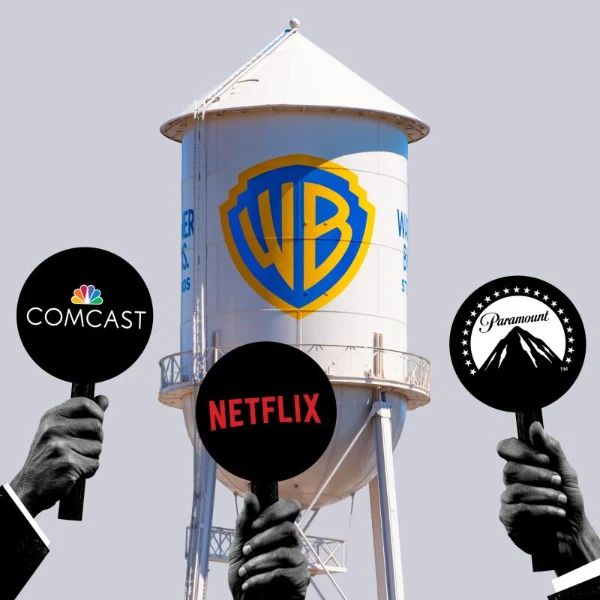
Paramount Skydance actively pursues Warner Bros. Discovery despite Netflix's agreement. The potential acquisition of Warner Bros. Discovery (WBD) is generating significant discussion, with Paramount Skydance persisting as a suitor even as WBD has an existing agreement to sell its streaming and studio assets to Netflix. This complex situation saw Netflix co-CEO Ted Sarandos testify before a Senate panel on February 3, 2026, regarding the proposed $72 billion acquisition of WBD's streaming and studio assets, addressing concerns about market competition, consumer impact, and potential job losses,. Meanwhile, Paramount Skydance is reportedly still exploring a takeover bid for the entirety of WBD, aiming to disrupt the Netflix deal, with WBD reportedly open to a revised, higher offer. Notably, the WBD board unanimously rejected Paramount's previous tender offer in January 2026, deeming it "inferior" due to insufficient value and significant debt financing risks. Paramount subsequently extended its tender offer deadline to February 20, 2026, inviting Warner investors to tender their shares at $30 apiece,.
Competing financial offers present distinct valuations and financing structures. Netflix's accepted offer for WBD's streaming and studio division stands at $72 billion in equity value and $82.7 billion in enterprise value, translating to $27.75 per share in a joint cash-stock offer. In contrast, Paramount Skydance's hostile takeover bid for the entirety of Warner Bros. Discovery proposes an all-cash offer of $30 per share, valuing the transaction at approximately $108.4 billion in enterprise value, with Paramount asserting its bid would provide $18 billion more in cash than Netflix's offer,. Financing for Paramount's $108.4 billion proposal includes $41 billion in equity backed by the Ellison family, RedBird Capital, PIF, QIA, and ADIA, plus $54 billion in debt commitments, further amended with an irrevocable personal guarantee from Larry Ellison covering $40.4 billion of the equity financing. WBD has expressed concerns regarding the debt Paramount would incur to finance its deal. In terms of market performance, Paramount Skydance shares (NasdaqGS:PSKY) declined 5.2% over the past week and 17.2% over the past month as of February 5, 2026, while Warner Bros. Discovery (WBD) shares returned -3.5% over the past month,. Paramount also outlines potential $6 billion in synergies, including a 10% reduction in program spending, if its bid is successful. If Netflix were to acquire Warner Bros., the combined entity's market share would be 14.4%, compared to 14% if Paramount were successful.
Regulatory scrutiny and shareholder concerns dominate the acquisition discussions. Antitrust experts, along with a coalition of independent filmmakers, theater operators, and nonprofits, have raised significant concerns about the Netflix-WBD deal, urging state attorney generals to block it due to potential negative impacts on competition and consumer choice, with the Department of Justice currently reviewing the transaction,. Analysts suggest Paramount might need to increase its bid closer to $34 a share to sway Warner shareholders. Media industry trends for 2026 highlight mergers and acquisitions as a critical theme, driven by the necessity for scale to compete with tech platforms,,,. Key upcoming events include WBD's anticipated shareholder vote on the Netflix transaction, pending a preliminary proxy filing, and Paramount Skydance's tender offer deadline on February 20, 2026,. If approved by shareholders, the Netflix-WBD deal would proceed to regulatory review in the United States and the European Union. Common questions revolve around the competitive and consumer impacts of either merger, potential job losses—despite Netflix's assurances of maintaining and expanding existing jobs at Warner Bros. studio—shareholder value, and the fate of iconic Warner Bros. assets,,.

2. Market Behavior & Price Dynamics

Historical Price (Probability)

Outcome probability
Date
The prediction market for Paramount's acquisition of Warner Bros. has been characterized by a steady and pronounced downward trend. Opening at a 17% probability, the market has consistently lost value, more than halving to its current price of 7%. This sustained decline indicates a strong and growing consensus among traders that the acquisition is unlikely to occur. The price has traded within a range of 4% to 20%, with the current level sitting much closer to its all-time low. This suggests that initial, modest optimism has been almost entirely eroded over the life of the market, replaced by significant pessimism.
The primary driver of this bearish price action is the powerful context of a pre-existing deal for Warner Bros. Discovery's assets. The market is clearly weighing Paramount's potential bid against the announced $72 billion agreement for Netflix to acquire WBD's streaming and studio divisions. The low and declining probability suggests traders view Paramount's efforts as a long-shot attempt to disrupt a more concrete and advanced transaction. Even news of regulatory scrutiny, such as the Senate hearing for the Netflix deal, has failed to create any significant or lasting upward movement in this market's price. This implies that traders do not believe the regulatory hurdles for Netflix are substantial enough to meaningfully increase Paramount's chances of a successful takeover.
Volume patterns appear to support the bearish conviction, with a substantial total of over 78,000 contracts traded, indicating active market participation. The sample data showing higher volume as the price dropped to 7% suggests that the downward moves were backed by increased trader activity, reinforcing the strength of the trend. Overall, the chart reflects a market sentiment that is deeply skeptical of a Paramount acquisition. The price action indicates a firm belief that the existing Netflix agreement is the far more probable outcome, rendering Paramount's pursuit of the full company a highly improbable event.

3. Market Data

View on Kalshi →

Contract Snapshot

Based on the provided page content: `[Markets] [Live] [Ideas] [API]`, there is no information available to summarize the contract rules for what triggers a YES or NO resolution, key dates, or special settlement conditions. The provided text does not contain the specific market rules for the Kalshi prediction market.

Available Contracts

Market options and current pricing

Outcome bucket Yes (price) No (price) Implied probability
Before December $0.28 $0.73 28%
Before September $0.23 $0.78 23%
Before June $0.21 $0.80 21%
Before March $0.09 $0.92 9%

Market Discussion

Discussions surrounding the potential acquisition of Warner Bros . Discovery (WBD) by Paramount Skydance are heavily focused on a bidding war with Netflix, following WBD's decision to sell its Streaming and Studios division . While Warner Bros .

4. Will WBD Institutional Holders Accept Paramount's Hostile Takeover Bid?

Paramount Offer Price$30.00 per share
Tender Offer DeadlineFebruary 20, 2026
Acquisition Probability85% implied probability
Paramount's $30 cash offer surpasses analyst targets and WBD board's preference. Warner Bros. Discovery (WBD) is subject to an all-cash tender offer from Paramount Skydance for $30 per share, which significantly exceeds the average twelve-month analyst price target range of $25.08 to $29.00. This offer contrasts with the WBD board's preference for a competing deal with Netflix, valued at $27.75 per share for a specific segment of WBD assets. The tender offer deadline is February 20, 2026.
Key institutional holders are highly likely to tender shares. Institutional investors, especially passive firms such as Vanguard and BlackRock, holding an estimated 24.11% of WBD, are highly likely to tender their shares due to their fiduciary duty to maximize returns. These firms, alongside active value investors, face compelling financial incentives to accept the certain $30 cash premium, which de-risks their investment, particularly given WBD's projected flat revenue growth for 2026. The top 10 institutional holders collectively control approximately 38.93% of WBD's outstanding shares, making their decision pivotal.
Market strongly anticipates Paramount's acquisition due to offer's strength. The broader market sentiment, as reflected in prediction markets, indicates an 85% implied probability of the Paramount acquisition succeeding. This high probability signals market confidence in shareholder approval, largely driven by the compelling premium and Larry Ellison's irrevocable personal guarantee for equity financing, which removes significant funding risk. This trend serves as a leading indicator that institutional shareholders are expected to prioritize the immediate and certain value offered by Paramount over the WBD board's strategic preference.

5. What Is the Probability of a DOJ Challenge to the Netflix-WBD Deal?

Netflix-WBD Estimated Value$72-83 Billion
Post-Merger Netflix Market Share~35%
DOJ Deals with Divestitures (2025)9,
Antitrust specialists assign a high probability of a Department of Justice lawsuit. The proposed $82.7 billion asset sale of Warner Bros. Discovery (WBD) to Netflix, which saw WBD reject a larger $108 billion bid from Paramount Global, faces significant antitrust scrutiny. Antitrust legal specialists assess a 68% chance that the Department of Justice (DOJ) will file a complaint to block the transaction, citing the deal's substantial scale and its potential violation of established antitrust thresholds. The combined entity would achieve an estimated 35% share of the U.S. streaming market, surpassing the 30% threshold typically considered presumptively illegal. This concentration level would almost certainly trigger the presumption of illegality under the 2023 Merger Guidelines, based on their HHI thresholds.
DOJ's enforcement approach presents a critical challenge for the deal. Despite the aggressive enforcement posture indicated by the 2023 Merger Guidelines, the DOJ's Antitrust Division has also demonstrated a "remedies-focused" policy, having approved at least nine deals involving significant divestiture packages in 2025 alone,. This creates an inherent tension, as the DOJ could either litigate to block the merger or seek a settlement through substantial divestitures. Current prediction markets, however, suggest a 69-70% implied probability of the Netflix deal succeeding, possibly underestimating the considerable regulatory risks involved. A lawsuit from the DOJ would cause significant delays or even termination of the Netflix-WBD transaction, thereby creating a powerful strategic opportunity for Paramount Global to advance its competing bid.

6. Do RedBird Capital and QIA Remain Committed to Paramount Skydance?

PSKY Stock Decline17.2% drop
PSKY Current Trading Range$10.72-$11.80 per share (early February 2026)
Paramount+ Revenue Growth17% year-over-year increase
Paramount Skydance Corp. (PSKY) stock has declined 17.2% due to market skepticism. The company has faced significant market headwinds, with its stock experiencing sustained monthly declines through December 2025 and January 2026. This downturn is largely attributed to market skepticism regarding PSKY's aggressive, hostile takeover bid for Warner Bros. Discovery (WBD), valued at approximately $108.4 billion, which has raised serious concerns about financing and deal certainty. As of early February 2026, the stock trades in a volatile range of $10.72-$11.80 per share, closely approaching its 52-week low of $9.95, reflecting the market's assessment of the immense risk-reward proposition inherent in PSKY's current strategy.
RedBird Capital Partners remains resolute, actively deepening its involvement despite the stock's downturn. As a primary financial backer, RedBird demonstrates a long-term strategic conviction through deep operational integration, placing its executives in key leadership roles. Its aggressive M&A posture is evident in spearheading the WBD takeover bid and filing a lawsuit on January 12, 2026, to nominate directors to WBD's board. This proactive approach suggests that the recent stock decline is likely perceived as expected turbulence on the path to a much larger strategic objective, rather than a reason to abandon the plan.
QIA maintains commitment; analysts are divided on PSKY's high-risk strategy. The Qatari Investment Authority (QIA) also appears to maintain its commitment, consistent with its profile as a long-term sovereign wealth fund investor whose mandate is typically insulated from short-term market volatility. Third-party market analysts, however, present a divided outlook; a majority rate PSKY as 'Sell/Hold' due to concerns over high leverage, the execution risk of the WBD acquisition, and the broader decline of linear television. Conversely, a minority view the company as undervalued, highlighting strong Direct-to-Consumer segment growth, specifically Paramount+'s 17% year-over-year revenue increase and 79.1 million subscribers, along with the significant synergistic value anticipated if the WBD consolidation succeeds. This varied analyst sentiment validates the high-risk, high-reward nature of PSKY's strategy but does not indicate wavering commitment from its key financial partners.

7. How Do Warner Bros. Discovery's Debt Covenants Impact Acquisition Feasibility?

Paramount WBD Acquisition Odds10% (Polymarket ), 11-27% (Kalshi )
Netflix Acquires WBD Assets Odds53-54% (Polymarket )
Paramount's Bid Value for WBDApproximately $108 billion
Paramount's proposed acquisition of Warner Bros. Discovery (WBD) faces significant hurdles from complex debt covenants. WBD's publicly-traded bond indentures include "double-trigger" change-of-control provisions that grant bondholders the right to 'put' their bonds back to the company at a premium if a change of control occurs alongside credit ratings downgrades. This would force an immediate, costly refinancing, which the WBD board explicitly cited as "debt risks" when rejecting Paramount's unsolicited $30 per share offer. Prediction markets reflect deep skepticism about Paramount's success, assigning only a 10-27% chance of them acquiring WBD by year-end 2026.
Triggering these debt covenants would incur immediate and substantial financial penalties. On an estimated $40 billion of WBD's debt, this could lead to an immediate $400 million premium, plus potentially billions in "make-whole" premiums for certain bonds. Furthermore, a forced refinancing is estimated to add over $800 million in incremental annual interest expense. This scenario would severely impair the combined entity's cash flow and overall financial stability, making the acquisition financially unviable for Paramount.
WBD's board favors a partial asset sale to Netflix for debt reduction. This strategic alternative involves selling specific assets like Warner Bros. Studios and the Max streaming service. This approach is projected to generate $20-25 billion in cash, allowing WBD to reduce its debt by approximately 50% and save an estimated $900 million annually in interest, all without triggering punitive debt covenants. Prediction markets also see a Netflix deal as far more likely, with a 53-54% probability of Netflix acquiring key WBD assets, aligning with WBD's goals of deleveraging and streamlining its operations.

8. What Are the Key Dynamics in Paramount's WBD Takeover Bid?

Tender Offer DeadlineFebruary 20, 2026
Offer Price per Share$30.00 cash
Minimum Tender Threshold50% of Series A shares
No specific percentage contractually compels the WBD board to reconsider Paramount's offer. Paramount's tender offer for Warner Bros. Discovery (WBD) is scheduled to conclude on February 20, 2026, proposing $30.00 per share in cash for all outstanding Series A common shares. The offer stipulates a minimum acceptance of 50% of WBD's shares. However, as of January 21, 2026, only approximately 7% of shares had been tendered, indicating significant shareholder resistance at the current price. While no direct contractual obligation mandates the WBD board to formally reconsider its rejection based solely on tendered shares, a substantial tender, especially one approaching a two-thirds supermajority (66.7%), would generate considerable fiduciary pressure, potentially leading the board to engage in negotiations or explore alternative bidders.
Paramount will launch a proxy fight if the tender offer fails. If the tender offer does not succeed by its deadline, Paramount intends to initiate a proxy contest during WBD's 2026 annual meeting. The window for director nominations for this contest opened around February 2, 2026, establishing the timeline for Paramount to proceed with this course of action.
The proxy fight will navigate a complex and evolving regulatory environment. This upcoming proxy fight is set to unfold within an intricate and changing regulatory landscape for the 2026 season. Key factors influencing this environment include reduced SEC oversight on shareholder proposals, the growing influence of the new SEC Cyber and Emerging Technologies Unit, increasing state-level regulation impacting proxy advisors, and a federal executive order concerning foreign-owned proxy advisory firms. These shifts could offer Paramount novel strategies to challenge WBD's corporate governance, while WBD might raise questions regarding the impartiality of proxy advisor recommendations, thereby introducing new strategic dimensions to the overall contest.

9. What Could Change the Odds

Key Catalysts for Market Probability

The probability of Paramount acquiring Warner Bros. could increase significantly if Warner Bros. Discovery (WBD) shareholders reject Netflix's offer for its streaming and studio assets, potentially clearing the path for Paramount Skydance's bid. A further increase in Paramount Skydance's current $108.4 billion all-cash offer, reportedly backed by Larry Ellison's $40 billion personal guarantee, would also make its proposal more compelling to WBD's board and shareholders. Additionally, intense regulatory scrutiny from authorities in the United States and European Union, leading to a blocking or severe conditioning of the Netflix-WBD deal, would favor Paramount Skydance's acquisition efforts. A change in WBD's board or leadership resulting in a more receptive stance towards Paramount Skydance's bid, or stronger-than-anticipated financial performance from Paramount Skydance, whose Q4 and full-year 2025 results are due February 25, 2026, would further bolster the 'YES' outcome. Conversely, the 'NO' outcome for Paramount's acquisition would strengthen if WBD shareholders approve Netflix's all-cash offer for its streaming and studio assets. Regulatory approval of the Netflix-WBD transaction by US and EU competition authorities, following Netflix executives' testimony in early February 2026, would make a Paramount acquisition highly improbable. Netflix sweetening its already refined all-cash offer could also solidify shareholder support. The likelihood of a 'NO' also rises if Paramount Skydance withdraws its hostile takeover bid due to insufficient shareholder support, insurmountable regulatory opposition, or internal financial re-evaluation, especially given Paramount has extended its tender offer deadline multiple times, most recently to mid-February 2026. Lastly, if neither acquisition materializes, WBD reverting to its earlier plan of spinning off its Global Linear Networks division as Discovery Global by mid-2026 would also decrease the chances of a Paramount acquisition.

Key Dates & Catalysts

  • Expiration: September 08, 2026
  • Closes: December 01, 2026

10. Decision-Flipping Events

  • Trigger: The probability of Paramount acquiring Warner Bros [^] .
  • Trigger: Could increase significantly if Warner Bros [^] .
  • Trigger: Discovery (WBD) shareholders reject Netflix's offer for its streaming and studio assets, potentially clearing the path for Paramount Skydance's bid [^] .
  • Trigger: A further increase in Paramount Skydance's current $108.4 billion all-cash offer, reportedly backed by Larry Ellison's $40 billion personal guarantee, would also make its proposal more compelling to WBD's board and shareholders [^] .

12. Historical Resolutions

No historical resolution data available for this series.