Short Answer

The model assigns meaningfully lower odds (0.5%) than the market (26.0%) for Tesla Optimus being released before 2027.

1. Executive Verdict

  • Q3 2026 Optimus production relies on timely component orders.
  • Optimus heavily relies on single-sourced Chinese components, creating supply chain risks.
  • Competitor pressure drives probable symbolic Optimus release before August 2026.
  • Optimus ambitions depend on strong automotive profitability and significant cash investment.
  • Optimus Gen 3 mass production commenced January 21, 2026, at Fremont.
  • Public unveiling of Optimus Gen 3 and sales opening set for Q1 2026.

Who Wins and Why

Outcome Market Model Why
Before 2027 27% 0.5% Significant technological hurdles remain for a consumer-ready Optimus robot.

Current Context

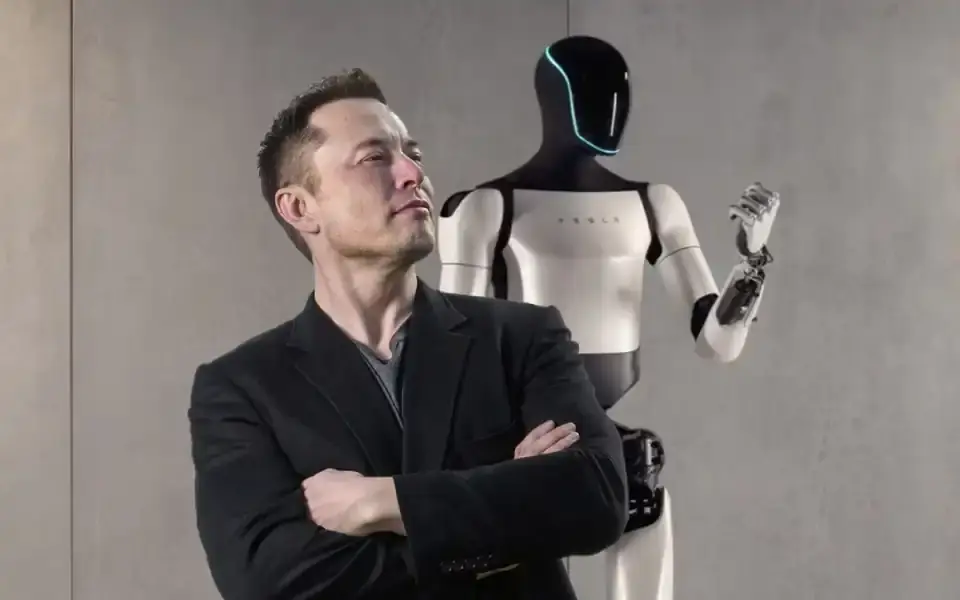
Tesla is aggressively pivoting to Optimus production this year. The company plans to unveil the third-generation Optimus robot in the first quarter of 2026, featuring "major upgrades, including our latest hand design". Following this, Tesla announced it would halt production of its Model S and Model X vehicles in the second quarter of 2026 to convert Fremont factory lines for Optimus manufacturing, aiming for an annual production capacity of one million units. This strategic shift towards AI and robotics comes amidst a reported decline in Tesla's annual revenue. Elon Musk has reiterated his highly ambitious vision, stating that Optimus could become Tesla's "biggest product ever" and potentially the first "Von Neumann machine" capable of self-replication and building civilization, despite his recent admission that Optimus robots are not currently performing "useful work" in Tesla's factories. While Musk expressed confidence in Tesla's lead in real-world intelligence and hand design, he acknowledged formidable competition from Chinese robotics firms like Unitree and UBTech, with production expected to heavily rely on China's expanding robotics supply chain.
Optimus release timelines are set, but skepticism remains high. The third-generation Optimus is slated for its debut in Q1 2026, with limited "Founders Series" pre-orders anticipated in late Q3 2026, and widespread consumer availability projected for 2027. Initial units may cost approximately $25,000-$30,000, with Tesla targeting a long-term price of $20,000 as production scales towards its goal of one million units annually. Current prototypes of the third-generation are capable of walking, lifting small objects, and executing scripted tasks, with significant upgrades expected in hand design, as Tesla envisions Optimus as a general-purpose robot capable of learning from human observation. Experts express skepticism about the robot's immediate readiness for large-scale deployment, citing ongoing challenges in areas such as balance, manipulation, and power efficiency. However, some analysts view the mass production of Optimus as crucial for Tesla's transformation into a leading AI and robotics entity, within a humanoid robotics market projected to reach $5 trillion by 2050. Despite the potential, The Motley Fool noted Tesla as a "risky stock" due to its high valuation.
Significant challenges and uncertainties surround Optimus's real-world success. Common questions and concerns revolve around Tesla's ability to achieve its ambitious production goal of one million Optimus units annually, and whether the robot can truly perform "useful work" in real-world applications outside of research and development environments. The credibility of Elon Musk's timelines is a recurring concern given his history of optimistic projections that are sometimes delayed. Further points of discussion include the potential for intense competition from other global robotics firms, particularly those in China, and the reliance on external, especially Chinese, supply chains for Optimus production. Tesla's decision to discontinue Model S and Model X production and invest heavily in Optimus amidst declining EV revenue also raises questions about the company's financial strategy and the potential risks involved. Additionally, discussions around Musk's "Von Neumann machine" concept for Optimus touch on futuristic and potentially sci-fi ethical considerations regarding self-replicating AI.

2. Market Behavior & Price Dynamics

Historical Price (Probability)

Outcome probability
Date
The market for a Tesla Optimus release before 2027 has exhibited a long-term sideways trend, trading within a wide range of 12.0% to 49.0%. Despite the overall range-bound nature, the market is highly reactive to new information, as seen in recent significant price swings. On January 22, 2026, the probability dropped 10.0 percentage points after Elon Musk clarified at the World Economic Forum that a "wide public release" was not imminent, directly causing a dip in trader confidence. This sentiment reversed dramatically just two days later on January 24, when the price spiked 16.0 percentage points. This surge was driven by market anticipation of Tesla's accelerated production plans, specifically the news that the company would halt Model S and Model X production to retool factory lines for Optimus, signaling a strong corporate commitment.
The total traded volume of over 80,000 contracts indicates consistent interest, but trading activity appears to cluster around major news events, suggesting that market conviction is event-driven rather than built on a steady trend. The recent price action has established a near-term support level around the 14.0% low and a resistance level at the 32.0% peak. The current price of 28.0% suggests the market is assigning a relatively low but non-trivial probability to a pre-2027 release. Overall, the chart indicates a market sentiment of sustained uncertainty, caught between Tesla's highly ambitious production goals and more cautious public statements on release timelines. This has created a volatile, sideways market without a clear long-term consensus.

3. Significant Price Movements

Notable price changes detected in the chart, along with research into what caused each movement.

📈 January 24, 2026: 16.0pp spike

Price increased from 16.0% to 32.0%

Outcome: Before 2027

What happened: The 16.0 percentage point spike in the "Tesla Optimus released this year? Before 2027" prediction market on January 24, 2026, was primarily driven by market anticipation of Tesla's accelerated plans for Optimus production. While Elon Musk had publicly stated in mid-January that Optimus would be available for public sale by the end of 2027, upcoming information from Tesla's Q4 2025 earnings call (January 28, 2026) revealed plans to "start production of Optimus before the end of 2026". This distinction between commencing production and public availability likely fueled speculation on an earlier "release" (i.e., production start) within 2026, preceding the official earnings report. Social media activity and broader news surrounding Tesla's increasing pivot to AI and robotics likely acted as a contributing accelerant, amplifying the positive sentiment leading up to the earnings call.

📉 January 22, 2026: 10.0pp drop

Price decreased from 24.0% to 14.0%

Outcome: Before 2027

What happened: The primary driver of the 10.0 percentage point drop in the "Tesla Optimus released this year?" prediction market (outcome: "Before 2027") on January 22, 2026, was a statement by Elon Musk at the World Economic Forum (WEF) in Davos. During his remarks, Musk clarified that a "wide public release [of Optimus] won't happen until late 2027". This public statement by a key figure, Elon Musk, directly indicated a later timeline for Optimus's release than anticipated by the market, thereby reducing confidence in a release before 2027 and directly coinciding with the price movement.

4. Market Data

View on Kalshi →

Contract Snapshot

Based on the provided page content, the market is titled "Tesla Optimus released this year? Odds & Predictions 2026." However, the extract does not contain specific rules defining what constitutes a "YES" or "NO" resolution for the Optimus release, nor does it detail key dates, deadlines, or special settlement conditions. Therefore, it is not possible to summarize these contract rules from the given information.

Available Contracts

Market options and current pricing

Outcome bucket Yes (price) No (price) Implied probability
Before 2027 $0.27 $0.75 27%

Market Discussion

Discussions surrounding the "release" of Tesla Optimus this year (2026) are primarily debating the distinction between its unveiling and the commencement of public sales . While Tesla plans to unveil the third-generation Optimus robot in the first quarter of 2026 with "major upgrades" and aims to begin production by the end of 2026, CEO Elon Musk has indicated that the robots will likely not be available for sale to the general public until late 2027 . Skepticism exists due to Tesla's history of ambitious timelines and missed deadlines, with some analysts noting that bold plans for Optimus haven't yet significantly moved the needle for the company's stock in 2026 . Prediction markets, such as Kalshi, reflect this debate by offering contracts on whether Optimus will be on sale to the general public before December 31, 2026 .

5. Are Tesla's Optimus Production Timelines Achievable for Q3 2026?

Standard Robot Lead TimeApproximately 8 weeks
Control Systems Lead TimeTypically 4-12 weeks, some extended
Automotive Re-tooling Time12-24 months
Achieving Q3 2026 Optimus production hinges on timely component orders. Tesla's target for 'Founders Series' Optimus production in Q3 2026 is ambitious but potentially achievable for low volumes, provided critical long-lead automation components were ordered in mid-to-late 2025. Standard industrial robots, with lead times of approximately 8 weeks, are unlikely to be a bottleneck. However, the supply chain for specialized control system components from vendors like Rockwell Automation remains volatile, with some product lines experiencing extended lead times, posing a significant risk to the timeline.
Broader challenges beyond equipment delivery threaten 2026 production goals. The paramount challenges to the 2026 production timeline extend significantly beyond equipment delivery and involve the inherent novelty and complexity of the Optimus program itself. Key risks include establishing a nascent and fragile supply chain for bespoke components, navigating unprecedented manufacturing process complexity that Elon Musk predicts will lead to an 'agonizingly slow' initial ramp, and meeting stringent software and hardware validation requirements for safety-critical autonomous systems. Furthermore, external systemic risks such as global battery pack availability and geopolitical factors affecting semiconductor supply chains add to the complexity, making the transition from prototype to a mass-produced product a formidable undertaking.

6. What Performance Benchmarks Will Tesla Optimus Gen 3 Hand Need for Production?

Mean Cycles Between Failure (MCBF)25,000 cycles [learnings]
Wire-Stripping Success RateGreater than 98% [learnings]
Production ScalabilityConsistent performance across fleet of test units
Tesla targets specific performance benchmarks for Optimus hand mass production. A critical metric for the 3rd-generation Optimus hand is a Mean Cycles Between Failure (MCBF) of 25,000 cycles under typical load conditions. Task proficiency is equally crucial, with a wire-stripping success rate of greater than 98% expected for high-precision operations, with a roadmap to achieve over 99.5% through AI-driven improvements. The hand's design, featuring tendon-driven metallic cables and custom electric actuators, emphasizes longevity to achieve this standard, particularly given its increased complexity with 22 Degrees of Freedom (DoF) and up to 50 actuators per hand.
Board approval hinges on economic viability and strategic de-risking. Tesla's board will evaluate these benchmarks within the company's strategic framework, prioritizing sufficient technical de-risking and a credible scaling pathway over initial perfection. This evaluation includes assessing the return on investment for Optimus, comparing its economic viability against human labor or specialized machinery, even accounting for a certain failure rate and maintenance. Tesla's vertical integration strategy, deploying Optimus in its own factories, is key to mitigating risk and accelerating the learning cycle. This internal proving ground allows for rapid data collection and hardware/software iteration, benefiting from existing automated quality control systems. The company's approach backs a flexible, AI-driven humanoid that can perform multiple tasks, believing that AI-driven improvement will ultimately surpass traditional hardware-centric automation. The established benchmarks serve as the entry point for this iterative scaling process within Tesla's manufacturing ecosystem.

7. What are Tesla Optimus's supply chain risks from China and US regulations?

Current Estimated BOM Cost$46,000 per unit
Estimated BOM Cost (Non-Chinese Sourcing)$131,000 per unit
Probability of Major Supply Disruption (EOY 2026)High (60-70%)
Optimus relies heavily on single-sourced Chinese high-torque density components and specialized sensor suites, which form the "Optimus Chain" and enable a target production cost of approximately $46,000 per unit. Key primary suppliers for high-torque density components include Tuopu Group for rotary actuators, Sanhua Intelligent Control for linear actuators, and Green Harmonic for harmonic reducers. Specialized sensor suites are also single-sourced, notably from Keli Sensing for six-dimensional torque sensors. This strategic concentration of suppliers within China introduces significant supply chain vulnerabilities for Tesla.
U.S. government actions pose significant tariff and export control risks to these components. Upcoming Section 301 tariff hikes, scheduled to reach 25% on critical inputs such as permanent magnets, will directly increase the Bill of Materials cost for actuators starting January 1, 2026. More critically, the dual-use nature of advanced humanoid robotics creates a high risk that key components, including specialized actuators and sensors, or their enabling technologies, will be subjected to stringent export controls under the Export Administration Regulations (EAR). This could lead to specific Optimus Chain suppliers being added to the Entity List or components being classified as critical technologies on the Commerce Control List before the end of 2026.
A high probability exists for significant supply chain disruption before 2027. We assess a high probability (60-70%) of significant supply chain disruption due to new, targeted EAR actions against at least one key Optimus Chain supplier before the end of 2026. Such a disruption would not only significantly derail Tesla's ambitious production timeline but could also cause production costs to nearly triple. Costs are estimated to rise to $131,000 per unit as Tesla would need to qualify higher-cost, lower-scale alternatives. Mitigating these substantial risks requires proactive supply chain diversification and a "design for sourcing" initiative.

8. Will Tesla Optimus Release Early Due to Competitor Pressure?

UBTech Walker S2 Mass Production StartNovember 2025
Unitree H2 Production StartEarly-to-mid 2026
UBTech Walker S2 2026 Production Target5,000 units
Tesla's symbolic Optimus release is probable before August 2026. This conclusion stems from the accelerating commercialization timelines of key competitors, Unitree and UBTech. UBTech initiated mass production of its Walker S2 in November 2025, with units already being delivered to major industrial clients. Concurrently, Unitree is set to begin H2 production in early-to-mid 2026, following the opening of pre-orders in late 2025. These established market realities are generating significant competitive pressure within the humanoid robotics sector.
Tesla's history of symbolic releases drives market narrative and preempts rivals. Under Elon Musk's leadership, Tesla's strategic behavior historically involves utilizing high-visibility, "symbolic" product unveilings and early, low-volume shipments to manage market narratives and preempt competitors. This established pattern suggests a forthcoming symbolic release of Optimus, potentially involving the shipment of a single non-finalized unit. Such a release might target a strategic partner or be deployed for internal factory use, primarily to demonstrate progress and assert market leadership. Critical triggers for this action include publicly verifiable milestones from competitors demonstrating scale or real-world utility. Examples include Unitree announcing its 1,000th H2 shipment or UBTech publishing a case study on significant return on investment with an industrial partner, both of which are plausible before August 2026, considering their stated production targets.

9. What Automotive Margins Determine Tesla's Optimus 2026 Production Timelines?

Minimum Q1 2026 Automotive Gross Margin (Ex-Credits)17.7%
Minimum Q2 2026 Automotive Gross Margin (Ex-Credits)17.4%
Year-End Cash Trigger for Capital Discipline ReviewBelow $30 billion (Q4 2025 cash was $44.1 billion )
Tesla's Optimus ambitions depend on robust automotive profitability and cash. The company has a significant strategic investment planned for its AI and robotics initiatives, notably the Optimus robot, with capital expenditures projected to exceed $20 billion in 2026. This substantial investment is contingent upon the sustained profitability of its core automotive business. An internal "capital discipline review" would be activated if financial models project Tesla's year-end cash and cash equivalents to fall below a critical threshold of $30 billion.
Specific Q1 and Q2 2026 margins are crucial for Optimus deployment. To prevent triggering this review and deferring the Optimus program, Tesla must achieve minimum automotive gross margins (excluding regulatory credits) of 17.7% in Q1 2026 and 17.4% in Q2 2026. Failure to meet these targets would likely lead to a postponement of the Fremont factory conversion for Optimus production and a reallocation of the associated budget into 2027. Such a delay would directly impact the resolution of the prediction market "Tesla Optimus released this year?", which is contingent on a production start before 2027. Therefore, the Q1 and Q2 2026 automotive gross margin figures are the most critical leading indicators for this market's outcome, with any executive commentary hinting at "pacing our investments" signaling a delay for a 2026 release.

10. What Could Change the Odds

Key Catalysts and Timeline

Tesla's Optimus project demonstrates significant forward momentum with the commencement of mass production for Optimus Gen 3 on January 21, 2026, at the Fremont plant, designed for large-scale output. A public unveiling of this advanced Gen 3 is slated for Q1 2026, where Elon Musk is also expected to announce the sales opening time. Further bullish indicators include the planned internal deployment of Optimus within Tesla factories by mid-2026 and the anticipated opening of limited "Founders Series" pre-orders in late Q3 2026, which would signify a public-facing "release" for initial customers.
Conversely, significant challenges persist. As of January 2026, Elon Musk admitted Optimus robots are not yet performing "useful work" in factories and remain in the R&D phase, contradicting earlier claims. Experts are skeptical about overcoming major technical hurdles in robot balance, manipulation, and power efficiency for real-world deployment, with many public demonstrations still relying on teleoperation rather than true autonomy. A widespread public release for general consumers is not expected until late 2027, citing the need for high safety and reliability, and physical limitations like short battery life (90 minutes to two hours) and high costs also pose concerns. Furthermore, Musk's history of missed timelines for various projects and potential advancements from competitors could temper expectations.
Key dates to monitor before the December 31, 2026, settlement include the January 21, 2026, start of Gen 3 mass production and its Q1 2026 unveiling. Mid-2026 is targeted for initial internal deployment within Tesla's facilities, while late Q3 2026 is critical for the expected "Founders Series" pre-orders. The discontinuation of Tesla Model S and X production by Q2 2026 to reallocate manufacturing capacity to Optimus also signals a strong commitment to achieving significant production volumes by the end of 2026.

Key Dates & Catalysts

  • Expiration: December 31, 2026
  • Closes: December 31, 2026

11. Decision-Flipping Events

  • Trigger: Tesla's Optimus project demonstrates significant forward momentum with the commencement of mass production for Optimus Gen 3 on January 21, 2026, at the Fremont plant, designed for large-scale output [^] .
  • Trigger: A public unveiling of this advanced Gen 3 is slated for Q1 2026, where Elon Musk is also expected to announce the sales opening time [^] .
  • Trigger: Further bullish indicators include the planned internal deployment of Optimus within Tesla factories by mid-2026 and the anticipated opening of limited "Founders Series" pre-orders in late Q3 2026, which would signify a public-facing "release" for initial customers [^] .
  • Trigger: Conversely, significant challenges persist.

13. Historical Resolutions

No historical resolution data available for this series.